To learn how to clean steam boiler system safely, drain the old solution, circulate descaler for 2-4 hours, flush with two system volumes, add inhibitor, then test pressure, heat, and leaks. Allow 6-8 hours, plus an overnight settling period.
On this page
- Quick recap
- Why steam boiler systems need regular cleaning
- Prepare the steam boiler for cleaning
- Choose and handle descaling chemicals safely
- Clean each component in the correct order
- Flush the system properly to remove descaler and debris
- Test cleaned boiler safety and effectiveness before full operation
- Quick questions
Part of our guide on matching Baxi 800 boiler to hot water demand
Quick facts
- Efficiency loss from scale
- 15-25% after 10-15 years
- Cleaning cycle time
- 6-8 hours, plus 24 hours cooling
- Safe system pressure
- 1.0-1.5 bar cold, 2-2.5 bar hot
- Water hardness target
- Below 100 ppm after treatment
- Descaler contact time
- 2-4 hours circulating through system
Quick recap
- Turn off, cool down and drain completely before you start; trapped pressure causes injuries
- Scale deposits reduce heat transfer by 0.5-1% per millimetre thickness on pipe interiors
- Chemical descaling works only on fresh scale; old black deposits need mechanical flushing
- Check system pressure and bleed radiator vents after refilling to remove air that blocks heat
- Test water pH and hardness after cleaning to prevent future corrosion and scale
Why steam boiler systems need regular cleaning
Scale and sludge build up inside steam boilers and pipework over 10-15 years. A 1 millimetre layer of scale on the inside of pipes reduces heat transfer by roughly 0.5-1% per millimetre, meaning a 3 millimetre deposit wastes 1.5-3% of your fuel. Worse, scale traps corrosive oxygen against metal surfaces, eating through brass valves and steel pipes from the inside. You won't see it happen until a pinhole leak appears in a first-floor radiator and water pours onto the ceiling below.
UK tap water contains minerals that precipitate when heated. Hard water areas in the Midlands, South East and East Anglia see scale buildup faster than soft-water regions in Wales and Scotland. Even soft-water systems build black magnetite sludge from corrosion inside cast-iron radiators and boiler tubes. A boiler that ran for 15 years without descaling typically has 2-5 millimetres of white scale on surfaces and a layer of loose black powder at the bottom of the primary heat exchanger.
You'll notice reduced radiator output first. A room that used to reach 21°C takes an extra hour and never gets past 18°C. The boiler cycles on and off more often because scale insulates it from the water. Some boilers respond with loud banging or gurgling inside the cylinder. Fuel bills creep up 10-15% before you realise the boiler has lost efficiency.
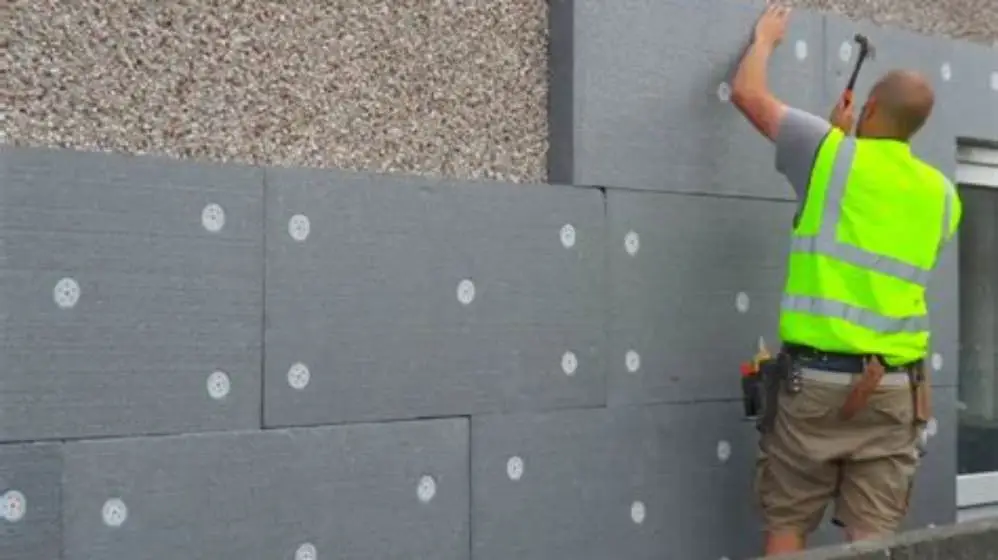
Cleaning restores heat transfer, cuts fuel use by 5-10%, and stops corrosion eating through radiator seams. It's cheaper than replacing a corroded radiator (£300-500 fitted) or a boiler that's failed early (£2,500-4,500). A full system clean costs £400-800 if you hire an engineer, or under £100 in chemicals if you do it yourself over a weekend. We go through methods to clean external insulation step by step elsewhere on the site.
Prepare the steam boiler for cleaning
Turn off the boiler and let it cool for at least 12 hours. Never work on a hot system. Open all radiator bleed valves slightly to relieve any pressure trapped inside. Place a bucket under each one as you open them; old systems often leak rusty water that stains carpets.
Locate the drain valve at the lowest point of the system, usually under the boiler or in the basement. Attach a garden hose and run it to a drain or outside area where you can safely discharge water. Open the drain valve fully and let the system empty completely. This takes 30-60 minutes depending on system volume. A typical UK house with 8-10 radiators holds 50-80 litres.
While draining, inspect the water colour. Clear water suggests no major sludge. Brown or orange water means iron corrosion inside the radiators. Black water indicates heavy magnetite buildup. Extremely dark, oily water with sludge at the bottom means the system needs aggressive flushing, not just descaling.
Once empty, close the drain valve and open the filler valve (usually a small tap on the boiler or on a pipe near it). Run cold water through the system for 5-10 minutes to rinse out loose sludge. Let this rinse water drain away. Repeat twice more until the water runs clear. Don't skip this step; loose particles will block the descaler's action on actual scale deposits.
- Turn off boiler, wait 12 hours for complete cooling
- Open all radiator bleed valves to release trapped pressure
- Attach hose to drain valve and position at a safe outflow point
- Open drain valve fully and allow system to empty completely
- Close drain valve, open filler, and flush cold water through until clear
- Repeat rinse cycle twice more to remove loose sludge

Outdoor Boiler Treatment ProTech 300 Boiler Treatment- 2 Gallon Pack
Treats rust, corrosion and scale in your wood boiler at one gallon covering 300 gallons of water.
Choose and handle descaling chemicals safely
Descalers for steam boilers come in two types: citric acid (mild, safe for beginners) and ethylenediaminetetraacetic acid (EDTA) (stronger, needs careful dosing). Citric acid works on fresh white scale but struggles with old black deposits thicker than 2 millimetres. EDTA shifts both white and black scale faster, typically in 2-3 hours instead of 4-6.
UK suppliers stock descalers as liquids or powders mixed to strength. A typical 10-litre system needs 1-2 litres of standard-strength descaler (200-400 ppm concentration). Always check the bottle label for the correct dose; overdosing wastes money and can corrode brass fittings. Underdosing leaves scale behind.
Descalers are corrosive. Wear nitrile gloves and safety glasses when pouring. Never splash it directly on skin or clothes. If you spill it, rinse immediately with plenty of water. Work in a well-ventilated space; some descalers release mild fumes as they work. Never mix descalers with other chemicals, bleach or vinegar: you'll create toxic compounds.
Store descaler in a cool, dark place away from children and pets. Label it clearly. Empty bottles that held descaler must be rinsed three times with water before putting in the bin. In most UK councils you can add rinsed bottles to plastic recycling, but check your local authority's guidance.
- Citric acid: milder, 4-6 hours, suits fresh scale and beginner users
- EDTA descaler: stronger, 2-3 hours, removes old black and white scale
- Dosage: check label for your system volume, usually 200-400 ppm
- Gloves and glasses: wear them whenever handling concentrate
- Ventilation: open windows or work in a garage with a door open
| Type | Strength | Contact time | Best for | Cost per litre |
|---|---|---|---|---|
| Citric acid | Mild | 4–6 hours | Fresh white scale, first cleaning | £8–12 |
| EDTA chelant | Strong | 2–3 hours | Old black scale, stubborn buildup | £15–22 |
| Phosphonic acid | Very strong | 1–2 hours | Extreme corrosion, industrial use | £20–30 |
Clean each component in the correct order
Start at the boiler, not the radiators. The boiler holds the thickest scale because water is hottest there. Cleaning radiators first sends loosened sludge back into the boiler.
Close the drain and filler valves after the cold-water rinse. Find the pump inlet and outlet pipes using the manual or pipe labels. Attach a flexible hose to the outlet and run it into a bucket or drain.
Pour descaler slowly through the filler valve with a funnel. Close the valve, then turn on the circulation pump. Run it continuously for 2-4 hours, following the descaler instructions.
The solution moves through the boiler, flow pipe, radiators, and return pipe. Murky discharge is normal. Stop the pump when its colour barely changes for 15 minutes. Let the system stand for 30 minutes so particles settle.
- Close drain and filler valves after the cold-water rinse
- Attach a discharge hose to the boiler outlet and run it to a bucket or drain
- Pour descaler slowly through the filler valve
- Close the filler valve and turn on the circulation pump
- Run the pump continuously for 2-4 hours, watching discharge colour
- Stop when discharge colour stabilises for 15 minutes
- Let the system stand for 30 minutes without circulation
Flush the system properly to remove descaler and debris
Stop the pump and drain all descaler into a bucket or suitable drain. Keep draining until the flow slows to a drip. Leftover chemical can keep attacking brass and other metal parts.
Close the drain valve and open the filler valve. Run two complete system volumes of fresh cold water through the system. An 80-litre system needs 160 litres. Fill, circulate for 20-30 minutes, and drain completely each time.
On the third fill, add a water treatment inhibitor such as Fernox MB1 or Sentinel X100, following the bottle instructions. These products cost £15-25 per litre and form a polymer film that limits oxygen contact. They don't remove scale.
Circulate the inhibitor at normal pump speed for 15-20 minutes. Stop the pump and leave the system off overnight. Smell the third drain. A sharp, sour odour means you need a fourth rinse.
- Drain all descaler completely
- Close the drain valve and open the filler valve
- Fill with fresh water and circulate for 20–30 minutes
- Drain completely and repeat the cycle twice
- Add inhibitor during the third fill, following bottle instructions
- Circulate for 15–20 minutes, then stop the pump
- Leave the system off overnight
Test cleaned boiler safety and effectiveness before full operation
Close the drain valve and open the filler valve slowly. Fill until the cold pressure gauge reads 1.0-1.2 bar. Don't overfill, because excess pressure stresses seals and radiator connections.
Bleed radiator valves from the top floor down. Close each valve when steady water appears. If no water appears after 30 seconds, leave that radiator and bleed the rest. Sludge may block its inlet.
Restart the boiler and let it reach normal operating temperature. Pressure should rise to 2.0-2.5 bar. Above 2.5 bar indicates an expansion-vessel problem. Below 1.5 bar when hot suggests a small leak. Check every connection.
Run the heating for 15 minutes. Check radiator surfaces with an infrared thermometer. Clean radiators should reach 55-65°C. A radiator still cool after 20 minutes may have internal corrosion or a stuck valve.
After 1 hour, inspect every pipe joint and radiator connection. A steady drip still present after an hour needs tightening or replacement within a week. Check one radiator in each room before normal use.
- Fill the cold system to 1.0–1.2 bar
- Bleed radiator vents from the top floor downward
- Restart the boiler and reach normal operating temperature
- Check for 2.0–2.5 bar when hot
- Check radiator surfaces for 55–65°C
- Run for 15 minutes and inspect connections
- Inspect all joints again after 1 hour
| Reading | Condition | What to do |
|---|---|---|
| Pressure stays below 1.0 bar cold | Underfilled | Add water slowly until the needle reaches 1.2 bar |
| Pressure rises above 2.5 bar hot | Expansion vessel fault | Call a qualified engineer and stop operating the boiler |
| Radiator reaches 55–65°C in 20 minutes | Normal output | Continue normal operation |
| Radiator stays cool after 30 minutes | Blocked inlet valve or trapped air | Bleed again or call an engineer |
| Steady drip remains after 1 hour | Damaged seal | Tighten or replace within a week |
Quick questions
Can I use vinegar to clean my steam boiler instead of commercial descaler?
No. Vinegar (acetic acid) is too weak for scale thicker than 1 millimetre and works so slowly it takes 24+ hours of circulation. It also doesn't reach inside cast-iron radiators effectively. Commercial citric or EDTA descalers are designed for water hardness and work 4-6 times faster. Vinegar is fine for cleaning kettles, not boilers.
How often should I clean and descale a steam boiler system?
Every 5-7 years in hard-water areas (South East, Midlands, East Anglia), every 10-12 years in soft-water regions (Wales, Scotland). If your water hardness is above 200 ppm, descale every 4-5 years. You'll notice fuel bills creeping up and radiators taking longer to warm: these are your signs it's time. Using a water softener or inhibitor between cleans extends the interval by 2-3 years.
What's the difference between a boiler descale and a full system flush by an engineer?
A descale circulates chemical to dissolve scale. A full flush uses high-pressure water jets to physically dislodge scale and sludge, especially from radiators and dead legs of pipework. Engineers usually do both: descale first, then flush at pressure. This is more thorough but costs £600-1,000. A DIY descale handles 80% of buildup and costs under £100, but thick deposits or very old systems may need professional flushing.
Is it safe to clean a boiler myself, or should I call an engineer?
It's safe if you follow the steps exactly: cool the system completely, drain fully, and work with gloves and ventilation. Don't work on a pressurised hot system: that's where injuries happen. If you're unsure about locating pump switches or if your boiler is over 20 years old with heavy sludge, call an engineer. A mid-process mistake (overpressurising, forcing a stuck valve) can damage seals and cost £200-300 to repair.
Will cleaning my boiler improve my EPC rating?
No, cleaning doesn't change your EPC rating directly. An EPC rates the building's insulation, boiler efficiency, and heating controls as designed, not as actually used. However, a clean boiler uses fuel more efficiently, so your actual bills drop and your home stays warmer for the same fuel cost. When you replace the boiler in future, a clean system history helps the engineer specify the right replacement size.
After cleaning, how do I stop scale building up again as fast?
Install a water softener (removes the minerals that form scale), use a magnetic boiler filter (traps loose corrosion particles), and add water treatment inhibitor to the system each year. A water softener cuts scale regrowth by 90% but costs £800-1,200 installed. A magnetic filter costs £150-250 and stops sludge recirculating. Inhibitor (£20/year) does both jobs partially. Hard-water homes benefit most from softeners; soft-water homes just need inhibitor yearly.