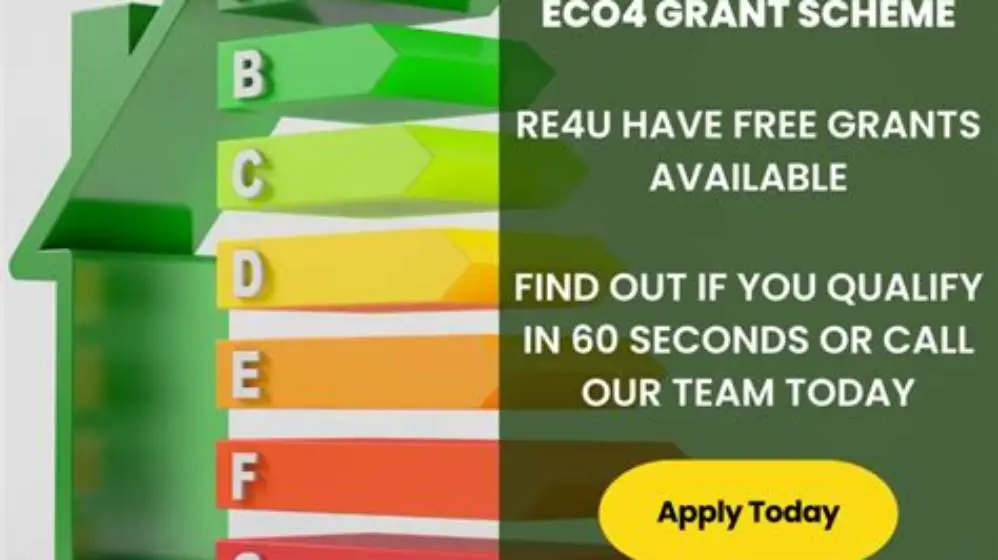
Yes - the ECO4 grant is still available and accepting applications, but it is scheduled to run only until 31 March 2026, when the Warm Homes Plan takes over. Availability after that date depends on the successor scheme, so check official sources before applying.
On this page
Part of our guide on confirming eligibility checklist

AMPBANK M192 Thermal Camera for USB-C iPhone Android
Scans your walls and loft at 192x192 native resolution with 40mK sensitivity, so every cold spot and
Check the specs on AmazonQuick facts
- Scheme status
- Open, accepting applications
- Scheduled end
- 31 March 2026
- Who pays
- Energy suppliers, not you
- Property EPC
- Band D, E or F usually
- Administered by
- Ofgem
- Successor scheme
- Warm Homes Plan
Quick recap
- ECO4 is open now and runs to 31 March 2026
- Verify status on GOV.UK or Ofgem before applying
- Eligibility depends on benefits, EPC band and council referrals
- The Warm Homes Plan is the planned successor scheme
- Never pay an upfront fee - ECO4 installers claim costs from suppliers
Is the ECO4 grant still available right now?
Yes. ECO4 - the Energy Company Obligation's fourth phase - is still open and funding installations in homes across England, Scotland and Wales. The scheme obliges larger energy suppliers to pay for insulation, heating upgrades and first-time central heating in low-income and fuel-poor households. Householders never pay the grant back; the supplier claims the cost against its obligation.
The important qualifier is time. ECO4 was legislated to run from April 2022 until 31 March 2026, and government policy has confirmed no extension of the ECO4 brand beyond that date. That does not mean funding vanishes overnight - a successor under the Warm Homes Plan is planned - but the eligibility rules, application routes and measure lists can all change. Anyone applying in late 2025 or early 2026 should therefore treat the deadline as real, not as marketing pressure.
Availability also varies month to month for a less obvious reason: individual installers hold finite allocations of funding per supplier, and some regions fill their quotas faster than others. A scheme being technically open and an installer having funded work left in your postcode are two different things. If you are told there is a waiting list in your area, that is allocation, not closure.
AMPBANK M192 Thermal Camera for USB-C iPhone Android
Scans your walls and loft at 192x192 native resolution with 40mK sensitivity, so every cold spot and insulation gap shows up clearly before your ECO4 assessor walks in.
- Weight 1.1 oz
- Height 1.73 inches
- Length 2.75 inches
Where to verify the status officially
Three official checkpoints settle the question in minutes, and none of them cost anything. First, GOV.UK carries the current guidance pages for the Energy Company Obligation, including the scheme end date and any policy announcements about its successor. If ECO4 were paused or extended, that page would change before any installer's website did. The other half of this decision is central heating storage heater grant.
Second, Ofgem regulates the scheme and publishes scheme documents, consultation outcomes and compliance notices. Ofgem's pages are the administrative record: they confirm which suppliers are obligated, how the obligation is calculated, and whether any phase has been suspended. Third, TrustMark lists registered installers - and an installer can only deliver funded ECO4 work if it appears there under the relevant measures.
A quick sanity check worth doing before signing anything: ask any company that contacts you for its TrustMark registration number and the name of the energy supplier it is working with, then look both up yourself. Genuine ECO4 work is claimed back from the supplier, so a request for an upfront fee of hundreds of pounds is the clearest possible sign something is wrong.
- Search GOV.UK for 'Energy Company Obligation ECO4 guidance' and read the scheme end date.
- Check Ofgem's ECO pages for any pause, extension or successor announcement.
- Ask the installer for its TrustMark registration number and verify it on trustmark.org.uk.
- Confirm the energy supplier funding the work is one of the obligated large suppliers.
Who qualifies under ECO4
ECO4 is targeted, not universal, and the eligibility routes matter more than the headline scheme status. The main route is receipt of a qualifying means-tested benefit - things such as Universal Credit, Pension Credit, Income Support or Child Tax Credit - alongside an EPC rating of band D, E or F for owner-occupiers. Pensioners on Pension Credit can also qualify through separate routes, and some low-income households qualify without benefits if their local council refers them. We cover eco4 scheme qualification guide in its own article.
That council route, known as ECO4 Flex, is the one many people miss. Local authorities publish statements of intent listing the criteria they will accept - often low income combined with a poorly rated property - and a referral from the council can unlock funding even when nobody in the household claims a listed benefit. If your benefits do not match the national list, your council's housing or energy team is the next call.
Social housing can qualify too, typically where the property sits in EPC band E, F or G and the landlord's stock meets the scheme's share caps. Private landlords need an eligible tenant in place; the landlord benefits from the improved property but the application is driven by the household's circumstances. Check your current EPC band before anything else, because a band C property will usually be excluded from the main routes.
| Route | Who it suits | Key condition |
|---|---|---|
| National benefits route | Households on means-tested benefits | Qualifying benefit plus EPC band D, E or F |
| ECO4 Flex (council referral) | Low income without a listed benefit | Council statement of intent and referral |
| Social housing / landlord | Tenants in social or private rented homes | Property in EPC band E, F or G with caps |
What ECO4 pays for and how much
ECO4 is a whole-house scheme, not a single-measure giveaway, which shapes what you can actually claim. Typical funded measures include loft insulation, cavity wall insulation, solid wall insulation, room-in-roof insulation, first-time central heating, and upgraded heating systems such as boilers replaced under the scheme's rules. Solar photovoltaic panels and heating controls can be installed where they support the overall package. People in this spot often ask about checking property eligibility as well.
There is no fixed cash amount per household. Instead, an assessor scores the property before and after the proposed measures, and the funding follows the improvement in the score. A draughty band F house with no loft insulation attracts far more funding than a band D house needing one measure, which is why two neighbours can receive very different packages. Everything funded must be installed by a TrustMark-registered installer using approved materials.
One practical tip before the assessment: walk the house and note cold spots yourself. A handheld thermal imaging camera that plugs into a smartphone makes this easy and costs a fraction of what a single missed measure is worth - cold corners, thin loft patches and uninsulated cavity reveals all show up clearly, and you can point the assessor straight at them. Some people find gaps the survey misses; every gap found is free warmth the grant should have covered.
What to do if ECO4 is closed or paused
If you are reading this after March 2026, or if funding in your area has genuinely run dry, the picture shifts rather than ends. The government's Warm Homes Plan is the announced successor, consolidating grant support for insulation, heat pumps and low-carbon heating, and details of open application routes will be published on GOV.UK. The first move is always the same: check the official guidance rather than relying on a company's claim that a scheme has ended or begun. We go through location and EPC rating rules step by step elsewhere on the site.
Meanwhile, three alternatives remain worth knowing. The Great British Insulation Scheme - sometimes still described as GBIS - targets households in lower council tax bands with poorer EPC ratings and runs alongside supplier obligations. The Boiler Upgrade Scheme pays a grant towards air source and ground source heat pumps in England and Wales regardless of income. And if you are on a low income, your council may run locally funded retrofit schemes entirely separate from national ones.
Practically, prepare now regardless of scheme status. Get an up-to-date EPC, gather benefit and income documents, and register interest with your council's energy team. Households with paperwork ready when a new window opens are the ones installed first, because assessors and installers work through complete applications before chasing missing documents.
| Scheme | Focus | Who it targets |
|---|---|---|
| ECO4 | Insulation and heating upgrades | Low-income and fuel-poor households |
| Warm Homes Plan | Successor grants for efficiency and heat | Announced routes to be confirmed |
| GBIS | Single insulation measures | Lower council tax bands, poor EPC |
| Boiler Upgrade Scheme | Heat pump grants | Any eligible England or Wales home |
- Multiple routes can be stacked across schemes
- Council-run schemes fund work national ones miss
- Prepared applicants are installed first
- Successor rules are not yet fully published
- Scheme changes can alter eligible measures
- Local schemes differ council by council
How to apply safely and how long it takes
The application itself is straightforward once you are eligible. You contact a TrustMark-registered installer or a supplier directly, provide proof of benefits or a council Flex referral, and book a property assessment. The assessor surveys the building, proposes measures, and the installer submits the package for approval before any work starts. Installation typically follows within a few weeks of approval, depending on materials and labour availability in your region.
Expect the full journey - first contact to finished insulation - to take somewhere between four and ten weeks. Solid wall insulation and first-time central heating take longer than loft or cavity work, and winter demand peaks compress everyone's timelines. Applying in autumn or early winter means joining the queue at its busiest.
Guard against the companies that have attached themselves to the scheme's reputation. Cold callers claiming government endorsement, pressure to sign on the day, and charges dressed up as 'admin fees' or 'survey costs' are the recurring patterns. Verify the TrustMark registration, read what you sign, and remember that a legitimate installer earns its money from the supplier's obligation, not from your pocket. If any part of a deal feels manufactured, get a second quote from a different registered installer before committing.
ECO4 remains a genuine free route to whole-house efficiency, but with a hard March 2026 end date, applying early and verifying installers are the two things that decide whether it works for you.
Quick questions
Is ECO4 open in Scotland and Wales as well as England?
Yes. ECO4 covers Great Britain, so homeowners in Scotland and Wales can apply through the same routes. Some eligibility detail, such as council Flex criteria, is set locally, so check your own council's statement of intent.
Do I have to pay anything back for ECO4 work?
No. The obligated energy supplier pays the installer, and there is no repayment, loan or charge to the household. A genuine application should never ask you for money upfront.
What happens to applications already submitted before the March 2026 deadline?
Work approved and contracted under ECO4 continues under the scheme's rules. The closing date governs when new funding can be committed, not work already in the pipeline.
Can renters apply for ECO4 themselves?
Private tenants need the landlord's consent for any works, and eligibility is judged on the household's circumstances. Social housing goes through the landlord where the stock meets the scheme's caps.
How do I find my EPC rating before applying?
Search your postcode on the official EPC register to see the existing certificate for free. If your home has never been assessed, the installer will arrange one as part of the survey.