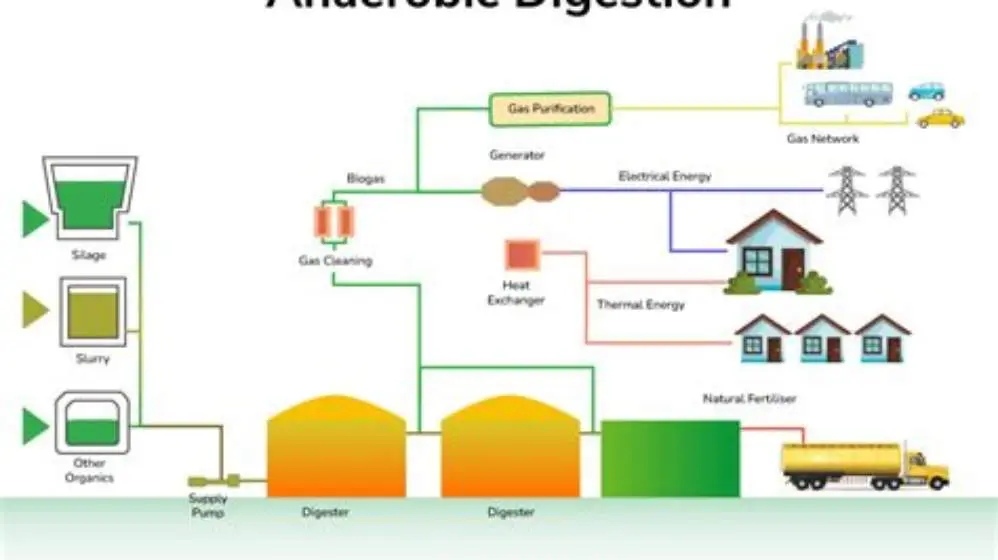
Anaerobic digestion is the breakdown of organic waste by microorganisms in the absence of oxygen, producing biogas (mainly methane) and digestate. It usually occurs at 35-55°C, treating food waste, manure, and sewage sludge to lower waste volume and generate renewable energy.
On this page
Part of our guide on characteristics of green homes
Quick facts
- Temperature range
- 35-55°C
- Main biogas component
- Methane CH4
- Common feedstocks
- Food waste, manure
- Process duration
- 10-30 days
- Aerobic digestion
- Uses oxygen
- Incineration
- Burns waste
Quick recap
- Anaerobic digestion processes waste without oxygen, producing biogas and digestate.
- It treats organic materials like food waste, manure, and sewage.
- Aerobic digestion needs oxygen, producing CO2 and less energy.
- Incineration burns waste, releasing emissions and no biogas.
- Biogas can replace natural gas, reducing energy bills and emissions.
What anaerobic digestion is
Anaerobic digestion is a natural process where microorganisms break down organic waste in an oxygen-free environment. It produces two main outputs: biogas, a mixture of roughly 50-70% methane and 30-50% carbon dioxide, and digestate, a nutrient-rich residue suitable as fertiliser.
This process typically occurs inside sealed tanks or digesters designed to maintain specific temperature conditions, usually within the mesophilic range of 35-40°C or thermophilic range of 50-55°C. These temperatures influence the speed and efficiency of digestion.
Anaerobic digestion reduces waste volume by about 30-50%, lowers odours compared to raw waste, and creates renewable energy from biogas. It's widely used in agriculture, wastewater treatment, and increasingly in food waste management.
The quality and composition of biogas can vary depending on the feedstock and operating conditions. For example, biogas methane content typically ranges from 50% to 70%, but impurities like hydrogen sulfide or siloxanes may be present and require removal for certain uses. Monitoring gas quality ensures efficient combustion and protects appliances.
Anaerobic digestion also plays a role in carbon cycling by converting volatile organic compounds into stable forms. The process decreases greenhouse gas emissions compared to landfill by capturing methane that otherwise would escape into the atmosphere. This environmental benefit is a key driver for expanding anaerobic digestion facilities worldwide.
How anaerobic digestion works
The anaerobic digestion process occurs in four biochemical stages: hydrolysis, acidogenesis, acetogenesis, and methanogenesis. Hydrolysis breaks down complex organic molecules like fats and proteins into simpler sugars and amino acids.
In acidogenesis, those simpler compounds convert into volatile fatty acids by acidogenic bacteria. Acetogenesis then transforms these acids into acetic acid, hydrogen, and carbon dioxide. Methanogenesis converts acetic acid and hydrogen into methane-rich biogas by methanogenic archaea.
The process speed depends on temperature, pH (optimally 6.8 to 7.4), and substrate type. Digesters maintain stable conditions to prevent microbial die-off and biogas production drops.
Typical retention times inside digesters range from 10 to 30 days, depending on system scale and feedstock. The gas collects at the top for use as fuel, while digestate exits as a soil enhancer.
The process efficiency is sensitive to inhibitory substances such as ammonia or heavy metals, which can accumulate and disrupt microbial communities. Regular monitoring of parameters like volatile fatty acid concentrations and alkalinity helps detect imbalances early, allowing adjustments to feedstock or pH to restore performance.
A typical example is a mesophilic digester operating at 37°C treating food waste where retention time is about 20 days. If temperature drops below 30°C, microbial activity slows significantly, causing biogas production to decrease and retention time to increase. Operators use heating systems and insulation to maintain optimal conditions.
Gas collection systems must be well sealed to prevent leaks, which not only reduce energy yield but also pose safety risks due to methane’s flammability. Routine inspections and maintenance of digesters and piping are essential to sustain stable operation and maximise biogas recovery.
- Hydrolysis: complex organics broken into simple sugars and amino acids
- Acidogenesis: simple compounds converted into volatile fatty acids
- Acetogenesis: acids turned into acetic acid, hydrogen, and CO2
- Methanogenesis: acetic acid and hydrogen produce methane gas
What materials anaerobic digestion processes
Anaerobic digestion handles a variety of organic waste including food waste, animal manure, sewage sludge, and crop residues. Food waste is particularly rich in carbohydrates and fats, making it an efficient biogas source.
Manure provides a steady feedstock but tends to produce less biogas per tonne. Sewage sludge from wastewater treatment contains organic solids readily digestible by microbes. Crop residues such as maize silage serve as high-energy feed for large-scale digesters.
Some materials must be pre-treated or excluded. High lignin content in woody biomass resists digestion. Non-organic contaminants like plastics and metals can damage equipment or hinder microbial activity.
Feedstock moisture content should usually exceed 85% to maintain microbial health and flow through the system. Feedstock mix balance impacts gas production and digestate quality.
Pre-treatment methods such as grinding, thermal hydrolysis, or chemical addition can improve digestibility of tougher materials, increasing biogas yields. For example, thermal hydrolysis of sewage sludge at 160°C for 30 minutes breaks down cell walls, making organic matter more accessible to microbes.
Co-digestion, mixing different feedstocks like manure with crop residues or food waste, can balance nutrient content and improve microbial activity. This strategy often increases methane production by 10-30% compared to single feedstock digestion.
Care must be taken to avoid feedstock with inhibitory compounds such as pesticides or excessive salt, which can poison microbial populations and halt digestion. Regular testing of incoming materials helps maintain healthy digester function.
- Food waste: high biogas potential, needs source separation
- Animal manure: abundant but lower methane yield
- Sewage sludge: common in municipal digesters
- Crop residues: high energy, may require chopping or ensiling
- Unsuitable: plastics, metals, woody biomass with high lignin
Difference between anaerobic and aerobic digestion
Anaerobic digestion occurs without oxygen, while aerobic digestion requires oxygen. This fundamental difference affects the waste breakdown products, energy use, and environmental impact.
Aerobic digestion produces carbon dioxide, water, and heat but no methane. It consumes energy to supply oxygen, typically via aerators. It is faster than anaerobic digestion, completing in days, but emits more greenhouse gases overall because methane is a stronger greenhouse gas if released.
Anaerobic digestion generates methane-rich biogas, usable for heating, electricity, or vehicle fuel. It is slower, taking weeks, but yields renewable energy and a stable fertiliser product.
Choosing between them depends on waste type, site conditions, and goals. Aerobic systems suit small-scale composting. Anaerobic suits larger installations prioritising energy recovery.
| Feature | Anaerobic digestion | Aerobic digestion |
|---|---|---|
| Oxygen requirement | None | Required |
| Main gas produced | Methane (CH4) | Carbon dioxide (CO2) |
| Energy output | Biogas usable | No usable fuel |
| Process time | 10-30 days | 1-7 days |
| By-product | Digestate fertiliser | Compost or sludge |
| Energy input | Low (heat only) | High (aeration) |
Comparison of anaerobic digestion with incineration
Incineration burns waste at temperatures above 850°C, converting it to ash, flue gases, and heat. It reduces waste volume by up to 90% and can generate electricity but does not produce biogas or fertiliser.
Anaerobic digestion preserves organic nutrients in digestate for soil use, while incineration destroys organic matter and nutrients. Incineration emits pollutants and requires expensive flue gas treatment to meet environmental standards.
Anaerobic digestion is more suitable for wet organic waste like food and sewage sludge, which are inefficient or uneconomical to incinerate. Incineration handles mixed municipal solid waste but not specifically biomass feedstocks for energy recovery.
Anaerobic digestion turns waste into renewable energy and fertiliser, while incineration focuses on volume reduction and electricity from combustion.
| Aspect | Anaerobic digestion | Incineration |
|---|---|---|
| Waste type | Wet organic waste | Mixed solid waste |
| Energy output | Biogas (methane) | Electricity/heat from combustion |
| Nutrient recovery | Yes, digestate fertiliser | No, nutrients destroyed |
| Emissions | Low, biogas captured | High, requires flue treatment |
| Waste volume reduction | 30-50% | Up to 90% |
What is anaerobic digestion and why it matters to UK homeowners
Anaerobic digestion is relevant beyond large plants. Some UK homes and communities can use small-scale digesters to manage food waste, reducing landfill and cutting energy costs by producing biogas for cooking or heating.
The digestate can improve garden soil, reducing the need for chemical fertilisers. Using anaerobic digestion also aligns with UK green schemes aiming to lower carbon footprints and improve EPC ratings of properties by encouraging renewable energy use.
Funding and grants, such as from the Boiler Upgrade Scheme or ECO4, may support installing biogas-compatible appliances or heat systems integrated with digesters. However, system size and maintenance complexity mean most homeowners rely on council-managed anaerobic digestion facilities.
Still, understanding the process helps you make informed choices about waste management and participate in local green energy initiatives.
Quick questions
Can anaerobic digestion handle plastics or metals?
No, anaerobic digestion only breaks down organic material. Plastics and metals do not degrade and can damage equipment, so they must be removed before digestion.
Is anaerobic digestion better than composting at home?
Anaerobic digestion produces usable biogas energy, unlike aerobic composting which emits CO2. However, home digesters are more complex and costly compared to simple composting.
What happens to the digestate after digestion?
Digestate is a nutrient-rich by-product that can be used as fertiliser or soil conditioner. It usually needs testing for contaminants before use in gardens or agriculture.
Does anaerobic digestion produce unpleasant odours?
When properly sealed and managed, anaerobic digesters emit few odours. Poor maintenance or leaks can cause smells from waste or gas.
How does temperature affect anaerobic digestion?
Temperature controls microbial activity. Below 30°C process slows; above 60°C microbes die. Maintaining 35-55°C ensures stable biogas production.