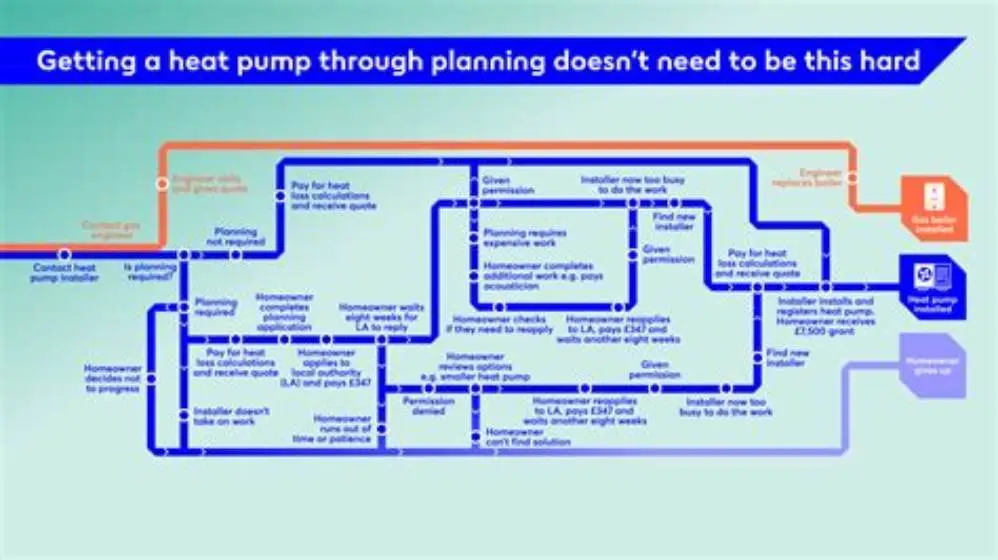
Most domestic heat pump installations in the UK qualify as permitted development and do not need planning permission if they meet size, location, and noise limits. Exceptions include listed buildings, conservation areas, or if the unit exceeds 1m from the wall or 1m height.
On this page
- Quick recap
- Which heat pump installations qualify as permitted development
- Size and location limits affecting permission requirements
- Exceptions that always need planning permission
- How to check with local authorities before installing
- Noise limits and neighbour considerations for heat pumps
- UK heat pump planning permission permitted development rules uk
- Quick questions
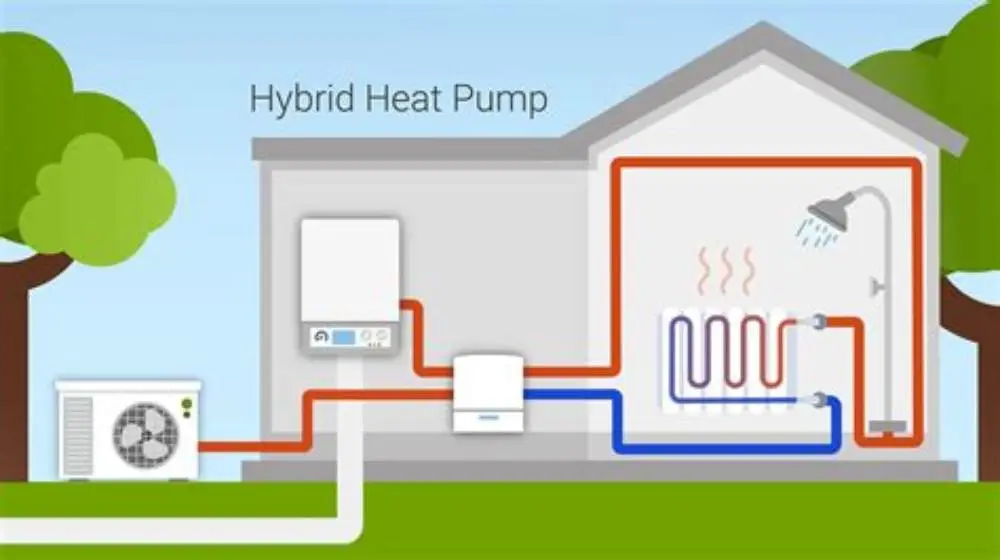
Part of our guide on thermal store tanks with hybrid heat pumps
Quick facts
- Max projection
- 1m from wall
- Max height
- 1m above ground
- Permitted development
- Yes if limits met
- Listed building
- Permission required
- Conservation area
- Permission usually required
Quick recap
- Heat pumps often fall under permitted development rights unless in sensitive areas.
- Size limits: external units must not stick out more than 1m from the wall or 1m high.
- Listed buildings and conservation areas generally require planning permission.
- Always check with your local planning authority before installation.
- Noise limits apply to prevent disturbance; units must comply.
Which heat pump installations qualify as permitted development
In England, most domestic heat pump installations qualify as permitted development under Schedule 2, Part 14, Class G of The Town and Country Planning (General Permitted Development) (England) Order 2015, as amended. This means they do not need planning permission if they meet certain conditions related to size, location, and noise.
The permitted development rights apply to external heat pump units attached to a dwellinghouse or within its curtilage, provided the property is not a listed building or in a designated area like a conservation area or national park. If the heat pump is for a non-domestic building, different rules apply.
Units must be reasonably necessary for the heating or cooling of the property. This excludes installations purely for business use without a domestic connection.
- Permitted development applies only to external units at domestic properties
- Not allowed on listed buildings or in certain protected areas without permission
- Must be for heating or cooling the home, not commercial use
Size and location limits affecting permission requirements
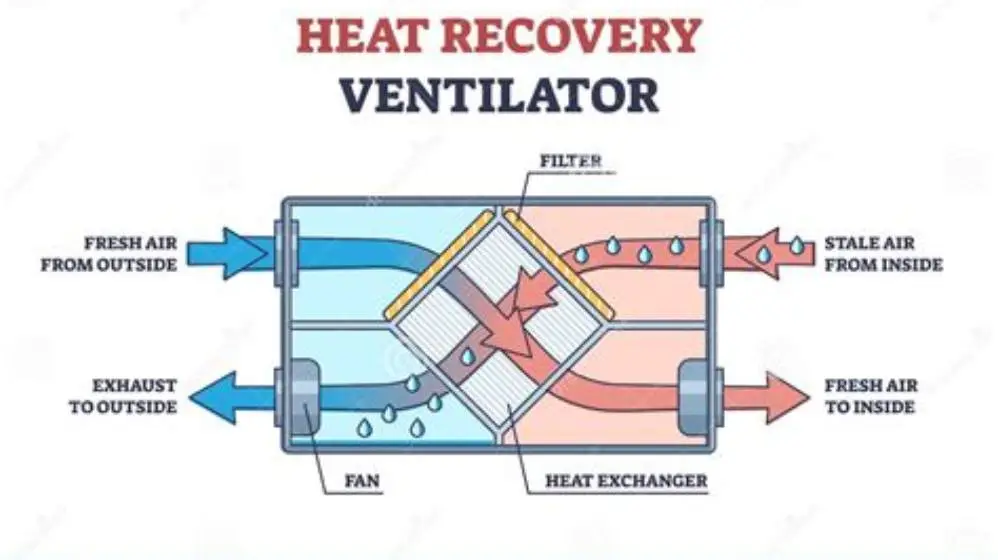
The most important size limits for permitted development of heat pumps are that the external unit must not protrude more than 1m from the wall or roof slope it is attached to, and must not be higher than 1m above ground level if it is installed on the ground or a flat roof. These limits prevent bulky installations that affect the building's appearance or neighbour amenity. Before you commit to anything, it is worth looking at exchanging stale air efficiently.
The unit must be sited to minimise its visual impact from the road or neighbouring properties. Rear gardens or side elevations are preferable to front-facing walls. The unit must also comply with noise limits to avoid nuisance.
If the heat pump exceeds these size or location limits, planning permission is required. This is a common trigger if the property has small external space or if the unit's design requires a larger or free-standing installation.
- External unit max projection: 1 metre from wall or roof slope
- Max height if ground/flat roof mounted: 1 metre above ground
- Position to reduce visual impact and neighbour disturbance
- Noise level must comply with local environment limits

Decibel Meter, TopTes TS-501B Sound Level Meter with 2.25” Backlit LCD
Checks that your heat pump noise complies with local planning requirements by measuring sound levels accurately from 30 to 130 dB with A/C weighting
Exceptions that always need planning permission
Heat pump installations on listed buildings always need planning permission regardless of size or location. This protects historic fabric and appearance. Installing a heat pump in a conservation area, national park, or Area of Outstanding Natural Beauty generally requires permission because permitted development rights are restricted or removed in these areas. If that sounds like your situation, read up on air source heat pump cost uk installed next.
Also, if the heat pump installation involves alterations that affect the external appearance of the building significantly, or if it causes material harm to amenity through noise or disturbance, planning permission will be necessary.
Free-standing heat pumps sited away from buildings or those requiring substantial ductwork or pipework visible externally typically require specific consent.
- Listed buildings: permission always required
- Conservation areas and protected landscapes usually require permission
- Installations causing noise or visual harm need consent
- Free-standing or large units outside normal limits require planning
How to check with local authorities before installing
Local planning authorities hold the definitive records of any restrictions in your property’s area and can confirm if your heat pump installation needs permission. Check your local council’s planning portal or call their planning department with your address and installation details. It helps to understand biomass boiler grant uk rules before going further.
You can submit a ‘Lawful Development Certificate’ (LDC) application to the council. This is a formal confirmation that your installation is permitted development, which gives legal certainty and can support future property sales.
It is advisable to prepare a site plan and specifications of the heat pump model, size, and proposed location to provide the council with clear information. Local authorities usually respond within 8 weeks.
- 1. Identify your local planning authority via your postcode.
- 2. Visit their planning website or contact the planning department.
- 3. Provide details of your property and proposed heat pump installation.
- 4. Request confirmation if planning permission is required or apply for a Lawful Development Certificate.
- 5. Await response before proceeding with installation.
Noise limits and neighbour considerations for heat pumps
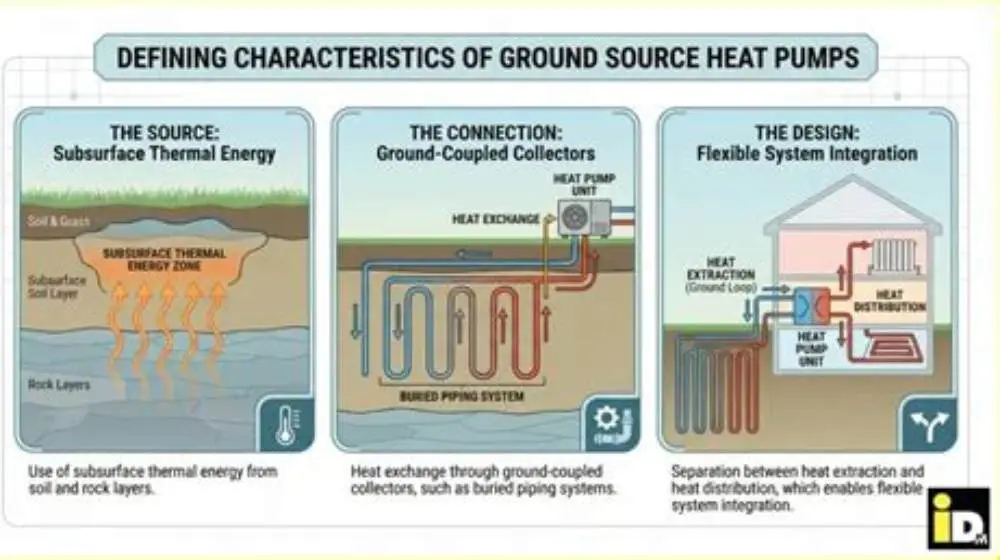
Heat pumps produce noise from their compressor and fans. To avoid complaints and enforcement, the noise level at the nearest neighbour’s property should usually not exceed 42 decibels (dB) at night, though exact limits depend on local council policies and site conditions. The other half of this decision is space use considerations for boreholes.
Manufacturers provide noise emission ratings in decibels measured at 1 metre distance, and installers use this to predict impact at neighbours. If predicted noise exceeds limits, mitigation such as acoustic enclosures or relocating the unit may be necessary.
Noise is a common reason councils require planning permission even if the unit fits within permitted development size limits. Taking noise into account during planning avoids expensive modifications or removal later.
- Typical noise limit at neighbour: approx. 42 dB at night
- Check manufacturer’s noise emissions in
dB(A)at 1m - Consider position and barriers to reduce noise impact
- Noise breach may trigger planning enforcement
UK heat pump planning permission permitted development rules uk
The permitted development rights for heat pumps in the UK depend on tight limits defined by legislation and local planning policies. The key rules are: the unit must not project more than 1m from the wall or roof slope; it must be under 1m high if ground mounted; it must not be sited on a listed building or in a conservation area without permission; and it must comply with noise limits.
Heat pump installations that meet these criteria usually do not require planning permission and qualify as permitted development. However, if your property is in a protected area or the installation exceeds these limits, you must apply to your local planning authority before installing.
Verification involves measuring physical dimensions with a tape measure and checking site location with your council’s planning portal. Planning authorities may also consider the impact on neighbours and the character of the area, so consultation is recommended.
| Condition | Permitted Development Limit | Requires Permission If Exceeded |
|---|---|---|
| Projection from wall/roof | ≤ 1 metre | > 1 metre |
| Height if ground/flat roof mounted | ≤ 1 metre | > 1 metre |
| Location | Non-listed, non-conservation area | Listed building or conservation area |
| Noise limit | Generally < 42 dB at neighbour | Above noise limit |
| Unit type | External unit attached to dwelling | Free-standing or large unit away from building |
Quick questions
Can I install a heat pump on a flat roof without planning permission?
You can if the unit does not exceed 1 metre in height above the roof surface and complies with noise limits. Otherwise, planning permission is needed.
Do I need permission if I replace an old heat pump with a new one of the same size?
If the new unit fits within the original’s size and location limits and the property is not listed or in a protected area, you likely do not need permission. Confirm with your council.
What happens if I install a heat pump without required planning permission?
Your local authority may issue an enforcement notice requiring removal or alteration, possibly with fines. Applying for retrospective permission is difficult and not guaranteed.
Are air source and ground source heat pumps treated differently for planning?
Yes. Ground source heat pumps often involve excavation and pipework, likely requiring planning permission, while small air source units meeting size limits may qualify as permitted development.
How can I check if my property is in a conservation area or listed?
Search your address on the local council’s planning portal or ask their planning department directly. This information is public and essential before installation.
Does the Boiler Upgrade Scheme affect planning permissions?
No. The scheme provides financial grants for heat pump installation but does not change the legal planning requirements. Permission must still be obtained if applicable.