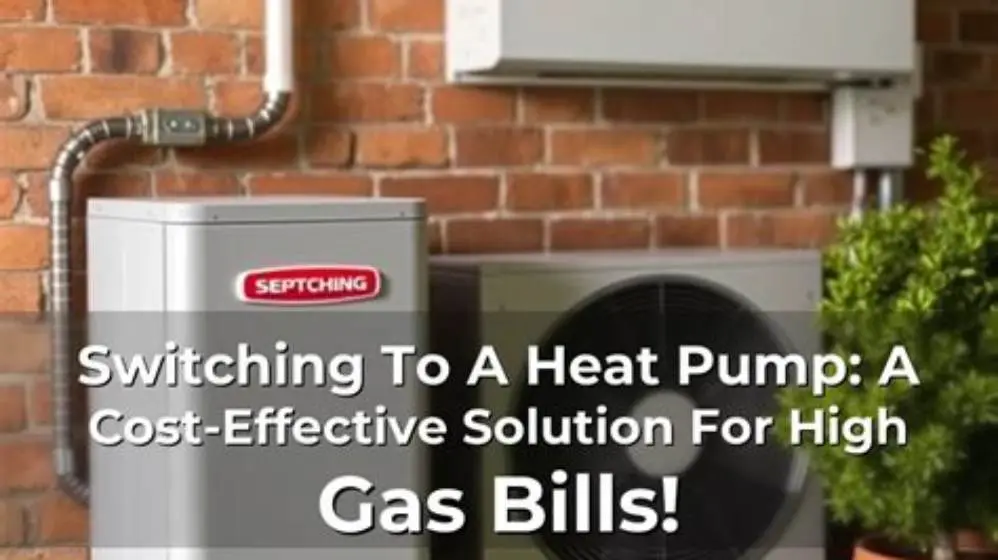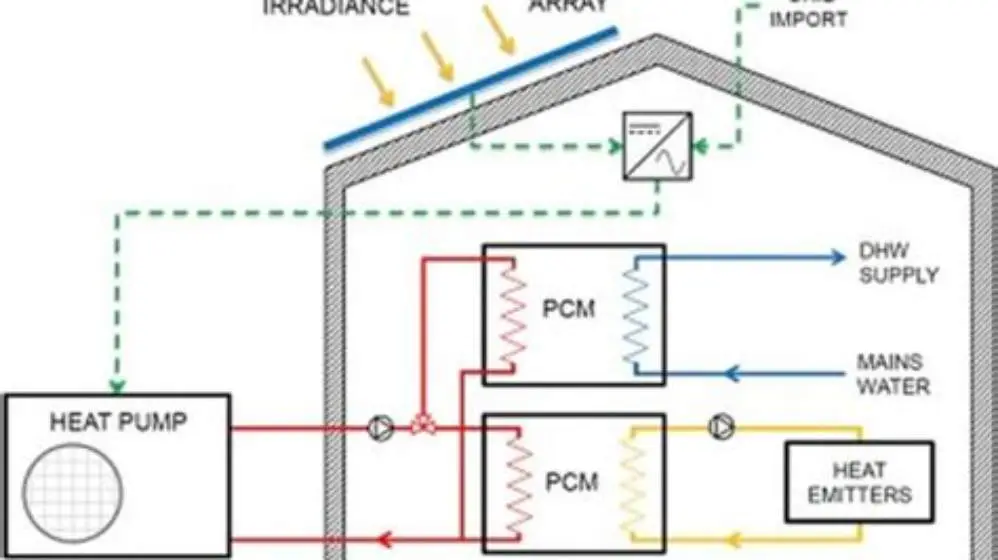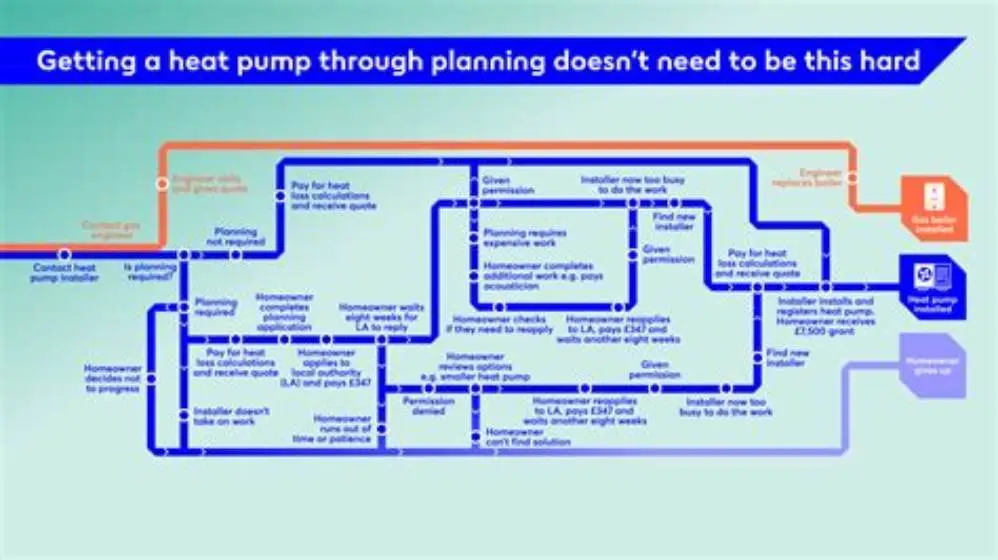
Installed costs for air source heat pumps in the UK vary widely depending on property size, insulation, existing heating system and installer. Multiple authoritative sources report different typical ranges, so expect personalised quotes; government schemes (for example the Boiler Upgrade Scheme and ECO4) may reduce the upfront cost for eligible households: check the official government and Ofgem pages for current details (see references).
On this page
- Quick recap
- Typical UK installed cost ranges for air source heat pumps
- Key factors that influence installation costs
- How Boiler Upgrade Scheme and ECO4 grants can affect upfront costs
- More detail on eligibility and the application process for BUS and ECO4
- Steps to estimate your home's air source heat pump cost
- Comparing air source heat pumps to alternatives by cost and efficiency
- What to check post-installation and maintaining cost efficiency
- Quick questions
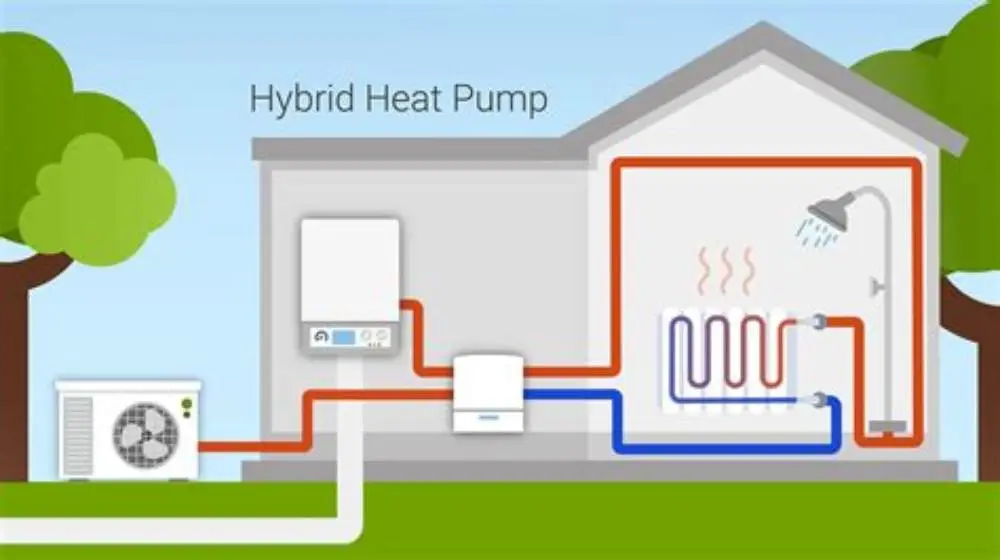
Part of our guide on thermal store tanks with hybrid heat pumps
Quick facts
- Typical installed cost
- Varies widely; see text and references for source ranges
- Grant support
- Scheme-dependent; check official pages for current offers
- Boiler Upgrade Scheme
- Subject to eligibility and scheme status; see gov.uk for current position
- Installation time
- 2-5 days typical (site-dependent)
- Heat pump lifespan
- Typically 15-20 years (component replacements may be required)
Quick recap
- Installed costs vary significantly by property, installer and region; published estimates differ between sources.
- Property size, insulation and required upgrades (radiators, electrical work) heavily influence the final price.
- Government schemes such as the Boiler Upgrade Scheme and ECO4 may provide support for eligible households; eligibility and amounts depend on the scheme rules and availability at the time of application.
- Get multiple detailed quotes from MCS‑certified installers and confirm grant eligibility before booking.
- Account for ongoing maintenance and occasional repair costs in your lifetime budget, not just annual servicing.
Typical UK installed cost ranges for air source heat pumps
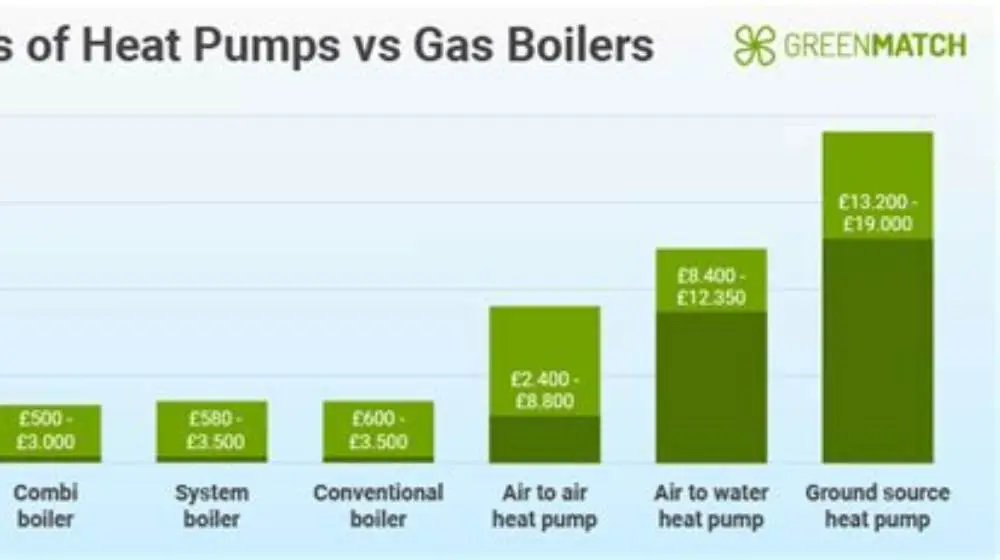
Published cost estimates for installing an air source heat pump in the UK vary between sources because they reflect different assumptions about system size, the need for distribution upgrades (radiators or underfloor heating), and regional labour rates. For example, guidance and industry surveys commonly cite installed costs from several thousand pounds up to the mid five‑figure range for complex retrofit projects. See the references below (Energy Saving Trust, Which?, and installers’ guides) for specific published ranges and the assumptions behind them.
A quoted price should ideally include the heat pump unit, installation labour, controls, any required radiator or underfloor heating upgrades, electrical work and commissioning. If an installer’s quote excludes likely extras (for example, radiator upgrades, system controls or electrical board work), add those costs to the headline figure.
System size for UK family homes commonly lies between about 8 kW and 16 kW, but the correct size depends on heat loss calculations for your property. Some sources give example installed costs for particular sizes (for instance, a mid‑range 12 kW system used as an example by trade publications), but these are illustrative: always get a bespoke heat loss calculation and detailed quote.
| Property Size | Heat Pump Size (kW) | Indicative Installed Cost Range (£) (source assumptions vary) |
|---|---|---|
| Small (up to 90m²) | 8-10 | Indicative lower‑end to mid range; see installer quotes and Energy Saving Trust examples |
| Medium (90-150m²) | 10-12 | Indicative mid range; individual quotes vary by region and required upgrades |
| Large (150-250m²) | 12-16 | Indicative mid to higher range; larger/poorly insulated homes may require more complex work |
Key factors that influence installation costs
Installation costs depend heavily on your home's existing heating layout and building fabric. Homes with old radiators sized for high‑temperature boilers, or properties with poor insulation, commonly require larger pumps or radiator upgrades: increasing costs. If that sounds like your situation, read up on regional grant differences next.
Difficult access, long pipe runs, or the need to upgrade the electrical supply (for example a new consumer unit or wiring) add labour and material costs. Local labour rates and the installer’s experience also affect the price.
Ducted installations (rare for domestic ASHPs) and underfloor heating retrofits are more expensive than straight radiator‑upgrade retrofits. Insulation improvements reduce the size (and therefore the cost) of the heat pump needed.
Choice of brand and model matters: higher People in this spot often ask about uk rainwater harvesting costs as well.
Performance (seasonal COP/SPF) units and premium models carry higher capital costs but can reduce running costs. Differences in quoted prices between reputable brands for the same kW rating are often in the low thousands of pounds, depending on features and warranty.
Integrating the heat pump with existing smart controls or home automation can require additional modules or wiring. Typical extra costs for controls vary, and including this integration in the initial quote avoids later surprises.
- Property insulation: better insulation reduces system size and price.
- Existing heating system: replacement or upgrade can add several thousand pounds.
- Access difficulty: tight spaces or multiple floors increase labour.
- Electrical work: upgrading fuse boards or wiring adds cost and may be required by local regulations.
- Ducting/underfloor works: more disruptive and higher cost than radiator retrofits.
How Boiler Upgrade Scheme and ECO4 grants can affect upfront costs
Government and obligated‑supplier schemes have aimed to reduce the upfront cost of low‑carbon heating, but the value and availability of support depend on the scheme rules, eligibility criteria and available funding at the time you apply. For the latest official guidance check the UK government Boiler Upgrade Scheme page and Ofgem/ECO pages (links in the references). For the detail, see our notes on annual energy bills for heating options.
The Boiler Upgrade Scheme (BUS) has offered a grant for certain low‑carbon heating measures in previous phases; published government materials have stated a maximum grant figure for heat pumps while the scheme was open. However, grant availability, the maximum award and the application process have changed across funding rounds and between administrations. Always confirm current grant levels and application timings on the official gov.uk BUS page or via an MCS‑certified installer who is registered to provide the grant application service.
ECO4 (the Energy Company Obligation) is administered by Ofgem and targets energy efficiency improvements for low‑income and vulnerable households. ECO4 support may cover insulation measures that enable an efficient heat pump installation or may, in some cases, contribute towards the heating system itself. Eligibility is generally based on household income, receipt of qualifying benefits, or being nominated under local authority schemes; the details are set out in Ofgem’s ECO guidance and delivered via participating energy suppliers and installers.
Because both BUS and ECO4 have eligibility and delivery rules, you should not treat any headline grant figure as guaranteed for your property. Your installer typically checks and submits applications on your behalf for BUS, while ECO4 funding is arranged through obligated suppliers and approved installers. If you book installation before confirming grant approval you may not be able to reclaim support afterwards. Before you commit to anything, it is worth looking at estimating energy cost reductions.
- Grant amounts and availability change; always consult official sources before relying on a figure.
- BUS: check the gov.uk Boiler Upgrade Scheme page for current status and eligibility.
- ECO4: see Ofgem’s guidance on eligibility and how measures are delivered by suppliers.
- Installers: MCS certification or other accreditation is commonly required by grant schemes.
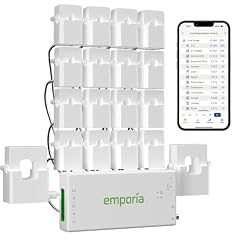
Emporia Vue 3 Home Energy Monitor
Monitors your home's electricity consumption in real-time with ±2% accuracy, helping you track your heat pump's running costs precisely.
More detail on eligibility and the application process for BUS and ECO4
Boiler Upgrade Scheme (BUS) - eligibility and application: Historically BUS required homeowners to use an MCS‑certified installer and to have a suitable property and system specification. Applicants normally do not apply directly to the government; instead, approved installers complete the application as part of the sales process and the grant is applied at point of sale or paid after installation according to scheme rules. Check the current gov.uk BUS page for the latest eligibility checklist, required documentation and whether the scheme is open or closed for new applications.
ECO4 - eligibility and delivery: ECO4 is designed to help households on low incomes and with vulnerabilities. Eligibility typically depends on receipt of certain benefits, household income thresholds, or local authority referrals. ECO4 funding is provided through obligated energy suppliers who commission approved installers to deliver measures. To find out if you qualify, speak to the suppliers or an accredited installer, and consult Ofgem’s ECO4 guidance which explains the nomination, referral and delivery routes.
Practical steps you can take: ask potential installers whether they are registered to handle BUS/ECO4 applications, request written confirmation that they will submit any required paperwork, and ask for a clear timeline showing when grant approval will be obtained relative to the installation date. Keep copies of all paperwork submitted on your behalf and confirm whether the grant will be deducted from your invoice at point of sale or paid as a reimbursement after completion. It helps to understand air source heat pump and thermal store before going further.
- BUS: installers usually submit the application; check their registration and process.
- ECO4: delivered via obligated suppliers and approved installers; eligibility is means‑tested or benefit‑based.
- Always obtain written confirmation of how and when grant funding will be applied to your quote.
Steps to estimate your home's air source heat pump cost
Calculating your installed cost involves: assessing your home's heating demand (a heat loss survey), choosing an appropriate system size, evaluating installation complexity, and checking available support and eligibility.
Step 1: Arrange a detailed heat loss survey (often provided by installers) to determine required kW output. This removes guesswork about sizing and reduces the risk of oversizing or undersizing.
Step 2: Obtain multiple itemised quotations from MCS‑certified installers. Ensure each quote lists the unit, labour, radiator or underfloor upgrades, electrical work, controls and commissioning. Before you commit to anything, it is worth looking at heat pump planning permission permitted development rules uk.
Step 3: Have installers check your eligibility for grant schemes (BUS, ECO4 or any local incentives) and confirm whether they will submit the application on your behalf. Do not start work before grant approval if you intend to use it.
Step 4: Subtract confirmed grant amounts (if any) from the itemised quotes to calculate your expected net cost. Treat any pre‑grant quote that does not show how the grant will be applied as incomplete.
Step 5: Factor in potential electrical upgrades (which can add a few hundred to several thousand pounds depending on complexity) and any building works needed for radiators or underfloor heating.
Step 6: Estimate annual running costs using your local electricity tariff and an efficiency estimate (COP or SPF) provided by the manufacturer or installer. For example, using a representative seasonal performance factor of around 3 and local electricity prices gives a simple comparative figure, but real performance varies with temperature, control strategy and occupant behaviour.
- Arrange a heat loss survey.
- Request detailed quotes from qualified installers.
- Verify grant eligibility and application process before booking.
- Compare net costs after confirmed grant support.
- Include likely electrical and distribution upgrades in the final budget.
Comparing air source heat pumps to alternatives by cost and efficiency
Air source heat pumps generally have higher upfront costs than modern gas boilers but can deliver substantially higher delivered heat per unit of energy input because of their efficiency. Comparing lifetime costs requires factoring capital cost, running costs (electricity price and heat pump efficiency), maintenance and any incentive support.
Other low‑carbon options (for example biomass or solar thermal) have different trade‑offs such as fuel handling or seasonal performance. The relative attractiveness depends on local fuel prices, household patterns and access to grants.
Published comparisons in consumer guides and industry reports present ranges rather than single numbers. Use these as a starting point but rely on your own quotes and running‑cost estimates for decision‑making.
| Heating System | Installed Cost (illustrative) | Typical Efficiency (illustrative) | Maintenance |
|---|---|---|---|
| Air Source Heat Pump | Varies by property and installer; see quotes | Often quoted as 200–400% (i.e. 2–4 units heat per unit electricity) depending on conditions | Regular servicing; occasional component replacement |
| Gas Boiler | Lower typical upfront cost than heat pumps in many cases (depends on property) | Typically 85–95% for modern condensing boilers | Annual checks; fuel supply dependence |
| Solar Thermal | Moderate capital cost; performance weather dependent | Lower delivered heat percentage; supplementary heating usually required | Panel and system maintenance; possible cylinder corrosion checks |
- High efficiency can reduce running costs where electricity is competitively priced or low‑carbon.
- May be eligible for government or supplier support depending on schemes.
- Lower on‑site fuel handling and combustion risk compared with biomass.
- Higher upfront cost in many typical retrofit scenarios.
- Performance varies with outdoor temperature and property fabric.
- Requires good insulation and, in some cases, distribution upgrades to work well.
What to check post-installation and maintaining cost efficiency
After installation, verify system commissioning paperwork and the heat pump’s settings. Correct commissioning ensures control schedules, flow temperatures and safety interlocks are set as designed.
Monitor room temperatures and electricity usage during the first heating season. Unexpectedly high electricity use or cold spots can indicate incorrect settings, poor insulation or a mismatch between pump size and building heat loss.
Annual servicing by an accredited technician helps maintain efficiency and can identify refrigerant leaks or control faults before they become major problems. Typical annual service costs vary; check quotes from local accredited service providers (many report charges in the low hundreds of pounds per year in standard cases).
Beyond annual servicing, plan for occasional maintenance or repairs such as fan or compressor replacement, control board repairs, or refrigerant top‑ups if a leak occurs. These occasional costs can range from a few hundred pounds for small repairs up to several thousand for major component replacement late in the system’s life. Including a modest contingency in your budget for such events is prudent.
- Check commissioning paperwork and system controls immediately after installation.
- Monitor energy use and temperatures during the first season.
- Schedule yearly servicing with an accredited technician.
- Budget for occasional repairs or component replacement beyond regular servicing.
- Use a smart meter or energy monitor for ongoing performance tracking.
Quick questions
How does the size of my home affect the heat pump cost?
Larger homes generally need larger heat pumps and may require more extensive pipework or radiator upgrades, increasing installation costs. A heat loss survey gives the correct size for your home rather than relying on rule‑of‑thumb kW figures.
Can I get both Boiler Upgrade Scheme and ECO4 grants together?
In some circumstances households may benefit from more than one scheme, but eligibility rules and the way funding is delivered differ. ECO4 targets low‑income or vulnerable households and is subject to supplier delivery routes; BUS (when open) has separate conditions. Confirm with your installer and check official guidance before assuming combined support.
What happens if my home isn’t well insulated?
Poor insulation increases heat loss, which usually requires a larger heat pump and raises both upfront and running costs. Schemes like ECO4 may fund insulation improvements where eligible, which can improve the economics of a heat pump; confirm eligibility through Ofgem or your installer.
Do I need to replace radiators for a heat pump?
Not always. Low‑temperature heat pumps perform best with larger radiators or underfloor heating. Some homes will need radiator upgrades to deliver comfortable temperatures efficiently: installers should show this in the heat loss/specification report.
How long does installation usually take?
Installation commonly takes between 2 and 5 days for a typical domestic retrofit, but may take longer if significant building or electrical upgrades are required.