Choose an air source heat pump if your UK home has at least EPC band D, radiator flow temperatures under 55°C, and suitable outdoor space. Ground source suits larger plots but needs deeper insulation. Boiler Upgrade Scheme grants depend on heat pump type and property fabric.
On this page
- Quick recap
- Boiler Upgrade Scheme eligibility rules per heat pump type
- Minimum insulation and EPC requirements for grant access
- Radiator sizing and flow-temperature implications for existing UK systems
- Outdoor unit space and noise constraints for typical UK plots
- Installer accreditation (MCS) availability by region and technology
- Which heat pump for UK central heating: grant eligibility and property match
- Quick questions
Part of our guide on boiler upgrade scheme eligibility
Quick facts
- Min EPC rating
- Band D
- Radiator flow temp
- <55°C
- Outdoor space needed
- 1-2 m²
- Grant caps
- Up to £5,000
- Installer certification
- MCS required
- Noise limit
- Usually 42-50 dB
Quick recap
- Boiler Upgrade Scheme grants favour air and ground source heat pumps with minimum EPC band D.
- Flow temperature under 55°C is essential to use existing radiators effectively.
- Outdoor unit space and noise limits often restrict air source heat pump options.
- Installer accreditation (MCS) availability varies by region and technology.
- Proper insulation upgrades may be required before installing a heat pump for grant eligibility.
Boiler Upgrade Scheme eligibility rules per heat pump type
Boiler Upgrade Scheme (BUS) grants cover heat pump installations replacing fossil fuel boilers in UK homes with EPC band D or better. Both air source heat pumps (ASHP) and ground source heat pumps (GSHP) qualify.
ASHPs must meet a minimum seasonal coefficient of performance (SCOP) of around 3.5 under UK heating conditions, typically tested at 35°C flow temperature. GSHPs usually have slightly higher efficiency because of stable ground temperatures.
Grant amounts differ: up to £5,000 for ASHPs and up to £6,000 for GSHPs, reflecting installation complexity and cost. The property must have adequate insulation and a heating system capable of low-temperature operation typically under 55°C for radiators.
You won't qualify if your property has an EPC rating below band D unless an insulation upgrade comes first. The heat pump must be MCS-certified, and the installer must be registered under the scheme. Before you commit to anything, it is worth looking at uk free insulation grant eligibility.
| Heat pump type | Min EPC rating | Flow temp (°C) | Grant max (£) | Installer accreditation |
|---|---|---|---|---|
| Air source | D | <55 | 5,000 | MCS required |
| Ground source | D | <55 | 6,000 | MCS required |
Minimum insulation and EPC requirements for grant access
The UK government requires homes to have a minimum EPC rating of band D to qualify for heat pump grants under BUS and ECO4 schemes. This usually means cavity wall insulation, loft insulation to 270mm or more, and double glazing.
Upgrading insulation before installing a heat pump is common. Heat pumps deliver lower water temperatures, so thermal losses matter more than with gas boilers. A well-insulated home reduces running costs and increases comfort.
If your EPC rating is below D, you must improve insulation or fabric performance first. ECO4 grants can help fund insulation upgrades, which then unlock heat pump grants. You can check your EPC certificate for insulation status and energy efficiency scores. Before you commit to anything, it is worth looking at mvhr heat pump sizing problems.
Failing to improve insulation risks a cold home and wasted investment. Heat pumps perform best in homes with U-values for walls around 0.3 W/m²K or less and roofs near 0.16 W/m²K.
Radiator sizing and flow-temperature implications for existing UK systems
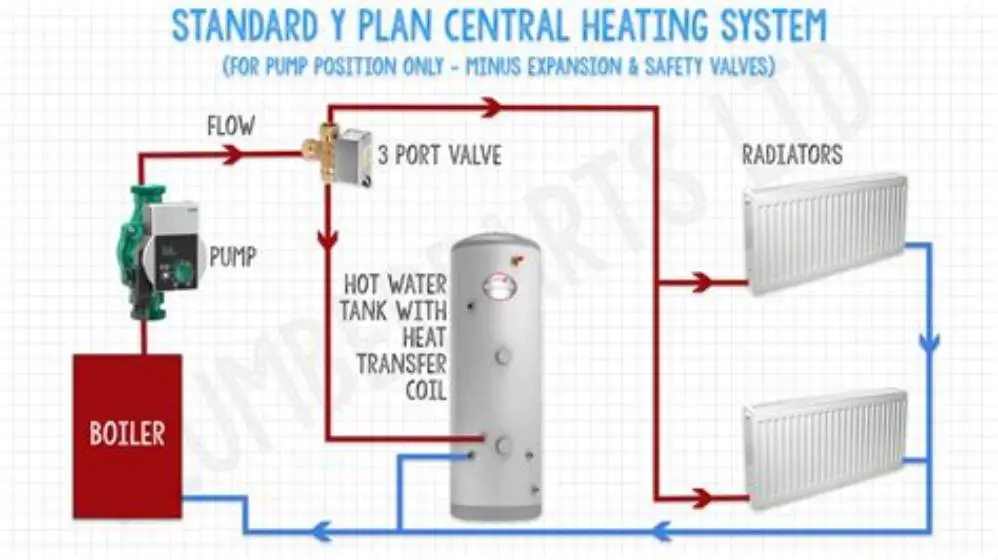
Existing radiators in UK homes often operate at 70-80°C flow temperatures. Heat pumps work best at lower flow temperatures around 35-55°C to maintain efficiency.
To use your current radiators, you must have a system sized for low-temperature operation or enlarge radiators to increase surface area. Otherwise, the heat pump won't maintain comfort without running at inefficient higher temperatures. We go through heat pump funding in scotland step by step elsewhere on the site.
A quick test: measure your radiator's actual flow temperature during a heating cycle using an infrared thermometer. If it's above 55°C, consider radiator upgrades or adding underfloor heating for the best heat pump performance.
A heat pump paired with properly sized radiators can reduce your heating bills by 30-50%. Without resizing, you lose those gains and strain the system, cutting its lifespan.
Take a typical 1,000 W radiator rated at 70°C flow. At 45°C flow it outputs about 600 W, a 40% drop. You need roughly 1.6 times the surface area to match the heat loss. For a 12 m² room losing 800 W at -3°C outside, you need 1,300 W of radiator at low flow. That means swapping a single 600x800 mm panel for a double 600x1200 mm. Check the rating at Delta T 30, not Delta T 50. There is more on electric heat pumps for homes installation in a separate guide.
Run a heat pump at 65°C to feed small radiators and SCOP falls from 3.5 to near 2.5. You pay about £150 more per 10,000 kWh of heat at 30p per kWh. The house feels uneven, radiators stay lukewarm at the bottom. The unit cycles on and off every few minutes. Measure return temperature after 30 minutes of steady running. You want 45°C flow and 35°C return for radiators, or 35°C flow for underfloor.
Outdoor unit space and noise constraints for typical UK plots
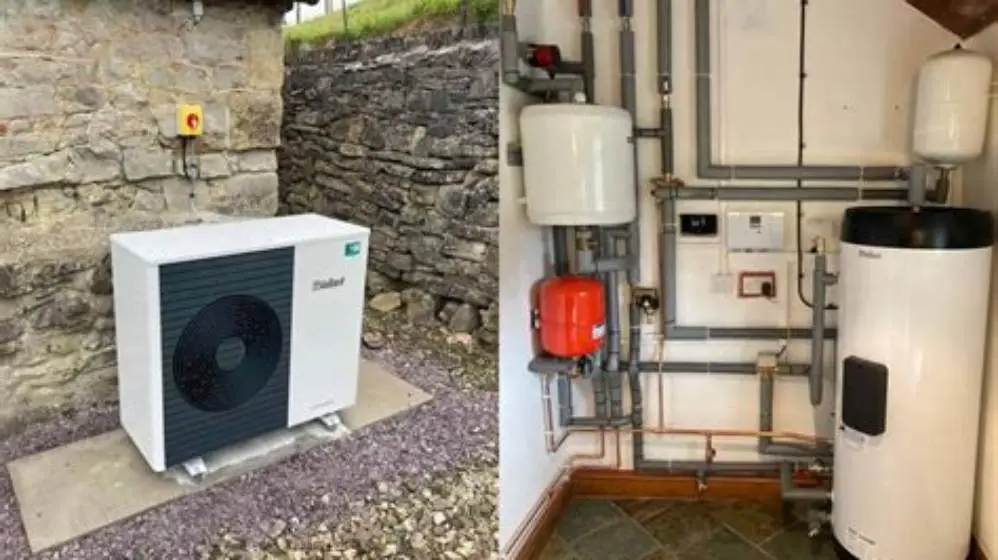
Air source heat pumps need 1-2 square metres of clear outdoor space for their external unit. Ground source heat pumps require larger land areas for underground loops, often 50 to 100 square metres or more, limiting their use on typical UK plots.
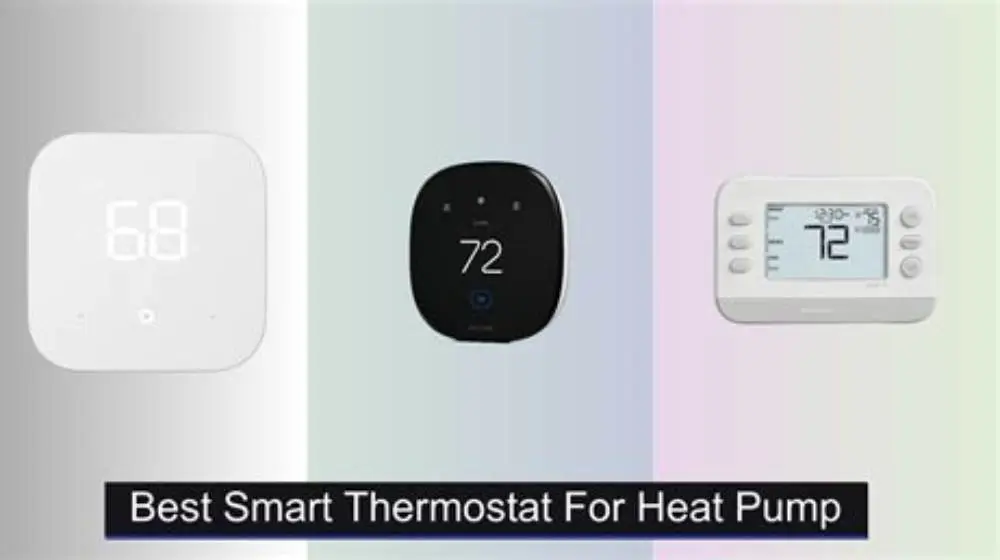
Noise limits range between 42 and 50 decibels at the boundary, depending on local council regulations. Many UK homes have tight garden space or are in noise-sensitive areas, restricting the choice of heat pump model and location. People in this spot often ask about smart thermostat compatible with heat pump and immersion as well.
Check property boundaries and legal covenants before installation. Some local authorities require noise impact assessments if the heat pump is close to neighbours.
Choose a compact unit if you have a small garden and consider acoustic enclosures or mounting the unit on vibration isolators to reduce noise transmission.
Permitted development needs 1 metre clearance from the boundary and the unit must meet 42 dB at 1 metre from the neighbour's nearest window. A 7 kW unit at 45 dB at 1 metre drops to about 37 dB at 3 metres. Place it on a wall facing your own brick wall and sound reflects. Place it on open ground with a fence behind and you lose 3 to 5 dB. Use a phone sound meter at the boundary at night. You need below 42 dB to avoid a complaint.
Installer accreditation (MCS) availability by region and technology
Only Microgeneration Certification Scheme (MCS) certified installers can fit heat pumps eligible for UK government grants. Installer availability varies widely by region and heat pump type.
Air source heat pump installers are more common in urban and suburban areas. Ground source heat pump specialists are fewer and tend to service rural or large-plot properties due to excavation requirements.
Check the MCS online directory for your postcode to find qualified installers and avoid unaccredited work that voids grants. Booking early is advised, as demand often outstrips installer supply.
Installer quality also affects system efficiency, so choose someone with proven experience and good reviews, not just the lowest price.
Lead times stretch to 8 to 12 weeks in the South East in autumn, versus 3 to 5 weeks in the North East. Rural GSHP jobs often need two separate crews, one for groundworks and one for plumbing. If the MCS certificate lists the wrong heat pump size, the BUS voucher fails. You lose the £5,000 or £6,000 grant and pay full price. Ask for the MCS number and check it on the register before you pay a deposit. Match the address exactly.
Which heat pump for UK central heating: grant eligibility and property match
Match your heat pump choice to your property fabric, existing heating system, and grant eligibility for the best results. An air source heat pump suits most UK homes with EPC band D or better and existing radiators sized for 45-55°C flow temps.
Ground source heat pumps fit properties with larger outdoor space and better insulation but require higher upfront cost and specialist installers. Both types qualify for the Boiler Upgrade Scheme if installed by MCS-accredited fitters and meeting efficiency standards.
Failing to match the heat pump type to your home's insulation or radiator system risks poor comfort, higher bills, and losing the grant. Check your EPC rating, radiator flow temperature, outdoor space, and installer options before deciding.
The one tool to buy now is an infrared thermometer for radiator flow checking, saving money by confirming your system matches the heat pump's operating temperatures.
Air source heat pumps best fit most UK homes under Boiler Upgrade Scheme if flow temps and insulation meet criteria.
Quick questions
Can I get a heat pump grant if my house has EPC band E or below?
Generally, no. Boiler Upgrade Scheme grants require at least EPC band D. You must improve insulation first, often using ECO4 funding, before qualifying.
Do I need to replace my radiators to install a heat pump?
Not always. If your existing radiators can run efficiently at 45-55°C flow temperature, they can work. Use an infrared thermometer to check. Otherwise, radiator upgrades or adding underfloor heating may be needed.
Is the noise from an air source heat pump a big problem in typical UK gardens?
It depends on the unit and placement. Noise typically ranges 42-50 dB at the boundary. Careful siting and using smaller or acoustically treated units reduce impact.
Are ground source heat pumps better than air source for all UK homes?
No. GSHPs excel with large outdoor space and stable ground temps but cost more to install. Air source heat pumps suit most urban and suburban homes.
How do I find an MCS-accredited installer near me?
Use the official MCS online directory by entering your postcode. Book early, as installers may have long waiting lists.