Size your heat pump after you've specified the MVHR system, not before. MVHR with 75-90% heat recovery cuts ventilation heat loss by up to 2 kW in a typical three-bedroom house, shrinking the heating load the heat pump must meet. Get it backwards and you'll oversize the pump by 20-30%, causing short-cycling and higher bills.
On this page
Part of our guide on confirming eligibility checklist
Quick facts
- MVHR heat recovery
- 75-90% of exhaust warmth
- Ventilation heat saved
- 1.5-2.5 kW typical home
- Oversize penalty
- 20-30% if MVHR ignored
- Typical airflow rate
- 0.3-0.5 air changes/hour
- Short-cycle interval
- 8-12 minutes when oversized
- SCOP drop from cycling
- 0.3-0.6 points lost
Quick recap
- MVHR recovers 75-90% of exhaust heat, cutting ventilation losses by 1.5-2.5 kW in most homes
- Size the heat pump after finalising MVHR spec, or you'll oversize by 20-30% and trigger short-cycling
- Use whole-house ventilation rate (typically 0.3-0.5 air changes per hour) to calculate recovered heat
- Mismatched sizing causes the heat pump to cycle every 8-12 minutes instead of running smooth 20-minute cycles
- A heat loss calculation with MVHR credit built in avoids guesswork and matches grant scheme requirements
How MVHR airflow affects heating load
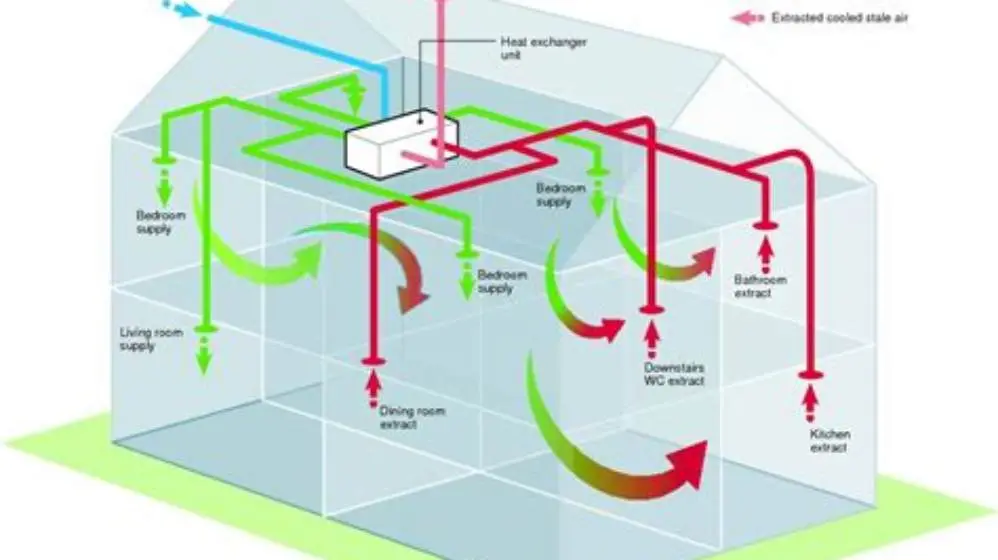
MVHR (mechanical ventilation with heat recovery) pulls stale air from kitchens and bathrooms, recovers 75-90% of its heat, and warms incoming fresh air before it reaches your living rooms. That recovered warmth cuts the ventilation heat loss your heating system must replace. In a 150 m² house with 0.4 air changes per hour, MVHR saves roughly 1.8-2.2 kW compared to trickle vents or extract fans that dump warm air outdoors.
The saving depends on three things: the heat-recovery efficiency stamped on the MVHR unit datasheet, the whole-house airflow rate in cubic metres per hour, and the temperature difference between inside and outside during winter. A unit rated at 85% efficiency with 180 m³/h airflow recovers about 2 kW when it's 0°C outside and 20°C inside. Drop the efficiency to 70% and you lose half a kilowatt of that recovery.
Building regulations push you toward 0.3-0.5 air changes per hour for the whole dwelling. That figure sets the MVHR fan speed and the size of ductwork. A draughty older house might hit 0.8 air changes through gaps alone, but once you've insulated walls and fitted airtight windows for a heat pump retrofit, controlled ventilation through MVHR becomes the main fresh-air path. The tighter the building fabric, the bigger the share of heat loss that ventilation represents: and the more MVHR saves.
Heat loss calculations for grant schemes like the Boiler Upgrade Scheme now include a line for ventilation heat recovery. Miss it and the assessor inflates your heating load by the full ventilation loss, then sizes a heat pump to match. You end up with a 6 kW unit where a 4.5 kW model would have done the job, paying an extra £800-£1,200 and running it less efficiently because it short-cycles in mild weather. The other half of this decision is home energy scotland grant and loan for a heat pump.
Why sizing heat pump separately can cause issues
Heat pumps work best with long, steady runs. A correctly sized unit cycles on for 20-30 minutes, meets the heat demand, then rests. An oversized pump hits the target temperature in 8-12 minutes, shuts off, cools down, restarts, and repeats. Every restart costs efficiency because the compressor and refrigerant loop spend energy getting back up to working pressure and temperature instead of delivering heat.
Short-cycling drops the seasonal coefficient of performance (SCOP) by 0.3-0.6 points. A heat pump rated at SCOP 3.5 in the lab might deliver SCOP 2.9 in your house if it's oversized by 25%. That difference costs you roughly £150-£200 extra per year on a typical heating bill, and it wears compressor components faster because they're starting and stopping four times an hour instead of twice.
The mismatch gets worse when you add MVHR later or upgrade it. Say you fitted a basic 70% recovery unit during the heat pump install, then replaced it two years later with a 90% unit to chase a better EPC rating. The new MVHR saves an extra kilowatt, but the heat pump is already sized. Now it's even more oversized, and the cycling problem deepens. You can't easily swap a heat pump down a size without losing grant money or warranty cover. There is more on how does an mvhr unit work in a separate guide.
Installers sometimes add a buffer tank to smooth out short-cycling, but that's a fix for a sizing mistake, not a design choice. The tank costs £400-£700, takes up a square metre of floor space, and adds another 5-10% to standing losses. It's better to size the pump correctly from the start by accounting for MVHR recovery in the heat loss calculation.
Method to calculate heat pump size from MVHR specs
Start with a whole-house heat loss calculation to EN 12831 standard, the method grant assessors and MCS-certified installers use. The calculation walks through every room, tots up losses through walls, windows, floors and roof, then adds ventilation loss. For ventilation, it multiplies the building volume by the air-change rate, the temperature difference, and the specific heat capacity of air (0.33 Wh/m³·K). That gives you the ventilation heat loss in watts.
Now apply the MVHR credit. If the unit recovers 85% of exhaust heat, it replaces 85% of the ventilation loss, so you subtract that from the total. A house with 3 kW fabric loss and 2 kW ventilation loss would have a 5 kW load without MVHR. With 85% recovery, ventilation loss drops to 0.3 kW (15% of 2 kW), so total load becomes 3.3 kW. Add 10-15% for hot water if you're using the heat pump for domestic hot water as well, and you land on a heat pump between 3.5 and 4 kW. The other half of this decision is electric heat pumps for homes installation.
Check the MVHR unit datasheet for the certified heat-recovery efficiency under EN 13141-7 or Passivhaus Institute testing. Budget models claim 75-80%, mid-range units hit 85%, and top-spec Passivhaus-certified boxes reach 90-92%. Use the certified figure, not the marketing headline. A 5% difference in recovery efficiency changes heat pump sizing by roughly 250 W on a typical home, enough to nudge you between model sizes.
Most MCS installers use software like Heatpunk, Heat Engineer, or MCS Heat Pump Calculator that includes an MVHR tick-box. Tick it, enter the recovery efficiency and airflow rate, and the tool recalculates the load. If your installer is working from a spreadsheet or a rule of thumb (100 W/m² is not a rule for a house with MVHR), ask them to redo it properly. The Boiler Upgrade Scheme requires a compliant heat loss calc anyway, so this isn't extra paperwork.
- Complete a room-by-room heat loss calculation to EN 12831, including fabric and ventilation losses.
- Identify the MVHR heat-recovery efficiency from the unit datasheet (look for EN 13141-7 certification).
- Subtract the recovered percentage from the ventilation heat loss: if recovery is 85%, ventilation contributes only 15% of its original loss.
- Add 10-15% for domestic hot water if the heat pump will supply it.
- Choose the heat pump model whose output at design temperature matches the adjusted total load.
- Verify that the chosen heat pump can modulate down to 30-40% of rated output to avoid short-cycling in mild weather.
Common problems from mismatched sizing
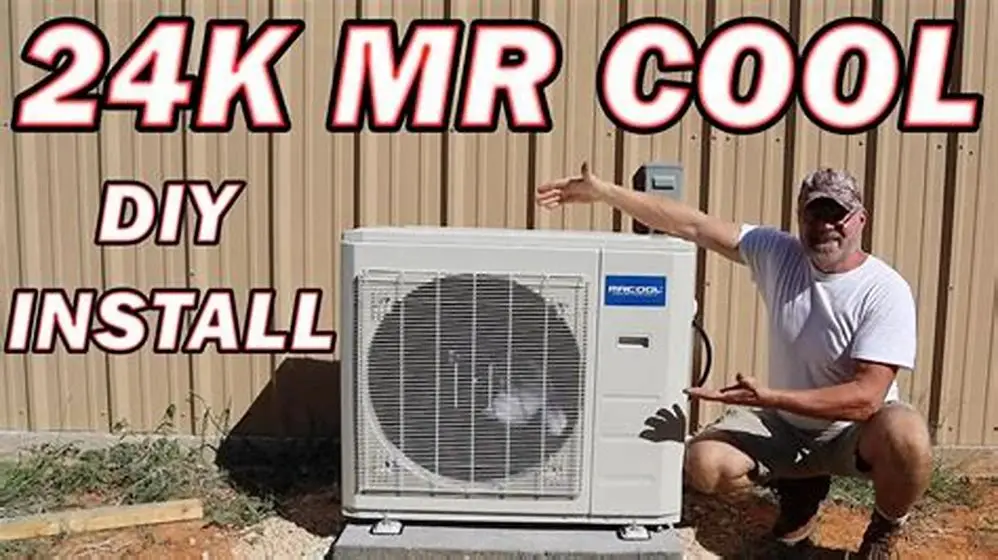
The most frequent mismatch is a heat pump sized before MVHR was specified, or sized assuming no MVHR at all. The installer measures heat loss, adds full ventilation loss at 0.5 air changes per hour with no recovery, and picks a heat pump to cover it. When MVHR goes in later (often as part of the same retrofit but ordered separately) the heating load drops by 1.5-2 kW, leaving the pump oversized. The system still heats the house, but it cycles every 10 minutes instead of running smooth half-hour stretches. People in this spot often ask about mr cool heat pump installation as well.
Another problem is undersizing the MVHR to save money, then finding it can't deliver the airflow the building needs. A 120 m³/h unit might suit a small flat, but a 200 m² house needs closer to 250 m³/h to meet Part F ventilation rates. Run the MVHR flat-out and fan noise climbs, and the unit's heat-recovery efficiency drops by 5-10% because airflow turbulence disrupts the heat exchanger. You lose the MVHR credit you designed for, and the heat pump struggles on cold days.
Some installers fit MVHR with summer-bypass mode but forget to tell the heat pump controls. The bypass dumps warm air in summer to prevent overheating, which is correct, but if the heat pump's weather-compensation curve still assumes year-round heat recovery, it'll underestimate heating demand in spring and autumn when the bypass is active. The house feels cold until you manually boost the flow temperature, wasting the efficiency you paid for.
Ductwork leaks kill recovery efficiency. A system designed for 85% recovery might deliver 65% if ducts are poorly sealed or crushed during installation. The MCS standard requires airtightness testing of MVHR ductwork, but not every installer does it unless you ask. A 10% duct leak costs you 0.5 kW of recovered heat, enough to push the heat pump into short-cycle territory. We go through boiler upgrade scheme replaces RHI step by step elsewhere on the site.
- Oversized heat pump: fitted before MVHR was specified, causing 8-12 minute cycles and 0.3-0.6 SCOP drop
- Undersized MVHR: chosen to save £300-£500, then run at full speed with higher noise and lower recovery
- Bypass-mode mismatch: summer bypass active but heat pump curve still credits full-year recovery
- Duct leakage: 10-15% loss from poor sealing, reducing actual recovery to 65-75% instead of the rated 85%
Impact on system efficiency and comfort
A matched system (MVHR and heat pump sized together) runs at higher SCOP because the pump spends more time in steady-state operation. Compressors are most efficient between 40% and 80% of rated output, where refrigerant flow and motor speed find their sweet spot. An oversized pump barely reaches 40% modulation before the room hits temperature, so it shuts off and loses efficiency to the next restart. A correctly sized pump runs longer at 50-70% output, delivering SCOP close to the lab rating.
Comfort improves because room temperatures stay stable. An oversized heat pump heats the room quickly, overshoots by 0.5-1°C, then lets it drift back down before restarting. You get a sawtooth temperature profile with swings every 15-20 minutes. A right-sized pump delivers a gentle, continuous trickle of heat that holds the room within ±0.3°C of target. You notice it most in bedrooms and home offices, where even small swings disrupt sleep or concentration.
MVHR itself contributes to comfort by delivering fresh air at near-room temperature. Without heat recovery, cold outside air enters at 5-10°C in winter, creating draughts near supply vents. MVHR preheats it to 18-19°C, so you don't feel the incoming air as a chill. That perceptual warmth means you can run the heating system at a slightly lower flow temperature (say 40°C instead of 42°C) and still feel comfortable, which pushes heat pump SCOP up another 0.1-0.2 points.
The combined saving is real. A 150 m² house heating with a correctly sized 4 kW heat pump at SCOP 3.4 and MVHR recovering 2 kW costs roughly £650 per year to heat at current electricity prices. Oversize the pump to 5.5 kW and skip MVHR, and the same house costs £950-£1,000. That's a £300-£350 annual difference, recovering the MVHR purchase cost in three to four years.
| Configuration | Heat pump size | SCOP achieved | Annual cost |
|---|---|---|---|
| Correctly sized with MVHR | 4 kW | 3.4 | £650 |
| Oversized, no MVHR | 5.5 kW | 2.8 | £980 |
| Correctly sized, no MVHR | 6 kW | 3.0 | £850 |
| MVHR added after oversized pump | 5.5 kW | 3.0 | £800 |
Finding installers who size both systems together
Look for an MCS-certified heat pump installer who also holds Domestic Ventilation Installers Scheme (DVIS) accreditation, or who partners with a DVIS installer. MCS covers heat pump competence, DVIS covers MVHR. An installer with both tickets understands how the two systems interact and will design them as a pair rather than bolting MVHR on as an afterthought. Check the MCS database and filter by postcode; many entries list additional schemes in the installer's profile.
Ask three questions during the quote stage. First: will you complete a whole-house heat loss calculation to EN 12831 and credit MVHR heat recovery in it? Second: will you specify the MVHR unit and ductwork layout before sizing the heat pump? Third: will you test ductwork airtightness and commission the MVHR with the heat pump controls? A yes to all three means they've done this before. Vague answers or a suggestion to "fit MVHR later if you want it" mean they're treating the systems separately.
Retrofit grant schemes increasingly expect both systems in the same application. ECO4 and the Local Authority Delivery scheme often fund MVHR alongside heat pump upgrades when the property is a solid-wall house or a pre-1920 build with no cavity to insulate. The Great British Insulation Scheme sometimes includes MVHR in whole-house packages. Applying for both measures together forces the installer to show a single heat loss calc that accounts for both, which is exactly what you want.
If you're organising the retrofit yourself rather than through a scheme, get the MVHR design done first. A DVIS assessor will measure room volumes, plan duct routes, and specify the unit size and recovery efficiency. Take that spec sheet to the heat pump installer and ask them to incorporate it into the heat loss calculation. It adds one meeting and a week to the timeline, but it guarantees the pump is sized for the house you'll actually have, not the house you have now.
Quick questions
Can I add MVHR after the heat pump is already installed?
Yes, but the heat pump will be oversized unless you fitted a smaller model than the original heat loss suggested. The pump will short-cycle more in mild weather, dropping efficiency by 0.3-0.5 SCOP points. You can add a buffer tank to smooth the cycling, but that costs £400-£700 and still wastes some energy. Better to plan both systems together from the start.
Does MVHR work with air-source and ground-source heat pumps the same way?
Yes. MVHR cuts the heating load regardless of the heat source. Ground-source pumps have slightly higher SCOP to begin with, so the absolute efficiency gain is a bit larger, but the sizing method is identical. Both pump types benefit from reduced short-cycling and steadier run times when sized to match MVHR-adjusted heat loss.
How much does an MVHR unit cost, and does it qualify for grants?
A whole-house MVHR system with installation costs £3,500-£6,500 depending on house size and duct complexity. The Boiler Upgrade Scheme doesn't fund MVHR directly, but ECO4 and some council retrofit schemes do when MVHR is part of a fabric-first upgrade package. Ask your local authority energy team what's available in your area.
What happens if the MVHR breaks down in winter?
The unit continues to ventilate but stops recovering heat, so your heating load jumps by the amount MVHR was saving: typically 1.5-2.5 kW. The heat pump has to work harder and may not keep up on the coldest days if it was sized tightly. Most MVHR units have a five-year warranty, and breakdowns are rare if filters are changed every six months. Keep a spare filter set and check the unit twice a year.
Can I run MVHR in summer when I don't need heating?
Yes, and you should. MVHR provides continuous fresh air and removes humidity and cooking smells year-round. In summer, the bypass mode dumps warm exhaust air outside instead of recovering its heat, so the incoming air stays cool. Running costs are low: just the fan, drawing 30-60 W, which adds about £50-£80 per year.