Understand if low cost ammeters can measure heat pump start surges and when to opt for higher-spec tools.
Consumer handheld ammeters generally cannot capture heat pump start surges accurately. They often miss the peak inrush current because their sampling rates and response times are too slow. Look for meters with sampling above 10kHz and true RMS capability. Otherwise, use a power quality analyser for precise surge measurement.
On this page
Part of our guide on using a smart thermostat
Most handheld ammeters miss heat pump start surges; this reveals what specs actually capture the true peak current.
| Typical start surge | 4-7× running current |
|---|---|
| Low cost meter sampling | <1kHz |
| Required sampling rate | >10kHz for surge |
| Measurement type | True RMS needed |
| Surge duration | 50-300 ms |
The short version
- Low cost ammeters usually miss peak surge currents.
- Sampling rate above 10kHz is needed to catch start surges.
- True RMS measurement improves accuracy during surges.
- Power quality analysers provide reliable surge data.
- Knowing surge current helps choose the right heat pump setup.
What start surge current means for heat pumps
Heat pumps draw a higher current at start than during normal running. Technicians call this the start surge or inrush current. The peak often reaches 4 to 7 times the running current for many domestic compressors. The surge length depends on the compressor design, load and supply conditions. Typical durations run from 50 to 300 milliseconds.
That short peak stresses wiring and protective devices. Circuit breakers, fuses and contactors see the full instantaneous current. A breaker rated for steady current can still trip if it senses a high short-duration surge. Knowing the surge magnitude and time helps you pick the right breaker trip curve and contactor rating.
Start surge also skews energy measurements. Many meters report an averaged or RMS value that misses the top of the spike. Energy management systems and EPC assessments can therefore underreport peak demand and misclassify supply adequacy. Capture the peak to avoid faulty retrofit choices and to prevent repeated nuisance trips.
How low cost ammeters read current
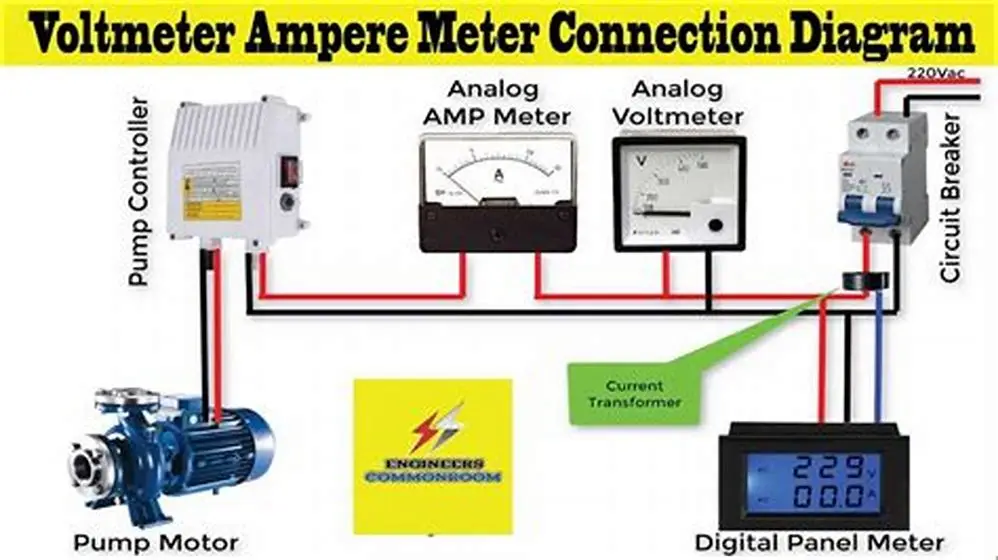
Most consumer ammeters use a clamp coil or a Hall-effect sensor. They convert magnetic fields into a voltage and then sample that voltage. Sampling rates often sit below 1,000 samples per second. The meter then computes an average or an RMS value over a short window. That process yields a stable reading for steady loads. We cover how to monitor home energy usage in its own article.
The internal firmware often applies smoothing filters and a moving average. Those filters remove noise and make the display steady. They also blunt fast transients. A 100 ms surge that peaks and falls inside the filter window can be averaged down by more than half.
Manufacturers usually publish accuracy for steady-state sinusoidal currents. They rarely specify response to short transients. Expect reasonable accuracy for running current. Expect poor capture of sub-second peaks. Read the specs for sampling rate and true RMS capability before you trust a low cost meter for surge work.
Accuracy limits during surge
Start surge currents rise and fall in about 50 to 300 milliseconds. To capture the peak, an ammeter must sample at least 10,000 times per second. This allows accurate waveform reconstruction for true RMS calculation during surge. People in this spot often ask about how to read an electricity meter with pulse output as well.
Low cost ammeters with sampling below 1kHz average the current and miss the peak entirely. The result is an underreported surge by 20-50%, sometimes more. This creates false confidence in circuit sizing and condition.
Also, meters without true RMS capability cannot accurately measure the complex surge waveform. This results in further measurement errors.
For meaningful surge capture, an ammeter needs fast sampling and true RMS measurement. If yours lacks either, its surge data is unreliable for retrofit decisions. We cover reducing wasted heating energy in its own article.
Can a low cost ammeter measure heat pump start surge
Short answer: usually no. Low cost ammeters rarely capture the true peak of a heat pump start surge. Most sample slowly and average the waveform. That removes the highest part of a fast spike.
You can sometimes see an approximate surge value on a cheap meter. The meter will show a value that looks plausible. That value is often the smoothed RMS or a delayed average. It can under-report the peak by 20 to 50 percent depending on the meter filter and the compressor waveform.
For reliable surge measurement you need two key specs. First, a sampling rate above 10,000Hz. Second, true RMS processing with no low-pass averaging that masks short events. Clamp meters built for inrush measurement list both specs. Power quality analysers list them too. People in this spot often ask about how to submeter washer dryer amp draw without electrician as well.
If you must test with a low cost ammeter, take multiple starts and watch the first reading immediately. Use slow-motion video of the meter display or a camera with a high frame rate. This can sometimes capture a brief spike shown on the display before the average settles. This is a workaround, not a replacement for the right tool.
Alternatives if low cost ammeters fall short
When a handheld meter is insufficient, power quality analysers or specialised inrush meters are the alternatives. They connect similarly via clamps but sample much faster. They capture waveform details to calculate true RMS in real time during surge.
These devices cost more but return reliable surge current readings needed to assess wiring and breaker sizing. Some come with PC software for visualising spikes and storing data. It helps to understand energy star rating for nest thermostat before going further.
If budget is tight, borrowing or hiring a power quality analyser can be considered. Some electricians offer surge testing as part of service calls.
Aside from instruments, you can measure surge indirectly by installing a smart energy monitor with high sampling on your main supply. It won’t catch spike details but can estimate surge based on overall load patterns.
- high accuracy waveforms
- true RMS measurement
- data logging and analysis
- higher upfront cost
- more complex to use
- less portable
How low cost ammeters measure current
Low cost ammeters typically use Hall effect sensors or current transformer clamps to measure current. They sample the analog current signal at rates below 1kHz, then display an averaged or RMS value.
They are suitable for steady-state current checks but smooth out fast transient surges. The measurement updates every 0.5-1 second, missing peaks lasting milliseconds.
To capture surge current details, meters must sample much faster and calculate true RMS over short windows. This requires more advanced electronics and costs more.
For retrofit decisions about heat pumps, this matters. You need accurate surge values for wiring checks, so low cost meters are not enough.
Questions people still ask
Why does start surge current matter for my heat pump?
Start surge current affects wiring and fuse sizing. If underestimated, it can cause trips or damage. It also influences energy monitoring accuracy.
Can my cheap clamp meter catch the surge correctly?
Most cheap clamp meters sample too slowly and lack true RMS. They miss the peak surge, giving misleading low readings.
What meter specs guarantee accurate surge readings?
Look for sampling rates above 10kHz and true RMS measurement. These capture the transient peak waveform accurately.
Are power quality analysers worth the cost for homeowners?
If you test surge once or twice, hire or borrow one. For multiple heat pumps or detailed retrofit work, owning one adds value.
Can smart home energy monitors detect start surges?
They usually have slow sampling and miss peak surges but can estimate load changes. They aren't precise for surge current.
How long does the heat pump start surge last?
Surges typically last 50 to 300 milliseconds, depending on compressor size and supply voltage.