Understand solar meter export tracking limits during low irradiance for accurate UK home energy decisions.
Solar generation meters usually track export down to about 10-20 watts depending on the model’s minimum measurable power and sampling interval. Below this, readings can be erratic or zero due to noise and meter resolution limits.
On this page
- The short version
- Can solar meters track export during low irradiance
- How export readings change as irradiance drops
- Limitations of export measurement under low light
- Advice for interpreting export data on dull days
- How the meter's minimum measurable power and sampling interval affect export tracking
- What is needed to improve export tracking accuracy during low irradiance
- Questions people still ask
Part of our guide on improving energy savings
| Minimum detectable export | ~10-20 W |
|---|---|
| Typical sampling interval | 1-5 seconds |
| Export reading error | Up to ±5 W at low power |
| Low irradiance export | Fluctuates or zero |
| Solar irradiance low limit | Below 100 W/m² causes issues |
The short version
- Solar meters have a minimum measurable export power often around 10-20 watts.
- Sampling intervals of 1-5 seconds affect the stability of low power readings.
- Export readings at low irradiance can fluctuate or drop to zero due to noise.
- On dull days, interpret export data cautiously, focusing on trends over moments.
- Upgrading to meters with higher resolution improves low-light export tracking.
Can solar meters track export during low irradiance
Solar generation meters measure export power based on electrical output flowing back to the grid. Their ability to track export during low irradiance depends on the meter’s minimum measurable power, typically around 10 to 20 watts. Below this level, the meter cannot reliably distinguish export flow from noise.
Sampling intervals also matter. Meters sample power every 1 to 5 seconds on average. Shorter intervals capture more detail but may also introduce noise at low power.
Therefore, meters can track export during low irradiance but often with reduced accuracy and higher variability. Export readings tend to fluctuate or sometimes show zero export when real power is small but nonzero.
Meters that track export also depend on the inverter’s behavior at low irradiance. Some inverters switch off or enter standby mode when irradiance drops below about 50 W/m², causing zero export regardless of meter ability. Before you commit to anything, it is worth looking at measuring heat pump surge current.
In practice, export readings below 10 watts are often indistinguishable from background noise caused by small fluctuations in power flow or meter electronics. For example, a meter with a 15-watt minimum power may report zero export when actual export is 8 watts.
To check if a meter tracks low export, compare readings during low irradiance with a known reference, such as a calibrated power analyzer. If export readings jump between zero and a small positive value, the meter is near its detection limit.
How export readings change as irradiance drops
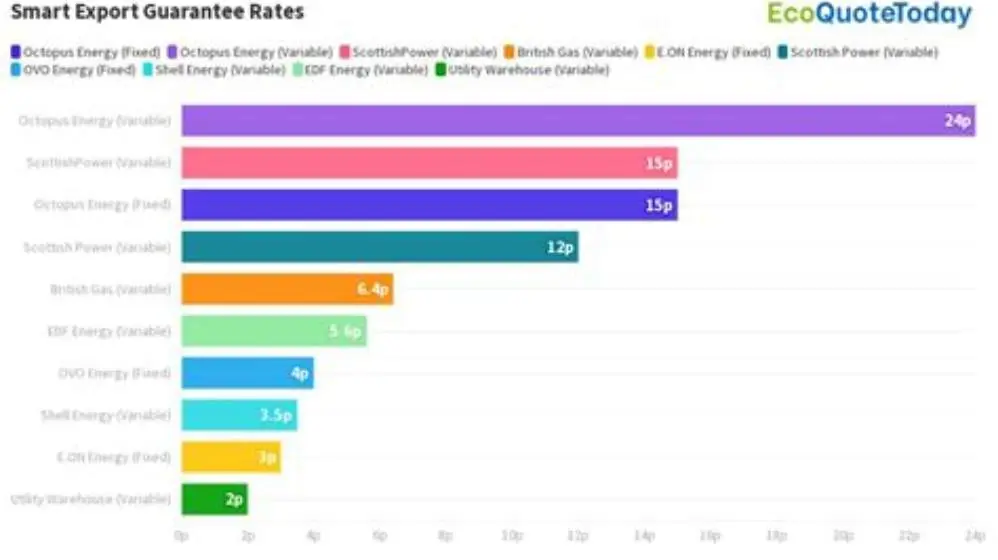
As solar irradiance falls, export power decreases roughly in proportion. Export readings typically drop from hundreds or thousands of watts at midday to near zero at dawn or dusk. If that sounds like your situation, read up on smart export guarantee rates compared next.
At irradiance below about 100 watts per square metre, export readings often become less stable. Small environmental changes or meter noise may cause jumps between zero and low positive export values.
Meters averaging data over longer intervals smooth output but reduce the ability to detect brief export spikes caused by passing clouds or reflections.
Export readings’ variability also depends on the solar panel array size and orientation. Smaller systems produce lower export during low irradiance, pushing readings closer to the meter’s detection limit. We cover understanding smart meter capabilities in its own article.
For instance, a 3 kW system might show export fluctuating between 0 and 15 watts under 100 W/m² irradiance, while a 10 kW system may maintain more stable export readings above 50 watts at the same irradiance.
This means export tracking accuracy at low irradiance improves with larger system size, all else equal. However, cloud cover variability can cause rapid irradiance changes that challenge export reading stability.
| Irradiance range (W/m²) | Export reading behavior | Typical export power (W) |
|---|---|---|
| Above 500 | Stable readings, proportional export | 100+ to 3000 |
| 100 to 500 | More fluctuation, export reduces | 20 to 100 |
| Below 100 | Erratic or zero readings common | Below 20 |

Cunyuer SM206 Power Meter
Measures solar irradiance with a sampling time of 2.5 seconds but minimum measurable power is not stated
Limitations of export measurement under low light
The key limitation is the meter’s resolution and noise level. When export power nears the minimum measurable threshold, readings can jump erratically or register zero despite small export flows. Before you commit to anything, it is worth looking at why does my smart plug show watts when device off.
Sampling interval affects noise filtering. Short intervals capture more noise, causing unstable export readings. Longer intervals reduce noise but lag real changes.
Some meters do not record export below a fixed threshold or round outputs down, causing data loss at very low irradiance.
Electrical noise from other household devices or grid fluctuations can also interfere with low-level export detection. There is more on interpreting electricity meter pulses in a separate guide.
Some meters use digital filtering or averaging algorithms to reduce noise but risk smoothing away brief export spikes during low irradiance. This causes underreporting of export if export fluctuates rapidly.
Electrical interference from appliances like refrigerators or HVAC systems can cause meter readings to falsely register small export or import spikes, confusing low-level export measurement.
In worst cases, meters lacking shielding or calibration drift over time, further degrading low export measurement accuracy. Regular calibration checks help maintain data reliability. The other half of this decision is measure appliance amp draw safely.
Advice for interpreting export data on dull days
Expect export readings on dull days to be low, patchy, and sometimes zero. Avoid assuming zero reading means no export.
Look for overall trends over several minutes or hours rather than moment-to-moment values. Export usually exists in small amounts even when the meter reads zero intermittently.
Cross-check export data with local weather and irradiance information if available.
If export data is critical for decisions, consider upgrading meters to those with better resolution and smaller minimum detection thresholds.
If export data looks erratic on dull days, check the meter’s sampling interval and minimum measurable power in its manual or specification sheet.
Use data logging software to apply moving averages over 1 to 5 minutes. This shows longer-term export trends that are more meaningful than second-to-second jumps.
If export readings remain zero despite sunny conditions, inspect the inverter’s status and wiring to rule out faults causing no export.
- Interpret export readings as approximate on low irradiance days.
- Use moving averages to smooth data and reveal true export trends.
- Beware of quick spikes or drops that reflect noise, not real export change.
- Combine export data with solar irradiance or generation data for context.
How the meter's minimum measurable power and sampling interval affect export tracking
The minimum measurable power defines the smallest export reading the meter reliably shows, usually around 10 to 20 watts. Lower than this, readings lose accuracy and stability.
Sampling interval influences data detail and noise. A 1-second interval offers high time resolution but more noise. Intervals of 5 seconds reduce noise at the cost of temporal detail.
Meters with high resolution and optimized sampling intervals better capture subtle export changes during low irradiance.
Choosing a meter for retrofit or behaviour decisions requires checking these specifications to avoid misleading export data.
Sampling intervals shorter than 1 second are rare but can generate excessive noise, making low export data unusable. Intervals longer than 10 seconds lose temporal resolution to track dynamic changes caused by passing clouds.
An example: a meter sampling every 2 seconds with a 10-watt minimum power may report export values jumping between 0 and 12 watts during low irradiance. Increasing the interval to 5 seconds smooths these to a steady 8-watt average, improving readability.
Some advanced meters adapt their sampling interval based on export level, using longer intervals during low export to reduce noise but switching to shorter intervals when export rises.
| Parameter | Short Interval (1s) | Long Interval (5s) |
|---|---|---|
| Noise levels | High | Lower |
| Export reading stability | Lower | Higher |
| Temporal detail | High | Lower |
| Minimum power detectable | ~10 W | ~20 W |
What is needed to improve export tracking accuracy during low irradiance
Improved export tracking during low irradiance requires meters with minimum measurable power below 10 watts and sampling intervals that balance noise and temporal resolution, typically 2-3 seconds.
A meter designed for export measurement rather than just consumption can better detect small export flows.
Adding a calibrated irradiance sensor or data logger alongside the meter helps interpret export readings by correlating export with solar conditions.
For retrofit and behaviour decisions, investing in a smart export meter with these specs yields clearer insights.
Improving export tracking also involves firmware that intelligently filters noise without losing short export spikes. Some meters use machine learning to distinguish real export from noise.
Upgrading to meters with built-in irradiance sensors or integrating external weather station data can help correlate export changes with actual solar resource, improving confidence in low export readings.
For systems where solar export revenue or grid compliance relies on accurate low-level export measurement, consider meters certified for accuracy at low power, meeting standards like IEC 62053-21 class 0.2.
Standard solar meters work well above 20 W export but struggle below, which matters on dull UK days.
Questions people still ask
Can solar meters detect export when the sun is behind clouds?
Yes, but export readings will be low and may fluctuate between zero and small positive values due to meter noise and low irradiance levels.
Why do export readings sometimes show zero on partly cloudy days?
Because export power falls below the meter’s minimum detectable power or sampling noise causes it to register zero temporarily.
How often do solar meters sample export power?
Sampling intervals vary by model, typically between 1 and 5 seconds, affecting export data smoothness and noise.
Can I rely on export data from my existing meter during dull UK winter days?
Existing meters may under-report export on dull days. Use data trends, or upgrade meters for better accuracy.
Does export reading error at low power impact solar self-consumption calculations?
Yes, inaccuracies at low export distort self-consumption estimates, so interpret low-power data cautiously.