Smart radiator valves are worth it only if two things are true: some rooms overheat while others go unused, and your boiler is running while those rooms sit empty. Otherwise a smart thermostat, at lower cost, delivers most of the same saving.
On this page
- Quick recap
- Are smart radiator valves worth it? The decision rule
- What a smart TRV can and cannot do compared to a smart thermostat
- The home and heating pattern that makes TRVs worth it
- Does a combi or system boiler change the payback?
- Why closing off one room to save money usually backfires
- What to check before buying, and when to spend on controls instead
- Quick questions
Part of our guide on improving energy savings
Quick facts
- Payback condition
- Uneven rooms plus empty heated rooms
- Typical valve cost zone
- Roughly the price of a mid-range smart thermostat per radiator
- Better first buy
- Smart thermostat in small, even-heating homes
- Boiler output range
- 24-30 kW minimum modulation
- Best valve feature
- Open-window detection and real schedules
- Heat pump bonus
- TRVs help more on low-temperature systems
Quick recap
- Buy smart TRVs only for rooms that overheat or sit unused while the boiler runs - not for every radiator.
- A smart thermostat is the better first spend in small homes or flats with even heat.
- Zoning a single room off completely usually costs more than it saves, because the boiler keeps cycling for the rest of the house.
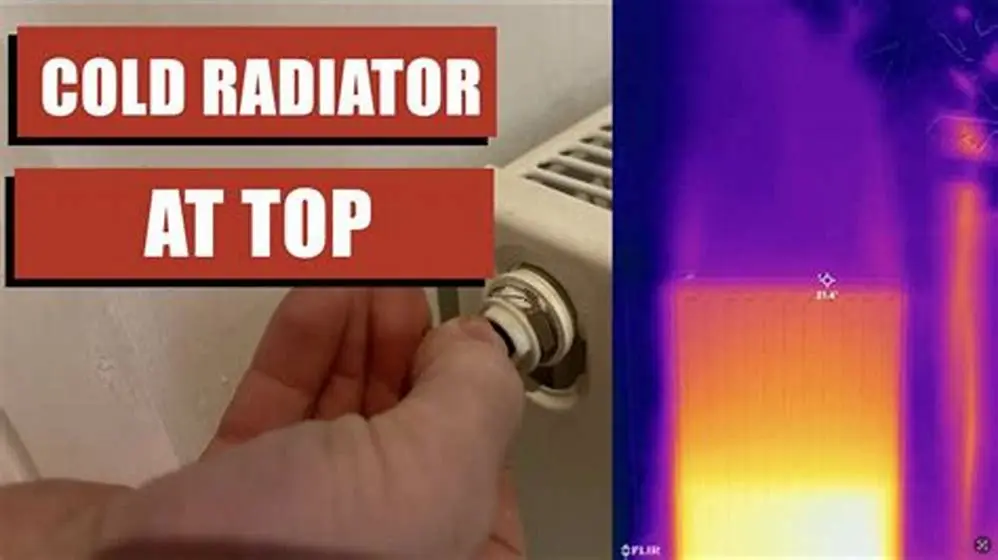
- Check your existing valve bodies before buying: worn or seized bodies need replacing too.
- Homes on the Boiler Upgrade Scheme path to a heat pump get extra value from TRVs, since heat pumps run at low temperature and reward careful room control.
Are smart radiator valves worth it? The decision rule
Here is the rule that the spec sheets never state plainly. Smart radiator valves pay back in one specific kind of home: one where the rooms heat unevenly, and where the boiler is running at times when some of those rooms are empty. If that describes your house, TRVs let you stop paying to heat spare rooms and sun-trap spaces to the same temperature as the one you are sitting in. If it does not, you will spend several hundred pounds replacing hardware that was never the problem.
The test is simple enough to do this week. Walk the house two hours after the heating comes on. Are the bedrooms, hall or spare room noticeably warmer than they need to be, simply because every radiator fires together? And is the boiler burning while those rooms have nobody in them? Both answers yes: TRVs earn their keep. Either answer no, and the money is better spent on a smart thermostat, better controls, or insulation.
A note of honesty about scale. Even in the ideal case, the saving comes from shaving hours of boiler run time, not from a transformation. The valves are a refinement of a working system, not a fix for an expensive one. That is why the order of spending matters, and why this article spends more words on the decision than on the devices.
| Your home | Best first spend | Why |
|---|---|---|
| 4+ bedrooms, some rooms unused in the day | Smart TRVs on those radiators | Cuts boiler hours in rooms nobody heats |
| Flat or small house, even heat | Smart thermostat | Whole-system timing for a fraction of the cost |
| Old system, ancient valve heads | New TRV bodies first | Smart heads need sound valve bodies to close on |
| Planning a heat pump | Thermostat, then TRVs | Low-temperature systems reward room-by-room control |
What a smart TRV can and cannot do compared to a smart thermostat
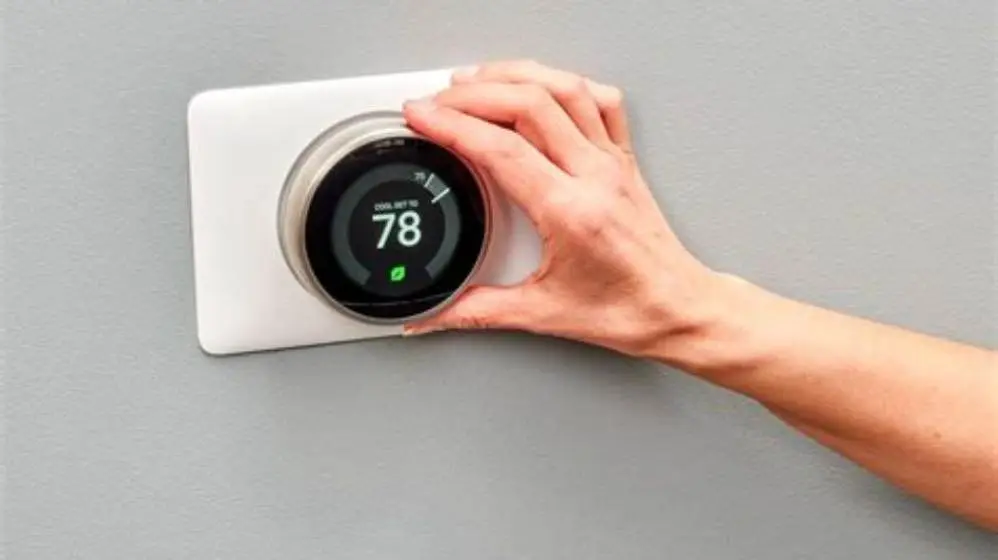
A smart thermostat is one brain for the whole house. It decides when the boiler fires, based on one room's temperature, and every radiator open to the flow responds together. A smart TRV is a small brain per radiator: it meters hot water into its own radiator to hold its own room at its own schedule. The two solve different problems, which is why swapping one for the other is so often the wrong move. For the detail, see our notes on removing trapped air in radiators.
What the TRV genuinely adds is per-room scheduling and temperature. A bedroom can drop to 16 degrees overnight and warm before wake-up while the bathroom hits 20 at six. What it cannot do is change when the boiler runs. Most smart TRVs are motorised heads on standard valve bodies; they restrict flow but cannot summon heat. If the boiler never fires, no valve makes the radiator warm.
The thermostat's power is the opposite. It controls the boiler itself, so it changes total run time - the biggest lever on the bill. What it cannot do is spare the guest room that bakes every afternoon. One thing neither device does, despite marketing hints: neither fixes a system that needs balancing. If the radiators nearest the boiler roar and the far end of the house barely warms, that is a balancing job for a valve key and thirty minutes, not a shopping problem.
| Capability | Smart thermostat | Smart TRVs |
|---|---|---|
| Controls when the boiler fires | Yes | No |
| Per-room schedules | No | Yes |
| Spares an unused room | No | Yes |
| Approximate cost for a 3-bed | One unit | Six to nine heads |
| Works with any boiler flow temperature | Yes | Yes |
The home and heating pattern that makes TRVs worth it
Four home types fit the rule well. Large houses where daytime living happens in two rooms while five others sit empty. Homes with big south-facing rooms that overshoot while the thermostat, sitting in a cooler hall, keeps the boiler lit. Houses with a spare room or home office used for an hour a day. And homes occupied by people with genuinely different schedules - a night worker's bedroom matters at midday, not at eight in the morning. We go through smart thermostat setup guide step by step elsewhere on the site.
The pattern matters as much as the layout. If your heating runs on one morning block and one evening block and the whole household moves through the house together, a TRV has almost nothing to do. Every room is in use when the boiler runs, so every room should be warm. That is not a failure of the valves; it is a sign your existing schedule already matches your life.
Before buying anything, measure rather than guess. A cheap standalone digital room thermometer moved from room to room over a few days tells you the truth about which rooms overshoot and by how many degrees. Two degrees of overshoot in three rooms is a business case. Half a degree everywhere is not. This is the one purchase worth making first: a simple digital indoor thermometer costs a few pounds and turns a hunch into a decision.
Does a combi or system boiler change the payback?
Boiler type matters less than how the boiler behaves when it runs. The key figure is the minimum output, sometimes called the modulation floor. A combi that can throttle down to 4 kW will settle into a gentle simmer when most TRVs close, quietly feeding the remaining rooms. A boiler whose minimum output is 24-30 kW cannot simmer. When TRVs shut most radiators, it fires at full power for a couple of minutes, satisfies the remaining demand, and switches off - then cycles like this repeatedly, which wastes energy and wears the boiler. We cover understanding smart meter capabilities in its own article.
So the honest answer: on a well-modulating boiler, closing radiators saves fuel. On a big-output boiler that cycles, aggressively closing radiators can make running worse, not better. You can find the minimum output on the manufacturer's datasheet for your exact model rather than the range.
Combi boilers add one wrinkle of their own: hot water. A combi heats water on demand, so no TRV setting affects tap temperature or shower costs at all. The valves only ever influence the space-heating side. System boilers with a cylinder behave similarly on the water side. Either way, judge the TRV purchase on heating hours alone, and remember the saving is a share of the heating bill, not the whole bill.
Why closing off one room to save money usually backfires
The single most common TRV mistake is treating a radiator like a light switch: one cold, unused room, one valve closed, one saving expected. In a system with a fixed-output boiler, the heat that radiator would have released has to go somewhere. It goes into the rooms whose valves are still open, which then overshoot, or into the thermostat's location, which then short-cycles the boiler. The gas gets burned either way. People in this spot often ask about uk household energy saving tips as well.
There are worse versions of this mistake. Fully closing radiators in a room with poor ventilation invites condensation and mould on cold external walls. In a house heading for a heat pump, heat pump installers often need at least one radiator per room left generously sized, because low-temperature systems depend on every available surface emitting heat. Sealed-off rooms also sit outside the heat pump's flow temperature calculations.
The profitable way to use a TRV is never fully off. Set unused rooms to a frost-guard figure - around 7-10 degrees - so the valve still trickles heat through when the house is genuinely cold. The room stays dry, the boiler keeps a small, efficient load, and the saving comes from the delta between 20 degrees and 8, which is real, rather than from pretending the room does not exist, which is not.
- Frost setting keeps walls and windows dry
- Boiler keeps a steadier, more efficient load
- Real saving of 10-12 degrees per unused room
- Full closure invites mould on cold walls
- Cycling worsens on fixed-output boilers
- Heat pump designs need radiators in every room
What to check before buying, and when to spend on controls instead
Three checks decide everything. First, the valve bodies. Smart heads screw onto standard M30 x 1.5 threads, but the body underneath must actually close. A body twenty years old with a seized pin will silently leak heat past any head you fit, and the room will stay warm while the app claims otherwise. Push the pin by hand: it should depress and spring back. If it resists, budget for a new body and a drain-down, which roughly doubles the cost per radiator. If that sounds like your situation, read up on choosing ammeters for surge measurement next.
Second, the system pressure and any sludge. Pale or patchy radiators hint at magnetite sludge, and sludged radiators barely heat no matter how clever the valve. Third, the boiler's controls today. If you still have a basic dial thermostat in the hall, that upgrade delivers whole-house scheduling and weather compensation for the price of two TRV heads, and it should come first in almost every home.
The sequencing rule falls out of all this. Thermostat first, unless you have the specific uneven-home pattern described above. Valve bodies and system health next. Smart heads last, on the two or four radiators that earned them - not the full set. And if a heat pump is in your future under the Boiler Upgrade Scheme, say so to your installer early: TRV strategy and radiator sizing should be planned together, not bolted on afterwards.
- Press each valve pin by hand to confirm it moves and springs back.
- Check radiators for cold patches and pale sludgy water.
- Find your boiler's minimum output on its datasheet.
- Upgrade the main thermostat if it is still a basic dial.
- Fit smart heads only to the rooms your thermometer proved overshoot.
Smart TRVs are a good second or third spend in a large, unevenly heated home, and a wasted one everywhere else.
Quick questions
Can I mix smart TRVs with ordinary radiator valves?
Yes, and it is usually the right approach. Fit smart heads only to the rooms that overheat or sit empty, and leave ordinary thermostatic valves elsewhere. The smart heads work independently of the other valves.
Do smart TRVs work with a combi boiler?
They work with the space-heating side of a combi, since combis heat radiators and hot water from the same unit. They have no effect on hot water costs, so judge the payback on heating hours only.
Will smart TRVs work with a heat pump?
Yes, and they often add more value than on a boiler, because heat pumps run at low flow temperatures where careful room control matters. Tell your installer before installation so radiator sizing accounts for them.
How many smart TRVs does a house need?
Rarely the full set. Most homes benefit from two to five: spare rooms, a hot south-facing room, and bedrooms on different schedules. Valves on every radiator add cost without adding decisions.
Do smart TRVs need a hub or work over Wi-Fi?
It depends on the brand: some connect directly to Wi-Fi, others use a hub or bridge plugged into the router. Either works, but a hub-based set usually gives more reliable communication between many valves.