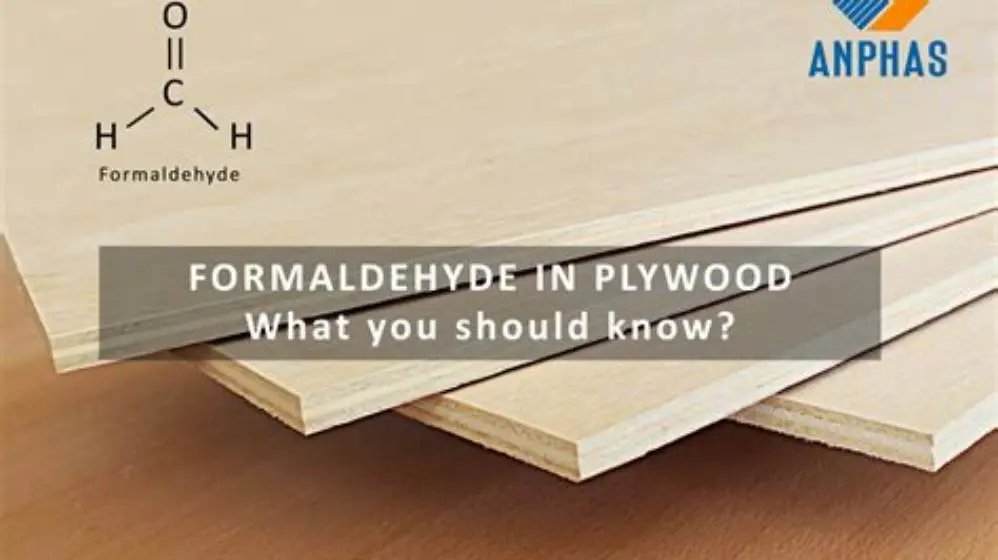
Sealing plywood reduces formaldehyde emissions by 30-70% depending on sealer type and coverage, but it doesn't stop offgassing entirely. Emissions continue at lower levels for months to years, particularly from unsealed edges and joints where resin remains exposed.
On this page
- Quick recap
- Does sealing plywood stop formaldehyde emissions
- Typical formaldehyde levels before and after sealing
- Why formaldehyde still escapes through sealers
- How long offgassing continues after sealing
- How to verify plywood safety after sealing
- When sealing isn't enough and what to do instead
- Quick questions
Part of our guide on linoleum flooring for kitchen spill resistance and low voc
Quick facts
- Emission reduction
- 30-70% with full sealing
- E1 plywood unsealed
- under 0.124 ppm formaldehyde
- E2 plywood unsealed
- 0.124-1.0 ppm formaldehyde
- Safe indoor level
- below 0.08 ppm continuous
- Peak offgassing period
- first 3 months
- Full cure time
- 1-3 years depending on grade
Quick recap
- Sealing cuts formaldehyde by 30-70% but doesn't eliminate it, especially from cut edges
- E1 and CARB Phase 2 plywood emit under 0.124 ppm even unsealed; E2 needs sealing or replacement
- Offgassing peaks in the first three months, then drops steadily over one to three years
- Test with a formaldehyde meter after sealing to confirm levels stay below 0.08 ppm
- Two coats of water-based polyurethane or shellac on all surfaces give the best reduction
Does sealing plywood stop formaldehyde emissions
Sealing doesn't stop formaldehyde emissions from plywood. It slows them. A complete seal over all six surfaces of a sheet can reduce offgassing by 30-70%, but the urea-formaldehyde resin inside the layers continues to break down and release vapour through microscopic gaps, unsealed edges, and any damage to the coating. The reduction depends on sealer type, number of coats, and how thoroughly you cover cut edges and joints.
Water-based polyurethane and shellac perform best, cutting emissions by 50-70% when applied in two coats to all surfaces. Oil-based varnish and lacquer manage 30-50% reduction. Thin coatings like wax or single-coat stains barely help. The sealer creates a barrier that formaldehyde molecules must diffuse through, but it's never airtight, and the vapour pressure inside the plywood eventually pushes some gas out.
Cut edges are the weak point. Factory edges may have been sealed during manufacture, but every cut you make exposes raw layers where resin sits between veneers. Those edges offgas three to five times faster than sealed faces. Seal them immediately after cutting with the same product you use on the face, applying extra coats to soak into the exposed grain. Miss the edges and you'll measure formaldehyde in the room even after sealing everything else.
The biggest mistake is sealing one side only. Plywood breathes from both faces. Seal the top and leave the underside bare, and you've cut emissions by perhaps 20% while trapping moisture that can delaminate the panel. Seal every surface the day you cut it, before installation, or accept that offgassing will continue at near-original rates from the parts you left open. We go through silicate paint over lime plaster compatibility step by step elsewhere on the site.
Typical formaldehyde levels before and after sealing
Unsealed E1 plywood emits 0.05-0.12 ppm formaldehyde in a closed test chamber, measured under EN 717-1 at 23°C and 45% humidity. That's the legal maximum for interior use across the UK and EU. E2 plywood, now banned indoors but still available for exterior or industrial use, releases 0.12-1.0 ppm unsealed. CARB Phase 2 compliant plywood, the California standard many importers now meet, tests below 0.09 ppm and often comes in at 0.04-0.06 ppm.
After sealing with two coats of water-based polyurethane on all surfaces, E1 plywood typically drops to 0.02-0.04 ppm in the same test chamber. That's a reduction of 60-70%. E2 plywood sealed the same way falls to 0.05-0.3 ppm, still above safe continuous exposure levels. CARB Phase 2 material sealed drops to 0.01-0.02 ppm, near the detection limit of most consumer meters.
Real-world room concentrations depend on loading ratio, the square metres of plywood per cubic metre of air. A small room lined with unsealed E1 plywood at 1 m² per m³ might measure 0.08-0.15 ppm in still air, dropping to 0.03-0.05 ppm with the same material fully sealed. Double the loading and you double the concentration. Ventilation cuts it further, halving levels for every air change per hour above baseline. People in this spot often ask about ceramic tile voc emissions as well.
Those figures hold for new plywood. Emissions decay over time. An unsealed E1 panel that starts at 0.10 ppm in week one will fall to 0.06 ppm by month three and 0.03 ppm by year two, even without sealing. Sealed material follows the same curve but starts and ends lower. The gap between sealed and unsealed narrows as the panel ages, which is why old plywood smells less than fresh stock.
| Plywood grade | Unsealed (ppm) | Sealed, two coats (ppm) | Reduction (%) |
|---|---|---|---|
| E1 (UK/EU standard) | 0.05-0.12 | 0.02-0.04 | 60-70 |
| E2 (banned indoors) | 0.12-1.0 | 0.05-0.3 | 50-60 |
| CARB Phase 2 | 0.04-0.09 | 0.01-0.02 | 70-75 |
| Phenolic (exterior) | 0.01-0.03 | 0.005-0.01 | 50 |

LifeBasis Air Quality Monitor Indoor
Detects formaldehyde with a resolution suitable for verifying indoor air quality after sealing, including HCHO monitoring
Why formaldehyde still escapes through sealers
Formaldehyde molecules are tiny, about 0.0000003 mm across. They diffuse through polymer films the way helium leaks from a balloon. Water-based polyurethane dries to a film 0.02-0.05 mm thick per coat, and formaldehyde vapour moves through it by Brownian motion, slowed but not stopped. The denser and thicker the coating, the longer the path and the lower the emission rate, but no consumer sealer is gas-impermeable.
Urea-formaldehyde resin inside the plywood breaks down slowly over years, releasing free formaldehyde as the polymer chain hydrolyses in the presence of moisture and heat. That breakdown accelerates above 25°C and above 60% humidity. The gas pressure inside the sealed panel builds until it equalises with the room, and molecules find their way out through the coating, through joints, and especially through any damage or thin spots. Before you commit to anything, it is worth looking at voc limits for paint.
Edges and drill holes bypass the seal entirely. A 6 mm hole through sealed plywood exposes raw veneer and glue line to air, creating a point source that offgasses as if the panel were never sealed. The same happens at mitred joints, dado cuts, and anywhere you sand through the finish. That's why cabinet interiors and subfloor installations, where edges meet and screws penetrate, often measure higher formaldehyde than sealed panels tested alone.
Temperature cycling makes it worse. A sheet of plywood in a loft that swings from 5°C overnight to 35°C by afternoon expands and contracts, opening microcracks in the sealer and pumping vapour out with each cycle. Ground-floor installations in stable temperatures offgas more slowly. The volatility of formaldehyde doubles for every 10°C rise, so a warm room releases twice the vapour of a cool one, sealed or not.
How long offgassing continues after sealing
Sealed E1 plywood offgasses most heavily in the first three months, then drops to half that rate by month six and keeps falling. By year two, emissions are typically 10-20% of the initial level. Full cure, the point where offgassing becomes negligible, takes one to three years depending on grade, sealer coverage, and ventilation. E2 plywood takes longer, sometimes three to five years, because it starts with more free formaldehyde in the resin. It helps to understand clay render cracking on old lime plaster walls before going further.
The decay isn't linear. Emissions follow a logarithmic curve: fast at first, then slower and slower. A sealed E1 panel that measures 0.04 ppm in week one might drop to 0.025 ppm by month three, 0.015 ppm by month twelve, and 0.008 ppm by year three. The last 50% of the drop takes twice as long as the first 50%. That's why you can smell new plywood for months even after sealing it thoroughly.
Ventilation speeds the process by removing formaldehyde from the room before it re-absorbs into the wood, which maintains the concentration gradient that drives diffusion outward. A room with 0.5 air changes per hour will offgas a sealed panel to negligible levels in 18-24 months. The same panel in a sealed cupboard with no airflow can take five years. Open a window and you cut the timeline.
CARB Phase 2 and phenolic plywood cure faster because they start with lower free formaldehyde. Sealed phenolic drops below 0.01 ppm within six months, and CARB Phase 2 within twelve. Old-stock E2 plywood, even sealed, can offgas for a decade, which is why it's not worth sealing if you have a choice. Replace it instead. People in this spot often ask about cellulose insulation settling in lofts as well.
- First 3 months: emissions drop 40-60% from peak as surface resin cures and free formaldehyde near the sealer depletes
- Months 3-12: rate halves again as deeper layers offgas more slowly through the sealed surface
- Years 1-3: logarithmic decay continues; by year three, emissions are 5-10% of the original level
- Beyond year 3: offgassing drops below typical outdoor formaldehyde (0.005-0.015 ppm) and becomes unmeasurable
How to verify plywood safety after sealing
Use a formaldehyde meter with 0.01 ppm resolution to measure room concentration, not panel emissions. Close the room for 12 hours with the heating on and windows shut to let formaldehyde accumulate, then take a reading 1 metre from the sealed plywood at breathing height. Safe continuous exposure is below 0.08 ppm under UK HSE guidelines; aim for 0.05 ppm or lower to leave margin for other sources like MDF, foam, and cleaning products.
Test after the sealer has fully cured, which means seven days for water-based polyurethane and fourteen days for oil-based finishes. Testing earlier gives falsely high readings because the sealer itself releases VOCs as it dries. Run the meter for five minutes to let the sensor stabilise, then record the average. A single spike isn't meaningful; you want the settled reading after the room has equilibrated.
If the reading is above 0.08 ppm, check for unsealed edges and apply another coat. Wait a week, then test again. If it's still high, increase ventilation or consider that the plywood grade is too high-emission for that space. E2 plywood in a bedroom or sealed office often can't be made safe by sealing alone; you'd need continuous extract ventilation or replacement with E1 or better.
Compare the reading to a baseline taken in an empty room or before installation. Formaldehyde is everywhere at low levels, 0.005-0.02 ppm outdoors and 0.02-0.04 ppm in a typical home with no known sources. If your sealed plywood room measures 0.06 ppm and the baseline was 0.03 ppm, the plywood is contributing 0.03 ppm, which is acceptable. A jump to 0.15 ppm tells you sealing didn't work or the grade is too high.
- Seal all six surfaces of the plywood with two coats of water-based polyurethane, letting each coat dry fully.
- Wait seven days for the sealer to cure and stop releasing its own VOCs.
- Close the room for 12 hours with heating on and windows shut to let formaldehyde build up.
- Place the formaldehyde meter 1 metre from the plywood at breathing height and let it stabilise for five minutes.
- Record the average reading; it should be below 0.08 ppm, ideally under 0.05 ppm.
- If above 0.08 ppm, check for unsealed edges, apply a third coat, and retest after another week.
When sealing isn't enough and what to do instead
Sealing fails when the plywood grade is too high-emission for the space or when edges and joints can't be fully covered. E2 plywood in a bedroom or small office will often measure above 0.08 ppm even after two coats on all surfaces, because the loading ratio is too high and every screw hole or mitre joint becomes a leak. At that point, sealing is just reducing the problem, not solving it.
Replace high-emission panels with E1, CARB Phase 2, or phenolic-bonded plywood instead. Phenolic resin uses phenol rather than urea and releases almost no formaldehyde, though it costs 20-40% more than standard E1. CARB Phase 2 is widely available and performs nearly as well. If you've already installed E2 plywood and sealing hasn't brought levels down, rip it out. You can't fix bad material with coating.
Increase ventilation to dilute what offgassing remains. A small extract fan running at 15-30 litres per second will halve formaldehyde concentration in a typical room within two hours and keep it low as long as it runs. Mechanical ventilation with heat recovery does the same without losing warmth. Passive vents help but aren't enough on their own; you need forced airflow to maintain the gradient that pulls formaldehyde out.
Use activated carbon filters in air purifiers to capture formaldehyde that sealing doesn't stop. Standard HEPA filters do nothing; formaldehyde is a gas, not a particle. You need a filter with potassium permanganate-treated carbon or a photocatalytic unit. A decent unit for a 20 m² room costs £150-250 and cuts formaldehyde by 30-50% when run continuously, which stacks with the reduction from sealing.
- E1 or better: buy CARB Phase 2 or phenolic plywood from the start; it costs a bit more but offgasses 70-90% less than E2
- Extract ventilation: a small fan removing 20 litres per second halves room formaldehyde and speeds cure by six months
- Air purifiers: units with potassium permanganate carbon filters cut an additional 30-50% when run continuously
- Encapsulation paint: specialty formaldehyde-blocking primers exist but cost £40-60 per litre and still don't seal edges fully
Quick questions
Can you paint over sealed plywood to reduce formaldehyde further?
Paint over polyurethane adds another 10-20% reduction if you use two coats, but the benefit is small once the base sealer is in place. Specialty formaldehyde-blocking primers claim higher reductions but cost significantly more and still can't seal cut edges perfectly. Apply them as the first coat, then topcoat with normal paint.
Does formaldehyde from plywood build up in furniture or soft furnishings?
Formaldehyde doesn't accumulate in fabrics or wood; it's a gas that disperses into air and breaks down. Soft furnishings can temporarily absorb it and release it back when concentration drops, acting as a buffer, but they don't hold it permanently. Wash curtains and vacuum upholstery if the room had high levels before sealing.
Is exterior-grade plywood lower in formaldehyde than interior plywood?
Exterior plywood bonded with phenolic resin releases 0.01-0.03 ppm unsealed, far less than interior urea-formaldehyde plywood. Marine ply and structural sheathing often use phenolic. Check the stamp: WBP or EN 636-3 usually means phenolic. It's heavier, harder to cut, and costs more, but offgassing is negligible even without sealing.
Will sealing plywood prevent it from swelling if it gets damp?
Sealing slows moisture uptake but doesn't stop it. Plywood edges soak up water quickly even when sealed, and the face veneer can delaminate if the panel stays wet. Sealing both faces without ventilating the space between them can trap moisture inside and make swelling worse. Use exterior-grade plywood in damp locations regardless of sealing.
Can I use shellac instead of polyurethane to seal formaldehyde?
Shellac works well, cutting emissions by 50-60% with two coats, close to water-based polyurethane. It dries faster and smells less during application, but it's not water-resistant, so use it only in dry interiors. Dewaxed shellac bonds better under topcoats if you plan to paint or varnish over it.
Does OSB offgas less formaldehyde than plywood after sealing?
OSB bonded with phenolic resin offgasses less than urea-formaldehyde plywood, but most UK OSB uses MDI or PMDI resin, which releases almost no formaldehyde. Unsealed PMDI OSB typically measures 0.01-0.02 ppm, lower than sealed E1 plywood. Check the product datasheet; if it's CARB Phase 2 or EN 300 OSB/3 with PMDI, sealing adds little benefit.