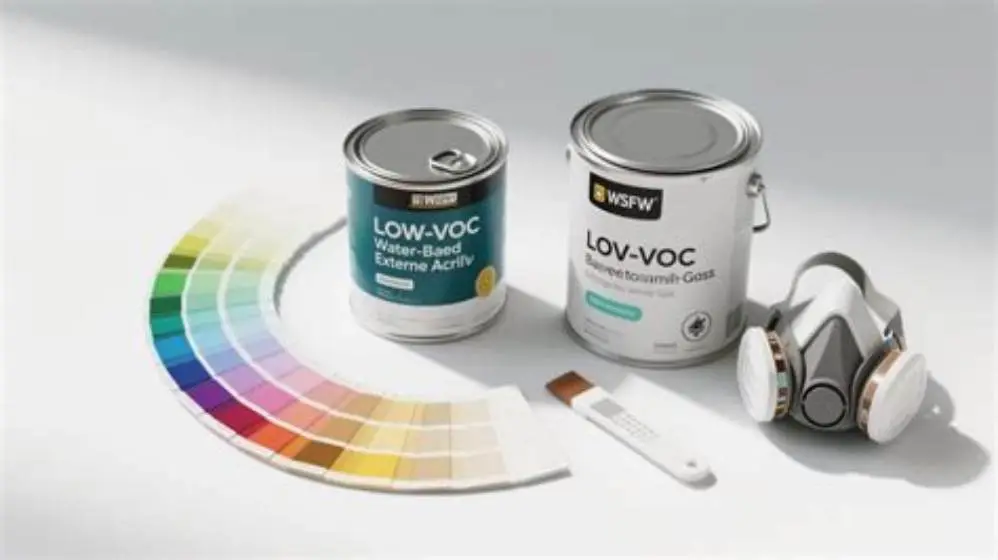
No, but using a solvent-based undercoat under VOC-free topcoat defeats the point. You can use a VOC-free topcoat over a conventional primer and it will stick, yet the room will still off-gas VOCs for days. For low odour and low emissions, pair VOC-free topcoat with VOC-free primer rated at under 5 g/L.
On this page
Part of our guide on low voc linoleum flooring for kitchens
Quick facts
- VOC-free in tin
- under 1 g/L typical
- Solvent undercoat
- 100-400 g/L VOCs
- Tint adds
- 3-10 g/L extra
- Off-gassing window
- 2-5 days
- Recoat at 18°C
- 4-6 hours
- Coverage 2nd coat
- 10-12 m² per litre
Quick recap
- Adhesion does not demand VOC-free primer, but low emissions do.
- Tinting can add 3-10 g/L even to a VOC-free base, so check tinted figures.
- Pair water-based primer and topcoat both under 30 g/L for cleanest air.
- Use stain-block or knotting solution first, then VOC-free primer on problem spots.
What VOC-free really means on a tin
Tins marked VOC-free in UK shops typically test at under 1 g/L in the can, measured as g/L VOC content at 20°C, not absolute zero across the whole life cycle. That figure covers solvents that evaporate as the paint dries. It does not count the water, the binder or the pigment. Some brands call 0.1% by weight VOC-free, others say minimal VOC. Both can smell faintly while drying. That matters for nurseries and small flats.
Labels hide what happens after you stir. Tinting adds 3-10 g/L depending on colour strength, and the colourant is often solvent-based even when the base is not. A deep blue or red can push a VOC-free base into low-VOC territory. Temperature matters too. Warm rooms of 20-22°C release more vapour quickly, cold rooms slower but longer. Check the technical data sheet for VOC in the tinted colour you will actually use, not the white base.
UK rules set a limit for each paint type, but marketing goes beyond them. VOC-free is not a legal grade, it is a brand claim. Look for the figure in g/L on the data sheet and the test method beside it. If the sheet omits tinted values, assume higher. A true low-emission choice stays low after tinting, after thinning and after drying for 24 hours. That is the number your nose notices. Keep the sheet with the tin.
Does voc-free paint require voc-free undercoat in practice?
A standard solvent-based undercoat can release 100-400 g/L VOCs, compared with under 30 g/L for a water-based VOC-free primer, both measured in the tin. Paint that under a VOC-free topcoat and the room still smells for 2-5 days in a typical 12 m² bedroom with the door shut. The topcoat does not seal the solvents in. It slows them a little, then they pass through as the film cures. Your air stays affected. We go through silicate paint over lime plaster compatibility step by step elsewhere on the site.
You do not need a VOC-free undercoat for adhesion alone. Most water-based topcoats stick well to a sound, lightly sanded conventional primer if you follow the recoat window on the tin, usually 4-6 hours at 18°C. The trade-off is air quality, not grip. Households with asthma, infants or poor ventilation feel that trade-off most. Landlords chasing a healthier listing also lose the benefit they paid for.
Choose the undercoat for the job the system must do. For low odour and low impact, pair like with like: VOC-free primer with VOC-free topcoat, both water-based and rated under 5 g/L as supplied and tinted. For bare wood with knots, use a knotting solution first, then the VOC-free primer. For stained walls, use a water-based stain block rated under 30 g/L. You keep emissions low and you stop stains bleeding through. That pairing lasts.
Pick the undercoat for the surface you have
New plaster sucks paint fast and can flash if you skip misting. Apply a water-based primer thinned 10% with water, at 18-20°C and 40-60% humidity, then two topcoats. Old matt emulsion in good shape needs only a light sand with 120-grit and a VOC-free primer where repairs show. Bare MDF and softwood need a dedicated primer to seal fibres and knots. Get the primer right and the topcoat goes further, often 10-12 m² per litre on second coat. People in this spot often ask about low voc paint definition as well.
Metal and glossy woodwork are the tricky spots. A water-based VOC-free undercoat grips well on lightly abraded, clean surfaces, but bare steel needs a rust-inhibiting primer first, ideally water-based and under 30 g/L. Solvent-based wood primers still block tannin better in one coat, yet they reintroduce the smell you tried to avoid. Two coats of a good water-based stain-blocking primer usually match one solvent coat without the vapour peak. Lightly sand between coats.
Match sheen and binder too. Acrylic primers suit acrylic topcoats. Hybrid or alkyd primers suit trim that takes knocks, but check the VOC figure. If the data sheet shows 75-150 g/L, expect odour. In kitchens and baths, pick a primer that tolerates humidity and is marked for damp areas. It resists peeling where steam hits. That choice cuts repainting within 2-3 years on ceilings near showers.
- Bare plaster: mist coat with water-based primer, then VOC-free topcoat.
- Repaired walls: spot-prime filler with VOC-free primer to stop flashing.
- Knotty wood: knotting solution, then VOC-free wood primer, then topcoat.
- Stains or nicotine: water-based stain block under 30 g/L, then primer.
| Undercoat type | Typical VOC in tin | Best for | Trade-off |
|---|---|---|---|
| Water-based VOC-free primer | under 5 g/L | Plaster, drywall, previously painted walls | May need two coats on stains |
| Water-based stain block | 10-30 g/L | Water marks, crayon, light nicotine | Slight odour for hours |
| Water-based wood/metal primer | 15-30 g/L | MDF, softwood, primed metal | Light sand needed between coats |
| Solvent-based undercoat | 100-400 g/L | Heavy tannin, bare hardwood in one coat | Strong odour for days |
Check the whole system for health and durability
Think system, not single tin. A room with two coats of VOC-free topcoat over one solvent undercoat still emits from the undercoat for 48-72 hours after you finish. Ventilation halves that time in a house with cross-ventilation and a steady 18°C, but it does not erase it. People sensitive to smells notice it first at night. That is the real test. Before you commit to anything, it is worth looking at low voc levels in ceramic tiles.
Durability depends on prep more than VOC level. Wash with sugar soap, rinse, then sand glossy areas to a dull finish with 180-grit. Fill, spot-prime and keep film thickness even. Thin, patchy primer lets tannin or nicotine bleed and forces extra topcoats. Extra coats add cost and material use, which cuts the environmental gain you wanted. Do the prep once.
For health, check more than VOCs. Look for low odour, water-based binders and no added formaldehyde donors on the data sheet. Keep windows cracked and use a low fan for 2 hours after each coat. If you must use a solvent primer on a small area, isolate it. Paint that section first, ventilate well, then apply the VOC-free system over it after 24 hours. Small steps cut exposure.
- low odour during and after painting
- keeps whole-system emissions under 30 g/L
- easier recoat and water clean-up
- needs two coats on heavy stains
- tinted strong colours can rise to 10 g/L
- not ideal for bare steel without specialist primer
Apply a low-VOC system without trapping moisture
Moisture trapped under fresh paint causes peeling, especially on exterior-facing walls in winter. Keep the wall surface above 10°C and below 60% relative humidity while you paint. A cheap hygrometer tells you in seconds. Cold, damp plaster holds water and slows curing. Warm it gently, do not blast with a heater. Steady beats hot. If that sounds like your situation, read up on voc emission limits for materials next.
Water-based paints form a film as water leaves. High humidity or cold air stalls that. You get soft film and scuffs. Low humidity and strong draughts dry the surface too fast and leave lap marks. Aim for even drying. Close external doors, crack a window, keep air moving lightly. That balance gives a tough, washable finish.
Whole-house view matters. Good ventilation after painting protects the finish and your lungs. Trickle vents and an extractor on 15 minutes overrun clear residual vapour without dumping all your heat. In well insulated homes, that steady background air change matters more than throwing windows wide for an hour. Plan it before you start.
- Clean and dry the surface, then check room reads 12-22°C and 40-60% humidity on a hygrometer.
- Cut in edges, then roll the VOC-free primer in even bands at 10-12 m² per litre.
- Lightly sand nibs with 220-grit after 4-6 hours, wipe dust, then apply first VOC-free topcoat.
- Ventilate gently for 2 hours, keep heat steady, then apply second topcoat next day.
- Leave windows on trickle and avoid washing the wall for 7 days while film hardens.
Keep the finish lasting and low-impact
A lasting finish is the greenest one. Two proper coats over a well-chosen primer outlast three thin coats over bare plaster. Expect 5-7 years on walls and 3-5 years on busy trim with a water-based system kept clean, both at 18-20°C indoor average. Scrubbing with harsh cleaners shortens that. Use soft cloth and mild soap. Small care, long life. Before you commit to anything, it is worth looking at cork flooring durability for kitchen and spill resistance.
Waste matters too. Buy the right volume. Measure walls in m², subtract windows, then allow 10% extra for cutting in and touch-ups. Decant what you need and seal tins promptly. Wash rollers in a bucket, let paint solids settle, then dispose of solids as directed by your council. Do not pour wash water down storm drains. That keeps microplastics out of waterways.
Store leftovers for repairs. Label the tin with room, colour code and date. Keep it at 5-25°C, frost-free. A sealed sample pot avoids opening the main tin for tiny touch-ups. When you finally need to repaint, a light sand and one fresh topcoat often suffices if the primer system was sound. Less paint, less work, less impact. That is the payoff.
- Coverage check: if first topcoat looks patchy, primer was thin, add another primer coat not extra topcoat.
- Quick test: press masking tape on cured primer, peel. If it lifts, sand more and re-prime.
- Rule of thumb: if you can still see filler or plaster colour after primer, you need another pass.
- fewer repaints, less material over 10 years
- water clean-up, lower disposal impact
- keeps indoor air fresher for occupants
- needs careful prep on glossy or stained surfaces
- strong colours cost more to keep low-VOC
Pair VOC-free topcoat with VOC-free primer for cleanest air; conventional primer works but keeps odour for days.
Quick questions
Can I put VOC-free paint over an old oil-based undercoat?
Yes, if the old film is sound, clean and dull-sanded. It will stick, but you will still have solvent odour from any fresh oil-based layer. For low emissions, avoid adding new solvent primer and use a water-based VOC-free primer for repairs.
Do I need a special primer for new plaster if I want VOC-free?
Use a water-based primer or a thinned first coat of the VOC-free emulsion as a mist coat, about 10% water. Keep the room at 18-20°C and let it dry fully before topcoats. That seals suction without solvents.
Will VOC-free paint cover stains without a stain block?
Light marks often hide after two topcoats over VOC-free primer. Heavy water, nicotine or knot stains usually bleed through. Use a water-based stain block under 30 g/L first, then prime and topcoat.
How long should I ventilate after using a VOC-free system?
Even a fully VOC-free system benefits from gentle ventilation for 24-48 hours. Keep a window on trickle and run an extractor intermittently. Odour should be faint by next day in a 12 m² room at 18°C.
Does VOC-free mean no smell at all?
No. You will still notice a mild paint smell for hours, and stronger colours smell more due to tint. Low odour is the practical sign, not zero smell. Check the tinted g/L figure for the real picture.