A V-groove, also called a V-strip or V-seal, suits a relatively small, even gap within the product's working range. If the measured gap exceeds that range or changes sharply around the frame, choose another profile or repair the timber first.
On this page
- Quick recap
- Measure the actual gap with the sash closed
- Check if a V groove seal suits a timber window gap too wide
- Use the right profile for the measured condition
- Use this quick decision checklist
- Repair movement before fitting a wider seal
- Check these fields on the datasheet
- Fit the seal, then test the closing load
- Keep ventilation while reducing draughts
- Quick questions
Part of our guide on krypton filled glazing cost difference per window
Quick facts
- V-seal fit
- An even gap within the product's stated working or compression range
- Brush pile fit
- A gap matched to the stated pile depth and carrier height
- Foam fit
- A gap within the product's compression limit where easy replacement is acceptable
- Repair territory
- A large, uneven or moving opening that no rated profile fits
- Measure points
- Several points on every edge, including corners and meeting rails
- Closing test
- Latch with firm hand pressure, never force the sash
Quick recap
- Measure the gap with the sash closed and fully latched at several points
- Use the product sheet's working gap, seal height, carrier height and compression range
- Choose brush pile only when its pile depth and carrier height match the measured opening
- Use foam or a bulb seal only when its compression limits and carrier fit suit the window
- Repair a large, uneven or changing gap before adding a thicker seal
- Keep ventilation paths open and check local planning advice before altering a listed window
Measure the actual gap with the sash closed
Measure the window under the condition the seal must handle. Close the sash fully, engage every latch and check the gap between the sash edge and the rebate. An unlatched sash can sit differently, so it gives you the wrong working measurement.
Use metric feeler gauges where possible. Slide a blade into the closed gap and note the largest blade that passes with light drag. A folded card can help bracket a wider opening, but it is less reliable on old, painted timber.
Take readings at the corners, the middle of each edge and any visible low spot. Repeat the test after opening and closing the sash several times. Record the smallest and largest readings for each edge, not one average number.
This gives you the working gap under load. Seasonal timber movement can change it, so check for swelling, rubbing or a latch that pulls one corner tight. If the opening changes sharply when latched, investigate the movement before fitting a seal. Before you commit to anything, it is worth looking at double glazing u values argon and air.

Felt Pile Weather Stripping Brush for Sliding Windows/Doors Frame Side
Fills larger V‑groove openings with a 9/16 in brush height (published) to bridge wider timber window gaps.
Check if a V groove seal suits a timber window gap too wide
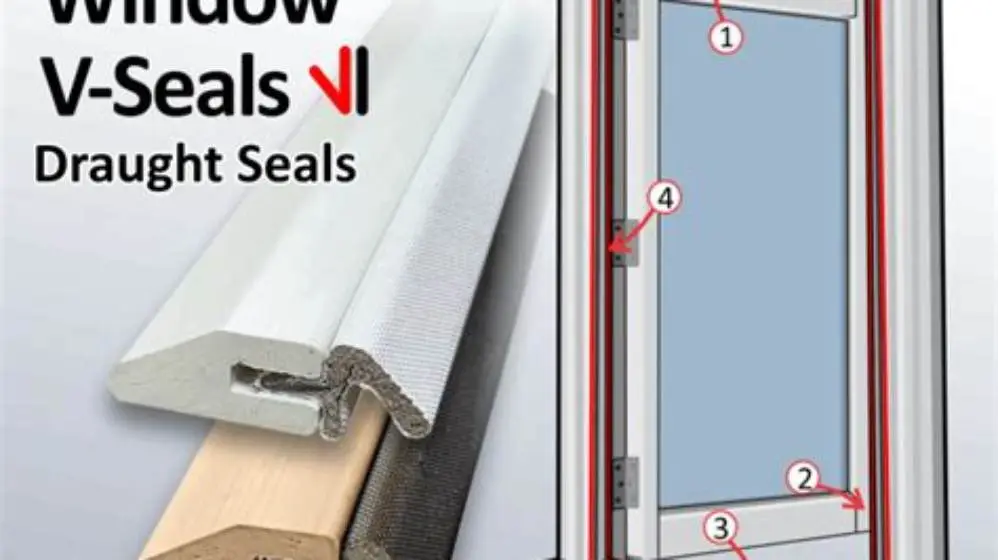
A V-groove seal is usually a flexible V-shaped strip fixed along one edge. Closing the sash folds the V and creates the seal. Sellers may call the same profile a V-strip, V-seal or compression seal.
The names are not perfectly consistent. Check the cross-section drawing, because a flat fin, foam strip or bulb profile may appear under similar search terms. The geometry matters more than the label.
A V-strip is suitable when the measured gap stays within the maker's stated working or compression range and remains reasonably even around the frame. If the gap clearly exceeds that range, or the profile bottoms out before the sash latches, use another profile or repair the opening. The other half of this decision is are triple glazed windows worth it.
Aim for the middle of the stated working range rather than its limit. The seal must close the air path without carrying the sash or preventing the latch from engaging. Test a short sample on the tightest section before fitting the full length.
Use the right profile for the measured condition
Brush pile can suit a moderate gap when pile depth and carrier height match the measured closed, latched gap. Check the product dimensions rather than assuming a standard range. The pile should touch the opposite surface without folding hard or stopping the sash.
A taller pile is not automatically better. Excessive contact can drag on a sliding sash, wear the pile and make a casement difficult to close. The carrier also needs a rebate deep enough to accept it. We go through how much is triple glazing step by step elsewhere on the site.
Closed-cell foam can suit a wider opening when its stated compression limit covers the measured gap. It can take a permanent set, so choose it where replacement is straightforward and the opening remains fairly stable.
Foam needs a clean, dry and sound surface. It can peel from chalky paint, loose putty or damp timber. A silicone or EPDM bulb seal can suit a moving gap when the frame supports its carrier and the bulb is compressed as specified.
Standard off-the-shelf profiles may not suit very large or highly uneven gaps. If the gap exceeds the rated working range shown on product sheets, repair or a bespoke solution is likely required.
| Profile | Best fit | Service life | Best for |
|---|---|---|---|
| V-strip, sprung | Even gap within the maker's rated working range | Longer when correctly sized | Clean rebates on sashes that close freely |
| Brush pile with carrier | Gap matched to pile depth and carrier height | Depends on wear and exposure | Sliding sashes or slightly uneven edges |
| Closed-cell foam | Opening within the product's compression limit | Often shorter than sprung seals | Budget repairs where easy replacement is acceptable |
| Bulb seal in carrier | Moving gap supported by a suitable carrier | Longer when correctly compressed | Casements or frames needing a flexible seal |
| Carpentry or bespoke repair | Gap too large, uneven or caused by movement | Depends on the repair | Dropped, warped, rotten or poorly aligned timber |
Use this quick decision checklist
Use your largest and smallest readings, then compare them with the profile's stated dimensions. The result should guide the product family before you buy a full roll.
Choose the option that matches these conditions:
If the gap is even and inside the V-strip's rated working range, a V-strip may suit.
If the gap is moderate and the pile depth and carrier height match, consider brush pile.
If the opening is wider but stable and inside the foam's compression limit, consider closed-cell foam.
If the opening moves and the frame supports the carrier, consider a bulb seal with the specified compression.
If no profile covers the readings, or the gap is uneven, changing or caused by damaged timber, repair the window first.
Repair movement before fitting a wider seal
A large or uneven gap often points to a fault rather than a missing seal. Look for a dropped sash, a failed joint, rotten timber, loose putty, paint build-up or frame movement. A gap that has changed since last winter deserves inspection before sealing.
Open and close the sash slowly. A consistent tight spot can indicate paint build-up, while a sash that drops after release can point to worn cords or a balance problem. Sight along the meeting rail and check whether the rails remain parallel.
Press the putty line gently with a thumbnail. Crumbling putty can let the glass move and open the rebate. Do not press hard enough to crack the glass. Check the frame for soft timber with a small probe, especially at the sill and lower corners.
Repair the joint, cord, putty, rotten section or alignment problem first. Measure again after the repair. A standard seal may then fit without forcing a bulky profile into the opening.
Listed buildings and conservation areas need extra care. Contact your local planning authority or conservation officer before changing glazing bars, rebates, sightlines or historic fabric. Check the council's guidance and any listing consent requirements before work starts. Use a joiner experienced with historic windows for reversible draught-proofing advice.
Check these fields on the datasheet
Use the manufacturer's company datasheet, technical drawing or installation guide for the exact profile. Product listings often omit the dimensions needed for a safe fit. Look for these field names and compare each one with your recorded readings.
Working gap or working range: confirm the full opening the seal is designed to handle.
Compression range: compare the required compression with the gap at tight and wide points.
Seal height or profile height: check the uncompressed height against the available rebate space.
Carrier height and carrier width: make sure the fixing section fits the rebate without fouling paint or hardware.
Pile depth and pile density: compare the pile reach with the closed, latched gap and contact surface.
Bulb diameter and recommended compression: confirm the bulb can close the air path without making the sash hard to latch.
Recommended surface preparation: follow the specified cleaning, drying, primer and temperature conditions.
Fixing method and fastener position: keep adhesive, pins and carriers clear of cords, pulleys, glazing and moving hardware.
Temperature range, exposure rating and warranty or service life: use these to judge whether the material suits the location.
A fictional example makes the comparison clear. If your readings run from 2 to 4 units and a product sheet lists a working range from 1 to 3 units, it does not cover the wider section. If another profile lists a working range from 2 to 5 units, test that profile at the tightest point and confirm the sash still latches freely. These figures are examples only, not universal sizing advice.
Fit the seal, then test the closing load
Fit the seal to the rebate where the window design allows it. A frame-mounted seal usually avoids repeated rubbing on the moving sash. Sliding meeting rails may need a different position because they often have no suitable rebate.
Clean the surface with a suitable degreaser and let it dry fully. Remove loose paint, dust and old adhesive, but do not strip sound historic paint without a reason. Follow the maker's instructions for primer, adhesive and fixing type.
Cut each length as instructed. Avoid stretching adhesive-backed material, since it can shrink after fitting. Mitre or butt brush-pile corners neatly, and leave no open channel at the meeting rail.
Fix the carrier with the recommended adhesive or pins. Close and latch the sash slowly, then reopen it and inspect for displaced seal material. The sash should close with firm hand pressure, not body weight.
Use a torch in a dark room to check for daylight. Test with a smoke pencil or incense only with care, away from curtains and other flammable materials. Never use a naked flame near the window.
- Measure the closed and latched sash at several points
- Compare the readings with the profile's working and compression fields
- Clean and dry the rebate without damaging sound historic finishes
- Cut and fix each length without stretching it
- Close, latch and reopen the sash to check contact
- Replace any section that causes hard closing or leaves a visible draught path
Keep ventilation while reducing draughts
Draught-proofing can improve comfort, but a timber window should not become the only ventilation system. Kitchens, bathrooms and bedrooms need controlled ventilation to manage moisture and indoor air quality.
Keep existing trickle vents, extract fans and other designed ventilation paths clear. Do not block a vent to solve a draught. If the room has an open-flue appliance, ask a qualified heating or gas professional before changing ventilation.
Older buildings can need a different approach from modern replacement windows. Check current building-control guidance for the work and property type, especially if you add a vent or alter the frame head.
Seal uncontrolled gaps, then monitor condensation on cold glass and corners. Use short, effective ventilation and maintain heating rather than sealing every possible air path.
Use a V-strip only when the closed, latched gap falls inside the manufacturer's rated working range. Choose brush pile, foam or a bulb seal for other conditions, and repair movement before sealing a large or uneven opening.
Quick questions
Can I stack two V-strips to fill a wider gap?
Avoid it except as a temporary test. The strips can interfere with one another, lose compression and make the sash hard to latch. Select one profile whose rated range covers the measured gap, or repair the opening.
What gap does brush pile suit?
Brush pile can suit a moderate opening when pile depth and carrier height match the closed, latched measurement. Compare those dimensions with the product sheet rather than assuming a universal size.
How should I measure a changing gap?
Close and fully latch the sash, then measure corners, edge centres and visible low spots with feeler gauges. Repeat after opening and closing it, and check again during a damp or cold period if movement is seasonal. Record the smallest and largest readings, then investigate a major change.
Should the seal go on the sash or the frame?
Use the rebate on the frame where the window design allows it. Sliding meeting rails may need the seal on a sash face instead. Keep the seal clear of pulleys, cords, glazing and hardware.
Why does my new seal make the window hard to close?
It may be too tall, too thick or too heavily compressed at one edge. Check the tightest reading against the product's compression range. Remove the seal if the latch needs force.
Will draught-proofing a sash window affect an EPC assessment?
An assessor may record draught-proofing as an improvement, but the effect depends on the whole property. The main gains are usually comfort and reduced uncontrolled leakage, not a guaranteed large EPC change.