Krypton often adds £20 to £50 per window over argon in UK fabricator quotes. Treat that as an unverified trade range, not a fixed tariff. It usually suits cavities under 12mm, while argon normally gives better value at 16mm to 20mm.
On this page
- Quick recap
- Check the krypton cost per window
- Match the gas to the cavity width
- Read the cavity width from a quote in four steps
- Use an infrared thermometer to check edge loss
- Check whether triple glazing changes the answer
- Compare U-values and estimate the payback
- Ask these questions before you pay
- Quick questions
Quick facts
- Decision threshold
- About 12mm cavity width
- Krypton sweet spot
- 8mm to 10mm cavity
- Argon sweet spot
- 16mm to 20mm cavity
- Typical U-value gain
- About 0.05 to 0.2 W/m²K
- Gas saving per window
- Often a few pounds a year
- Part L replacement limit
- 1.4 W/m²K in England, subject to the current edition
Quick recap
- Get the cavity width in millimetres before comparing gas fills.
- Treat £20 to £50 as an indicative fabricator-quote range, not a guaranteed price.
- Compare the whole-window Uw, not just the centre-pane Ug.
- Triple glazing usually removes the reason to buy krypton, except on slim units.
- Keep the sealed-unit specification for your records and future property assessments.
Check the krypton cost per window
Allow roughly £20 to £50 more per window for krypton than argon, based on informal UK fabricator quotes supplied for this article. Those figures are unverified and vary by supplier, so request a written comparison before relying on them.
The premium covers the gas, filling equipment and production time. Larger or shaped units can cost more because they contain more gas. Small units might sit below the range, but don't assume a particular floor without a supplier quote.
A supplied and fitted window priced at £600 to £900 puts the arithmetic in plain view. A £20 premium is 2.2% to 3.3%, while £50 is 5.6% to 8.3%. Rounded together, the premium is roughly 3% to 8%.
Compare the gas on identical glass, frame, spacer and installation terms. Otherwise a warmer spacer or different coating can make the price difference look like a gas charge. For the detail, see our notes on understanding window energy performance.
- Unit area: larger panes contain more gas and can carry a higher premium.
- Cavity width: the gap changes both gas volume and thermal performance.
- Fabricator volume: suppliers with different equipment can quote very different prices.
- Blended fill: an argon-krypton mix can sit between the two prices.
Match the gas to the cavity width
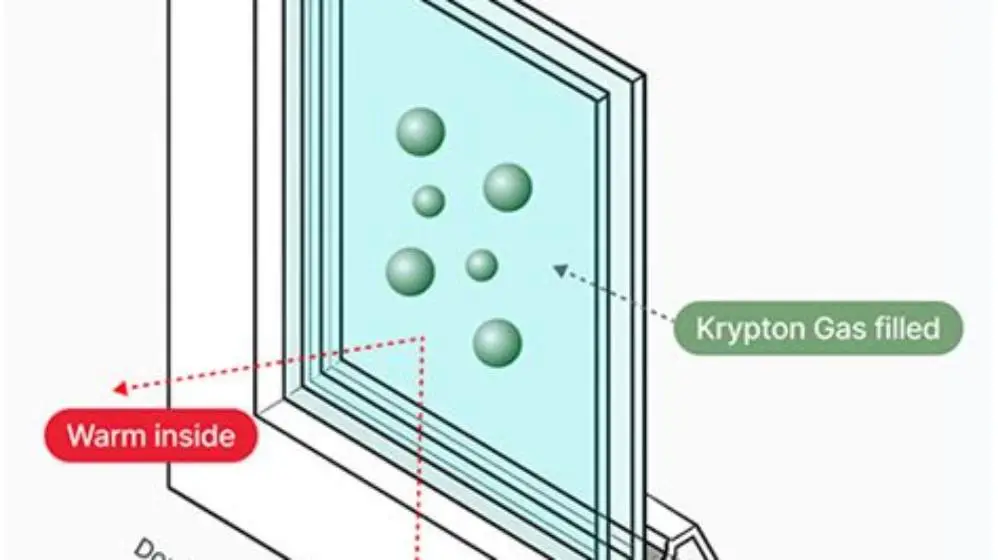
Krypton conducts less heat than argon, with typical conductivity values near 0.0095 and 0.016 W/mK respectively at room conditions. Its advantage matters most in narrow cavities, where convection stays low.
Argon usually performs well in a 16mm to 20mm cavity. Wider gaps can allow more convection, so the best result depends on the coating, spacer and unit design.
Use 12mm as a buying guide, not a universal boundary. Under that width, krypton can improve the centre-pane result. At 12mm and above, argon often comes close for much less money. For the detail, see our notes on internal insulation cost.
Read the declared figures for the complete unit. Coating type, gas purity and spacer design can shift the result by more than the gas choice alone.
| Cavity width | Gas that usually suits | Typical Ug (W/m²K) | Buying view |
|---|---|---|---|
| 6mm | Krypton | 1.3 to 1.5 | For slim frames |
| 8mm | Krypton | 1.1 to 1.3 | Krypton can earn its keep |
| 10mm | Krypton | 1.0 to 1.2 | Compare declared values |
| 12mm | Either | 1.1 to 1.2 | Borderline case |
| 16mm | Argon | 1.1 to 1.2 | Argon usually wins on cost |
| 20mm | Argon | 1.1 to 1.2 | A common argon target |
| 24mm and up | Argon | 1.2 to 1.3 | Check convection and coating |
Read the cavity width from a quote in four steps
The cavity measurement usually sits inside the glazing code. Find it before you compare prices or gas names.
You can't measure a sealed gap accurately with a tape measure. Ask for the sealed-unit specification if the quote does not show it. We go through roof insulation u value building regs 2010 vs current standard step by step elsewhere on the site.
- Find the glazing line. It may read 4-20-4 or 4/20/4: glass, cavity, glass in millimetres. Four numbers usually indicate triple glazing.
- Look for the gas code. Ar means argon and Kr means krypton. A percentage can indicate a blended fill.
- Check the specification sheet. It should list both cavity widths on triple glazing, plus the coating, spacer and declared Ug.
- Write the cavity width and gas into the order. That gives you something concrete to check if the delivered unit differs.

Infrared Thermometer Laser Temperature Gun
Lets you scan the glass edge and frame for the sharp temperature change that tells you whether a gas upgrade is worth paying for, with the surface setting already defaulted to 0.95 so glass reads true.
Use an infrared thermometer to check edge loss
An infrared thermometer can show a temperature pattern across the inside pane, but it cannot identify the gas. Use it as an indication, not a test certificate.
On a cold, stable day, compare the pane centre with a point within 50mm of the frame. A sharp drop near the edge indicates edge loss from the spacer, frame or installation. It does not prove a gas problem.
Keep the angle, surface and emissivity setting consistent. Curtains, sunlight, reflections and different surfaces can distort readings. Check several windows before drawing a conclusion. We go through u value differences at 16mm gap step by step elsewhere on the site.
Edge loss points towards the perimeter detail. A cold centre suggests the glass specification or room conditions need closer attention.
Check whether triple glazing changes the answer
Triple glazing often removes the case for krypton. Two 12mm to 16mm argon cavities can produce a whole-window Uw near 0.8 to 1.0 W/m²K, depending on the frame and glass.
Slim triple units are the exception. A 36mm to 40mm overall unit may leave each cavity near 8mm, where krypton or a blend can help meet the declared target. For the detail, see our notes on triple glazing cost.
Compare the full specification before spending on gas. A second low-e coating, warm-edge spacer or careful installation can affect the finished window more.
Triple glazing also adds weight and depth. A comparable unit can weigh roughly 40% to 60% more, so check hinges, frame strength and the opening reveal.
- Whole-window U-values near 0.8 can be possible
- Warmer inner pane and less condensation risk
- Often better acoustic performance
- Heavier and harder on hinges
- Deeper frame can change the reveal
- Payback may take many years
Compare U-values and estimate the payback
Use an example rather than a promise. Take a 1.5m² window, a 0.1 W/m²K improvement and 2,100 heating degree days. This figure represents an illustrative southern England case using a 15.5°C base temperature, not every UK home. For the detail, see our notes on energy savings compared to double glazing.
The simple heat-loss estimate gives about 7.5kWh a year. At 7p per kWh for gas, that is roughly 50p annually for the example window.
A larger improvement, colder exposure or direct electric heating changes the result. Even then, a £20 to £50 premium often remains a comfort or specification choice rather than a quick heating investment.
Ug covers the centre pane. Uw covers the complete window, including frame and spacer. Use Uw when judging the finished window and checking the relevant building paperwork.
| Figure | What it covers | Where to find it |
|---|---|---|
| Ug | Centre pane only | Sealed-unit specification |
| Uw | Whole window, frame and spacer | Window declaration of performance |
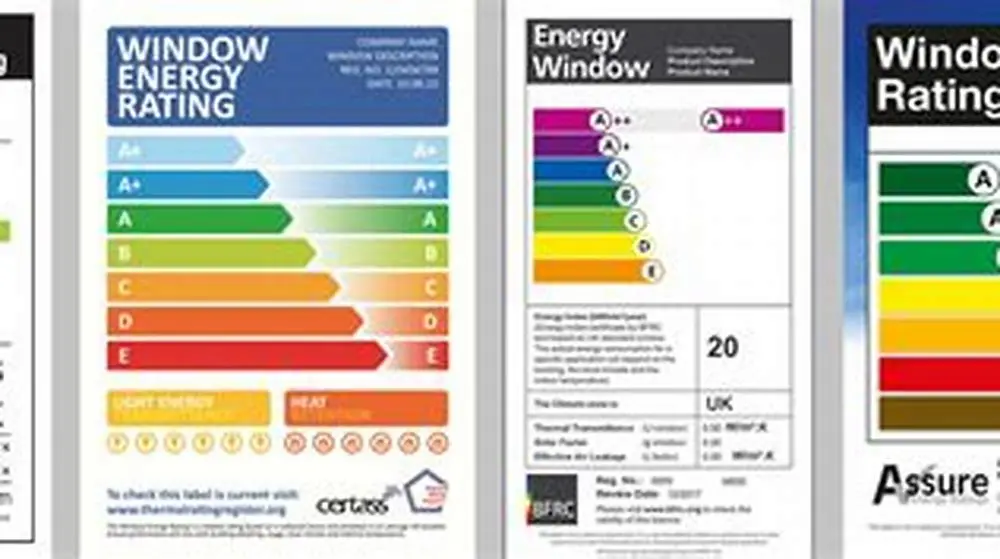
| WER band | Whole-window energy rating | BFRC label or certificate |
Ask these questions before you pay
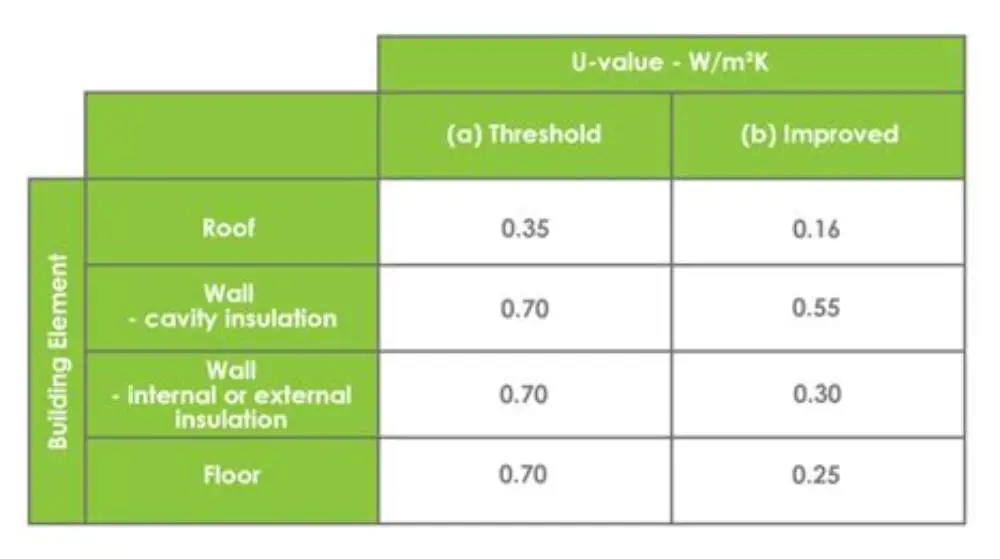
England's current Approved Document L sets a 1.4 W/m²K limiting value for replacement windows in existing dwellings, subject to the current edition and compliance route. Wales, Scotland and Northern Ireland use different rules, so check the local requirement.
BFRC window ratings currently run from A+++ to G. Ask for the actual label or certificate rather than relying on an old A to A++ description.
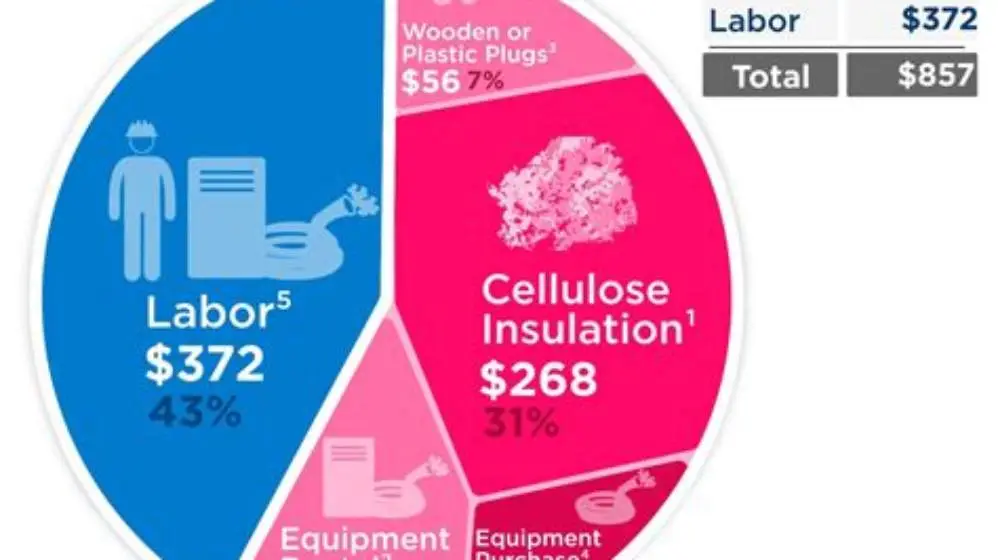
Frame material, access and region can change the fitted price more than the gas. uPVC usually costs less than timber or aluminium, while difficult upper-floor access, scaffolding, removal and disposal add labour. Local wages, travel and demand also affect the quote.
Keep the sealed-unit specification afterwards. Your EPC assessor can use the declared U-value instead of an age-based default, if the evidence meets the assessment rules.
- Declared Uw: request the whole-window figure, not only centre-pane Ug.
- Warm-edge spacer: compare its price and effect at the window edge.
- Coating specification: a second low-e layer can beat krypton in a wide cavity.
- Installation: poor sealing around the frame can waste the benefit of better glass.
- Gas wording: make the specified fill clear on the order and specification.
- Access and region: ask what removal, scaffolding and travel charges are included.
Krypton can justify its premium in cavities under about 12mm. Argon usually gives better value in wider cavities.
Quick questions
Is krypton worth it in a standard 28mm double-glazed unit?
Usually not. A 28mm unit often leaves a 16mm to 20mm cavity, where argon normally gives better value. Compare the declared Ug and Uw before deciding.
How can I tell what gas is in my existing windows?
Look for a spacer-bar label or the original sealed-unit paperwork. Without either, you can't identify the gas by looking because the unit is sealed.
Does krypton leak out of a sealed unit faster than argon?
Seal quality and the filling process matter more than the gas choice. Ask what the guarantee covers, since many guarantees focus on misting rather than gas concentration.
Can better glazing raise my EPC rating?
It can, but the result depends on the whole dwelling, window area and assessor's evidence. Keep the product documents for the assessment.
Can I get krypton fill on a grant-funded window?
Grant schemes usually set a minimum U-value or rating rather than a gas type. Check the scheme rules and let the fabricator meet them at the lowest sensible cost.