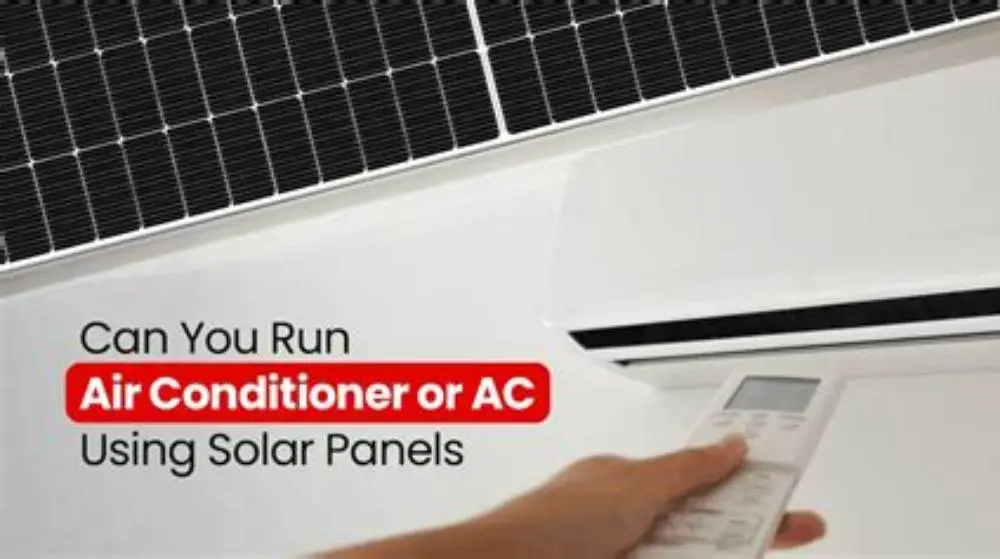
No, a standard UK air conditioner cannot run directly from solar panels without an inverter. Panels produce variable DC, your AC needs stable 230V AC. You need an inverter of some kind, but it does not have to be a hybrid.
On this page
- Quick recap
- Can an air conditioner run directly from solar panels without a hybrid inverter?
- What happens if you wire an AC straight to panels
- Solar battery without hybrid inverter for backup
- AC coupled solar panels with existing string inverter
- Size the power, surge and wiring before you commit
- Pick the right route and get comparable quotes
- Quick questions
Part of our guide on blackout use with solar battery
Quick facts
- Typical AC draw
- 800-1,200 W running
- Startup surge
- 2-3x running watts
- Panel output
- 30-45 V DC per panel
- AC-coupled charge rate
- 2-5 kW typical
- UK mains voltage
- 230V AC 50 Hz
- Blackout backup needs
- Island mode + earthing
Quick recap
- A direct panel-to-AC wire will not start or safely run a normal split or portable unit.
- You can keep your existing string inverter and add an AC-coupled battery for backup.
- Size the inverter for startup surge, not just running watts, and check islanding rules.
- For UK quotes, compare AC-coupled vs hybrid on cost, backup power and EPC impact.
Can an air conditioner run directly from solar panels without a hybrid inverter?
A 2.5 kW cooling split draws 800-1,200 W running and 2-3x that for 1-3 seconds at startup. That figure holds on a warm day at full load, lower on eco mode or when the thermostat cycles. A few hundred watts of solar at 10am will not cover it, 2 kW at noon might, but clouds drop output by 50-80% in seconds.
Direct DC from panels cannot feed a normal 230V AC air conditioner. The compressor motor and controls expect a clean sine wave at 230V and 50 Hz. Panels deliver 30-45 V DC per module, strung to 300-500 V DC, varying with light and temperature. You need an inverter to make usable AC.
You do not need a hybrid inverter specifically. A standard string inverter plus a separate battery inverter, or a dedicated solar AC unit with its own DC compressor, can do the job. The hybrid just combines solar and battery in one box. Keeping your existing inverter and adding an AC-coupled battery often costs less disruption.
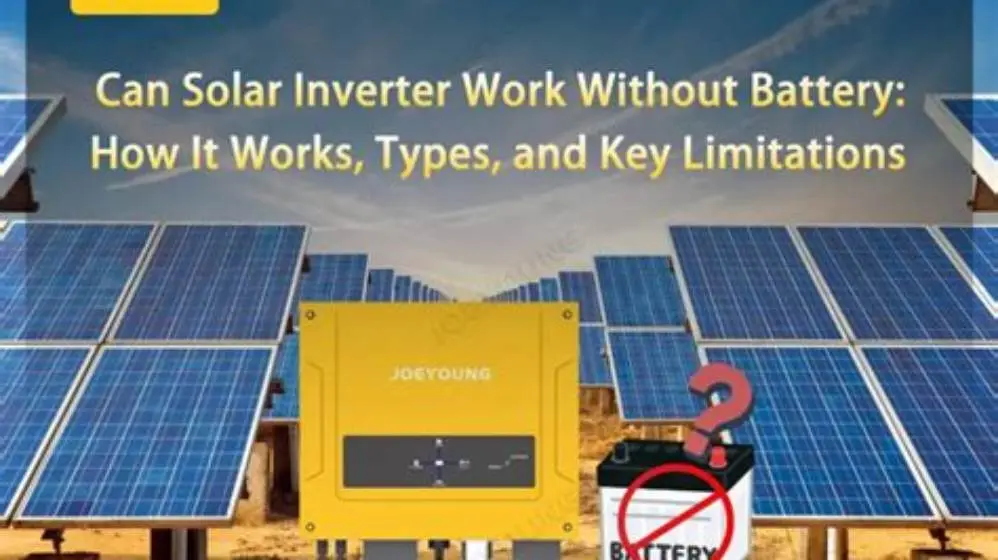
The mistake is buying panels to "run the AC for free" without checking the inverter path. Fix it by deciding the route first: keep string inverter and AC-couple, swap to hybrid, or buy a specialist DC solar air conditioner for an outbuilding. It helps to understand can a solar inverter still work without batteries before going further.
| Route | Inverter needed | Works with existing string inverter? | Best for |
|---|---|---|---|
| Direct DC solar AC | Built-in DC compressor drive | Yes, separate from house system | Garage, outbuilding, off-grid room |
| String inverter + AC-coupled battery | Existing string + AC battery inverter | Yes | Houses that already have solar |
| Swap to hybrid inverter | New hybrid replaces string | No, replaces it | New installs or end-of-life inverter |
- keeps existing string inverter
- flexible to add battery later
- needs separate battery inverter
- slightly lower round-trip efficiency
What happens if you wire an AC straight to panels
A direct wire gives you 0-400 V DC that swings with sun. At 200 W/m2 on haze you might see 20% of rated power, at 1,000 W/m2 on clear noon you see near rated. That swing will stall a compressor, trip its overload, or burn the control board. Most UK units will not start at all.
Even if the voltage matches for a moment, frequency is missing. Single-phase compressors need 50 Hz and a stable 230V. Panels provide no frequency. The fan may twitch, the display may flash, then the unit faults. Repeated tries can damage the capacitor and PCB.
Specialist solar air conditioners exist that take DC directly. They use a variable-speed DC compressor and an MPPT drive that tracks panel voltage. They work, but they are not your high-street split. They cost more, cool only that room, and still need mains or battery for cloud and night. Before you commit to anything, it is worth looking at working of solar batteries.
Check before you buy anything. Read the AC nameplate for rated input in W and LRA or startup amps. Measure real draw with a plug-in meter on a hot day. That number, not the cooling kW, sizes your inverter.

Watt Meter Power Meter Plug Home Electricity Usage Monitor 7 Modes Display
Reads W, V, A per bullets; no max wattage or voltage stated to confirm 3600W at 230V
Solar battery without hybrid inverter for backup
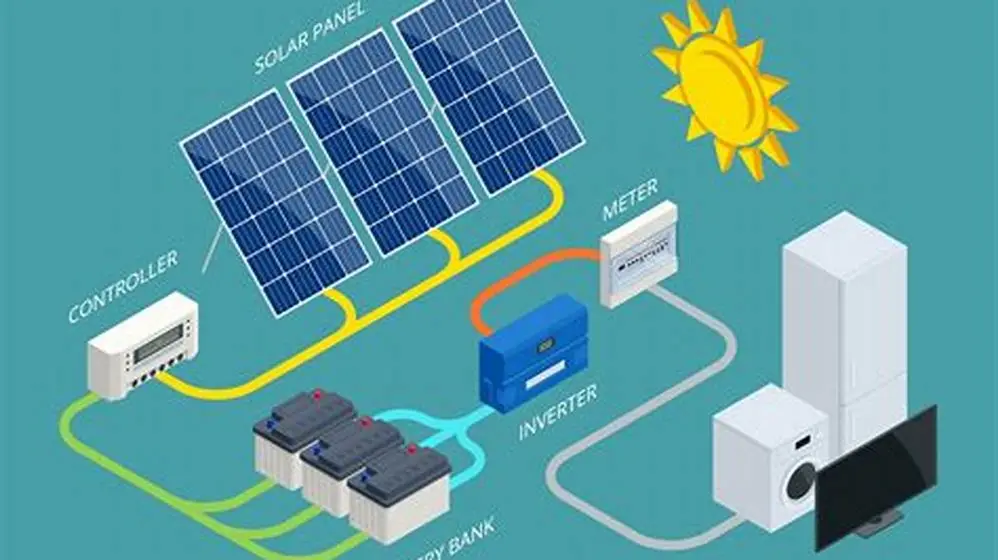
An AC-coupled battery adds storage without replacing your string inverter. It watches your AC mains with a current clamp or meter, charges from excess solar at 2-5 kW, and discharges to the house when demand rises. Charging rate depends on battery inverter size and state of charge, not just solar peak.
In normal grid-tied mode this is simple. Your string inverter still converts solar to 230V AC. The battery inverter sits on the same consumer unit and time-shifts energy. You get self-consumption and cheaper night use without rewiring the DC side. Round-trip efficiency is usually 85-90%, a touch below DC-coupled hybrids. The other half of this decision is cutting electricity costs.
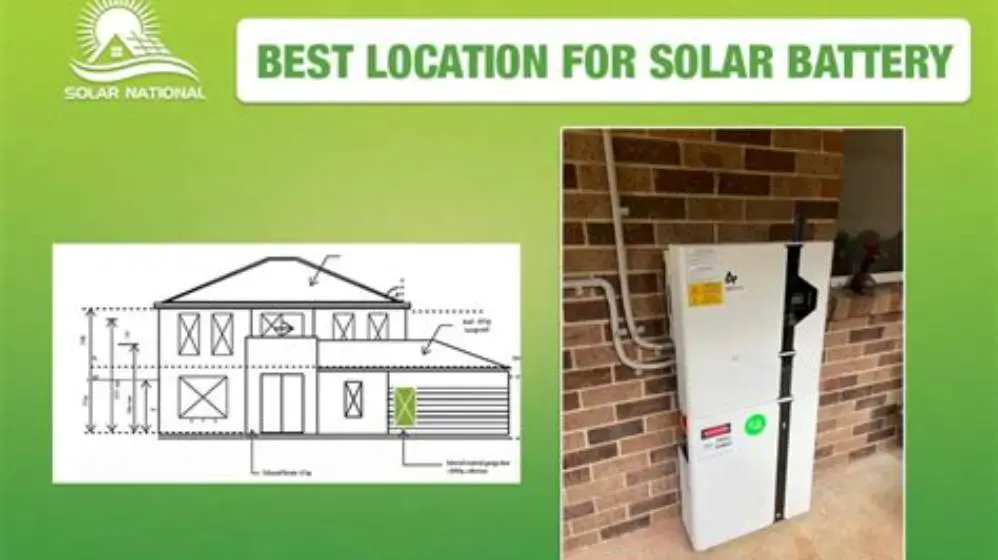
Blackout backup is where limits appear. For backup without a hybrid, you need an AC-coupled battery that offers island mode with an EPS or backup gateway and proper earthing. Not all do. Many budget AC batteries are grid-tied only and shut down in a power cut to meet G98/G99 anti-islanding rules.
Expect partial backup, not whole-house. Most single-phase AC-coupled systems provide 3-5 kW continuous and 5-7 kW peak, enough for lights, fridge, router and one small AC on low. Add more load and the battery trips. You also need a dedicated backup circuit, not every socket.
- AC-coupled battery inverter: charges from house AC, so it works with any string inverter with a meter.
- EPS gateway or backup box: disconnects from grid and creates a small island for selected circuits.
- Earthing and RCD setup: installer must provide neutral-earth bonding in island mode.
AC coupled solar panels with existing string inverter
Keeping your string inverter is the least disruptive upgrade. Output stays as AC on your consumer unit, typically 3-6 kW for a UK semi. The AC-coupled battery connects on the AC side, so you avoid new DC cabling, new roof work, or re-notification for the DC array. That holds if your existing inverter is healthy and not at end of life. For the detail, see our notes on sonnen 10kw battery backup with generator.
The clamp or Modbus meter is the key part. It tells the battery when you export. Fit it around the main incomer, pair it to the battery inverter, and set charge from excess. Response is 1-3 seconds, so a passing cloud still pulls from grid briefly. That is normal.
Retrofit works with most MCS string systems under G98 up to 3.68 kW per phase or G99 above that. Your DNO notification changes because you add storage, even if solar stays the same. A good installer files the G99/G98 update and sets export limits if you have them.
Trade-off to accept: two inverters mean two conversions when solar charges the battery, so you lose a few percent versus a hybrid. You gain choice. You can pick battery size later, keep your Feed-in Tariff or Smart Export Guarantee metering, and replace either inverter independently. We go through tile vs panel roofing effects step by step elsewhere on the site.
- Check string inverter health and warranty. Note model, kW rating and G98/G99 status on your certificate.
- Measure AC load. Clamp your AC on startup and running watts, and note other loads on the same phase.
- Choose AC-coupled battery with island mode if you want backup. Confirm continuous kW covers AC startup.
- Get installer to fit meter clamp, battery inverter and EPS gateway, then update DNO and EPC paperwork.
Size the power, surge and wiring before you commit
Start with the AC's real draw, not the brochure. A 3.5 kW cooling unit often draws 1,000-1,500 W running and needs 2,500-4,000 W for a second to start. Inverter-driven splits ramp softly and need less surge than old fixed-speed units. Your clamp reading beats any guess.
Match inverter continuous kW to running load plus margin, and peak kW to surge. A 3 kW continuous battery inverter may run a small split alone, but add a kettle and it trips. For whole-circuit backup, aim for 5 kW continuous if you must run cooling in a cut. Cable and breaker size must match that kW at 230V.
Solar array size matters for daytime running without draining the battery. A 4 kWp south-facing array in the Midlands makes 3-3.5 kW at noon in June, 0.8-1.5 kW on overcast. That covers a small AC at midday, not at 7pm. Battery kWh covers the shoulder hours.
Quick test at home: run the AC from mains through a plug-in energy meter or clamp for 30 minutes on a hot afternoon. Note W running and peak at startup. Compare that to your solar monitoring peak for the same week. If solar peak is below AC running W, you will always import.
- Inverter AC: lower surge, easier on batteries, check LRA on datasheet.
- Fixed-speed AC: higher surge, may need soft-starter or larger inverter.
- Wiring: dedicated RCBO, correct mm2 for length, and earthing for island mode.
Pick the right route and get comparable quotes
Choose by what you already own. New roof with no solar: a hybrid can be tidy and a touch more efficient. Existing string system under 10 years old: AC-coupled storage keeps scaffolding off and paperwork lighter. Single room that overheats: a specialist DC solar AC can be simpler than whole-house storage.
For UK homes, weigh EPC and grants alongside bills. Solar and batteries improve EPC, but funding like the Boiler Upgrade Scheme, ECO4 or Warm Homes Plan targets heat pumps and insulation, not air conditioning. Landlords chasing EPC C should price insulation and controls first, then solar.
Get three like-for-like quotes. Ask each installer for: battery kWh usable, battery inverter kW continuous and peak, island mode yes/no and which circuits, G98/G99 handling, warranty years on cells and inverter, and monitoring app. If a quote omits peak kW, it hides the AC question.
Do not let a quote hide behind kWh only. A 10 kWh battery with a 2.5 kW inverter will not start many ACs, a 5 kWh battery with a 5 kW inverter might. Price per kWh means little if the kW is wrong for your load.
For most UK homes with existing solar, AC-coupled storage beats swapping to hybrid unless the string inverter is due for replacement.
Quick questions
Can I run a portable air conditioner from a small solar system?
You can if the inverter can supply its running watts plus surge. Most portables draw 900-1,400 W and surge higher, so a 2 kW solar array with a 3 kW inverter may manage at noon but will import on cloud. Without a battery, it stops when sun drops.
Do I need planning or DNO approval to add an AC-coupled battery?
You do not usually need planning for a battery indoors, but you do need DNO notification. Adding storage changes export behaviour, so your installer files a G98 or G99 update. Listed buildings or conservation areas still need usual checks.
Will my solar run the AC in a power cut without any battery?
No. Standard string inverters shut down in a cut for safety. You need a battery with island mode and an EPS gateway that disconnects the house from the grid and forms its own 230V supply for selected circuits.
Is a hybrid inverter more efficient than AC-coupled?
Slightly. A hybrid charges the battery on the DC side with one conversion, AC-coupled does AC to DC to AC. Expect a few percent difference in round-trip efficiency. The bigger factors are battery size, inverter kW and how you use the AC.
What size battery to run AC for a few hours?
Work from watts and time. A 1,000 W AC for 3 hours needs 3 kWh plus losses, so allow 3.5-4 kWh usable. Add house baseload and you often need 5-8 kWh usable to be comfortable through an evening.