When installing a solar battery, expect a multi-step process including site assessment, electrical upgrades, and system integration; most grid-tied inverters won’t provide blackout power without a compatible battery system; Enphase batteries work only with Enphase microinverters designed for them.
On this page
- Quick recap
- What happens when installing solar battery
- Do solar batteries work in a blackout with grid tied inverter
- Solar batteries inside or outside installers advice
- Enphase solar batteries compatibility with existing microinverters
- Steps to prepare your home for solar battery installation
- How solar batteries affect your home energy bills and emissions
- Quick questions
Quick facts
- Installation time
- 4-8 hours
- Common battery capacity
- 5-15 kWh
- Blackout support
- Only with certain inverters
- Indoor/outdoor options
- Both allowed
- Enphase compatibility
- With Enphase microinverters only
Quick recap
- Solar battery installation involves assessing site and electrical system compatibility.
- Standard grid-tied inverters usually don’t supply power during blackouts without special setup.
- Enphase solar batteries require Enphase microinverter systems for compatibility.
- Location choice (inside or outside) depends on battery type, ventilation, and weather protection.
- A qualified electrician must upgrade the system and connect the battery safely.
What happens when installing solar battery
Solar battery installation usually takes between 4 to 8 hours, depending on system complexity and home wiring. First, a site survey checks your current solar inverter, electrical panel, and roof space for battery placement, either inside or outside.
The next step is wiring the battery to the inverter or a hybrid inverter system, which manages power flow between solar panels, battery, grid, and home loads. This requires electrical panel upgrades or installation of backup circuits to handle battery discharge safely.
Commissioning the system involves software configuration and performance testing. The installer will verify battery communication with the inverter, set charge/discharge parameters, and ensure compliance with local electrical codes.
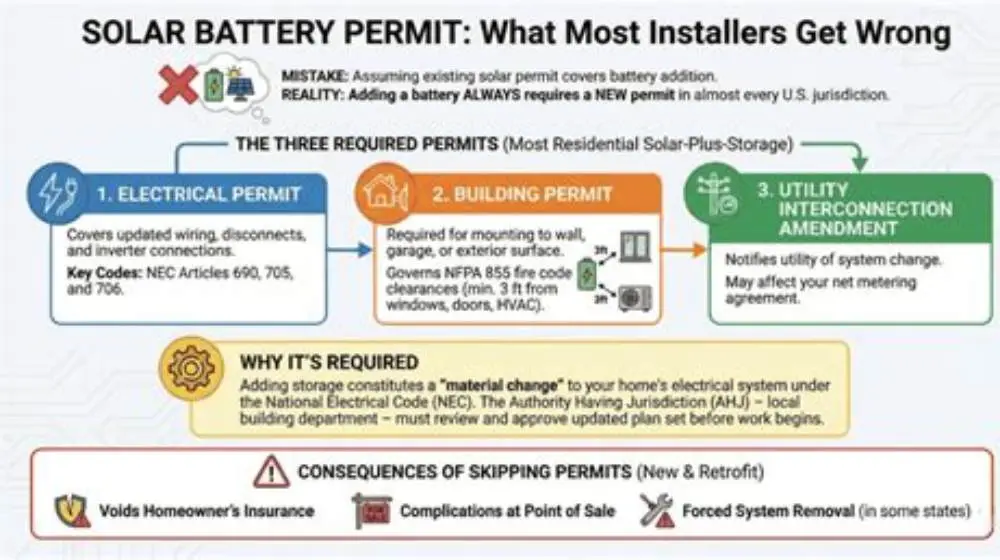
Installation complexity can increase significantly if your home’s electrical system is older. In such cases, additional upgrades beyond the panel might be necessary, such as rewiring or installing dedicated circuits to handle the increased load safely. For example, a home with a 60-amp panel may require an upgrade to a 100-amp or higher panel before the battery system can be integrated, which could add a day or more to the installation timeline. It helps to understand solar installation and permits before going further.
During the installation, the battery’s state of charge is carefully monitored and calibrated with the inverter to ensure optimal performance from day one. This step often includes a test cycle of charging from the solar array and discharging to the home loads, confirming that the battery management system and inverter controls communicate correctly. If this calibration is off, the system may show incorrect battery percentages or experience unexpected shutdowns, which installers check for before completion.
- Schedule a site assessment to evaluate compatibility and placement.
- Upgrade the electrical panel if necessary to handle battery loads.
- Install the battery and connect it to the inverter system.
- Configure and commission the system with software tools.
- Test system function including charging, discharging, and safety features.
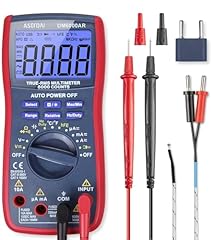
AstroAI Digital Multimeter
Verifies voltage and current accurately with True RMS and auto-ranging for safe solar battery installation checks.
Do solar batteries work in a blackout with grid tied inverter
Most grid-tied solar inverters do not supply power during blackouts because they are designed to shut off for safety, preventing backfeed to the grid. Without a battery system with backup capability, your solar panels won’t power your home during an outage.
To provide blackout support, the battery system must include a special inverter or hybrid inverter that isolates the home electrical circuit from the grid during outages. This setup ensures the battery can supply stored solar energy independently. People in this spot often ask about retrofitting a house guide as well.
Typical grid-tied inverters paired with standard batteries cannot supply power during blackouts unless the battery and inverter are specifically rated and configured for this function. This often means upgrading to an inverter with an 'islanding' feature or an integrated battery inverter.
Some advanced hybrid inverters allow limited solar generation during a blackout but only when combined with a battery system and an automatic transfer switch to isolate the home from the grid. For instance, systems with a hybrid inverter rated around 5 kW can supply essential circuits during an outage, but the total load must not exceed the battery’s discharge rate, often between 3 to 5 kW. Exceeding this load can cause the inverter to shut down to protect the battery and the system.
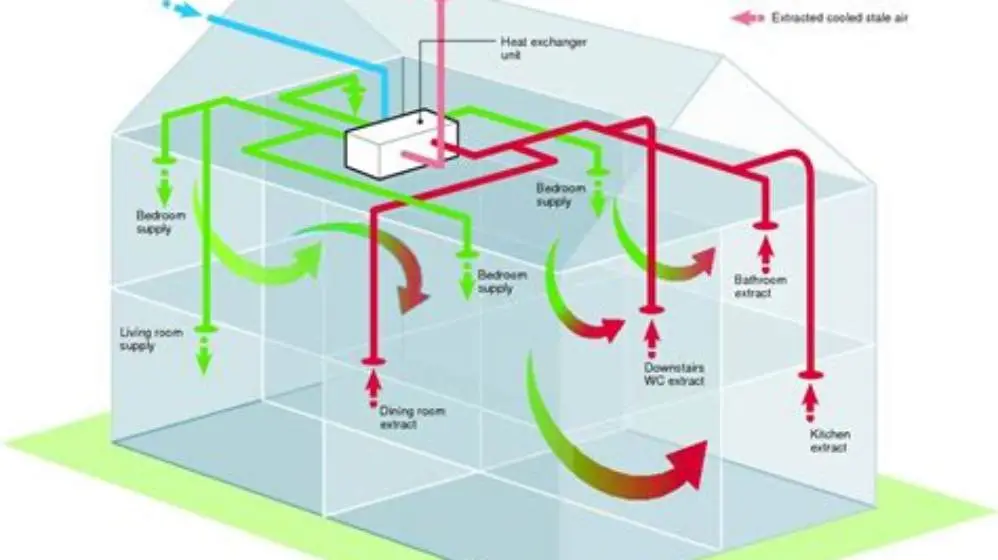
Solar panels alone cannot provide power during a blackout without a battery-equipped inverter system because the inverter must detect and disconnect from the grid to prevent backfeeding. This safety feature is mandated by utility regulations and protects line workers. Without this isolation, even a sunny day would not enable solar power use during an outage, which is why battery backup systems are essential for blackout resilience. We go through working of an mvhr unit step by step elsewhere on the site.
| Feature | Grid-tied inverter | Backup-capable inverter |
|---|---|---|
| Supplies power in blackout | No | Yes |
| Requires battery | Optional | Mandatory |
| Islands home from grid | No | Yes |
| Cost impact | Lower | Higher |
Solar batteries inside or outside installers advice
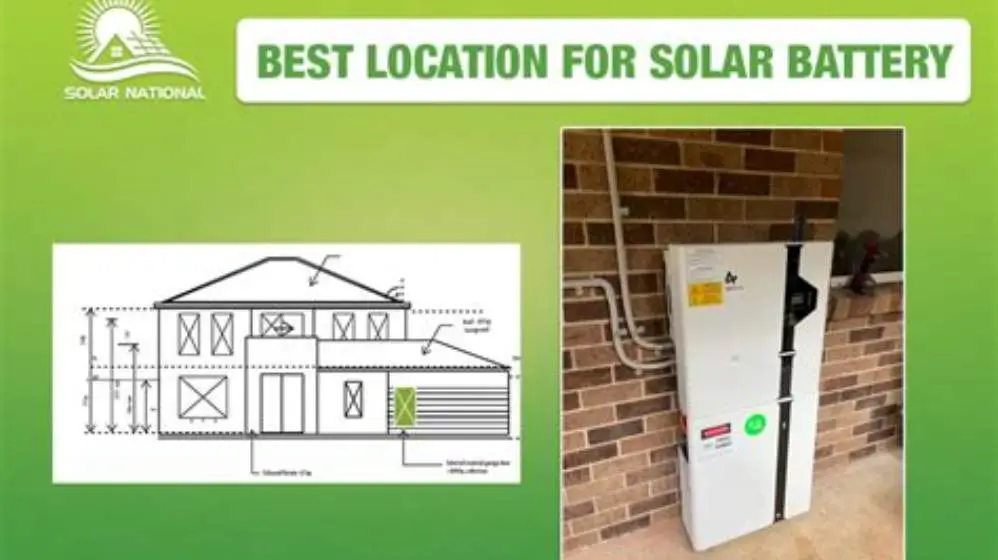
Solar batteries can be installed indoors or outdoors depending on the battery's protective enclosure rating and thermal management requirements. Lithium-ion batteries often come with weatherproof enclosures rated at IP65 or higher, allowing outdoor installation without extra housing.
Indoor installations require a ventilated space away from direct heat sources and potential ignition hazards. Proper clearance around the battery for maintenance and heat dissipation is also mandatory to meet safety standards.
Outdoor installations must consider local climate: temperature extremes below 0°C or above 40°C can reduce battery life. Adding weatherproof covers or placing batteries in shaded, ventilated areas will extend performance and safety. Before you commit to anything, it is worth looking at enphase ensemble battery compatibility with existing microinverters.
Enphase solar batteries compatibility with existing microinverters
Enphase solar batteries are designed to work exclusively with Enphase microinverter systems. This integration lets the battery communicate directly with each microinverter, optimizing energy flow at the module level.
If your existing solar system uses traditional string inverters or microinverters from other brands, the Enphase battery will not be compatible without replacing the inverter system with Enphase hardware.
The Enphase setup combines microinverters, Envoy communication gateways, and the Enphase battery to create a modular, scalable system. This approach offers easier monitoring and blackout support but requires full system compatibility to function correctly. The other half of this decision is can a solar inverter still work without batteries.
| Battery Brand | Compatible Inverter | Notes |
|---|---|---|
| Enphase | Enphase microinverters | Full modular integration |
| Generic lithium-ion | Hybrid/string inverters | Wider compatibility |
| Tesla Powerwall | Specific hybrid inverters | Requires Tesla gateway |
Steps to prepare your home for solar battery installation
Before installation, inspect your electrical panel capacity. Many homes need panel upgrades to handle battery load circuits safely. Confirm the breaker space and amperage ratings meet the battery system requirements.
Clear a safe installation area that meets manufacturer clearance specifications, with sufficient ventilation if indoors or weather protection if outdoors.
Arrange for a licensed electrician to be available during installation or to perform required panel modifications. Pre-installation wiring assessments prevent delays on install day. The other half of this decision is how microinverters work.
Gather all system documentation including inverter manuals, battery specs, and local electrical codes for compliance checks by the installer.
If you live in an area prone to extreme weather events, consider reinforcing the battery installation location to withstand environmental hazards such as flooding or heavy winds. For example, mounting the battery on a raised platform or a concrete pad can prevent water damage in flood-prone zones. Installers sometimes recommend adding a weatherproof enclosure or shade structure for outdoor batteries in high UV or rainy climates.
An important preparatory step is coordinating with your utility company to inform them of your battery installation. Some utilities require interconnection agreements or specific inspection procedures. This coordination can affect the timeline for permission to operate and grid connection after installation. Failure to complete these steps may delay your system’s activation and benefits. We cover deciding on home battery installation in its own article.
- Check your existing electrical panel capacity and breaker slots.
- Designate and prepare a battery installation location.
- Hire a licensed electrician for system upgrades.
- Assemble all documentation and permits.
- Schedule installation with your solar installer.
How solar batteries affect your home energy bills and emissions
Installing a solar battery can reduce electricity bills by storing excess solar power during the day and discharging it during peak evening hours when utility rates are higher. Savings depend on local time-of-use tariffs and battery capacity.
Batteries enable self-consumption of solar energy, cutting grid dependence and associated emissions. The average battery capacity of 10–15 kWh can cover essential loads for several hours during outages or peak bill periods.
However, initial costs and installation impact must be weighed against long-term savings. Battery life spans typically range from 5 to 15 years, with gradual capacity loss, affecting economic return timelines.
- Cost savings: depends on electricity rates and battery size
- Emission reduction: cuts grid power reliance during peak times
- Battery lifespan: 5-15 years with gradual capacity decline
- Payback period: varies widely, often 7-12 years
Quick questions
Can I add a solar battery to any existing solar panel system?
Not all solar inverters support battery integration. You need a compatible hybrid inverter or a separate battery inverter to add storage. Check your inverter model or consider upgrading for battery compatibility.
What happens if I install a solar battery without proper permits?
Improper permits risk code violations, insurance complications, and unsafe electrical conditions. Always secure local authority approvals and have certified electricians perform the work.
Will the solar battery charge if the grid is down but the sun is shining?
Only if your battery system and inverter support islanding and blackout operation. Most standard grid-tied systems shut down during outages for safety and won’t charge or discharge.
How do I know if my battery is compatible with Enphase microinverters?
Check your inverter model number and system documentation. Enphase batteries require the latest Enphase microinverter and Envoy gateway for full integration.
Should solar batteries be installed indoors or outdoors?
It depends on the battery enclosure rating and local climate. Weatherproof batteries can go outside, but indoor installation may need proper ventilation and clearance. Consult your installer.