Sonnen 10kW batteries integrate with standby generators via transfer switches, but control handshakes and islanding rules matter.
A Sonnen 10kW battery can run alongside a backup generator when connected through a properly sized automatic transfer switch or manual changeover. The battery handles short outages; the generator kicks in for extended ones, but you need compatible control logic to prevent both feeding the house simultaneously.
On this page
Part of our guide on solar battery installation process
Most installers wire the battery and generator as separate backup paths, but getting them to cooperate without fighting each other demands the right transfer-switch logic and a clear priority rule.
| Generator compatibility | Yes, via transfer switch |
|---|---|
| Transfer switch cost | £800–£1,400 installed |
| Battery priority window | 10–20 minutes typical |
| Minimum switch rating | 63 A per phase |
| Control protocol | Volt-free contact or Modbus |
The short version
- Sonnen 10kW batteries work with generators via a transfer switch that prevents backfeed
- Battery supplies the first 10-20 minutes of an outage; generator starts if the battery depletes
- Automatic switches need compatible control signals: check installer certifications before committing
- Diesel and petrol generators both work; hydrogen-ready units require islanding checks
- Expect £800–£1,400 for a suitable transfer switch and wiring labour
Can Sonnen 10kW battery run with a generator
Yes. A Sonnen 10 kWh battery integrates with a standby generator when you install a transfer switch between the grid supply, the battery inverter and the generator output. The switch ensures only one source feeds your backed-up circuits at any moment. Without it, the battery inverter detects the generator as grid voltage and either shuts down to prevent export or tries to synchronise, which most portable generators cannot handle.
The battery typically acts as the first line of defence. When mains power drops, the Sonnen inverter switches to island mode in under five seconds and supplies the protected loads from stored energy. If the outage lasts long enough to drain the battery below its reserve threshold (usually 20 per cent state of charge) the transfer switch can signal the generator to start, or you start it manually and throw the changeover.
You choose the priority order during commissioning. Most UK installers configure the battery to cover short interruptions (10 to 20 minutes) and reserve the generator for extended cuts or heavy loads the battery cannot sustain. That arrangement saves diesel, reduces noise and keeps the generator's service intervals longer. The Sonnen app shows which source is active and how much charge remains, so you know when to expect the changeover.
What generator types are compatible
Sonnen 10 kWh systems work with diesel, petrol and LPG standby generators that produce stable 230 V AC at 50 Hz. The inverter's island-mode controller expects a sine wave with less than five per cent total harmonic distortion, so cheap inverter generators with noisy waveforms may cause the battery to refuse synchronisation or trip on frequency drift. Look for a generator rated EN 61000-6-2 for immunity and G99 or G100 for grid-code compliance if you ever want to parallel it with the mains through a sophisticated controller. It helps to understand understanding battery and inverter integration before going further.
Automatic-start generators with volt-free remote-start terminals pair best with the Sonnen's control outputs. The battery's energy manager can close a relay contact when state of charge falls below a threshold, starting the generator without manual intervention. If your generator lacks remote start, a manual transfer switch and a walk to the shed will do the job; you lose convenience but save £400 to £600 on control hardware.
Three-phase generators suit homes with three-phase Sonnen installations: typically the 15 kWh or larger models, though a 10 kWh battery on a single phase can still back up one leg of a three-phase board if the transfer switch isolates that phase. Single-phase generators work fine for single-phase Sonnen systems, which covers most UK domestic setups. Hydrogen-ready and dual-fuel units are compatible provided their output voltage and frequency stay within ±10 per cent and ±1 Hz under load; test this with a multimeter before final commissioning.
- Diesel or petrol: stable output, proven reliability, wide service network across the UK
- LPG: cleaner exhaust, longer storage life than petrol, requires a bulk tank or bottle manifold
- Inverter generators: quiet and efficient but check THD spec - many cheap models exceed five per cent
- Automatic-start models: integrate with battery control signals, typical cost premium £300–£500 over manual-start
Transfer-switch options and wiring paths
An automatic transfer switch monitors the grid supply and switches to the generator or battery when mains voltage disappears for longer than a set delay: usually five to ten seconds. The switch needs a minimum rating of 63 A per phase for a typical whole-house backup, or 32 A if you protect only essential circuits like heating, fridge and a few sockets. Three common arrangements exist, and the one you pick depends on whether you want the battery or the generator to take priority. We cover can a solar inverter still work without batteries in its own article.
In a battery-first setup, the transfer switch sees the battery inverter as the backup source and the generator as a secondary fallback. The Sonnen inverter supplies the house in island mode; if the battery nears empty, a control signal from the energy manager tells the generator to start, and a second transfer switch (or a manual changeover) shifts load from battery to generator. This path suits short, frequent outages and keeps fuel consumption low.
A generator-first setup treats the generator as the primary backup and charges the battery from generator output if the outage persists. The transfer switch connects the generator to the house, and the Sonnen inverter stays in grid-tied mode, importing from the generator just as it would from the mains. You set the battery to charge at a controlled rate (typically 2 to 3 kW) so the generator is not overloaded. This arrangement works when you have a large fuel tank and want the battery available for later cycling after the grid returns.
Manual transfer switches cost £200 to £400 installed and require you to throw a lever or rotary handle. They are slower but eliminate control-wiring headaches and suit homes where someone is always present during outages. Automatic switches range from £800 to £1,400 depending on phase count, enclosure rating and whether they include Modbus RTU or volt-free contacts for integration with the Sonnen's control board. The other half of this decision is how solar batteries store power.
| Arrangement | Battery priority | Generator role | Control complexity | Typical cost installed |
|---|---|---|---|---|
| Battery-first auto | Immediate island mode | Starts when battery low | Medium—needs relay logic | £1,000–£1,400 |
| Generator-first auto | Charges from generator | Primary backup source | Low—generator runs continuously | £900–£1,200 |
| Manual changeover | Depends on switch position | You choose each time | None—purely mechanical | £200–£400 |
Control integration and handshake signals
Sonnen 10 kWh exposes two volt-free relay contacts and one Modbus RTU port for external control. Program a relay to close when state of charge drops below 25 per cent and wire that contact to the generator's remote-start terminals. Most automatic-start generators need a maintained closure to stay running. When state of charge rises above 80 per cent, the relay opens and the generator stops after its cooldown timer.
Use the second relay to tell a transfer switch to move from battery to generator if the switch accepts control inputs. High-end switches from Ruck or ASCO accept multiple inputs and run priorities in sequence. Budget switches ignore control inputs and switch on voltage presence. Expect a 15 to 25-second gap while the generator starts and stabilises; the house runs on battery during that gap.
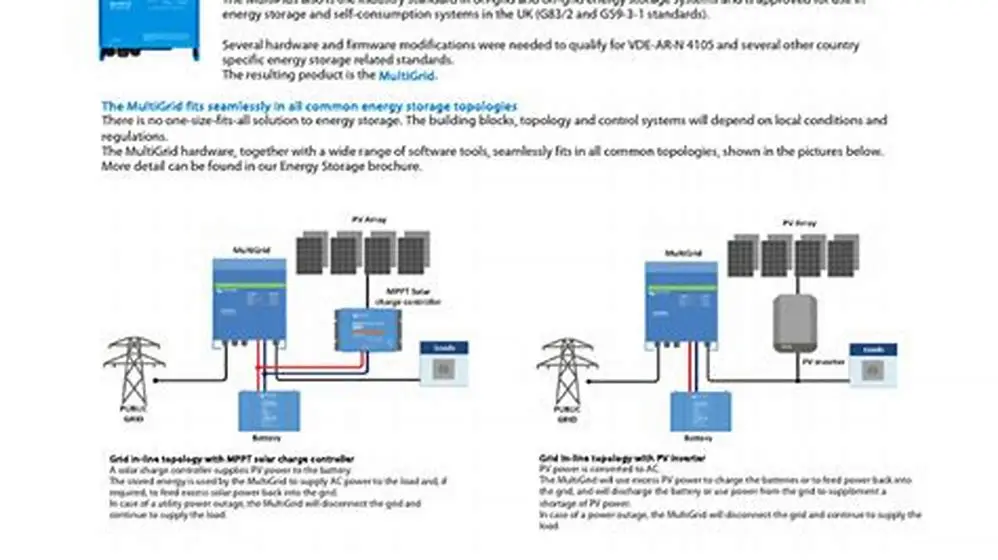
Connect Modbus RTU for full reporting and automated decisions. The Sonnen publishes state of charge, power flow and inverter status. A PLC or Modbus-capable transfer switch can read registers and act. Test the whole handshake under a controlled grid loss to confirm correct start, transfer and stop sequences. The other half of this decision is using victron multigrid for energy control.
- Volt-free relay contact: wire it to the generator's remote-start terminals, set the trigger at 20–25 per cent SOC
- Modbus RTU: RS485 two-wire connection, register 40103 reports state of charge, 40107 shows inverter mode
- Transfer-switch priority: configure which source the switch prefers when both are available - battery or generator
- Cooldown timer: most generators run for
2to5minutes after the stop signal to cool the engine - factor this into your control logic
Islanding limits and earthing requirements
When Sonnen goes into island mode it creates a local grid for the backed-up circuits. Keep that island isolated from the mains. Do not tie the generator frame earth into the inverter earth unless a synchronising controller is present.
Domestic installs usually use TN-S earthing, with the inverter's neutral and earth bonded inside the cabinet. Fit a separate earth rod for an outdoor generator. Ensure the rod does not create a parallel earth path when the transfer switch moves between sources.
G99 and G100 require sources capable of exporting to detect loss of mains within 0.5 seconds and disconnect. Sonnen monitors voltage and frequency. If output leaves the 207–253V or 49.5–50.5Hz windows, the inverter refuses to synchronise and opens its contactor. A poorly regulated generator can leave both sources unavailable. We go through choosing right battery size step by step elsewhere on the site.
Move a neutral bond only once. Multiple neutral–earth bonds cause circulating currents, nuisance RCD trips and possible touch voltages. Record bonding on the electrical certificate and verify continuity and earth-loop impedance after commissioning.
Common setup mistakes and how to avoid them
Undersize the transfer switch and it trips on motor starts. A single-phase Sonnen can deliver 4.6 kW continuous. Heat pumps and immersion heaters surge two to three times running current for a second or two. Fit a 63 A switch for whole-house backup to give inrush headroom.
Fail to tell the installer about a generator and you risk frequent disconnects. Sonnen has a firmware option that widens rate-of-change-of-frequency tolerance for generator use. Ask the installer to enable generator-compatibility mode during commissioning.
Run a generator at light load and you glaze diesel bores. Keep generator load above 50 per cent of rated capacity. Use a manual load bank or run the house while the battery charges at its 3 kW import rate.
Wire the generator upstream of the inverter and the battery may refuse to import. Most small generators do not meet grid-quality regulation within ±2 per cent, so the inverter will not charge. Wire the generator to the backed-up load side through the transfer switch instead.
- Undersized switch: fit 63 A minimum for whole-house backup, even if steady load is lower - inrush matters
- Firmware setting: enable generator-compatibility mode during commissioning to widen frequency tolerance
- Light-load glazing: keep generator above 50 per cent rated capacity by adding load or scheduling charge cycles
- Upstream wiring: never connect the generator to the battery's grid input unless the generator is grid-grade regulated
Questions people still ask
How long does the Sonnen battery last before the generator starts?
A fully charged 10 kWh Sonnen battery supplies a typical 1.5 kW household load for about six to seven hours before reaching its 20 per cent reserve threshold. If you configure the control relay to start the generator at 25 per cent state of charge, expect the generator to kick in after roughly five hours of continuous outage, assuming no solar input.
Can I use a portable petrol generator with a Sonnen 10 kW battery?
Yes, but only through a manual transfer switch. Portable generators rarely have remote-start terminals, so you cannot automate the handover. Run an inlet socket from the switch to an outside wall, start the generator, plug it in and throw the changeover lever. Make sure the generator produces stable 230 V ±10 per cent and less than five per cent harmonic distortion, or the Sonnen inverter may refuse to sync.
Does the generator charge the battery during an outage?
Only if you wire it that way. In a generator-first setup, the Sonnen inverter stays grid-tied and imports from the generator at 2–3 kW, charging the battery while the generator supplies the house. In a battery-first setup, the generator typically runs the house directly and the battery sits idle until the grid returns. You choose the behaviour during commissioning.
What happens if both the battery and generator fail during a power cut?
You lose backup power until one source recovers. If the battery is empty and the generator will not start, the transfer switch leaves the house disconnected from all sources. Keep the generator serviced and the fuel fresh, and check the battery's state of charge before severe weather to reduce the chance of both failing at once.
Do I need planning permission to install a standby generator for battery backup?
Generators under 50 kVA and installed more than one metre from a boundary usually fall under permitted development in England and Wales, but check with your local authority. Scotland and Northern Ireland have different rules. Noise limits and hours of operation may apply, especially in conservation areas or if your neighbours complain.