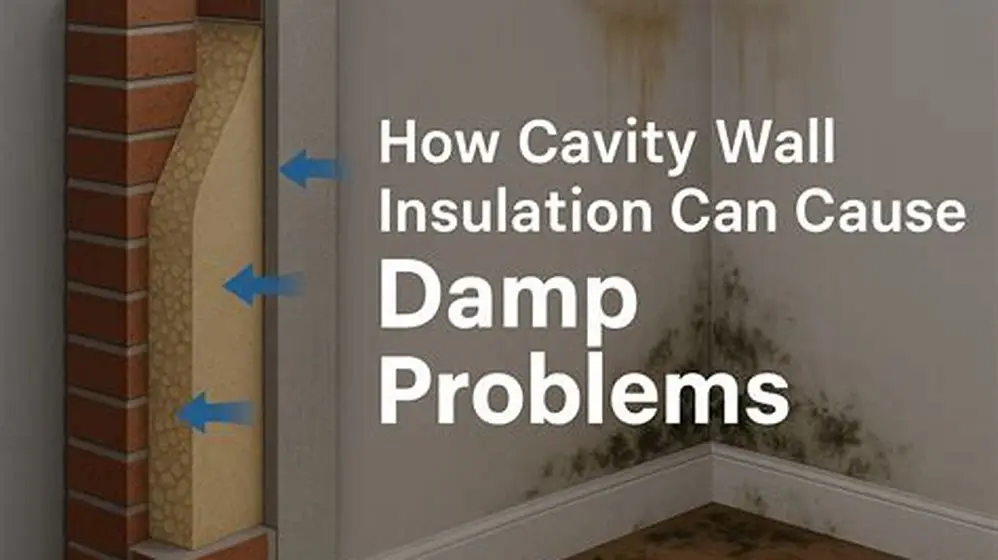
Three specific signs indicate cavity wall insulation causes or worsens damp: persistent cold spots on internal walls, visible damp patches aligned with insulation levels, and increased condensation near insulated cavities. Testing moisture levels and thermal imaging confirms this.
On this page
- Quick recap
- Common cavity wall insulation damp problems
- How to tell cavity insulation damp from other damp
- Foam vs mineral wool insulation damp risks
- What to do if insulation causes damp
- Does cavity wall insulation prevent or cause damp
- Cavity wall insulation problems and damp: 3 signs it’s causing or worsening damp
- Quick questions
Part of our guide on suspended timber floor insulation guide
Quick facts
- Typical insulation cavity gap
- 50-100 mm
- Insulation moisture absorption
- Up to 15% weight
- Moisture meter range
- 0-100% relative
- Thermal imaging range
- -20 to 100 °C
- Recommended wall dry-out time
- 8-12 weeks
Quick recap
- Persistent cold spots on walls often signal damp from cavity insulation problems.
- Visible damp aligned with insulation height suggests insulation-related moisture.
- Foam insulation generally traps moisture more than mineral wool.
- Thermal imaging and moisture meters are key to diagnosing insulation damp.
- Resolving insulation damp usually requires professional removal and wall drying.
Common cavity wall insulation damp problems
Cavity wall insulation can cause or worsen damp when moisture enters the cavity and is trapped by the insulation material. This happens especially if the insulation is damaged, incorrectly installed, or the wall's external protection is compromised.
A typical problem occurs when rainwater penetrates the brick outer leaf and can't drain or evaporate properly, creating damp patches on internal walls. Mineral wool and foam insulation absorb moisture differently, affecting how damp issues present inside the building.
Common signs include staining on internal walls at the height where the insulation sits, peeling plaster, and an increase in condensation. These symptoms often emerge within 1-3 years after insulation installation if problems occur.
- Water ingress: breaches in external brickwork let rain enter the cavity.
- Incomplete filling: gaps or voids where insulation is missing trap moisture unevenly.
- Material saturation: foam insulation can hold moisture longer than mineral wool.
How to tell cavity insulation damp from other damp
Identifying damp caused by cavity wall insulation requires checking the location and nature of the damp. Damp from insulation usually appears as cold, moist patches on internal walls at the exact height of the insulation within the cavity. People in this spot often ask about insulation for rubble-filled cavity walls as well.
Other damp types, such as rising damp or condensation, have different patterns: rising damp appears from the floor upwards; condensation forms mainly on windows and cold surfaces without specific height alignment.
Using a moisture meter can confirm whether wall moisture corresponds to the insulation layer depth: usually between 50-100 mm from the internal wall surface. Thermal imaging helps identify cold spots that indicate damp areas caused by insulation.
In some cases, visual signs alone may mislead diagnosis because damp caused by insulation can coexist with other damp issues. For example, condensation might worsen where insulation alters internal wall temperature, causing moisture to settle more readily on colder surfaces. To differentiate, it is useful to measure relative humidity inside the property. If high humidity is present alongside cold spots at insulation height, insulation-related damp is more probable than isolated condensation. We go through internal vs external wall insulation for solid walls step by step elsewhere on the site.
A practical check involves tapping or lightly pressing affected plaster areas. Insulation damp often leads to soft, crumbly plaster or paint blistering aligned horizontally with insulation layers. Rising damp, by contrast, usually causes a tide mark near the floor and a different tactile feel. Documenting these observations alongside moisture readings provides a stronger case for correct diagnosis.
| Measure | Cavity Insulation Damp | Rising Damp | Condensation |
|---|---|---|---|
| Location on wall | Mid-wall height matching insulation | From floor upwards | Surface/around windows |
| Moisture pattern | Patchy, localized | Rising band | Diffuse, often widespread |
| Temperature effect | Cold spots at insulation level | Generally warmer | Cold surfaces |
| Detection tools | Moisture meter, thermal camera | Moisture meter | Visual and humidity sensors |

Pinless Moisture Meter for Wood Digital Wall Moisture Detector
No moisture content range or maximum relative moisture content published to confirm it measures up to 100%.
Foam vs mineral wool insulation damp risks
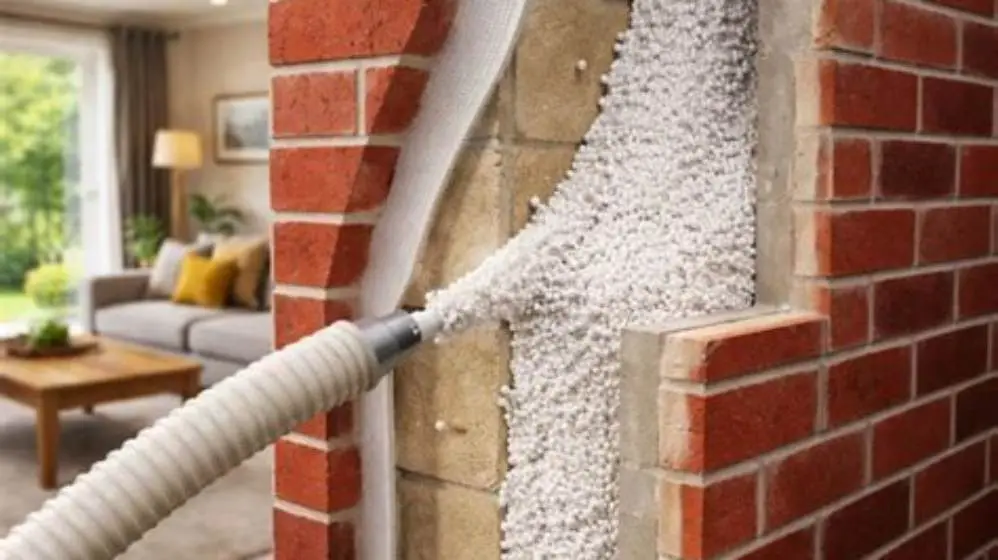
Foam cavity wall insulation has a higher risk of causing persistent damp issues because it can trap moisture within its closed-cell structure. This leads to slower drying compared to mineral wool, which is more breathable and absorbs less water by weight.
Mineral wool insulation absorbs up to around 15% of its weight in water but dries out faster due to its fibrous, open structure. Foam insulation’s water resistance varies by type, but trapped moisture can remain for months if water ingress is ongoing. For the detail, see our notes on fitting floor joist insulation.
The choice of insulation affects not only damp risk but also how quickly a wall can dry after a leak or flood event. Mineral wool tends to reduce condensation risks inside houses compared to foam, which may exacerbate damp patches.
| Feature | Foam Insulation | Mineral Wool Insulation |
|---|---|---|
| Water absorption | Low but traps moisture | Higher but dries faster |
| Drying time | Weeks to months | Days to weeks |
| Breathability | Low | High |
| Damp risk | Higher if cavity fills | Lower if installed correctly |
| Typical use | New builds, retrofits | Retrofits, breathable walls |
- Foam traps moisture less easily
- Mineral wool dries faster
- Foam causes longer damp if wet
- Mineral wool absorbs water
What to do if insulation causes damp
If you confirm cavity wall insulation is causing damp, immediate action involves identifying and stopping the water ingress source. This may include repairing external brickwork, repointing mortar, or installing adequate cavity drainage.
Next, professional removal of the wet or faulty insulation material is often needed. Simply drying the wall without removal usually fails because trapped moisture remains within the insulation. Removal specifications require minimum cavity clearance of about 50 mm for proper drying. It helps to understand how to clean external wall insulation before going further.
After removal, walls must dry thoroughly, a process taking 8-12 weeks under natural conditions. Sometimes, supplementary drying equipment like dehumidifiers accelerates this. Wall surface repairs and redecoration should occur only once moisture content returns below 15% relative.
- Inspect and repair external wall breaches or mortar joints.
- Use moisture meter and thermal camera to confirm insulation dampness.
- Hire professionals to remove compromised insulation per building regulations.
- Allow natural drying for 8-12 weeks or apply mechanical drying.
- Replace insulation with a suitable, breathable alternative if re-insulating.
Does cavity wall insulation prevent or cause damp
Correctly installed cavity wall insulation usually helps prevent damp by reducing condensation and maintaining wall dryness. It improves wall temperature, reducing cold bridging and therefore limits internal condensation.
However, insulation can cause damp if water penetrates the cavity and is trapped by the insulation material. This is more likely with damaged or poorly installed insulation, or if cavity drainage systems are absent or blocked. The other half of this decision is how does reflective foil insulation work.
The wall’s external condition and cavity ventilation are crucial. If external brickwork is porous or mortar joints fail, water enters the cavity, and insulation then retains it, turning a normally dry cavity into a moist trap.
The effectiveness of cavity wall insulation in preventing damp strongly depends on the building’s age and construction details. Modern buildings typically have better-designed cavities and moisture barriers, reducing risk when insulation is installed properly. In contrast, older buildings with thinner walls or irregular cavity widths may trap moisture more easily, making insulation a potential damp risk factor.
Insulation type also influences outcomes: breathable materials like mineral wool allow some vapour to escape, reducing damp potential. Closed-cell foams, while effective insulators, can trap moisture and worsen damp if water ingress occurs. Therefore, choosing insulation suited to the specific wall construction (and ensuring thorough external wall maintenance) is crucial for preventing damp problems.
| Aspect | Insulation Correctly Installed | Insulation Faulty or Damaged |
|---|---|---|
| Wall temperature | Increases, reduces condensation | Traps cold, promotes damp |
| Moisture levels | Remains low in cavity | Increases, saturates insulation |
| Damp risk | Decreases | Increases |
| Thermal efficiency | Improves | Degrades if wet |
Cavity wall insulation problems and damp: 3 signs it’s causing or worsening damp
Three signs strongly suggest cavity wall insulation is causing or worsening damp: 1) cold, damp patches on internal walls matching the insulation’s height in the cavity; 2) peeling or blistered plaster in those same areas; 3) higher moisture meter readings specifically at 50-100 mm depth inside the wall.
To confirm these signs, use a moisture meter to take readings at several wall depths and a thermal imaging camera to find cold spots. If moisture readings exceed 15% relative and cold spots align with the insulation layer, insulation damp is very likely.
These tests distinguish insulation-related damp from rising damp or condensation, which show different patterns. Confirming insulation damp helps guide effective fixes: insulation removal, wall drying, and cavity repairs.
Another sign indicating insulation-related damp is an increase in mold growth or musty odours appearing in areas corresponding to insulation height. Moisture trapped within insulation encourages fungal growth, which may damage internal finishes and affect air quality. Regular inspection for unusual smells or visual mold patches at typical insulation depths can help detect issues early.
A worked example: suppose a wall has insulation at 75 mm cavity depth. Moisture meter readings taken at 20 mm (near internal surface) show 10% relative moisture, but readings at 75 mm show 22%. Thermal imaging reveals a cold spot at that same depth. These combined findings strongly indicate cavity insulation damp rather than surface condensation or rising damp.
After resolving insulation damp, a follow-up moisture check after several weeks confirms drying progress. Moisture content falling below 15% relative at insulation depth signals successful remediation and readiness for replastering or redecoration. Continuous monitoring helps prevent recurrence and ensures the building remains dry.
- Visually identify damp patches aligned with insulation height (usually 50-100 mm).
- Use a moisture meter to measure moisture levels at the cavity depth.
- Scan with a thermal imaging camera for cold spots at insulation location.
- Compare moisture and temperature patterns to other damp causes.
- If confirmed, plan professional insulation removal and wall drying.
Quick questions
Can cavity wall insulation cause damp in older properties?
Yes, older properties with less robust cavity walls or damaged external brickwork are more susceptible to damp caused by cavity wall insulation, especially if the insulation impedes cavity ventilation.
How long after installation does insulation-related damp appear?
Damp symptoms usually develop within 1 to 3 years after cavity wall insulation installation but can appear sooner if water ingress is severe.
Is it better to remove or replace damp cavity insulation?
Removal of wet or faulty insulation is often necessary before replacement. Simply adding new insulation over damp material usually worsens the problem.
Does cavity wall insulation always improve energy bills?
When installed correctly and dry, cavity wall insulation reduces heat loss and energy bills. Damp insulation reduces effectiveness and may increase heating costs.
Can I test for cavity insulation damp myself?
Basic moisture meters and thermal imaging cameras can be rented or bought for DIY testing, but professional assessment is recommended for accuracy and safety.