Internal insulation reduces room space by 50-100mm; external adds 80-150mm outside. External is costlier but cuts drafts better and improves EPC more. Internal suits minimal disruption, but external boosts energy savings up to 35%.
On this page
- Quick recap
- How internal and external insulation affect room space and layout
- Cost differences and typical UK grant eligibility for insulation methods
- Disruption and installation complexity of each insulation method
- Energy saving effectiveness and impact on EPC rating for solid wall insulation
- Internal vs external wall insulation for solid walls: which is the best fit
- Steps to plan and install the right solid wall insulation method
- Quick questions
Part of our guide on materials for floor insulation
Quick facts
- Internal thickness
- 50-100mm
- External thickness
- 80-150mm
- Energy savings external
- 25-35%
- Energy savings internal
- 15-25%
- Cost difference
- External 20-50% higher
- Installation disruption
- Internal less disruptive
Quick recap
- Internal insulation reduces interior room size by up to 100mm, external adds 80-150mm outside.
- External insulation typically costs 20-50% more but offers higher energy savings and EPC improvements.
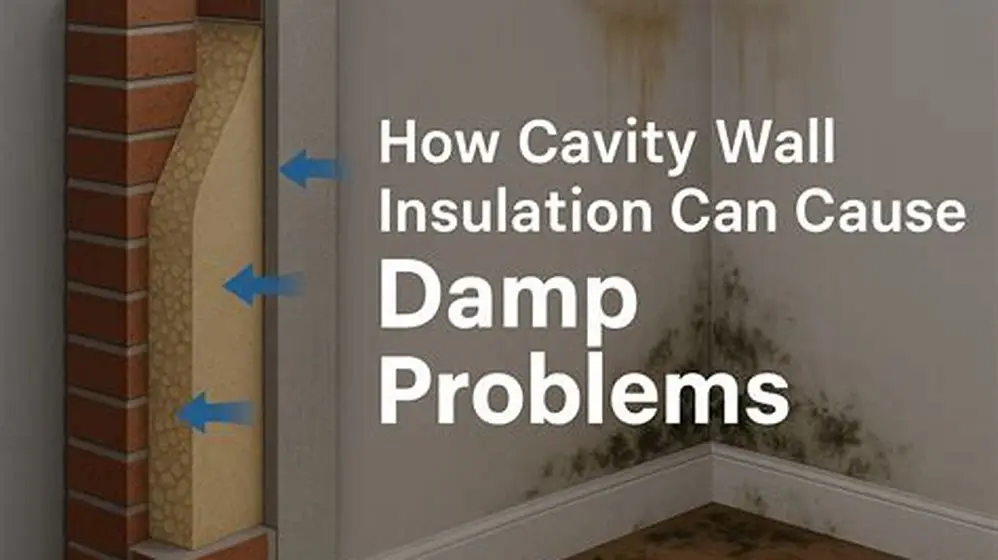
- Internal insulation causes less disruption but requires careful moisture management to avoid damp.
- Energy savings with external insulation can reach 25-35%, internal usually 15-25%.
- UK grants like ECO4 support both, but eligibility varies by method and property type.
How internal and external insulation affect room space and layout
Internal solid wall insulation (IWI) usually adds between 50 and 100 millimetres of thickness inside your rooms. That reduces floor space and can force you to move or modify skirting boards, window reveals, and sometimes heating controls or sockets.
External wall insulation (EWI) adds 80 to 150 millimetres on the outside, increasing the wall thickness but leaving internal space intact. This can alter your house’s appearance and may require planning permission in conservation areas.
Because internal insulation reduces usable room size, you must measure carefully, especially in small rooms where even 50mm is noticeable. External insulation may impact gutters, window sills, and door frames, which must be adjusted accordingly.
In both cases, wall-mounted items like radiators or shelves need relocation or adaptation. External insulation allows uninterrupted interior layout but comes with external work disruption. It helps to understand top down or bottom up insulation before going further.
When considering internal insulation, you need to factor in how it can impact heating systems. Because the wall thickness and surface temperature change, existing radiators may become less effective or need repositioning to maintain efficient room heating. For example, a radiator situated on an external wall insulated internally might require adjustment or upgrading to compensate for altered heat distribution.
External insulation can also affect external fixtures like satellite dishes, external lighting, or security cameras. These often need relocation or extension brackets to maintain their functionality once insulation thickness is added. This logistical consideration adds to project planning but preserves interior space and reduces potential inconvenience inside the home.
| Aspect | Internal Insulation | External Insulation |
|---|---|---|
| Thickness added | 50-100mm inside | 80-150mm outside |
| Impact on room size | Reduces usable space | No loss of internal space |
| Effect on external appearance | No change | Changes façade, may need permission |
| Alterations to fittings | Relocate sockets/heaters internally | Adjust gutters/windows externally |
Cost differences and typical UK grant eligibility for insulation methods
External insulation generally costs 20 to 50 per cent more than internal insulation for solid walls, depending on materials (e.g., mineral wool, EPS, or phenolic boards) and finish (render or cladding). For the detail, see our notes on how much does internal insulation cost.
Internal insulation tends to be cheaper mainly because it avoids scaffolding and extensive external work, but hidden costs can arise from moving wiring or plumbing.
UK grants like the ECO4 scheme or local Warm Homes funding often support both methods but grant conditions and rates depend on property type, EPC rating, and local authority rules.
Checking eligibility requires contacting your local authority or energy advice centre as criteria vary and budgets change over time. The other half of this decision is best insulation for cavity walls filled with rubble.
In many cases, external insulation attracts higher grant support due to its superior effect on energy efficiency and whole-house retrofit quality.
The cost difference between internal and external insulation also depends on the type of external finish chosen. For example, a high-quality brick slip finish on external insulation can increase costs significantly, potentially reaching up to 50 per cent more than basic render solutions. In contrast, internal insulation materials like insulated plasterboard or foam panels are generally more uniform in price but can vary based on thickness and fire rating.
Grant eligibility can also hinge on the type of insulation method. Some local authorities prioritize external insulation grants because it improves the building envelope comprehensively and can contribute significantly to carbon reduction targets. Conversely, internal insulation grants may be more readily available for tenants or leaseholders who cannot alter exterior walls. This nuanced approach means checking specific criteria before deciding. Before you commit to anything, it is worth looking at diagnosing cavity wall damp.
| Factor | Internal Insulation | External Insulation |
|---|---|---|
| Typical cost per square metre | £30-£50 | £40-£75 |
| Scaffolding | Not needed | Usually required |
| ECO4 grant eligibility | Common but varies | More common and higher support |
| Disruption cost impact | Lower | Higher due to external works |
Disruption and installation complexity of each insulation method
Internal insulation causes disruption mostly inside the home, lasting 1 to 2 weeks for an average semi-detached house, depending on room count and material choice. It involves plasterboard or insulated panels fitted to walls, requiring relocation of radiators and socket outlets.
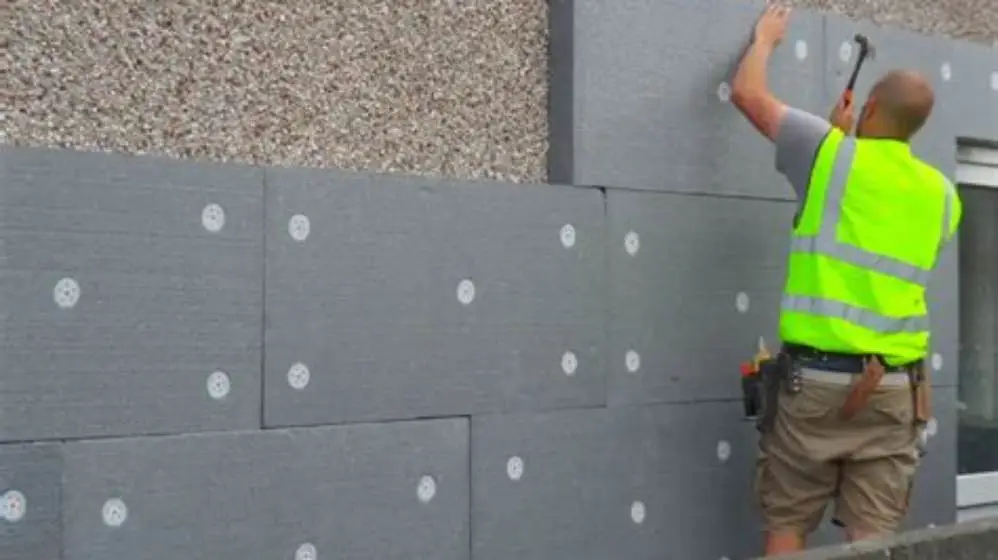
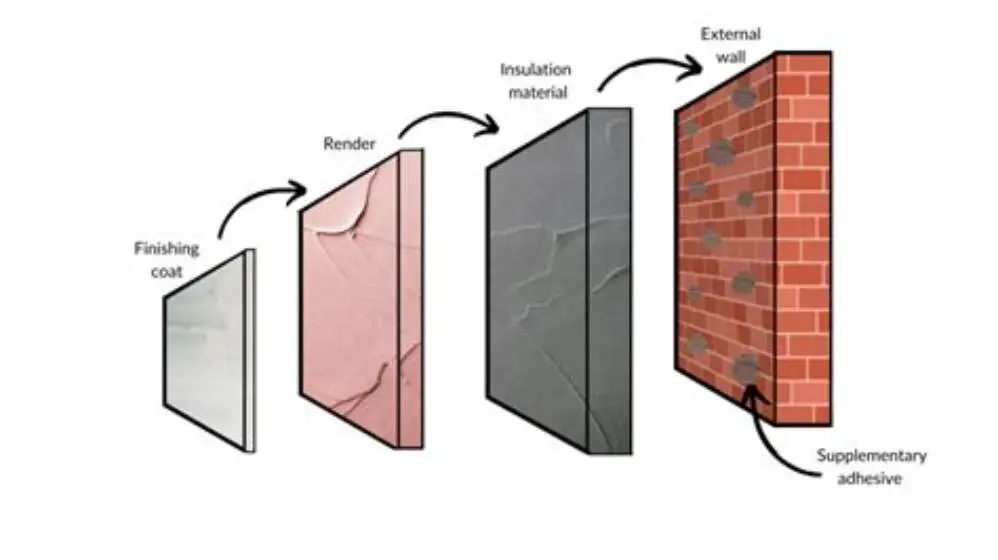
External insulation takes longer, typically 2 to 4 weeks, as it involves scaffolding, external wall preparation, fixing insulation boards, and rendering or cladding. Weather can delay work and create noise and dust outside.
Internal work can restrict room use during installation and drying, but the rest of the home remains accessible. External work may restrict driveway access or garden use but leaves interiors free. We cover removing dirt from external wall insulation in its own article.
Choosing between them depends on how much inconvenience you and your family can accept and whether the property has external obstacles like boundaries or trees that complicate scaffolding.
Installation complexity for internal insulation can increase significantly in older homes with uneven walls or historic detailing. Plaster and lath walls may require careful preparation or partial removal before adding insulation boards, extending project duration and cost. For example, a Victorian terrace might take up to 3 weeks due to these challenges, compared to 1 to 2 weeks in modern homes.
External insulation installation can be hindered by weather conditions, particularly in winter months when rain or frost delays rendering and cladding work. A practical check is ensuring that temperature remains above 5°C during application to avoid poor adhesion or cracking. This seasonal factor may influence the choice of insulation timing and method, especially in northern UK regions. There is more on should there be insulation inside a light fixture in a separate guide.
| Aspect | Internal Insulation | External Insulation |
|---|---|---|
| Typical installation time | 1-2 weeks | 2-4 weeks |
| Scaffolding needed | No | Yes |
| Work location | Inside | Outside |
| Impact on household routine | Rooms inaccessible temporarily | Garden/driveway restricted |
| Weather impact | Minimal | Significant |
Energy saving effectiveness and impact on EPC rating for solid wall insulation
External insulation can improve EPC ratings by 2 to 4 bands, often raising energy efficiency scores by 25 to 35 per cent on typical solid wall homes. This is because it creates a continuous thermal layer wrapping the house and reduces thermal bridging.
Internal insulation typically improves EPC by 1 to 3 bands, delivering savings of 15 to 25 per cent in heating costs. Heat loss reduction is less uniform due to possible cold spots around internal corners and services.
Installation quality plays a major role in energy performance. Gaps, thermal bridges, or poor vapour control can reduce savings and cause condensation problems.
For the best energy improvement, choose materials and installers certified under PAS 2035 retrofit standards or similar UK quality schemes.
The impact of insulation on EPC ratings also varies by wall type and condition. For example, solid brick walls with high moisture content may achieve less than average energy savings due to retained dampness, which lowers insulation effectiveness. Prior damp treatment and wall drying can increase savings by up to 10 per cent.
A worked example: a typical solid wall home with no insulation might have an EPC rating of D. Installing external insulation could raise this to a B or even an A in some cases, improving energy efficiency by around 30 per cent and reducing heating bills by £250 annually. Internal insulation might raise the rating to C, saving about 20 per cent and £150 per year.
| Measure | Internal Insulation | External Insulation |
|---|---|---|
| Typical energy savings | 15-25% | 25-35% |
| EPC band improvement | 1-3 bands | 2-4 bands |
| Thermal bridging risk | Moderate | Low |
| Condensation risk | Higher if poorly installed | Lower if well ventilated |
Internal vs external wall insulation for solid walls: which is the best fit
Choosing between internal and external wall insulation depends on your priorities: space, budget, disruption tolerance, and energy goals.
Pick internal insulation if you have limited external access, need to preserve the building’s façade, and want less external disruption, accepting some loss of room area and moderate energy savings.
Choose external insulation for maximum energy performance and preservation of interior space, if your budget allows and external works are acceptable.
Many UK homeowners combine insulation with other retrofit measures like double glazing or heating upgrades to maximise EPC gains and grant eligibility.
In all cases, securing a full assessment by a certified retrofit coordinator will help you meet UK regulations and qualify for grants like ECO4 or the Boiler Upgrade Scheme.
- Internal: lower initial cost
- Internal: less external disruption
- External: higher energy savings
- External: no loss of internal space
- Internal: reduces room size
- Internal: higher condensation risk
- External: higher cost
- External: requires scaffolding and permissions
Steps to plan and install the right solid wall insulation method
Before installation, check for existing damp or mould issues on walls as these can worsen if insulation traps moisture. A full assessment should include a moisture survey using a hygrometer or thermal imaging to identify cold spots.
Consider ventilation needs after insulation installation. Internal insulation can reduce wall breathability, so installing trickle vents or mechanical ventilation with heat recovery (MVHR) systems helps maintain indoor air quality.
Schedule a post-installation inspection within 6 months to verify that no condensation or mould has developed. This monitoring ensures that insulation performs as intended and protects structural integrity.
- 1. Survey your property’s current condition, including wall construction and damp risk.
- 2. Decide your priorities: space preservation, budget limits, disruption tolerance, and energy goals.
- 3. Consult a certified retrofit coordinator to assess eligibility for UK grants like ECO4 or the Warm Homes Plan.
- 4. Choose between internal or external insulation based on professional advice and grant conditions.
- 5. Select appropriate materials and installers with PAS 2035 certification or equivalent standards.
- 6. Plan installation timing to minimise disruption, accounting for weather if external insulation is chosen.
- 7. After installation, monitor indoor humidity and wall temperature to catch any condensation early.
External insulation usually offers better long-term energy savings and preserves interior space, but internal insulation suits tight budgets and protected façades.
Quick questions
Can external wall insulation cause damp or mould?
External insulation generally reduces damp risk by protecting walls from rain and cold bridging. However, poor installation or blocked ventilation can cause moisture problems. Proper detailing and drainage are essential to prevent mould.
Is internal insulation suitable for listed or conservation area properties?
Internal insulation is often preferred where external appearance must be preserved, such as in listed buildings or conservation areas. It avoids altering the façade but needs careful vapour control to avoid damage.
What grants are available for solid wall insulation in the UK?
Schemes like ECO4 and the Warm Homes Plan offer grants supporting both internal and external insulation, depending on property type, EPC rating, and local authority policies. Check with local energy advice for current eligibility.
How long does solid wall insulation last?
Both internal and external insulation can last 30 years or more if installed correctly with quality materials. External finishes may require re-rendering or repairs every 15-20 years depending on exposure.
Does internal insulation affect electrical wiring or heating systems?
Yes. Internal insulation often requires relocating sockets, switches, and sometimes radiators or pipework, adding complexity and cost to the installation.