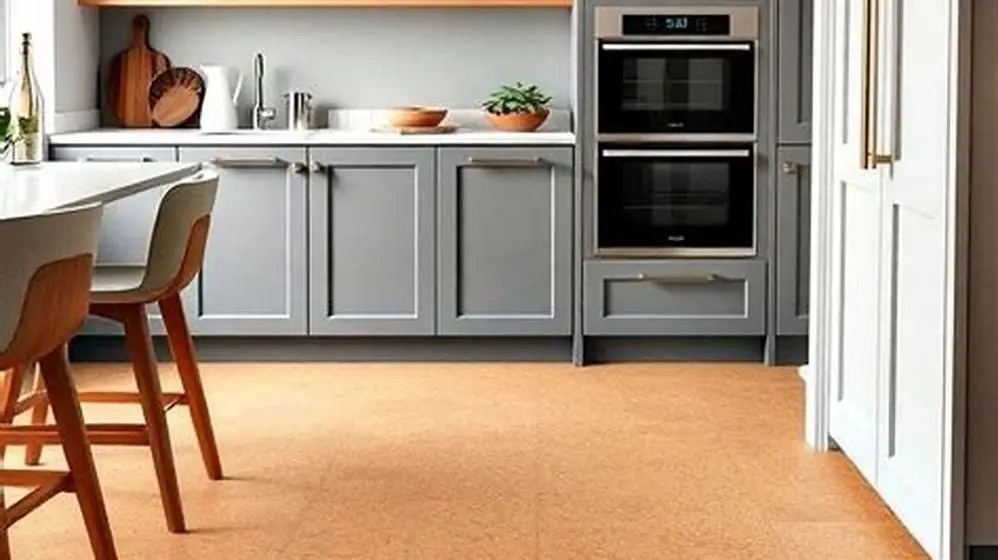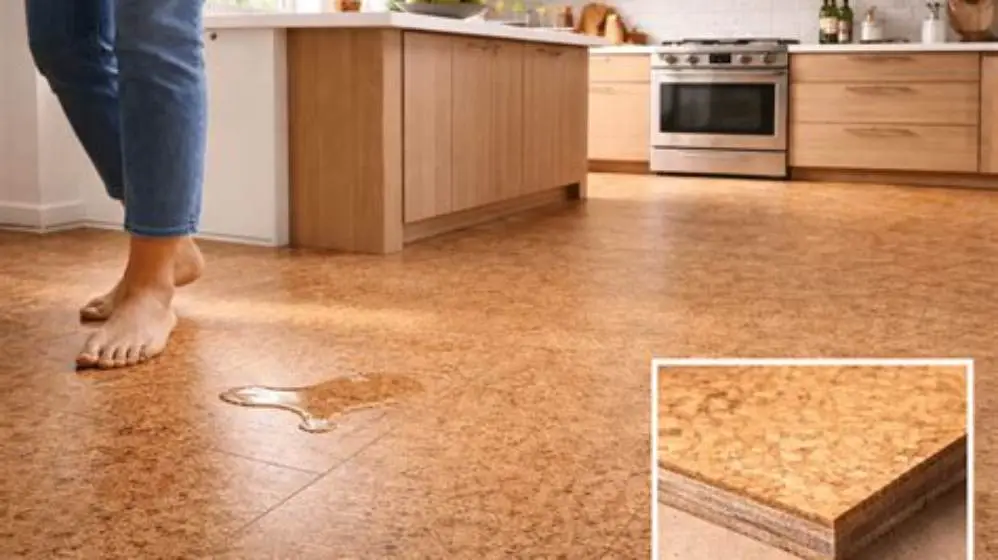
Key durability and spill resistance facts about cork flooring help you decide if it works in kitchens and basements with occasional moisture.
Cork flooring with a wear layer of at least 3-6 mm and a durable polyurethane finish resists kitchen wear well. Proper sealing prevents spill damage and swelling from occasional basement moisture, but maintenance is essential to preserve durability.
On this page
- The short version
- How wear layers affect cork flooring durability in kitchens
- Finishes and sealants that boost cork flooring spill resistance
- Expected durability and maintenance practices for cork floors in kitchens
- Spill resistance levels and how to care for cork flooring spills
- Is cork flooring suitable for basements with occasional moisture?
- How to test and maintain cork flooring durability and spill resistance
- Questions people still ask
Part of our guide on how can a building be sustainable
Exact wear layer thicknesses and finish coatings determine if cork floors survive kitchen spills and basement moisture without costly damage.
| Recommended wear layer | 3-6 mm |
|---|---|
| Typical polyurethane finish coats | 2-3 |
| Expected durability in kitchens | 5-15 years |
| Moisture swelling risk | High if unsealed |
| Spill resistance | Moderate to high |
| Suitable for basements | Yes, if sealed |
The short version
- Wear layers of 3-6 mm improve cork durability in kitchens
- Polyurethane finishes add critical spill resistance
- Sealing edges and joints prevents moisture swelling
- Regular cleaning and quick spill response extend lifespan
- Basements need extra sealing to handle occasional moisture
How wear layers affect cork flooring durability in kitchens
The wear layer of cork flooring directly determines its durability in high-traffic areas like kitchens. Most quality cork floors feature a wear layer thickness between 3 and 6 millimeters. This layer acts as a cushion and protective barrier, absorbing foot traffic and kitchen-related impacts.
Thicker wear layers extend the floor’s lifespan by several years, typically supporting 5 to 15 years of use, depending on daily wear intensity. Thinner wear layers wear out faster under kitchen conditions, exposing the softer cork beneath to damage.
Wear layers depend on construction type: floating cork floors often have thinner layers, while glue-down types or cork tiles may have thicker ones. The exact durability also hinges on the finish and the subfloor beneath.
Finishes and sealants that boost cork flooring spill resistance
Polyurethane finishes are the main defense against spills on cork flooring. Two to three coats typically provide a water-resistant surface that prevents liquids from penetrating the cork quickly. Some finishes include UV additives for color stability but don’t improve spill resistance. It helps to understand low voc linoleum flooring for kitchens before going further.
Sealants on edges and the floor’s underside play a critical role in stopping moisture seepage, especially in kitchens where spills and humidity are common. Unsealed edges allow liquids to enter the cork, causing swelling or warping within hours.
Matte or satin finish textures don’t lessen spill protection but can affect how easily stains show. Glossy finishes may look slicker but require similar maintenance. Oil-based finishes are less common and offer lower spill resistance.
Some advanced sealants include nanotechnology-based coatings that fill micro-pores in cork, enhancing spill resistance by up to 30% compared to standard polyurethane finishes. These coatings maintain breathability to prevent moisture entrapment while providing an additional barrier against liquids. However, their effectiveness depends on proper application and curing times, which can vary between 24 to 72 hours. We cover is bamboo flooring eco friendly in its own article.
Finishes wear unevenly in kitchens, especially near sinks and cooking areas where spill frequency is highest. Regular inspection of these zones for finish thinning or dull spots can prevent hidden cork damage. Touch-up kits for polyurethane finishes allow homeowners to restore spill resistance without full refinishing.

General Tools MMD4E Moisture Meter for Wood
Helps detect moisture risk that can cause cork swelling and damage with a moisture range of 5 - 50% for wood and 1.5 - 33% for building materials
Expected durability and maintenance practices for cork floors in kitchens
Well-installed cork floors with proper wear layers and finishes generally last 5 to 15 years in a kitchen setting. Durability depends heavily on maintenance: regular sweeping or vacuuming to remove grit reduces surface abrasion, and mopping with mild cleaners prevents finish damage.
Spills should be wiped immediately: standing liquids cause swelling and discoloration. Avoid harsh chemical cleaners or soaking the floor. Maintain polyurethane finishes by occasional buffing and recoating every 5 years or sooner if wear shows. Before you commit to anything, it is worth looking at checking tile installation for voc issues.
Kitchens with heavy use or appliances on rollers might reduce cork’s lifespan faster. Furniture pads and rugs can protect vulnerable areas. The floor’s subfloor moisture levels must be controlled to prevent upward moisture migration.
In kitchens with pets, durability may reduce due to scratches and spills from food or water bowls. Pet claws can wear the finish within 2 to 3 years without protective measures. Using area rugs under feeding stations and trimming claws regularly helps extend cork floor longevity.
To check maintenance effectiveness, a simple test is to pour a tablespoon of water on the floor and observe if it beads or absorbs within 10 minutes. Beading indicates intact finish; absorption suggests the floor needs recoating or sealing. This quick check can guide homeowners in scheduling maintenance before damage occurs. It helps to understand clay render cracking on old lime plaster walls before going further.
Spill resistance levels and how to care for cork flooring spills
Cork flooring’s spill resistance varies from moderate to high depending on the finish and sealing quality. Otherwise, cork is porous and absorbs liquids quickly, leading to swelling and stains.
Daily kitchen spills (water, wine, oil) can usually be managed if cleaned up within 5-10 minutes. Longer exposure can cause permanent damage. Special sealers can improve resistance but rarely make cork waterproof.
For ongoing protection, use area rugs near sinks and appliances. When spills occur, blot rather than scrub to prevent finish wear. Periodic reapplication of sealant or finish coats restores spill resistance over time.
When dealing with sticky or acidic spills like fruit juice or vinegar, immediate blotting is even more critical. Acids can etch the cork surface if left too long, leading to permanent discoloration. For example, a 15 ml vinegar spill left for 20 minutes on an unsealed cork floor caused visible darkening after drying.
If a spill causes swelling, the affected area may feel raised or soft to the touch. Prompt drying with absorbent cloths and fans can minimize permanent deformation. In worst cases, sanding and refinishing or replacing damaged tiles may be necessary. This physical check helps users identify when professional repair is required.
Is cork flooring suitable for basements with occasional moisture?
Cork flooring can be used in basements with occasional moisture only if the subfloor and cork are properly sealed. Cork swells significantly when exposed to moisture; unsealed floors will warp within days.
A moisture barrier beneath the cork and water-resistant finishes on top are essential. Basements with rising damp or frequent water intrusion are not suitable for cork.
Moderate basement humidity (below 60% relative humidity for extended periods) and prompt drying of any spills can preserve cork flooring. Monitoring basement moisture levels with a hygrometer helps prevent damage.
How to test and maintain cork flooring durability and spill resistance
Check cork floor durability by inspecting wear layer thickness with a gauge if accessible, or confirm specs with the manufacturer. Measure polyurethane finish thickness with specialized tools or rely on application records.
Test spill resistance by applying a small amount of water or oil in an inconspicuous area; if it beads and wipes easily without soaking in, sealing is intact. Any absorption indicates resealing is needed.
Maintain cork by cleaning spills swiftly, avoiding harsh detergents, and periodically applying recommended sealants. Use a digital moisture meter to monitor subfloor and ambient humidity near cork floors, especially in basements, to prevent swelling.
Regular inspection every 6 months catches early damage signs such as discoloration, warping, or finish dulling, guiding timely recoating or repair.
- Confirm wear layer thickness from product specs or gauge
- Inspect polyurethane finish thickness or application history
- Test spill resistance by applying water and checking absorption
- Use digital moisture meter near cork floors, especially basements
- Clean spills immediately and reseal floor if absorption occurs
- Perform maintenance recoating every 5 years or as needed
Questions people still ask
Can cork flooring handle heavy kitchen appliance traffic?
Cork with a 3-6 mm wear layer and strong finish can withstand moderate appliance traffic, but rollers or heavy dragging can damage it. Use protective pads and avoid dragging to extend floor life.
Does cork flooring require special cleaning products for spill resistance?
Use mild pH-neutral cleaners and avoid abrasive or oil-based products. Harsh chemicals damage finishes and reduce spill resistance.
How quickly must spills be cleaned on cork floors to prevent damage?
Spills should be wiped within 5-10 minutes to avoid absorption, swelling, or staining of cork.
Is cork flooring waterproof enough for basement use?
Cork is not waterproof but can be moisture-resistant if sealed and installed over a moisture barrier. Continuous or heavy moisture exposure makes cork unsuitable for basements.
How often should cork flooring finishes be reapplied in a kitchen?
Polyurethane finishes typically last 5-10 years but should be inspected regularly and reapplied when wear or dullness appears.