Bamboo flooring meets key eco criteria but watch for chemical use and durability tradeoffs that affect its green benefits.
Bamboo flooring is eco friendly because it grows fast, stores carbon, and is recyclable. But watch for chemical adhesives and finishes, and lower durability that can increase environmental impact over time.
On this page
- The short version
- Is bamboo flooring eco friendly
- Why bamboo is considered eco friendly
- Common environmental concerns with bamboo flooring
- Durability and environmental impact tradeoffs
- How to verify bamboo flooring sustainability
- Bamboo flooring eco friendliness: 3 green criteria met and 2 concerns to check
- Questions people still ask
Part of our guide on sustainable building materials
Bamboo flooring meets key eco criteria with rapid renewability and recyclability but watch for formaldehyde use and durability tradeoffs.
| Growth rate | 3-5 years |
|---|---|
| Carbon storage | High in growth |
| Adhesive concern | Formaldehyde possible |
| Durability range | 5-25 years |
| Recyclability | Yes, biodegradable |
The short version
- Bamboo grows 3-5 times faster than hardwood trees.
- It stores significant carbon during growth.
- Bamboo flooring is recyclable and biodegradable.
- Watch for formaldehyde in adhesives and finishes.
- Durability varies and affects long-term eco impact.
Is bamboo flooring eco friendly
Bamboo flooring is generally eco friendly because of bamboo's rapid growth rate. It can reach harvest maturity in 3 to 5 years, much faster than hardwood trees that take decades. This fast regrowth means bamboo can be a renewable resource if sustainably managed.
Another eco benefit is bamboo’s ability to store carbon while growing. Young bamboo plantations absorb CO2 efficiently, reducing greenhouse gas levels. The material is also biodegradable and recyclable at end of life, which helps lower waste.
However, eco friendliness depends on how the bamboo flooring is processed. Some products use adhesives and finishes with formaldehyde or other chemicals, which reduce indoor air quality and add pollution. The environmental impact of transporting bamboo from Asia to the UK also counts.
Why bamboo is considered eco friendly
Bamboo ranks as eco friendly mainly because it is one of the fastest growing plants. Under good management, it can be harvested every 3 to 5 years, renewing the resource quickly without deforestation. We go through wood carbon footprint step by step elsewhere on the site.
It grows densely without the need for pesticides or fertilizers in many cases, which lowers chemical inputs compared to conventional timber plantations. Bamboo also regenerates from its root system, avoiding replanting disturbances.
Its dense fibres and fast growth help it capture carbon effectively. This carbon stays locked in the flooring, offsetting emissions from other parts of the product’s life cycle. Bamboo can be fully recycled or composted at the product’s end of life.
Bamboo's environmental benefit hinges on harvest methods. Clear-cutting large areas disrupts soil and local wildlife. Sustainable practices limit harvesting to mature stalks, allowing younger ones to grow. This keeps the ecosystem balanced and the soil healthy. We cover embodied carbon of brick in its own article.
Bamboo plantations vary globally. In some regions, monoculture plantations replace native forests, which harms biodiversity. Certified sources often ensure mixed-use forests or agroforestry systems, supporting wildlife and plants alongside bamboo.
Bamboo's water use is generally low. It needs less irrigation than many timber species, reducing water stress in cultivation areas. This helps bamboo remain a greener choice in regions prone to drought or water shortages.
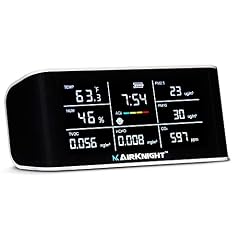
AirKnight Premium Indoor Air Quality Monitor Indoor & Air Quality Sensor. VOC
Measures formaldehyde levels with a sensor included in a 10-in-1 air quality monitor, suitable for checking indoor air after bamboo flooring installation.
Common environmental concerns with bamboo flooring
A major concern is the use of formaldehyde-based adhesives and finishes. Some manufacturers use urea-formaldehyde glues to bind bamboo strips. This chemical can off-gas VOCs (volatile organic compounds), affecting indoor air quality. Before you commit to anything, it is worth looking at voc limits for paint.
Another issue is the energy and emissions linked to transporting bamboo from Asia to the UK. Shipping and handling add to the carbon footprint, offsetting some growth-phase benefits.
Also, bamboo plantations sometimes replace diverse ecosystems or farmland, which can harm biodiversity. Not all bamboo products come from sustainably certified sources, so green credentials vary.
The durability of bamboo flooring affects its eco footprint. Less durable bamboo means replacing floors more often, increasing waste and resource use.
Formaldehyde emissions vary widely. Some bamboo floors emit levels below 0.05 parts per million, meeting strict indoor air standards. Others can exceed 0.1 ppm, which causes irritation and health risks. Checking emission ratings before purchase matters.
A further concern is harvesting impact on local communities. Unsustainable bamboo farming can displace small farmers or degrade land. Ethical sourcing includes fair labor practices and community involvement to reduce social harm.
Transport emissions also depend on shipping method. Air freight doubles the carbon footprint compared to sea freight. Opting for products shipped by sea reduces impact and supports eco claims.
Durability and environmental impact tradeoffs
Most bamboo flooring has a lifespan between 5 and 25 years, depending on quality, type, and installation. Strand-woven bamboo tends to be harder and more durable than traditional horizontal or vertical bamboo flooring.
Durability influences environmental impact because shorter-lived floors must be replaced sooner, increasing resource use and waste.
Choosing higher durability bamboo flooring reduces the need for frequent replacement, improving its eco credentials despite potentially higher initial resource use in manufacturing.
You should check the product’s Janka hardness rating or equivalent to estimate durability. Ratings above 3000 lbf indicate good wear resistance for residential use.
Strand-woven bamboo scores 3000 to 3500 lbf on the Janka hardness scale, exceeding many hardwoods like red oak at 1290 lbf. This means strand-woven bamboo resists dents and scratches better, lasting longer in busy homes.
Lower-quality horizontal bamboo rates around 1300 to 1600 lbf. This durability suits low-traffic areas but not heavy use. Floors in high-traffic commercial spaces might wear out in under 5 years, which harms eco benefits.
Finishes also affect durability. Harder, non-toxic finishes extend flooring life, reducing replacement frequency. Cheaper finishes may peel or scratch early, forcing sooner replacement and more waste.
| Type | Typical Lifespan (years) | Average Hardness (Janka lbf) | Eco Impact Tradeoff |
|---|---|---|---|
| Strand-Woven | 20-25 | 3000-3500 | Higher initial energy, longer life |
| Horizontal | 5-10 | 1300-1600 | Lower energy, shorter life |
| Vertical | 5-10 | 1200-1500 | Lower energy, shorter life |
How to verify bamboo flooring sustainability
Look for FSC (Forest Stewardship Council) or other credible certifications that verify sustainable harvesting and processing. These certifications confirm the bamboo comes from responsibly managed plantations.
Check technical data sheets for VOC emissions. Choose products with low or zero formaldehyde emissions to protect indoor air quality.
Ask suppliers about the type of adhesive and finish used. Avoid urea-formaldehyde-based glues and finishes with high VOCs.
Consider the total carbon footprint including transport. Locally available bamboo options or UK-manufactured composites can reduce shipping impact.
Using a formaldehyde test kit can help verify emissions in your home after installation. These kits measure indoor air quality and ensure safety.
Bamboo flooring eco friendliness: 3 green criteria met and 2 concerns to check
Bamboo flooring meets three key eco criteria: rapid renewability, effective carbon storage, and recyclability. These make it a strong candidate for green flooring compared to slow-growing hardwoods.
The first green check is bamboo’s fast growth cycle of 3-5 years, reducing land use pressure.
Second is its ability to lock carbon during its growth and maintain it in the finished flooring.
Third is that bamboo flooring waste can biodegrade or be recycled, limiting landfill impact.
However, two concerns require attention: chemicals like formaldehyde in adhesives and finishes, and durability tradeoffs that may lead to more frequent replacement and waste.
Evaluate products carefully for certification, VOC emissions, and durability ratings before deciding. If durability falls below 10 years, environmental benefits may erode.
Using a formaldehyde test kit after installation helps catch emission problems early, protecting health and confirming eco claims.
| Criterion | How Bamboo Performs | Impact |
|---|---|---|
| Renewability | Harvest in 3-5 years | Positive, reduces deforestation |
| Carbon Storage | High in growth phase | Offsets emissions |
| Recyclability | Biodegradable, recyclable | Reduces landfill |
| Chemical Use | Possible formaldehyde adhesives | Negative, indoor air risk |
| Durability | 5-25 years lifespan | Tradeoff: shorter life increases impact |
Bamboo flooring offers strong eco benefits if you choose durable, low-VOC products and verify certifications.
Questions people still ask
Is bamboo flooring better for the environment than hardwood?
Bamboo typically grows faster than hardwood trees, making it more renewable. However, durability and chemical use affect overall impact. High-quality bamboo can outperform some hardwoods if these factors are managed.
Can bamboo flooring release harmful chemicals in a home?
Some bamboo flooring uses adhesives and finishes containing formaldehyde. These can release VOCs indoors. Choosing low-emission products and testing air quality helps keep your home safe.
How long does bamboo flooring usually last compared to wood?
Bamboo lasts about 5 to 25 years depending on type and quality. Hardwoods often last 30-100 years. Longer lifespan means less frequent replacement and lower environmental damage.
What certifications ensure bamboo flooring is eco friendly?
Look for FSC or PEFC certifications that confirm sustainable bamboo harvesting. Also check for low VOC emissions certification to protect indoor air quality.
Is bamboo flooring recyclable or compostable after use?
Yes, bamboo flooring is biodegradable and recyclable if untreated by heavy chemicals. Untreated or lightly finished bamboo can be composted or reused responsibly.
How does transport impact the eco friendliness of bamboo flooring?
Bamboo is often shipped from Asia, adding carbon emissions. This transport footprint can offset some growth-phase benefits. Choosing local or UK-assembled products reduces this impact.