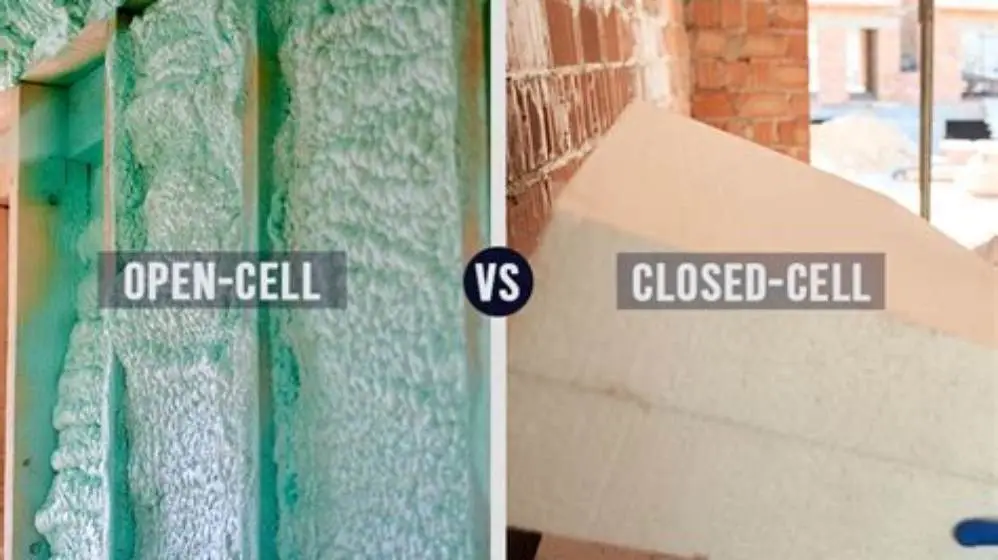
A clear comparison of closed cell and cellulose insulation at 50mm thickness for retrofit gaps focusing on thermal, moisture, and installation factors.
At 50mm thickness, closed cell foam typically delivers an R-value around 2.5-3.0 m²K/W, outperforming cellulose, which offers roughly 1.7-2.0 m²K/W. Closed cell also resists moisture better, but cellulose excels in vapor permeability and eco-friendliness. Choose based on moisture risk and retrofit constraints.
On this page
Part of our guide on sustainable building materials
Exact R-values, moisture risks, and installation challenges for closed cell and cellulose at 50mm retrofit thicknesses, compared with real-world retrofit fit in mind.
| R-value at 50mm | 2.5-3.0 closed cell |
|---|---|
| R-value at 50mm | 1.7-2.0 cellulose |
| Moisture resistance | Closed cell high |
| Vapor permeability | Cellulose high |
| Typical settling | Cellulose 5-10% |
| Embodied carbon | Lower in cellulose |
The short version
- Closed cell foam has higher R-value per 50mm than cellulose
- Cellulose offers better vapor permeability, reducing condensation risk
- Closed cell is stiffer, easier to fit tightly in narrow retrofit gaps
- Cellulose can settle over time, slightly reducing insulation value
- Embodied carbon is generally lower for cellulose than closed cell foam
Thermal performance at 50mm thickness
Closed cell spray foam insulation typically achieves an R-value between 2.5 and 3.0 m²K/W at 50mm thickness, depending on the exact product and installation quality. This range arises because closed cell foam has a dense, closed matrix trapping gas, reducing heat transfer efficiently.
Cellulose insulation, on the other hand, delivers around 1.7 to 2.0 m²K/W at the same thickness. Its loose fill nature and higher air permeability lower its thermal resistance. The cellulose’s R-value depends strongly on density and installation method: denser installs yield higher values but risk settlement.
Choosing between these R-values depends on how critical the incremental gain is versus cost, environmental impact, and fit constraints in a retrofit gap. Closed cell foam provides better thermal insulation in tight spaces but at a higher material energy cost.
| Insulation type | Typical R-value (m²K/W) at 50mm |
|---|---|
| Closed cell foam | 2.5 - 3.0 |
| Cellulose | 1.7 - 2.0 |
Moisture and condensation risks in retrofit cavities
Closed cell foam acts as a vapor barrier due to its low permeability, generally below 0.1 perms, which helps prevent moisture ingress through the cavity from warm interior air. This reduces condensation risk behind the insulation but can trap moisture if water enters from outside, potentially damaging timber structures. For the detail, see our notes on natural insulation low carbon.
Cellulose is highly vapor permeable, around 5-10 perms depending on density and additives. This means it allows moisture vapor to pass through, drying out any moisture that accumulates and lowering condensation risk. However, its hygroscopic nature means it can absorb some moisture, requiring careful moisture management.
In retrofit cavity gaps around 50mm, moisture risks arise mainly from leaks or poor ventilation. Closed cell’s vapor barrier effect helps block moisture but demands excellent detailing to avoid trapped dampness. Cellulose’s breathability reduces trapped moisture but needs drying time and protection from liquid water ingress.
In retrofit cavities around 50mm, the risk of condensation is also influenced by external climate conditions and wall orientation. For example, north-facing walls in cooler climates tend to retain moisture longer, increasing risk if closed cell foam traps water. Conversely, cellulose's vapor permeability helps adapt to seasonal moisture variations, allowing drying during warmer, drier months. However, if exterior walls are exposed to driving rain without effective barriers, cellulose may become saturated, compromising insulation value and promoting decay. This seasonal moisture dynamic means closed cell foam is safer in consistently dry or well-protected walls, while cellulose suits walls with good ventilation and rain shedding. The other half of this decision is spray foam patch removal.
| Aspect | Closed cell foam | Cellulose insulation |
|---|---|---|
| Vapor permeability | Very low (<0.1 perms) | High (5-10 perms) |
| Moisture absorption | Minimal | Moderate, hygroscopic |
| Condensation risk | Low if sealed | Low if dry and ventilated |
| Risk of trapped moisture | High if leaks occur | Low due to breathability |

Neoteck 6 inch Stainless Steel Digital Caliper and Feeler Gauge Set
Handles your 50mm retrofit gap measurement with an accuracy of 0.02mm (0.0008 inch), exceeding the 1mm accuracy needed.
Ease of installation in tight retrofit spaces
Closed cell foam is sprayed into the cavity and expands to fill gaps, making it highly effective in narrow 50mm retrofit spaces where precise fit is challenging. Its rigidity after curing provides structural rigidity and seals air leaks effortlessly.
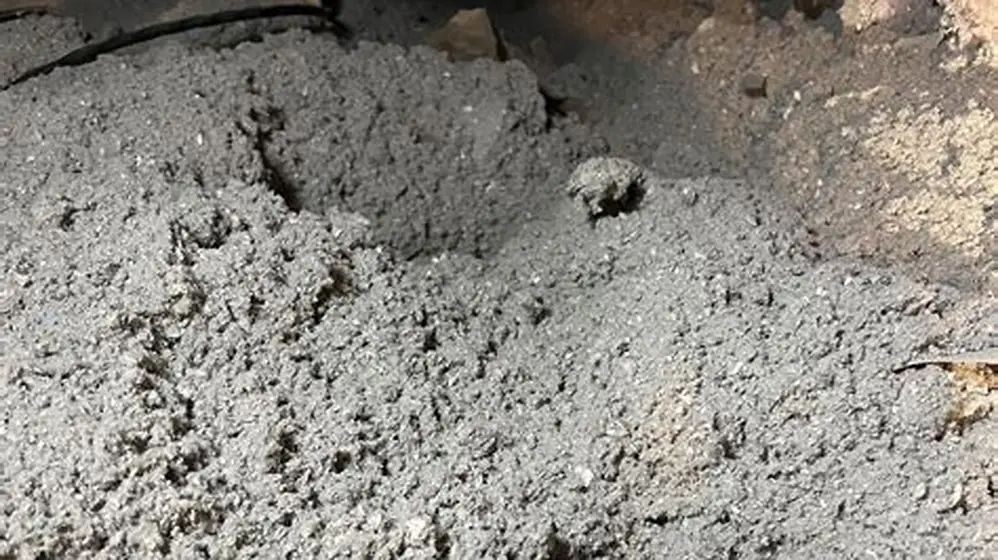
Cellulose installation involves blowing or pouring loose fibers into cavities, which may not compact uniformly in very narrow gaps. Achieving a dense, settled fill at 50mm depth is difficult and can result in voids or uneven coverage, reducing thermal performance.
In retrofit scenarios with limited access, closed cell foam usually offers a neater, quicker installation that reliably fills gaps and seals air leaks. Cellulose requires more care to avoid settling and gaps but can be done without specialist spray equipment. It helps to understand depth loss from cellulose settling before going further.
Durability and settling over time
Closed cell foam maintains its volume and R-value over decades if installed correctly. It resists compression and does not settle, maintaining airtightness and thermal performance in retrofit gaps as thin as 50mm.
Cellulose insulation commonly settles between 5-10% over the first years after installation, depending on density and vibration exposure. This reduces the effective insulation thickness and thermal performance, which can be critical in tight retrofit gaps.
Cellulose can degrade if exposed to persistent moisture or pests without additional treatment. Longevity depends on installation quality and environmental conditions, unlike closed cell foam, which resists biological degradation. We cover is wool a sustainable product in its own article.
To illustrate settling impact, a 50mm cellulose fill settling by 7% loses about 3.5mm effective thickness, dropping R-value from roughly 1.85 m²K/W to about 1.7 m²K/W. This loss might seem small but represents a 7-10% decrease in thermal resistance, meaningful in retrofit cases where every fraction counts. In contrast, closed cell foam maintains thickness and R-value with virtually no compression or settling, preserving insulation integrity over decades. This stability also helps maintain airtightness, reducing drafts and energy loss. A final check to confirm cellulose settling is to measure cavity depth a year after installation and compare it to original fill depth.
| Property | Closed cell foam | Cellulose insulation |
|---|---|---|
| Volume stability | Stable, negligible settlement | Settles 5-10% over years |
| Resistance to pests | Resistant | Can degrade without treatment |
| Longevity | Decades without loss | Depends on moisture and pests |
Embodied carbon and environmental impact
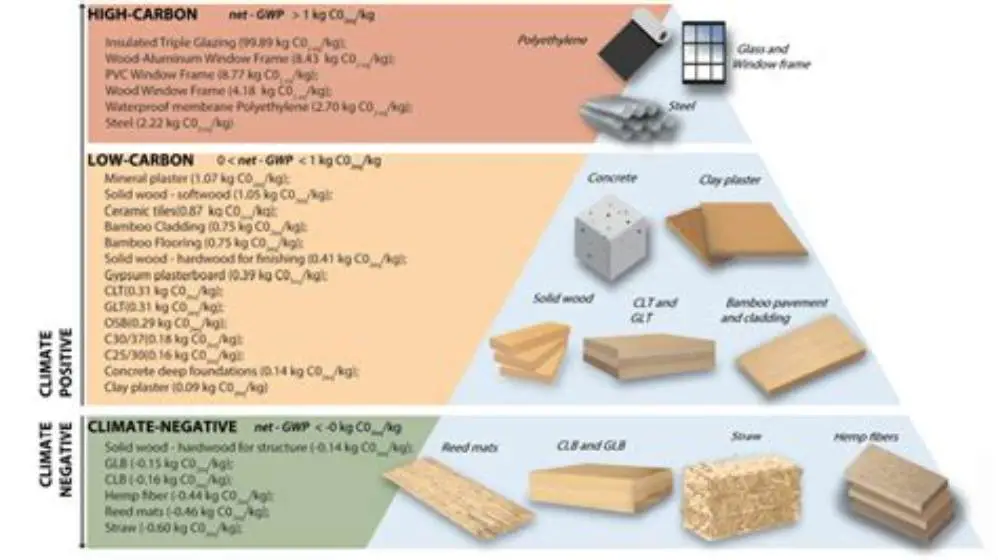
Cellulose insulation, made primarily from recycled paper treated with borates, has a low embodied carbon footprint, often less than 0.5 kg CO2e per kg. This makes it a strong choice for eco-conscious retrofits aiming to reduce carbon emissions.
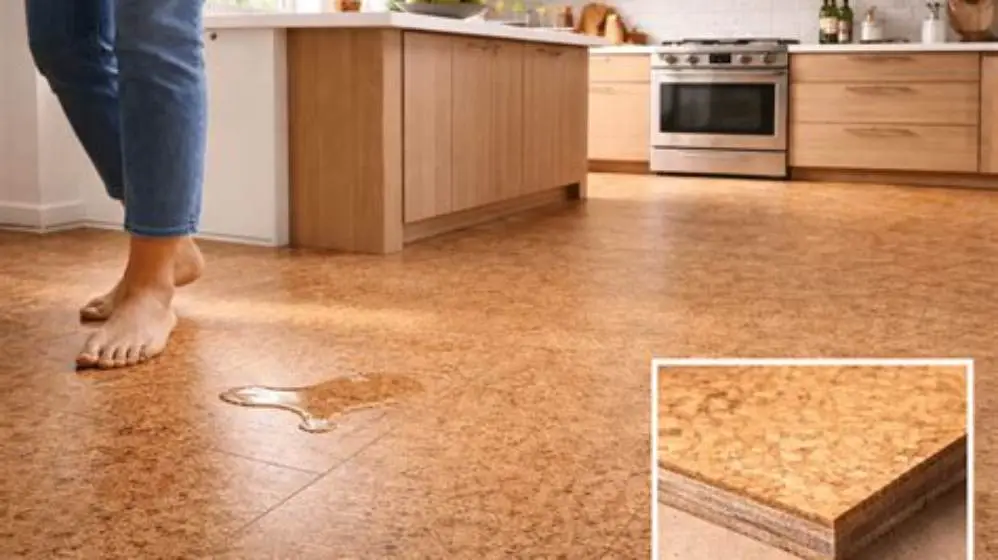
Closed cell spray foam typically contains petrochemical-based blowing agents and polymers, resulting in higher embodied carbon, generally around 3-4 kg CO2e per kg. These figures vary by product and manufacturer but tend to be significantly higher than cellulose. Before you commit to anything, it is worth looking at cork flooring durability for kitchen and spill resistance.
Choosing between these materials involves a trade-off: cellulose lowers the upfront carbon impact and is biodegradable, while closed cell offers better thermal performance and moisture resistance but with a heavier carbon cost.
Embodied carbon figures vary with product formulations. Some closed cell foams now incorporate low global warming potential (GWP) blowing agents, reducing carbon footprint by up to 50% compared to older formulations. Cellulose treatments with borate additives may slightly increase embodied carbon but improve fire and pest resistance, extending service life and offsetting impacts. Life cycle assessments also consider operational energy savings: closed cell’s higher R-value means greater energy reduction over decades, potentially outweighing initial carbon cost in colder climates. Therefore, selecting insulation based solely on embodied carbon should include anticipated service life and climate context for a full environmental evaluation.
| Material | Typical embodied carbon (kg CO2e/kg) |
|---|---|
| Cellulose insulation | Around 0.3 - 0.5 |
| Closed cell foam | Around 3 - 4 |
Closed cell vs cellulose for 50mm retrofit gap
The thermal R-value difference at 50mm thickness favors closed cell foam (2.5-3.0 m²K/W) over cellulose (1.7-2.0 m²K/W). This means closed cell can offer up to 50% extra insulation in the same gap size, critical in retrofit situations where space is limited. People in this spot often ask about paint compatibility on lime plaster as well.
Moisture management flips the decision. Closed cell foam seals moisture out but risks trapping water if the external wall leaks. Cellulose breathes and dries but can absorb moisture initially and requires careful moisture control externally.
Installation favors closed cell for tight, narrow retrofits because it expands to fill gaps and seals air leaks. Cellulose needs densification and risks settling, which can reduce long-term performance in 50mm gaps.
Embodied carbon is substantially lower in cellulose, making it attractive for low-carbon retrofits if moisture risks are controlled.
If the retrofit cavity has controlled moisture, and space is tight, closed cell foam is the better fit despite its carbon cost. For drier, ventilated walls prioritizing low carbon, cellulose is preferable despite thermal and settling compromises.
| Aspect | Closed cell foam | Cellulose insulation |
|---|---|---|
Thermal R-value (m²K/W) | 2.5-3.0 | 1.7-2.0 |
| Moisture permeability | Very low | High |
| Risk of trapped moisture | High if leaks | Low |
| Installation in 50mm gap | Easy, expands to fit | Challenging, risk of voids |
| Settling over time | Negligible | 5-10% common |
| Embodied carbon (kg CO2e/kg) | 3-4 | 0.3-0.5 |
| Longevity | High | Depends on moisture control |
- Closed cell: superior insulation in thin gaps
- Closed cell: excellent air and moisture barrier
- Cellulose: low embodied carbon
- Cellulose: vapor permeable, reduces condensation risk
- Closed cell: risk of trapped moisture if leaks present
- Closed cell: higher carbon footprint
- Cellulose: settling reduces long-term R-value
- Cellulose: harder to install well in tight cavities
For 50mm retrofit gaps, closed cell foam is best for thermal and fit performance, cellulose wins on moisture tolerance and carbon footprint.
Questions people still ask
Can cellulose insulation cause mold in retrofit gaps?
Cellulose can absorb some moisture but dries out if the cavity is ventilated and free of leaks. Mold risk is low if moisture ingress is controlled.
Is closed cell foam suitable for all retrofit walls?
Closed cell foam works best where moisture ingress is minimal. In walls prone to leaks or damp, it may trap moisture and cause damage.
How do I check if my retrofit gap is exactly 50mm?
Use a thin digital caliper or gap gauge to measure cavity depth accurately before purchasing insulation.
Does cellulose settling happen immediately or over years?
Most cellulose settling occurs within the first 2-3 years but can continue slowly if disturbed.
Can I install closed cell foam myself in retrofit gaps?
Closed cell foam installation requires specialist equipment and safety measures; professional installation is recommended.