Work out the right buffer tank size for an 8kW heat-pump system with radiators, and learn when inverter models can skip it altogether.
An 8kW air-to-water heat pump typically needs a 100 to 150 litre buffer tank when running radiators, calculated at roughly 15 to 20 litres per kW. Inverter-driven systems with low-loss headers or high total system volume may not need one at all.
On this page
- The short version
- Why buffer tank capacity matters for heat pump cycling
- Do I need a buffer tank with an inverter heat pump on radiators
- How to size a buffer tank for an 8kW air-to-water heat pump
- When to use a low-loss header instead of a buffer tank
- What happens when the buffer is too small or too large
- Calculating system volume from your existing radiators and pipework
- Questions people still ask
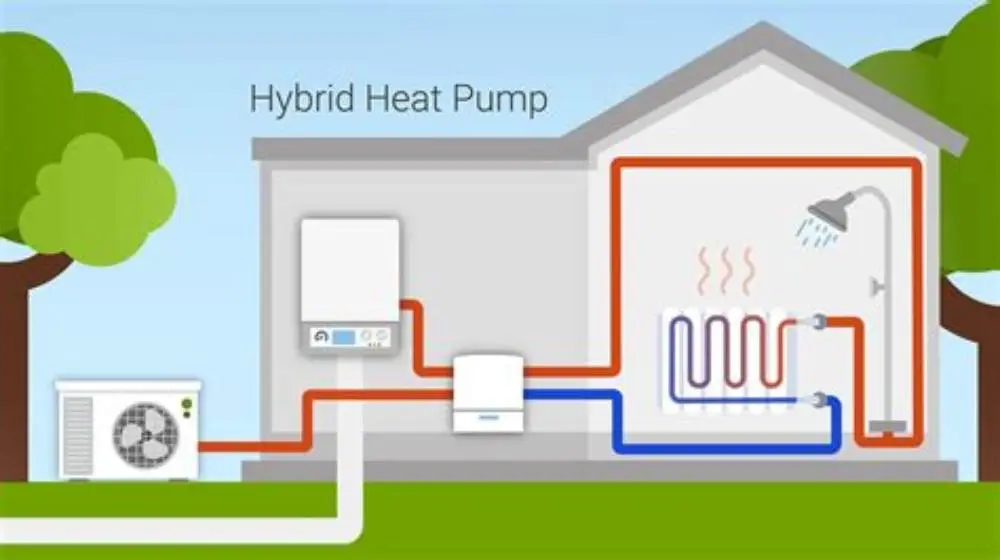
Part of our guide on what is a hybrid heat pump
Most installers guess buffer tank size, but the wrong volume costs you £300 and shortens compressor life through rapid cycling.
| Buffer size for 8kW | 100 to 150 litres |
|---|---|
| Rule of thumb | 15 to 20 litres per kW |
| Minimum cycle time | 6 minutes per run |
| System volume needed | 10+ litres per kW total |
| Minimum flow rate | 16 litres per minute |
| Typical buffer cost | £250 to £450 fitted |
The short version
- Aim for 15 to 20 litres per kW: 120 to 160 litres for an 8kW heat pump on radiators
- Inverter heat pumps can skip the buffer if total system volume exceeds 10 litres per kW and flow rate stays above 16 litres per minute
- Undersized tanks cause short-cycling below 6 minutes per run, wearing the compressor and cutting efficiency by 10 to 15 per cent
- A low-loss header with adequate pipework volume can replace a buffer tank on modulating systems
- Measure your existing radiator content first: six double-panel radiators hold roughly 60 to 80 litres, so you may only need 40 to 60 litres more
Why buffer tank capacity matters for heat pump cycling
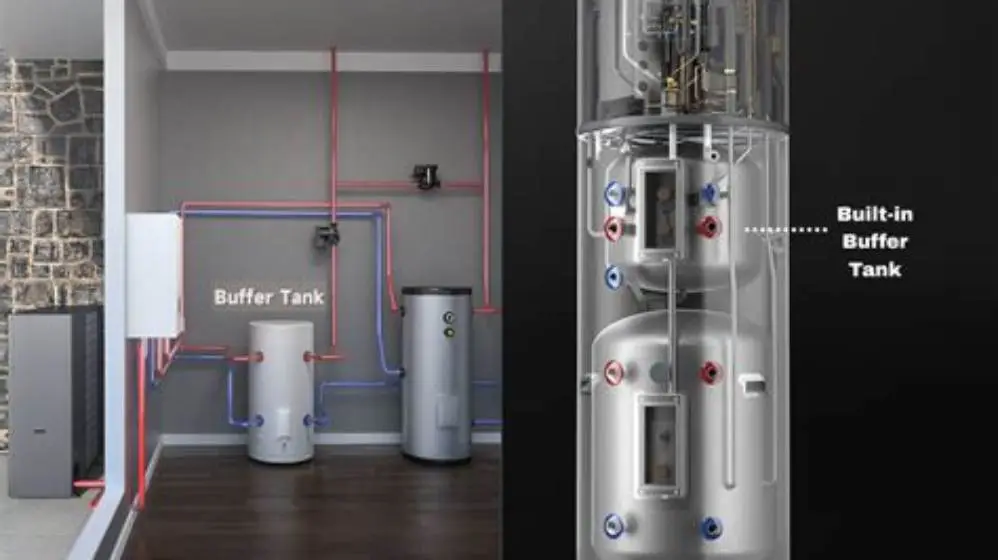
A buffer tank sits between your heat pump and radiators to hold enough water that the compressor runs for at least six minutes before the thermostat is satisfied and switches it off. Without that reservoir, small radiator circuits heat up in two or three minutes, the room stat cuts the call for heat, and the compressor cycles on and off every few minutes. Short-cycling wears the compressor, cuts COP by 10 to 15 per cent, and triggers low-flow or high-pressure faults on many controllers.
Air-to-water heat pumps deliver heat slowly compared to gas boilers. A radiator loop might only hold 60 litres, and an 8kW heat pump raises that volume by 3°C in under three minutes when the delta-T is 5°C. The room reaches setpoint, the pump stops, then five minutes later the room drops half a degree and the cycle repeats. That sawtooth pattern is hardest on fixed-speed compressors, which start and stop at full load every time.
A buffer tank absorbs heat when the stat is satisfied and releases it when the room calls again, stretching each compressor run to ten or fifteen minutes. The sweet spot is around 15 to 20 litres per kilowatt of heat-pump output. For an 8kW unit that means 120 to 160 litres. Go lower and you still get short cycles; go higher and you add thermal mass that slows response time and costs an extra £100 to £200 without much gain.
Check your system volume first. Six double-panel radiators and 20 metres of 22 mm microbore hold roughly 80 litres. Add a 100-litre buffer and you reach 180 litres total, or about 22 litres per kW. That usually keeps cycle time above six minutes even on mild days when the heat pump modulates down to 3 or 4 kW. If your existing pipework already holds 120 litres, a 60-litre buffer may be enough. We go through buffer tank benefits explained step by step elsewhere on the site.
Do I need a buffer tank with an inverter heat pump on radiators
Inverter-driven heat pumps modulate compressor speed between 25 and 100 per cent of rated output, so an 8kW unit can drop to 2kW on a mild day without stopping. That flexibility cuts cycling, and many manufacturers say you can skip the buffer tank if three conditions are met: total system volume exceeds 10 litres per kW, flow rate stays above 16 litres per minute at the heat pump, and you fit a low-loss header or use primary and secondary circuits.
In practice, a radiator-only retrofit often falls short on volume. Eight radiators and pipework might hold 100 litres, giving you 12.5 litres per kW for an 8kW heat pump. That sounds adequate, but if four radiators close on thermostatic valves the active volume drops to 60 litres and you are back below the threshold. The compressor then cycles even at part load, especially in spring and autumn when heat demand is low and modulation alone cannot stretch run time.
A low-loss header with 30 to 40 litres of additional pipework volume can bridge the gap. It decouples the heat-pump circuit from the heating circuit, letting each run at its own flow rate and giving the inverter enough thermal mass to modulate smoothly. Installers often fit a header instead of a traditional buffer on newer systems because it takes less floor space and costs about the same once you include the extra valves and pump. If that sounds like your situation, read up on heat pump and hot water cylinders next.
If you are replacing a gas boiler and reusing the existing radiator pipework, add up the water content honestly. Small microbore loops and modern slim radiators hold much less than old cast-iron or deep double-panels. When the total is marginal, fit a 100-litre buffer. It costs £250 to £350 for the tank and another £100 to £150 for labour and fittings, but it guarantees stable operation and protects a £10,000 investment. Removing a buffer later because the heat pump cycles anyway is far more disruptive than fitting one up front.
How to size a buffer tank for an 8kW air-to-water heat pump
Start with the 15 to 20 litres per kilowatt rule. An 8kW heat pump calls for 120 to 160 litres of combined system volume. Subtract what you already have in radiators and pipework, and the remainder is your buffer tank size. Suppose your radiators hold 70 litres and the pipework adds another 30 litres. You have 100 litres total, so a 60 to 80 litre buffer brings you into range. Round up to the next standard size: tanks come in 50, 80, 100, 120, 150 and 200 litres.
A second check is cycle time. The compressor should run for at least six minutes before the room thermostat is satisfied. If the heat pump delivers 8kW and the room needs 3kW on a mild day, the surplus 5kW goes into raising the buffer and radiator water by a few degrees. With 150 litres total and a 5°C rise, that takes about nine minutes before the stat cuts the call. That is comfortable. Drop to 90 litres and the same rise takes five minutes, right on the edge of short-cycling. People in this spot often ask about do heat pumps provide hot water as well.
Larger is not always better. A 200-litre buffer on an 8kW system adds three to four minutes to the time it takes for a cold room to feel warm, because the tank absorbs heat before the radiators fully charge. It also costs another £100 and takes up 600 mm of floor space instead of 450 mm. Stick to 100 to 150 litres unless your heat pump will run at very low modulation most of the time, in which case 150 to 180 litres smooths things further without penalty.
If you are adding a buffer to an existing inverter system that already cycles, measure current cycle time with a plug-in energy monitor or by watching the outdoor fan. Count the minutes from compressor start to stop, and aim to double that duration. A system cycling every four minutes needs roughly 50 per cent more volume, so if you have 100 litres now, add a 50 or 60 litre tank. Measure again after a week and adjust if needed.
- Add up radiator water content: drain one rad into a measuring jug, multiply by the number of radiators.
- Calculate pipework volume: 1.5 litres per metre for 22 mm pipe, 0.8 litres per metre for 15 mm.
- Subtract the total from your target of 15 to 20 litres per kW (120 to 160 litres for 8 kW).
- Round up to the next standard buffer tank size: 80, 100, 120 or 150 litres.
- Check cycle time after installation: compressor should run at least six minutes per cycle on a mild day.
When to use a low-loss header instead of a buffer tank
A low-loss header is a short vertical or horizontal pipe, typically 300 to 400 mm long and 80 to 100 mm diameter, that decouples the heat-pump loop from the heating circuits. The heat pump circulates through one side at a fixed flow rate, and separate zone pumps draw from the header as needed. The header itself holds only 8 to 12 litres, far less than a buffer tank, but the decoupling means the heat pump never sees a sudden drop in flow when a zone valve closes. The other half of this decision is matching heat output precisely.
Combine a low-loss header with 30 to 40 litres of additional primary pipework and you create enough thermal mass for an inverter heat pump to modulate smoothly without a buffer. This approach works well on new builds or full retrofits where you control the pipe sizing, but it is harder to retrofit into an existing microbore system because you need to add a primary loop in 28 or 35 mm copper between the heat pump and the header.
The cost is similar: a low-loss header is £150 to £250, plus another £100 to £200 for the extra pipework, valves and a second circulation pump if the heating zones need one. A 100-litre buffer tank is £200 to £300, with £100 for fitting. The header saves floor space and can improve zoning, but it adds complexity and more potential leak points. If you already have the floor space and a simple single-zone system, the buffer is simpler and just as effective.
Choose a low-loss header when you have multiple heating zones with separate thermostats, or when the heat pump sits more than ten metres from the cylinder and you want to avoid pumping losses. Choose a buffer tank when you have a single heating circuit, limited space for extra pipework, or an existing system you want to leave largely undisturbed. Both solve the cycling problem; the difference is in how they integrate with the rest of the system. For the detail, see our notes on cost and site constraints issues.
| Feature | Buffer tank | Low-loss header |
|---|---|---|
| Typical volume added | 100 to 150 litres | 40 to 50 litres total |
| Cost including fitting | £300 to £450 | £350 to £500 |
| Floor space | 450 mm diameter, 1.2 m tall | Mounted on wall, minimal |
| Best for | Single-zone, simple retrofit | Multi-zone, new install |
| Complexity | One extra vessel | Extra pipework, pump, valves |
What happens when the buffer is too small or too large
An undersized buffer leaves the heat pump cycling every three to five minutes on mild days, exactly the problem you were trying to avoid. Each start draws a surge current, wears the compressor contactors, and resets the defrost timer. Over a heating season that can add fifty or a hundred thousand extra starts, shortening compressor life from fifteen years to ten and cutting seasonal COP by 10 to 15 per cent because the heat pump spends more time ramping up and less time at steady state.
You will also see nuisance faults. Many controllers count cycles per hour and lock out with a high-cycle alarm if the compressor starts more than six times in sixty minutes. That threshold is there to protect the compressor, but it leaves you with no heat until you reset the fault and work out why the system is cycling. The usual fix is to add buffer capacity, adjust the differential on the flow thermostat, or increase the minimum modulation if the inverter allows it.
An oversized buffer slows response time. A 200-litre tank on an 8kW system means the heat pump must raise 200 litres by 10°C before the radiators reach full output, and that takes twenty-five to thirty minutes from a cold start. The room feels slow to warm, and weather compensation becomes less responsive because the buffer smooths out short changes in outdoor temperature. You also pay for a larger tank, more pipework, and the extra heat loss from a bigger vessel that sits at 45°C all the time.
The sweet spot for cycling and response time is 15 to 20 litres per kW. Stay in that range and the heat pump runs six to twelve minutes per cycle, the room warms within fifteen minutes of a call, and the buffer costs no more than necessary. If you are not sure, round up slightly: a 120-litre buffer on an 8kW system is better than an 80-litre one, and the extra £50 is cheaper than adding capacity later when you find the compressor is cycling every four minutes.
Calculating system volume from your existing radiators and pipework
Radiator manufacturers publish water content in the technical data, but if you cannot find it, use these approximations: a single-panel radiator holds about 0.8 litres per square metre of face area, a double-panel holds 1.2 litres per square metre, and a double-panel convector holds 1.5 litres per square metre. Measure height and length in metres, multiply, then multiply again by the factor. A 600 mm by 1200 mm double-panel convector is 0.6 × 1.2 = 0.72 m², so it holds about 1.1 litres.
For pipework, 22 mm copper holds 1.5 litres per metre, 15 mm holds 0.8 litres per metre, and 28 mm holds 2.4 litres per metre. Measure the run from the heat pump to the furthest radiator and back, counting both flow and return. A typical semi-detached house with eight radiators has about 25 to 30 metres of 22 mm microbore loop from the manifold, holding 40 to 45 litres. Add the radiator content and you might reach 90 to 100 litres total before any buffer.
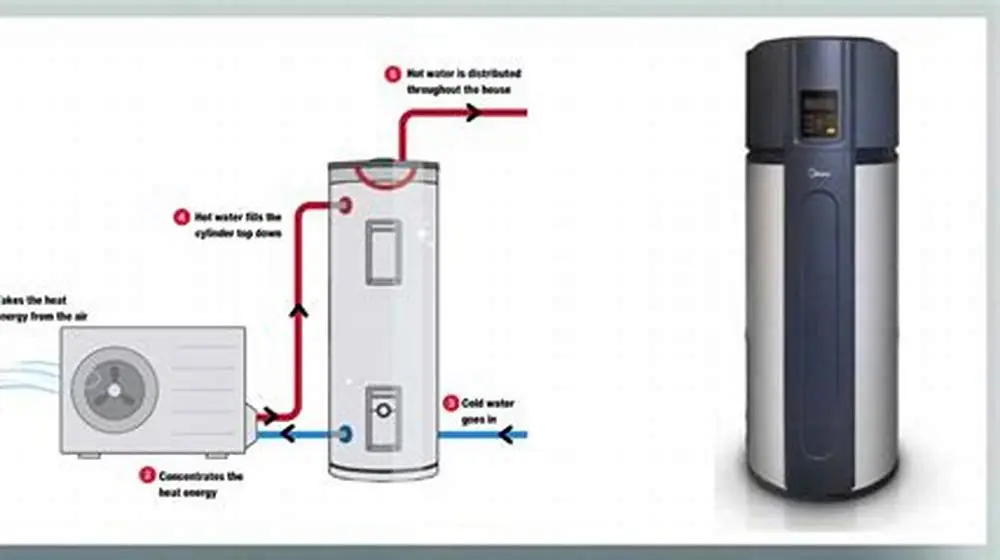
That leaves you 20 to 30 litres short of the 120-litre minimum for an 8kW heat pump, so you need a buffer or extra pipework to make up the difference. A 60 or 80 litre buffer brings the system to 150 to 180 litres, well within the 15 to 20 litres per kW guideline. If you already have a hot-water cylinder with a large coil or a thermal store, count that volume too: a 250-litre cylinder with a 15-litre coil adds useful thermal mass and may let you fit a smaller buffer.
Write down your calculation and give it to the installer at the survey. A good installer will check it and may drain a radiator to verify your figures, but at least you have a starting point. Systems that come out below 10 litres per kW need either a buffer, a low-loss header, or a redesign of the primary circuit. There is no way around the volume requirement; modulation and weather compensation help, but they cannot replace thermal mass.
- Single-panel radiator: 0.8 litres per m² of face area
- Double-panel radiator: 1.2 litres per m²
- Double-panel convector: 1.5 litres per m²
- 22 mm copper pipe: 1.5 litres per metre
- 15 mm copper pipe: 0.8 litres per metre
- 28 mm copper pipe: 2.4 litres per metre
Questions people still ask
Can I retrofit a buffer tank to an existing heat pump that is cycling too often?
Yes. Isolate the flow and return, cut in a pair of tees, and plumb the buffer in parallel with the heating circuit. Fit it on the return side before the heat pump inlet for best efficiency. The job takes half a day and costs £300 to £500 including the tank, fittings and labour. Cycle time should improve immediately once the system is refilled and bled.
Does a buffer tank need its own circulation pump?
No. The heat pump's internal or external circulation pump moves water through the buffer and the heating circuit in series. The buffer sits in the main loop, so the same pump handles both. A second pump is only needed if you fit a low-loss header and run separate primary and secondary circuits.
Will a buffer tank lower my heat pump running costs?
Indirectly, yes. Reducing short-cycling raises seasonal COP by 10 to 15 per cent, which cuts electricity use by the same proportion. On a typical 8kW system running 1,800 hours a year, that saves 250 to 400 kWh, worth £60 to £100 annually at current electricity prices. The buffer pays for itself in three to five years through improved efficiency and longer compressor life.
Can I use a hot-water cylinder as a buffer tank instead of buying a separate vessel?
Only if the cylinder has a large coil or internal heat exchanger and sits in the main heating loop. A standard vented cylinder with a small coil does not add enough volume to the primary circuit. Thermal stores work well as combined buffer and hot-water storage, but they are much larger and cost £800 to £1,200, making them overkill unless you need the hot-water capacity anyway.
What insulation does a buffer tank need to meet Building Regs?
Buffer tanks sold in the UK come pre-insulated to meet Part L requirements, typically with 50 to 80 mm of polyurethane foam giving a standing loss under 2 kWh per day. You do not need to add extra insulation unless the tank sits in an unheated space, in which case wrap it with an additional 25 mm jacket to cut heat loss by another 30 per cent.
How often does a buffer tank need maintenance or inspection?
None, beyond the annual service of the heat pump itself. The buffer is a passive pressure vessel with no moving parts. Check the relief valve once a year by lifting the test lever, and inspect the pipework connections for weeps. If the system is sealed and topped up with inhibitor, the buffer will last as long as the heat pump with no attention.