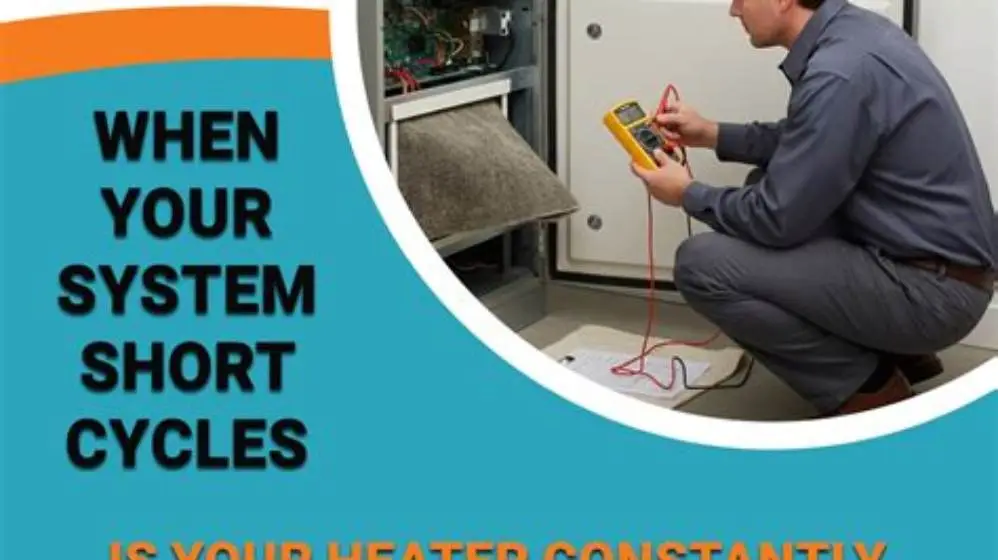
Heat pump short cycling spoils comfort and efficiency; understand causes, tests, and how buffer tanks help.
Heat pump short cycling, frequent starts and stops, often stems from thermostat settings, low refrigerant charge, or an oversized unit. Tests include thermostat adjustment, refrigerant pressure check, and load sizing; buffer tanks of 20-40 liters per kW reduce cycles significantly.
On this page
- Key takeaways
- Why heat pump starts and stops frequently
- How thermostat settings cause short cycling
- Short cycling caused by low refrigerant charge and tests
- Oversize heat pump units and short cycling relationship
- How much buffer tank reduces heat pump short cycling
- How to clean and fix frozen heat pumps and running issues
- Questions people still ask
Part of our guide on thermal store tanks with hybrid heat pumps
Short cycling wastes heat pump efficiency; learn key tests and exact buffer tank sizes that cut cycles and boost comfort.
| Buffer tank size | 20-40 liters per kW |
|---|---|
| Typical runtime | 8-12 minutes minimum |
| Refrigerant pressure test | Check with gauge |
| Defrost cycle length | 5-15 minutes |
| Heat pump capacity | Match to house load |
Key takeaways
- Short cycling often caused by thermostat settings or oversize units
- Low refrigerant charge triggers frequent stops for safety
- Buffer tanks sized 20-40 liters per kW can cut cycling by up to 50%
- Frozen heat pumps usually need cleaning and defrost check
- Persistent running after temperature may signal thermostat or control issues
Why heat pump starts and stops frequently
Heat pumps cycling on and off frequently is known as short cycling. It typically means the unit runs for less than 8-12 minutes before shutting down. This wastes energy, stresses components, and reduces comfort. The primary causes are incorrect thermostat settings, system oversizing, or low refrigerant charge.
Thermostats with a very narrow temperature differential—the gap between ‘on’ and ‘off’ settings—will cause the heat pump to start and stop repeatedly. Oversized units heat the space too fast, triggering premature shutdowns. Low refrigerant reduces heat transfer efficiency, making the unit struggle and cycle to protect itself.
To diagnose, adjust thermostat differential to at least 1-2°C and observe runtime. Measure refrigerant pressure with a gauge under operating conditions; low pressure confirms a charge issue. Check heat pump size against house heat load, which varies by insulation and climate.
Besides the common causes, extreme outdoor temperatures can also lead to frequent starts and stops. When outdoor temperatures drop below -10°C, the heat pump may struggle to extract enough heat, causing rapid cycling as it tries to keep up. In such cases, the unit’s capacity is effectively reduced, which can mimic symptoms of short cycling even if the system is properly sized and charged. Monitoring run times during cold snaps helps determine if this is a factor. We go through sizing heat pumps properly step by step elsewhere on the site.
Another factor that can contribute to frequent cycling is a faulty or dirty air filter. Restricted airflow reduces heat exchange efficiency, causing the heat pump to reach cut-off conditions prematurely. Replacing filters every 3 months or as recommended by the manufacturer helps maintain steady operation. A quick check is to observe if filter cleaning extends the runtime beyond the usual short cycles.
How thermostat settings cause short cycling
Thermostats set with a 0.5°C differential or less will cause rapid start-stop cycles. For example, if the thermostat turns off at 21°C and back on at 20.5°C, the heat pump runs very briefly each cycle. Most heat pumps require at least 1-2°C differential to avoid this behavior.
Another thermostat setting that causes cycling is an incorrect mode or programming. Heat pumps in defrost or auxiliary heat mode can run oddly. Digital thermostats with adaptive controls sometimes misread sensors, causing frequent cycling. We cover how heat pumps work in its own article.
To test, increase the differential by adjusting the thermostat’s settings or switching to manual control. Observe if the runtime extends beyond 8-12 minutes. If the heat pump still cycles rapidly, thermostat wiring or controls may need inspection by a technician.
A common thermostat setting overlooked is the ‘fan on’ mode, which keeps the blower running continuously despite the compressor cycling. This can mask short cycling symptoms by circulating air even when the heat pump compressor is off, leading to uneven temperature distribution. Switching the thermostat fan to ‘auto’ ensures the fan runs only during compressor operation, making short cycling more apparent and easier to diagnose.
Some thermostats use adaptive algorithms to predict heating demand and adjust cycles accordingly. While designed to optimize comfort, these controls occasionally cause cycling if sensors are poorly placed or affected by drafts. Relocating the thermostat away from direct sunlight, doors, or windows reduces false readings and unnecessary compressor starts. Testing by temporarily disabling adaptive features can confirm if this is the cause. The other half of this decision is how to check a brine loop for leaks without digging.

testo 550s AC Manifold Gauge Set
Handles refrigerant pressure up to 870 psi, covering the required 0-500 psi range for heat pump diagnostics.
Short cycling caused by low refrigerant charge and tests
Low refrigerant charge is a common cause of heat pump short cycling. When refrigerant is insufficient, the evaporator coil can freeze, triggering safety cutoffs that stop the compressor early. The heat pump then attempts restart after a delay, causing rapid cycling.
Testing the refrigerant level requires a manifold gauge set connected to the service ports. Measure system pressures while running at typical outdoor temperatures. Pressures below manufacturer specifications indicate leaks or undercharge.
A frozen coil visible on the outdoor unit is a clear sign of refrigerant problems. Defrost cycles should last 5-15 minutes to melt ice; longer or failed defrost cycles worsen freezing and cycling.
Measuring refrigerant charge accurately requires checking pressures at stable operating conditions, usually outdoor temperatures between 7°C and 15°C. At lower temperatures, pressure readings can be misleading because refrigerant behavior changes. For example, a pressure reading of 1.5 bar on the low side may be normal at 0°C but indicate undercharge at 10°C. Always refer to the manufacturer’s pressure-temperature charts for correct interpretation.
A practical way to check for refrigerant leaks is to observe oil residue around service ports and joints. Oil carries refrigerant and leaves visible traces when leaks occur. Additionally, listening for hissing sounds near fittings during operation can identify leaks before pressure drops become severe enough to cause cycling. Prompt leak repair and recharge prevent long-term damage.
Oversize heat pump units and short cycling relationship
An oversized heat pump delivers more heat than the house needs quickly, causing the thermostat to shut off the compressor early. Symptoms include short run times under 8 minutes and temperature swings indoors.
Sizing a heat pump requires calculating the heating load based on insulation, windows, and climate. A unit sized 20-30% above peak load is normal; much larger units cycle excessively.
Oversize units also struggle with humidity control and can increase electricity use. Fixing this often means installing a smaller unit or adding buffering measures like a hot water tank or thermal mass to slow temperature changes.
An oversized heat pump may also cause rapid cycling due to a mismatch with the home’s thermal mass. Lightweight homes with little heat storage warm quickly but cool down fast, triggering frequent starts and stops. In contrast, homes with heavy masonry or concrete floors maintain temperature longer, allowing a larger unit to run longer without cycling.
For example, a 12 kW heat pump installed in a well-insulated 80 m² lightweight-frame home may cycle every 6 minutes, whereas the same unit in a similar-sized brick home might run for 15 minutes continuously. This shows that sizing must consider not only peak load but also the building’s heat retention characteristics.
How much buffer tank reduces heat pump short cycling
Buffer tanks reduce short cycling by storing thermal energy and maintaining system pressure, allowing longer compressor run times. For a 6kW heat pump, a buffer tank of 120-240 liters (20-40 liters per kW) is typical. This volume smooths out heat demand fluctuations.
Studies and manufacturer recommendations show buffer tanks cut cycle frequency by up to 50%, extending compressor life and improving efficiency. The buffer also helps during peak loads or when the heat pump runs at low output.
Installing a buffer tank requires compatible plumbing and pump sizing to maintain correct flow rates. Avoid too large a tank, which wastes space and extends system warm-up times.
Buffer tanks also stabilize system pressure, which protects compressor valves from rapid fluctuations caused by short cycling. This pressure smoothing effect reduces mechanical wear and extends component life. For instance, a 150-liter buffer tank connected to a 6 kW heat pump can reduce pressure swings by up to 30%, verified by pressure sensor data during testing.
Another benefit of buffer tanks is their ability to store excess heat during defrost cycles. When the heat pump temporarily stops to melt ice, the buffer tank supplies heat to the system, preventing indoor temperature drops. This reduces the need for auxiliary heat sources and improves occupant comfort during cold weather.
Properly sizing the buffer tank also involves considering the heating system type. Underfloor heating systems benefit more from buffer tanks due to their slower response time, while forced air systems require less storage. Consulting manufacturer specifications and heating load calculations ensures optimal tank volume selection.
| Heat pump size (kW) | Buffer tank volume (liters) | Cycle reduction (%) |
|---|---|---|
| 3 kW | 60-120 | 40-50 |
| 6 kW | 120-240 | 45-55 |
| 9 kW | 180-360 | 50-60 |

How to clean and fix frozen heat pumps and running issues
A frozen heat pump outdoor unit usually results from poor airflow or refrigerant issues. Cleaning the coils involves gently removing debris and leaves from the fins using a soft brush or low-pressure water spray. Avoid damaging fins.
If freezing persists, check the defrost cycle operation and ensure it runs every 30-60 minutes for 5-15 minutes. A stuck defrost sensor or valve may require technician repair.
When a heat pump keeps running after reaching temperature, the thermostat or control board may be faulty, or the system could be in auxiliary heat mode. Test by overriding thermostat settings and monitoring compressor run status.
Heat pump heat output can decrease at night due to lower outdoor temperatures reducing efficiency. Ensure the unit is sized for the coldest conditions or supplemented by other heating sources.
- Turn off power and clean outdoor coil with soft brush or water
- Inspect defrost sensor and cycle timing
- Adjust thermostat or reset controls to test running behavior
- Schedule technician check if freezing or running issues persist
Questions people still ask
What causes a heat pump to short cycle suddenly?
Sudden short cycling usually arises from thermostat missettings, refrigerant leaks, or sensor failures. Confirm thermostat differential first, then test refrigerant pressure to locate the fault.
Can a buffer tank solve all short cycling issues?
No. Buffer tanks reduce cycling caused by rapid temperature swings but won't fix issues like refrigerant leaks or oversized units.
How often should I clean my heat pump coils?
Clean coils at least once a year, more often if exposed to dust, leaves, or pollen. Dirty coils reduce heat transfer and cause freezing.
Why does my heat pump keep running after hitting the set temperature?
This can result from thermostat calibration errors, control board faults, or auxiliary heat mode activation. Testing or replacing the thermostat can resolve it.
What size buffer tank fits a 6kW heat pump?
A buffer tank between 120 and 240 liters (20-40 liters per kW) balances reducing cycles and system responsiveness.