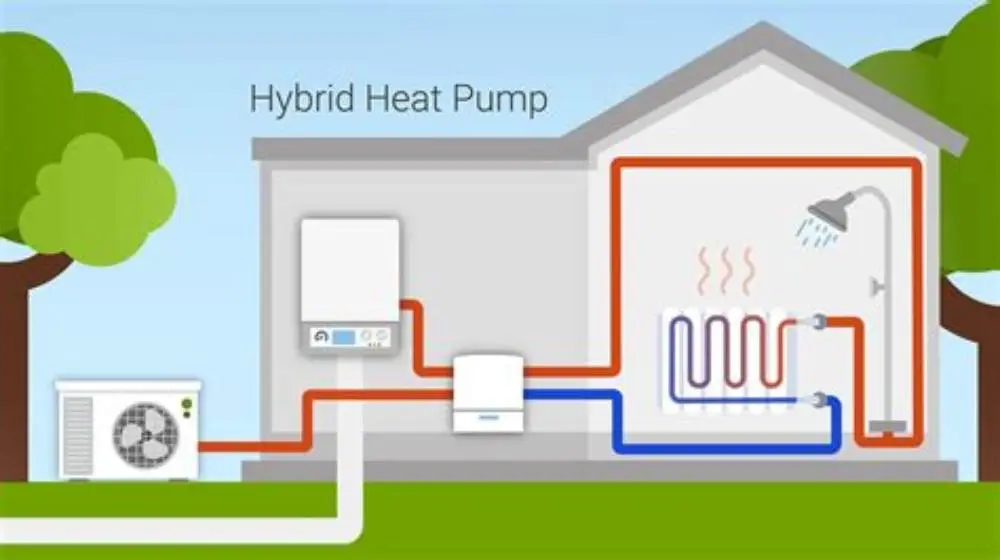
A hybrid heat pump combines an electric air source heat pump and a gas boiler to heat your home efficiently by switching between heat sources. A thermal store tank is needed only if the system includes gas to buffer heat and manage outputs smoothly.
On this page
- Quick recap
- What is a hybrid heat pump
- How hybrid heat pump systems combine heat sources
- Do I need a thermal store tank with a hybrid heat pump and gas?
- How to size a hybrid heat pump system for your home
- Costs and grants for installing hybrid heat pumps
- How to decide if a hybrid heat pump fits your home
- Quick questions
Quick facts
- Heat pump size
- 6-12 kW typical
- Thermal store need
- Yes, with gas boilers
- Hybrid sources
- Electric heat pump + gas
- Efficiency range
- COP 3-4 typical
- Fuel switching
- Automatic by controller
Quick recap
- Hybrid heat pumps combine electric heat pumps with gas boilers to reduce carbon and costs.
- Thermal store tanks are generally required when gas boilers are part of the system.
- Heat pump size depends on home heat loss; typical ranges are 6-12 kW for average homes.
- Hybrid systems optimize fuel use by switching heat sources based on efficiency and temperature.
- Proper integration ensures smooth operation without oversizing or frequent cycling.
What is a hybrid heat pump
A hybrid heat pump is a heating system combining an electric air source heat pump (ASHP) with a gas boiler. It switches between these two heat sources automatically to maximize efficiency and minimize fuel costs.
Typically, the heat pump handles heating when outdoor temperatures are above about 0°C, operating efficiently at a coefficient of performance (COP) of 3 to 4, meaning it delivers 3-4 times more heat energy than the electric energy it consumes.
When temperatures drop below 0°C or heating demand spikes, the gas boiler kicks in. It provides reliable heat without the efficiency losses air source pumps face in very cold weather.
This approach means you get low-carbon heat most of the year and backup heat from gas when needed, avoiding costly oversizing of heat pumps or uncomfortable indoor temperatures. People in this spot often ask about low flow high pressure pump as well.
Hybrid heat pumps can also be configured with different heat pump technologies, such as ground source heat pumps, but air source variants are most common due to lower installation costs and simpler siting. The efficiency advantage of hybrid systems varies seasonally and geographically: in southern UK climates, the heat pump may cover 70-80% of annual heating needs, whereas in colder northern areas, gas boiler use may increase to 40% or more. This seasonal variation affects carbon savings and operational cost benefits.
An example: in a home with a 10 kW heat pump and a 12 kW gas boiler, operating the heat pump at a COP of 3.5 in mild weather produces 35 kW of heat for every 10 kW of electrical input. When temperatures drop to -5°C, the COP might fall to 1.5, making the gas boiler more cost-effective and efficient to run. The hybrid controller smoothly shifts operation to maintain comfort and reduce fuel bills.
How hybrid heat pump systems combine heat sources
The key feature of a hybrid system is a controller that decides whether to run the heat pump or gas boiler depending on conditions like temperature and cost. It constantly measures outdoor temperature and the home's heating demand. The other half of this decision is hybrid heating installation tips.
Most operate with a temperature threshold (often around 0°C) where the heat pump handles heat above this point, and the gas boiler takes over below. This avoids inefficient heat pump operation in cold weather.
Heat is delivered to the home's heating system (radiators or underfloor heating) via a shared water circuit connected to both heat sources. This avoids duplication of plumbing and simplifies control.
The heat pump usually provides base load heating with the gas boiler supplementing as needed. This setup reduces carbon emissions compared to gas-only systems with no heat pump. If that sounds like your situation, read up on using thermal stores with heat pumps next.
Do I need a thermal store tank with a hybrid heat pump and gas?
A thermal store tank is generally needed when a hybrid system includes a gas boiler. It acts as a buffer for heat, storing hot water to smooth out output fluctuations and ensure stable heat delivery.
Without a thermal store tank, rapid switching between heat pump and gas boiler can cause short cycling, reducing efficiency and increasing wear on components.
The thermal store tank's capacity depends on the size of the heating system but is often between 150 and 300 liters. It must be well insulated to minimize heat loss and sized to support both heat sources adequately. Before you commit to anything, it is worth looking at typical heat pump lifespan.
If the system only includes the heat pump without gas backup, a thermal store tank is less critical but may still be used to improve system efficiency and provide domestic hot water.
How to size a hybrid heat pump system for your home
Sizing a hybrid system depends mainly on your home's heat loss, which varies with insulation, size, and climate. Typical heat pump sizes range from 6 kW for small, well-insulated homes to over 12 kW for larger or less insulated properties.
The gas boiler backup usually matches or slightly exceeds the heat pump capacity to cover peak demands and very cold spells. We cover heat pump and hot water cylinders in its own article.
Incorrect sizing risks discomfort and inefficiency: undersized pumps run constantly and may fail to keep up, while oversized pumps cycle too frequently and waste electricity.
A heat loss assessment from a qualified installer is essential to determine the right size and ensure that both heat pump and boiler work in harmony.
Heat loss assessments should consider not only the building fabric but also ventilation rates and occupancy patterns, as these influence the peak and base heating demands. For example, a well-insulated 120 m² house with airtight construction and mechanical ventilation might have a heat loss rate of around 3 kW at design temperature, while a poorly insulated older home of the same size could exceed 8 kW.
When sizing the thermal store tank in a hybrid system, you need to balance capacity against space constraints and heat source cycling. A typical 200-liter tank can provide enough buffering for a 10-12 kW system, reducing boiler short cycling and allowing the heat pump to run longer at optimal efficiency. Oversized tanks add cost and space needs without proportional benefits.
A practical check for correct sizing is to monitor system cycling during the coldest days: frequent on/off cycles of the boiler or heat pump suggest the thermal store capacity or control settings may need adjustment. Ensuring smooth operation prolongs equipment life and maintains efficient performance.
- Step 1: Conduct a heat loss assessment to measure your home's heat demand.
- Step 2: Select a heat pump sized to meet the base load heating requirement.
- Step 3: Choose a gas boiler backup that covers peak loads and very cold weather.
- Step 4: Confirm the controller's temperature setpoint and integration ensure smooth operation.
Costs and grants for installing hybrid heat pumps
Installing a hybrid heat pump system typically costs more upfront than a gas boiler alone, with prices influenced by system size, home complexity, and whether a thermal store tank is needed.
A rough range is £6,000–£12,000 for a typical UK home; exact quotes require a site survey.
Government grants and incentives can reduce costs considerably, depending on your location and eligibility. These often require professional installation and that the system meets certain efficiency criteria.
Check local and national schemes such as the Boiler Upgrade Scheme (BUS) for grants specifically for heat pumps and hybrid systems.
| Component | Cost Range (£) | Notes |
|---|---|---|
| Heat pump unit | 3,000–5,000 | Depends on size and brand |
| Gas boiler | 1,500–3,000 | Modern efficient models |
| Thermal store tank | 1,000–2,000 | If required with gas boiler |
| Installation | 1,000–3,000 | Includes plumbing and electrical work |
How to decide if a hybrid heat pump fits your home
A hybrid system works best if your home has a mixed heating demand: moderate temperatures most of the year with occasional cold spells.
If your home is very well insulated and has a small heat demand, a full heat pump might be better. If gas boiler infrastructure already exists and you want to reduce emissions without replacing everything, a hybrid system can balance efficiency and cost.
Consider your fuel prices and availability too. Where electricity is relatively cheap and green, heat pumps excel. Where gas remains affordable and reliable, hybrid systems offer a smooth transition.
A professional energy assessment lets you weigh the carbon savings, running costs, and comfort improvements to find your best solution.
- Flexible fuel use
- Reduced carbon emissions
- Reliable heating in cold weather
- Potential cost savings
- Higher upfront cost
- Requires system integration
- Thermal store tank needed
- Complex installation
Quick questions
Can a hybrid heat pump work without a gas boiler?
Hybrid heat pumps rely on combining two heat sources; without a gas boiler, it's just a standard heat pump system. Some hybrids may pair with other fuels, but a gas boiler is typical for backup.
Does a thermal store tank provide domestic hot water?
Yes, a thermal store can be designed to supply domestic hot water in addition to space heating, improving efficiency and allowing the boiler and heat pump to run more steadily.
How does the controller decide when to switch heat sources?
The controller uses outdoor temperature and heat demand thresholds to switch between heat pump and gas boiler, aiming to run the most efficient source for current conditions.
Are hybrid heat pumps eligible for government grants?
Many regions include hybrid heat pumps in their incentive schemes, subject to qualifying criteria like efficiency ratings and installation by certified professionals.
What maintenance is needed for a hybrid heat pump system?
Regular servicing of both heat pump and gas boiler is essential, including filter cleaning, refrigerant checks, and boiler safety inspections to ensure reliable operation.