Discover practical steps to store lead-acid batteries correctly and get clear answers to common solar battery questions for improved home energy use.
Store lead-acid batteries fully charged at 20-25°C in a dry, ventilated space, topping up electrolyte with distilled water every 1-3 months and avoiding deep discharges to keep capacity above 80%.
On this page
- Key takeaways
- How do I properly store lead-acid batteries
- How can Tesla battery packs be so small
- Are deep-cycle batteries for off-grid power tolerant of temperature changes
- Is it ok to mix battery brands in a solar battery bank
- Charging a battery with a solar panel
- Solar charging an e-bike lithium battery while riding
- Questions people still ask
Part of our guide on solar battery size for homes
Practical lead-acid battery storage methods preserve capacity and clarify solar battery system mysteries with real-world, actionable advice.
| Storage temp | 20-25°C |
|---|---|
| Charge level | 100% |
| Self-discharge rate | ~3% per month |
| Electrolyte check | 1-3 months |
| Deep-cycle temp range | 20°C to 50°C |
| Tesla pack size | smaller due to energy density |
Key takeaways
- Keep batteries fully charged before storage to prevent capacity loss.
- Store at moderate temperature (20-25°C) to reduce self-discharge and damage.
- Add distilled water regularly for flooded types to maintain electrolyte levels.
- Avoid mixing battery brands to ensure consistent performance and lifespan.
- Solar charging needs regulated voltage to protect battery health.
How do I properly store lead-acid batteries
To properly store lead-acid batteries, keep them fully charged at about 20-25°C in a ventilated, dry area. Batteries stored at lower charge levels risk sulfation, which reduces capacity permanently. The self-discharge rate at this temperature typically runs around 3% per month but accelerates significantly above 30°C.
Flooded lead-acid batteries require checking electrolyte levels every 1 to 3 months and topping up with distilled water to prevent plate exposure and damage. AGM and gel types are sealed and require less maintenance but still need to be charged regularly to avoid capacity loss.
Avoid deep discharges before storage. Batteries left discharged below 50% state of charge suffer faster degradation. Ideally, recharge batteries after use and before storing them for extended periods. Using a smart charger with an automatic float mode is highly recommended to maintain full charge without overcharging.
- Charge battery fully to 100%.
- Store in temperature-controlled, ventilated area around 20-25°C.
- For flooded types, check electrolyte and add distilled water every 1-3 months.
- Use a smart charger with float mode if battery is stored connected.
- Avoid deep discharge cycles before storage.

Schauer SBC0336MTR 36V 3A Smart Battery Maintainer with Automatic Float Mode
Keeps your 36V lead acid, AGM, or gel battery fully charged safely with automatic float mode to prevent overcharging during storage.

Alliance Chemical Battery Water
Supplies ultra-pure deionized reagent grade water meeting O-B-41H specs for topping up lead acid batteries to maintain electrolyte purity and battery efficiency.
How can Tesla battery packs be so small
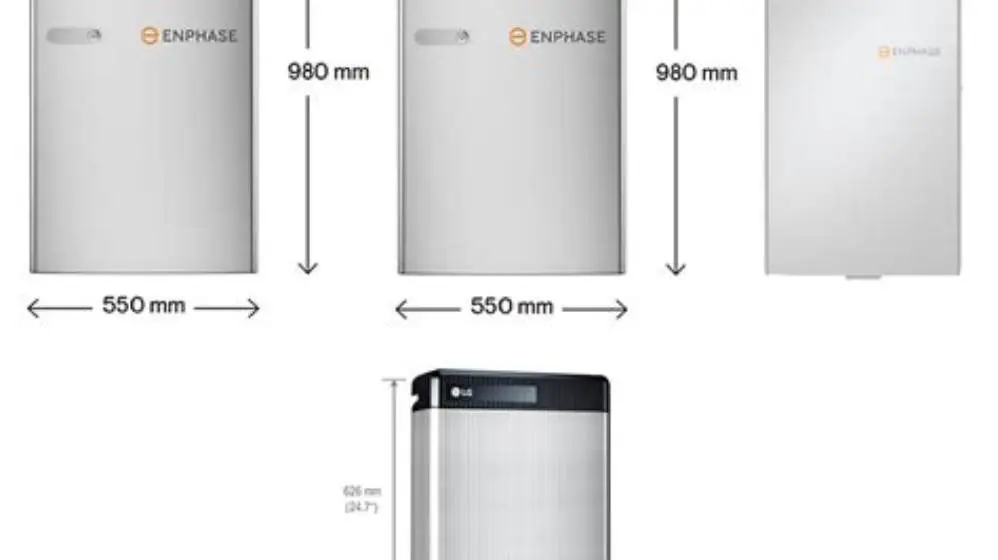
Tesla battery packs are smaller than traditional lead-acid battery banks because lithium-ion cells have a much higher energy density, roughly 3-4 times that of lead-acid. This means a Tesla pack can deliver the same capacity in a fraction of the volume and weight. There is more on estimating battery capacity in a separate guide.
The compact size also results from advanced battery management systems that optimize cell use and cooling to allow safe operation at higher voltages. Tesla packs often run at around 350-400 volts, which reduces the current needed and allows smaller cable sizes.
While lithium packs cost more upfront, their size and efficiency advantages make them ideal for space-limited installations and higher-depth cycling applications where lead-acid batteries would be bulky and less durable.
Are deep-cycle batteries for off-grid power tolerant of temperature changes
Deep-cycle lead-acid batteries tolerate a temperature range from about -20°C to 50°C, but capacity and lifespan depend heavily on how often they operate near the extremes. For example, operating consistently above 30°C accelerates self-discharge and grid corrosion, reducing usable cycles. Before you commit to anything, it is worth looking at working of solar batteries.
Conversely, cold temperatures slow chemical reactions, decreasing available capacity temporarily but not necessarily causing permanent harm unless the electrolyte freezes, which happens below about -10°C for typical sulfuric acid concentration.
You should aim to keep batteries near 20-25°C for optimal performance. Temperature compensation on charge voltage is critical; charging voltage needs to be reduced by about 3mV per cell per degree Celsius above 25°C to avoid overcharging and by the same amount increased below 25°C to ensure full charge.
Is it ok to mix battery brands in a solar battery bank
Mixing battery brands is generally not recommended because different manufacturers use varying plate designs, separators, and electrolyte formulas. This variation causes differences in internal resistance and capacity, leading to uneven charge and discharge among batteries. The other half of this decision is replacing solar light battery.
Uneven battery performance results in some units degrading faster, reducing the overall bank capacity and possibly causing early system failure. Additionally, mixed batteries may have slightly different voltage cutoffs, complicating battery management.
If you must mix brands, ensure all batteries have very similar age, capacity, voltage, and type (e.g., flooded or AGM). Regularly monitor cell voltages and state of charge to detect imbalance early. Ideally, buy batteries in matched sets from the same production batch for longer life.
Charging a battery with a solar panel
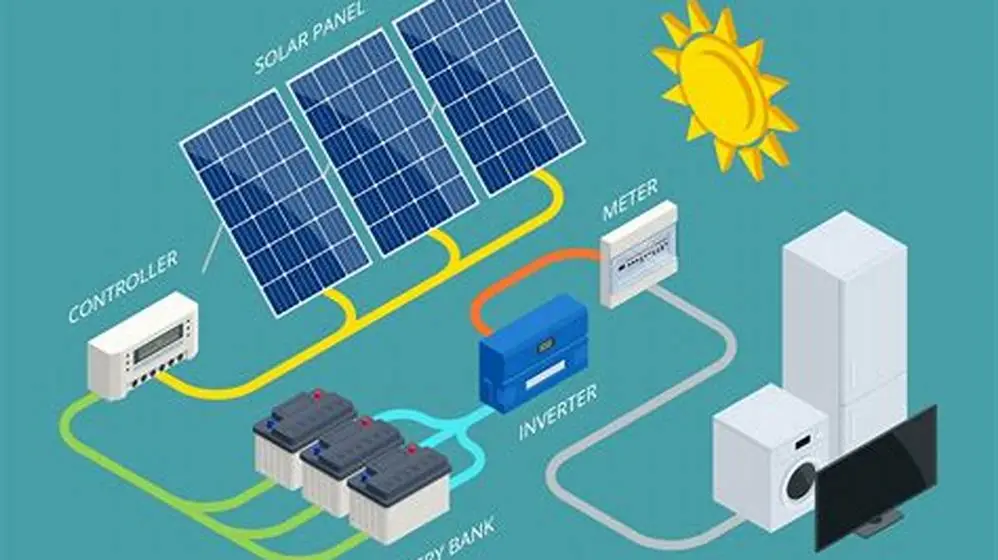
Solar panels charge lead-acid batteries through a charge controller that manages voltage and current to prevent overcharging. A proper charge controller adjusts charging stages: bulk, absorption, and float to maximize battery life.
Bulk stage delivers full solar current until battery voltage reaches the absorption setpoint, typically around 14.4-14.7 volts for 12V lead-acid batteries at 25°C. The absorption stage holds this voltage, allowing the battery to absorb charge completely. Then float stage maintains a lower voltage around 13.2-13.8 volts to keep the battery topped up without overcharging.
Without a charge controller, solar panels can damage batteries by applying too high voltage or reverse current at night. Therefore, always use MPPT or PWM controllers sized for your panel array and battery bank.
For flooded batteries, regular electrolyte checks remain necessary even with solar charging to prevent water loss and sulfation.
| Charging Stage | Voltage Range (V) | Purpose |
|---|---|---|
| Bulk | 14.4 - 14.7 | Rapid charging with max current |
| Absorption | 14.4 - 14.7 | Complete battery charge |
| Float | 13.2 - 13.8 | Maintain full charge safely |
Solar charging an e-bike lithium battery while riding
Charging an e-bike lithium battery via solar panel while riding is feasible but constrained. The solar panel output is often limited by size and angle, producing only a fraction of the battery's capacity per hour, especially under moving and shaded conditions.
Most e-bike lithium batteries require a dedicated charger that manages voltage and current precisely. Direct solar charging while riding risks exposing the battery to irregular voltages, potentially damaging cells or reducing lifespan.
A practical solution is a portable solar panel combined with a battery power bank or a DC-DC converter that stabilizes voltage before feeding the e-bike battery. This setup allows charging during stops or slow rides but not continuous fast charging while riding.
Always check your e-bike manufacturer’s guidance on charging input specifications and never exceed recommended charge rates or voltages.
Questions people still ask
How often should I check electrolyte levels in flooded lead-acid batteries?
Check electrolyte levels every 1 to 3 months depending on usage and temperature. Higher temperatures increase water loss, requiring more frequent checks. Always top up with distilled water, never tap water.
Can I store lead-acid batteries in a cold garage?
Storing batteries in a cold garage is acceptable if temperatures do not drop below -10°C, at which electrolyte can freeze. Cold slows self-discharge but can temporarily reduce capacity. Keep batteries fully charged and check storage conditions.
What happens if I mix lithium and lead-acid batteries in one bank?
Mixing lithium and lead-acid batteries in one bank is not advised. They have different charging profiles, voltages, and chemistry, which can cause inefficient charging, damage, and safety risks.
How do I know when a lead-acid battery needs replacement?
Replace a lead-acid battery when it fails to hold at least 80% of rated capacity or shows significant physical damage like bulging or leaking. Regular voltage and specific gravity testing help predict end of life.
Is a smart charger necessary for lead-acid battery storage?
Yes, a smart charger with automatic float mode is essential for long-term storage to maintain full charge without overcharging, which prolongs battery life and prevents sulfation.