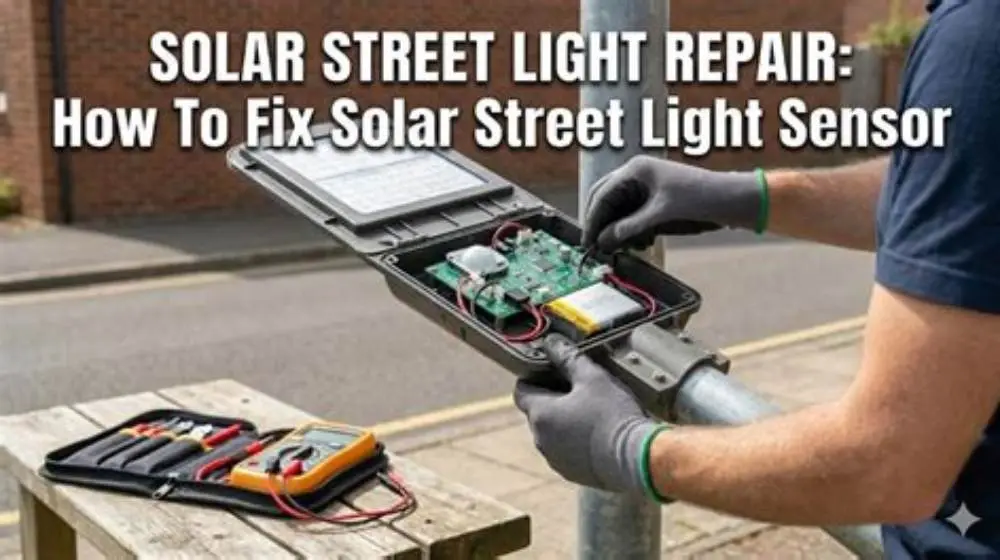
Learn how to identify if your solar light's battery or panel is the problem and how to replace the battery to fix night-time charging issues.
If your solar light won’t work or charge at night, first test the battery voltage under load and the solar panel voltage in sunlight. Replace batteries below 1.2 volts V if panels supply >4 volts V. Check connections and clean the panel.
On this page
- Key takeaways
- How to check if the solar light battery is the problem
- How to test solar panels for charging problems
- Why solar panels do not charge batteries at night
- How to replace solar light batteries safely and effectively
- Common wiring and contact issues that stop solar lights charging
- How to fix a solar light by identifying battery or panel issues
- Questions people still ask
Part of our guide on estimating daily kwh use
Step-by-step voltage and wiring checks pinpoint why your solar light fails to work or charge at night and how to fix it yourself.
| Battery voltage threshold | 1.2 V |
|---|---|
| Panel voltage in sun | >4 V |
| Typical battery life | 1-3 years |
| Common panel type | Amorphous or Mono |
| Test tool needed | Multimeter |
Key takeaways
- Battery voltage below 1.2 V usually means replacement is needed
- Solar panel voltage in bright sun should exceed 4 V
- Connections and cleanliness affect charging performance
- Replacing batteries is often the most effective fix
- Testing with a multimeter is essential before replacing parts
How to check if the solar light battery is the problem
The battery in a solar light usually runs at 1.2 V for NiMH or NiCd rechargeable cells. Measure the voltage with a multimeter after the light has been off at least an hour to avoid surface charge effects.
If the voltage reads below about 1.2 V under no load or drops dramatically under load, the battery is likely worn out and cannot hold charge. This is the most common cause of failure in solar lights that won’t work at night.
Remove the battery carefully, noting polarity. Some batteries are proprietary; others are standard AA or AAA NiMH/NiCd cells. Check the battery chemistry type printed on the cell to ensure correct replacement.
Batteries usually last one to three years in outdoor conditions. High temperatures and moisture accelerate degradation. People in this spot often ask about solar panels and roof protection as well.
- Power off and remove the solar light from its mount.
- Open the battery compartment, typically under the lamp housing.
- Use a multimeter set to DC voltage to measure battery terminals.
- Compare reading to the
1.2 Vthreshold. - If under threshold, replace the battery with the exact chemistry and size.

Digital Multimeter Voltmeter Battery Voltage Multi Tester Continuity Ohm Volt
Helps you accurately measure DC voltage up to 10 volts to check if your solar light battery is the problem, with full AC/DC voltage measurement capability.
How to test solar panels for charging problems
Solar panels in lights usually produce between 4 V and 6 V in full direct sunlight, depending on panel size and type. Use a multimeter to measure voltage at panel terminals during peak daylight.
If the voltage is significantly below 4 V in direct sun, the panel might be dirty, damaged, or internally faulty, preventing charging.
Panels can degrade over time due to weather exposure. Dirt, dust, or shading reduces voltage output too. Clean the panel with a soft cloth and water before testing. The other half of this decision is correct battery storage methods.
Check wiring from the panel to the battery and light circuit for corrosion or breaks, as any disconnection means no charging.
Solar panels' voltage output can fluctuate widely depending on conditions such as angle to the sun, temperature, and panel age. For instance, a panel might produce 5.5 V in direct sunlight at 25°C, but this can drop to 3.5 V or less if shaded or dirty. Measuring voltage multiple times during different times of day can help diagnose intermittent charging issues.
A simple test to confirm panel functionality is to connect a small load like a 12V LED bulb or a resistor and observe if it lights or gets warm when the panel is in direct sun. If no current flows despite a voltage reading, the panel may have internal damage causing open circuits. The other half of this decision is what happens when installing solar battery.
Why solar panels do not charge batteries at night
Solar panels generate electricity only when exposed to light. At night, no photons hit the panel cells, so they cannot charge the battery.
Some users expect solar panels to charge or maintain batteries during cloudy nights or in low light, which is physically impossible for standard photovoltaic cells.
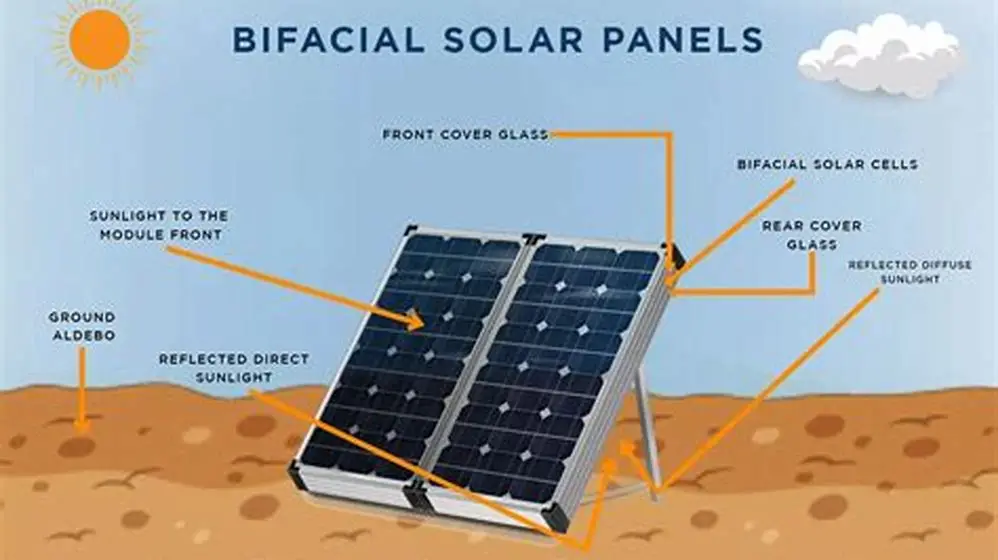
If your battery is completely drained overnight, check for parasitic loads or faulty circuits that might drain power when the light is off. People in this spot often ask about solar panels capturing light both sides as well.
Many solar lights include a diode to prevent battery drain back through the panel at night; if missing or damaged, battery discharge could increase.
Some solar lights include circuitry that prevents charging if the panel voltage is too low, to protect the battery. Therefore, even small amounts of light—such as from street lamps or moonlight—do not generate enough power to register as charging.
In rare cases, if a solar light's panel is exposed to strong artificial light overnight, this can cause the battery to charge slightly but may confuse the control electronics leading to erratic operation or reduced battery life.
How to replace solar light batteries safely and effectively
After confirming the battery is below 1.2 V, purchase replacement rechargeable cells matching the original type (usually NiMH/NiCd) and size exactly.
Turn off the light and disconnect the old battery carefully, noting the polarity to avoid reverse connection.
Install the new battery with correct polarity. Use a multimeter to confirm proper voltage before reassembling the light.
Test the light by charging in direct sunlight for at least 6 hours, then check if the light turns on automatically at night.
Dispose of old batteries according to local regulations. Do not throw rechargeable batteries in regular trash.
- Order the correct rechargeable battery type and size.
- Power off and remove the old battery with attention to polarity.
- Install the new battery, verifying positive and negative terminals.
- Reassemble the solar light housing securely.
- Place the solar light in direct sunlight for a full day to charge.
- Test operation after sunset.
Common wiring and contact issues that stop solar lights charging
Corroded connections between the solar panel, battery, and LED light can interrupt charging or power delivery.
Inspect wires and connectors for signs of rust, broken insulation, or loose contacts, especially at terminals.
Clean corroded contacts gently with fine sandpaper or a contact cleaner spray to restore conductivity.
Inexpensive solar lights often have fragile thin wiring prone to breakage from weather or movement.
Test continuity with a multimeter if you suspect broken wiring.
- Corrosion - common in outdoor environments, prevents current flow
- Loose connections - cause intermittent or no charging
- Broken wires - may not be visible but stop current
- Water ingress - causes shorts or corrosion inside housing
How to fix a solar light by identifying battery or panel issues
The key to fixing a solar light that won’t work or charge at night is a systematic check: measure battery voltage, test panel output in sunlight, inspect wiring and clean contacts.
Start by measuring the battery voltage; if below 1.2 V, replace it as batteries usually degrade after 1-3 years outdoors.
If the battery is fine, measure the panel voltage during bright sun. Less than 4 V suggests cleaning or panel replacement.
Repair or replace faulty wiring and ensure all contacts are clean and tight.
Once all checks and replacements are done, charge the light in full sun for at least 6 hours before testing operation at night.
If a solar light has a built-in charge controller or diode, ensure it is not faulty by testing for voltage drop or continuity. A failed diode can block charging current or cause the battery to discharge quickly at night, mimicking battery failure.
An example of a simple diagnosis is measuring battery voltage in the morning before the panel gets sunlight and again after a full day of sun exposure. If the voltage is the same or lower, the panel or wiring is likely at fault. If it rises above 1.2 V, the battery is charging properly and the issue may be with the LED or sensor circuit.
Questions people still ask
How often should solar light batteries be replaced?
Typically, rechargeable batteries in solar lights last 1 to 3 years depending on exposure conditions and usage. Replace when voltage consistently drops below 1.2 volts.
Why does cleaning the solar panel improve performance?
Dirt, dust, and grime reduce sunlight reaching the solar cells, lowering voltage output and charging efficiency. Cleaning restores proper voltage above 4 volts in direct sun.
Can I use alkaline batteries instead of rechargeable ones?
No. Alkaline batteries are not designed for recharging and may leak or damage the circuit. Always use the specified rechargeable NiMH or NiCd type.
Why does a solar light sometimes stay on during the day?
A faulty light sensor or wiring issue may cause the LED to stay on. This drains the battery and should be diagnosed by checking sensor function and wiring.
Is it necessary to fully charge the battery before first use?
Yes. Charging the battery in direct sun for at least 6 hours ensures it reaches full capacity for reliable operation overnight.