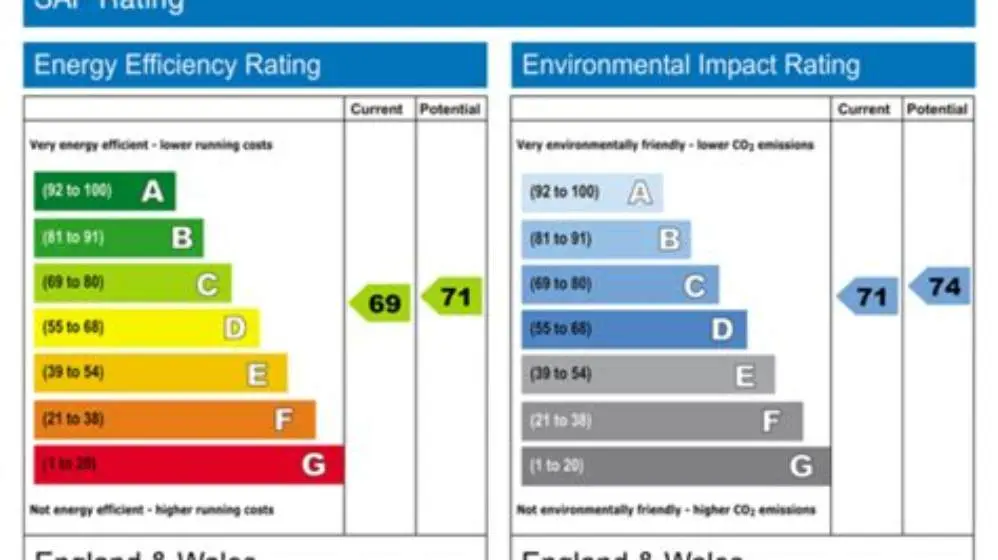
EPC ratings are worked out using the SAP score, a number from 1 to 100+ that measures a home's energy efficiency based on detailed physical data about the building and its services.
On this page
Quick facts
- SAP score range
- 1-100+
- EPC rating bands
- A to G
- Typical SAP for new home
- 70-90
- Heating efficiency impact
- up to 50% SAP
- Renewables impact
- up to 15 SAP points
Quick recap
- EPC ratings depend on SAP scores calculated from building fabric and heating systems
- The SAP score uses detailed data including insulation, windows, heating, and renewables
- EPC grades range from A (best) to G (worst) based on SAP bands
- Physical inspection and input data accuracy heavily influence the EPC rating
- Improving insulation or heating can raise your SAP score and EPC rating
What is an EPC SAP score
The SAP score stands for Standard Assessment Procedure score. It quantifies your home's energy efficiency as a number from roughly 1 to 100 or more.
A higher SAP score means better energy efficiency, lower running costs and less carbon emissions.
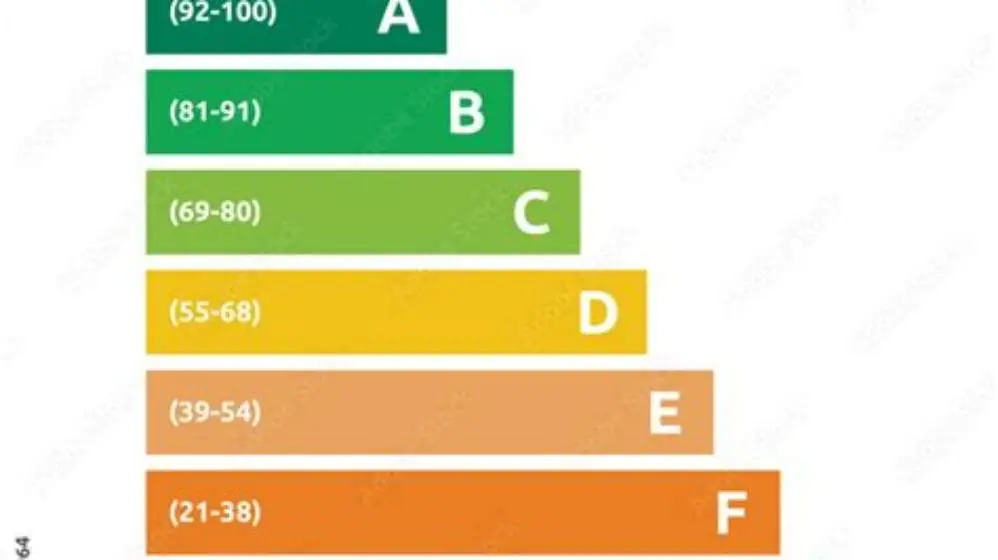
The score forms the basis of your EPC rating, with corresponding letter bands from A (best) to G (worst).
It is calculated using a UK government-approved method that considers physical and technical details of your home. If that sounds like your situation, read up on understanding sap rating next.
These details include insulation thickness, window types, heating system efficiency and any renewable energy sources installed.
The SAP score also accounts for the building's orientation and exposure to sunlight, which affect heating and lighting needs. For example, a south-facing house may score slightly better due to passive solar gain. This means two identical homes can have different SAP scores if they face different directions.
SAP scores are updated periodically to reflect changes in building regulations, technology, and energy prices. The current version, SAP 10.2, includes more detailed inputs on renewables and ventilation systems. This keeps EPC ratings relevant as building standards evolve. For the detail, see our notes on budgeting for internal wall insulation.
How EPC ratings are calculated
EPC ratings are calculated by converting your SAP score into a letter grade. The bands run from A (SAP 92+) down to G (SAP below 20).
Assessors input measured or reported data into the SAP calculation software to estimate energy use and costs.
The process models heat loss through walls, lofts, floors, windows, and ventilation, plus gains from heating and renewables. There is more on what is a good epc rating for a house in a separate guide.
Each home's fabric and services details weigh differently in the SAP calculation. For example, heating efficiency can represent about 40-50% of the SAP score.
Renewable technologies like solar panels or heat pumps add points, improving the score by up to 15.
The final SAP number converts into the EPC letter rating you receive on the certificate. We go through how to check the epc rating of a property step by step elsewhere on the site.
- Building fabric: insulation and windows reduce heat loss
- Heating system: efficiency of boiler, controls, and fuel type
- Renewables: solar, heat pumps, biomass lower energy demand
- Ventilation: balanced systems reduce uncontrolled heat loss
- Lighting and hot water: efficiency affects overall score

Emporia Vue 3 Home Energy Monitor
Monitors real-time home energy consumption with ±2% accuracy using 16 branch sensors
Which home details influence your SAP score most
Insulation in walls, roof and floors affects your SAP score heavily, typically determining 30-40% of the rating.
Double or triple glazed windows reduce heat loss, lifting the score by 5 to 10 points depending on quality.
Heating system efficiency also carries big weight, often 40-50% of the SAP score. High-efficiency boilers or heat pumps score best. Before you commit to anything, it is worth looking at epc change after adding insulated hot water tank.
Renewables such as solar photovoltaic panels or heat pumps add 5-15 SAP points depending on size and output.
Ventilation types influence heat loss; mechanical ventilation with heat recovery (MVHR) can notably improve scores compared to old extract fans.
Lighting efficiency and hot water system performance contribute smaller but measurable impacts. For the detail, see our notes on four key EPC upgrades.
Window types significantly influence heat retention. For instance, triple glazing can improve the SAP score by up to 10 points compared to single glazing, especially in colder climates. The exact gain depends on frame materials and installation quality.
Heating controls, such as thermostatic radiator valves and smart thermostats, can improve efficiency and thus the SAP score by around 5 points. These controls reduce wasted heat and help maintain consistent temperatures.
The presence of thermal bridges, where heat leaks through gaps in the building structure, can lower the SAP score by 5 to 10 points. Proper detailing and insulation around these areas are essential to avoid this loss.
| Feature | SAP score impact | Typical range |
|---|---|---|
| Insulation (walls, roof, floor) | 30-40% | Varies by thickness and material |
| Heating system efficiency | 40-50% | Depends on boiler or heat pump type |
| Windows (double/triple glazing) | 5-10 points | Better glazing yields higher points |
| Renewables (solar PV, heat pumps) | 5-15 points | Size and output matter |
| Ventilation system | 5-10 points | MVHR boosts score more than extract fans |
Step-by-step how EPC ratings are worked out
First, an energy assessor visits your property to collect data on the building fabric, heating, ventilation, and renewables.
They measure insulation thickness, window types, heating system details and fuel types, and note any renewable installations.
Next, this data is input into the SAP calculation software approved by the UK government.
The software models energy use for heating, hot water, lighting, and ventilation, estimating annual fuel consumption and CO2 emissions.
It converts these into a SAP score between 1 and 100+ and assigns the corresponding EPC rating band.
The assessor produces your EPC certificate showing the rating, suggested improvements and estimated savings.
After the assessor inputs data, the software runs calculations for each energy use type separately. For example, it models how much gas is needed to heat the home over a year based on insulation and heating efficiency.
If errors occur in data entry, the SAP score can be significantly off. Assessors cross-check measurements with property plans and previous EPCs when available to ensure accuracy.
The final EPC certificate includes recommended improvements ranked by cost-effectiveness. Homeowners can check these recommendations against their budget and priorities before starting upgrades.
- Collect physical measurements and installation details at the property
- Input data into SAP calculation software accurately
- Calculate modeled energy consumption and emissions
- Derive SAP score from calculated values
- Assign EPC rating letter band based on SAP score
- Produce and register the EPC certificate
Why your EPC rating may not match your bills
EPC ratings measure your home's theoretical energy efficiency, not your actual energy use.
The SAP method uses standard occupancy, heating patterns and fuel prices, so real household behaviour causes deviations.
Poor maintenance, draughts, or heating controls mismanagement can raise bills beyond what your EPC suggests.
The rating ignores appliances and plug loads, which can be significant energy consumers.
Hence, two homes with the same EPC can have different bills depending on user habits.
Improving your home's fabric and heating system raises your EPC rating and sets potential for lower bills, but behaviour remains key.
What grants and funding support EPC improvements
UK schemes like the Boiler Upgrade Scheme, ECO4, and Warm Homes Plan offer grants to improve heating and insulation, boosting your SAP score and EPC rating.
The Boiler Upgrade Scheme provides vouchers for heat pumps, which can add up to 15 SAP points.
ECO4 funding targets low-income households for insulation and heating upgrades.
The Warm Homes Plan offers funding for energy efficiency in vulnerable homes.
Applying for these schemes requires an up-to-date EPC to identify qualifying properties and improvements.
To maximise grant eligibility, get a current EPC and consult an accredited energy assessor.
- Boiler Upgrade Scheme: vouchers for heat pumps
- ECO4: funding for boiler and insulation upgrades
- Warm Homes Plan: grants for vulnerable households
- Current EPC needed to apply for most schemes
Quick questions
How often do EPC ratings need updating?
EPCs are valid for 10 years. If you make energy efficiency improvements, get a new EPC to reflect updated SAP scores and potentially better ratings.
Can I improve my EPC rating without major renovations?
Minor improvements like upgrading heating controls or installing better lighting can add a few SAP points, but major fabric upgrades or renewables are needed for big jumps.
Is the SAP score affected by house size?
SAP calculations include floor area, but the score focuses on efficiency per unit area, so larger homes can still score well with good measures.
Does EPC rating include appliance efficiency?
No. EPCs exclude plug-in appliances, focusing on fabric and fixed services like heating and lighting.
Who can produce an EPC with a SAP score?
Only accredited energy assessors trained in SAP methods can produce valid EPCs.