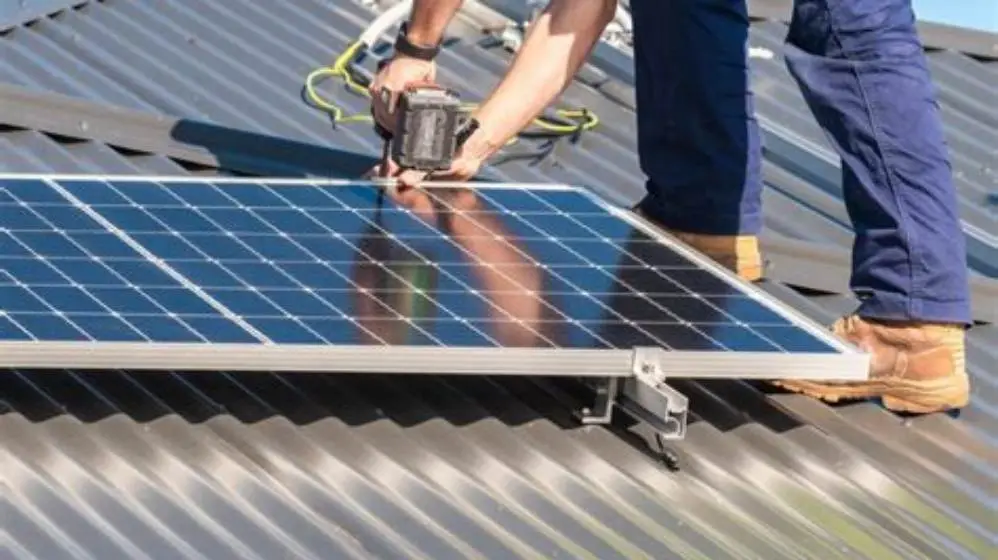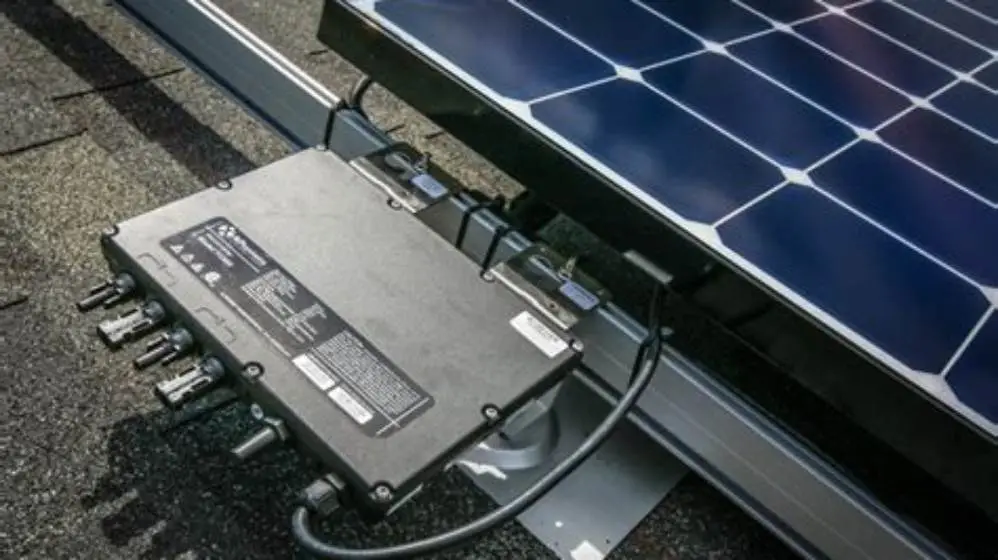
Microinverters convert DC to AC at each solar panel, offering better performance with shading and flexibility than traditional central inverters.
Microinverters are devices attached to individual solar panels that convert DC electricity into AC directly at the panel level, improving energy harvest especially when panels face different shading or orientations.
On this page
- Key takeaways
- What is a microinverter in solar panels
- How microinverters function with each panel
- Advantages of microinverters compared to central inverters
- Typical use cases for microinverters in UK homes
- How to get quotes and what to specify for microinverter systems
- What are microinverters in solar panels
- Questions people still ask
Part of our guide on solar batteries for homes sizes how many kwh needed
Microinverters convert power panel-by-panel, boosting output under shading and allowing tailored solar setups unmatched by central inverters.
| Typical voltage | 12-60 V DC |
|---|---|
| Conversion point | At each solar panel |
| Efficiency range | 95-97% |
| Common warranty | 10-25 years |
| Power rating per unit | 250-350 W |
Key takeaways
- Microinverters convert electricity per panel, not centrally.
- They reduce losses caused by shading and mismatched panels.
- Better for complex roof layouts or partial shading.
- Central inverters are usually cheaper but less flexible.
- Microinverters simplify system expansion and monitoring.
What is a microinverter in solar panels
A microinverter is a compact device mounted on or near each solar panel that converts the panel's direct current (DC) output into alternating current (AC) suitable for home use and grid export. Unlike a central inverter handling an entire array, microinverters work individually on each panel’s output.
The typical capacity of each microinverter matches the panel it serves, usually between 250 and 350 watts. They function at voltages ranging roughly from 12 to 60 volts DC, converting power with an efficiency commonly in the range of 95-97%, depending on model and conditions.
Microinverters enable each solar panel to operate independently, meaning shading or underperformance of one panel doesn't drag down the entire system’s output. This feature is central to their appeal in complex roof arrangements or partially shaded installations.
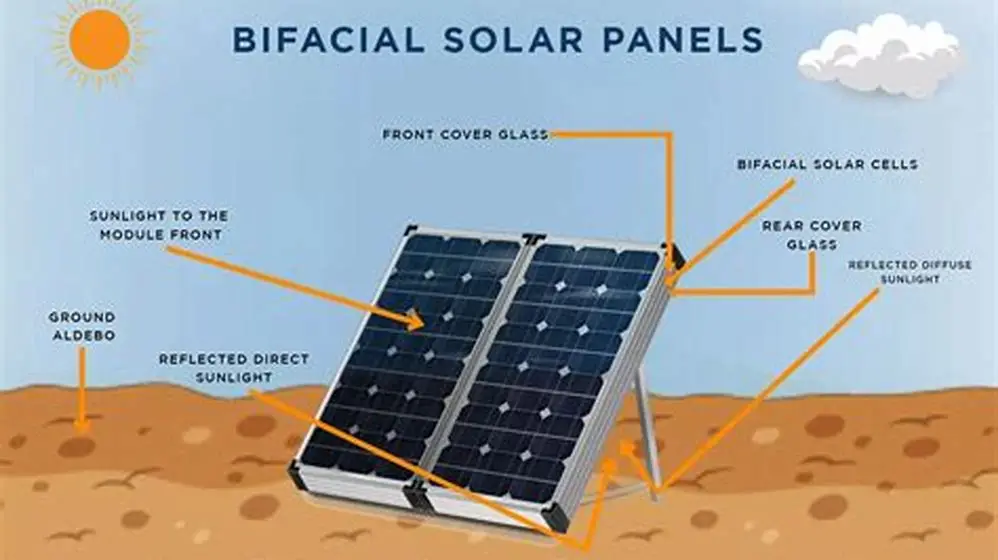
Microinverters often incorporate built-in surge protection and thermal management features to maintain performance and longevity under varying environmental conditions. For example, many models include temperature sensors that adjust operation to prevent overheating, which can degrade components and reduce efficiency. In typical UK rooftop temperatures ranging from -5°C to 35°C, these safety measures help ensure consistent energy conversion. For the detail, see our notes on solar panels capturing light both sides.
A practical check to confirm microinverter function involves monitoring the output of each panel through system software or apps. If one panel’s output suddenly drops while others remain steady, it indicates a panel-specific issue rather than a broader inverter fault. This granular visibility supports proactive maintenance and can prevent larger system losses.
How microinverters function with each panel
Microinverters attach directly to the back of each solar panel or nearby junction box, turning the panel’s DC electricity into AC right at the source. This eliminates the need for high-voltage DC wiring running through the roof or walls, reducing safety risks associated with DC arcs and fire.
Each microinverter optimizes the energy harvest individually by performing maximum power point tracking (MPPT) for its panel. MPPT adjusts the load on the panel to extract the highest power under varying sunlight and shading conditions. Before you commit to anything, it is worth looking at installing a solar battery.
Because conversion happens per panel, partial shading on one panel doesn’t reduce the output of others; the system output is the sum of each panel’s AC contribution. This contrasts with central inverter systems where shading on one panel lowers the string current, reducing overall output.
Microinverters also communicate via power line communication (PLC) or wireless signals back to a central monitoring hub, enabling real-time data collection and system diagnostics. This communication infrastructure must be robust enough to handle the number of panels, typically up to 20-30 per monitoring gateway, without data loss.
In a worked example, a 300 W panel under ideal conditions might produce 300 watts DC. The microinverter converts this at 96% efficiency to about 288 watts AC. If shading reduces panel output to 150 W DC, the microinverter still converts at 96%, yielding 144 W AC, without affecting other panels’ outputs. This independence is a core functional benefit. It helps to understand solar panels cost uk 2026 for a 3 bed house before going further.
Advantages of microinverters compared to central inverters
Microinverters give each panel its own maximum power point tracking (MPPT) and AC conversion at the module. When one panel is shaded, soiled, or of a different orientation, its loss does not reduce the current of other panels. Central string inverters, by contrast, connect modules in series so the string current is limited to the lowest-performing panel; voltage adds across modules while current is common to the whole string.
Because each microinverter performs MPPT per panel, the system extracts the peak power from every module independently. That difference changes how voltage and current are handled: a microinverter accepts the panel’s DC voltage and current, runs a DC–DC stage to track the MPPT point, then inverts to AC at the panel. The module’s operating current does not force other modules to operate at the same current. A central inverter accepts a higher DC string voltage (sum of module voltages) and a single string current; the inverter’s MPPT controls string voltage so every panel must operate near the same current, which can cause mismatch losses.
There are limitations to microinverters to bear in mind. Microinverters are rated for specific input voltage and input current ranges determined by the panel type; very high-voltage panels cannot be connected to a module-level inverter designed for lower voltages. Thermal stress on the roof and the lifespan of electronics at module level can also differ: central inverters sit in a protected location and often have higher peak continuous power capacity, while microinverters divide that capacity across many rooftop devices and may reach thermal limits earlier under extreme heat. There is more on solar panels and roof protection in a separate guide.
Operationally, microinverters reduce string-level clipping when a few panels are shaded because unshaded panels keep producing at their MPPT. Yet they are not immune to limits: a microinverter’s AC output is fixed (for example 230V single-phase output in the UK) and its continuous current rating constrains the maximum power one panel can export. Planning must match panel wattage, expected irradiance, and the microinverter’s input and output ratings to avoid overloading or underutilising devices.
| Aspect | Microinverters | Central Inverters |
|---|---|---|
| Conversion point | At each panel | Single central unit |
| Performance in shading | Minimised string losses; per-panel MPPT | Whole-string current limited by weakest panel |
| System expansion | Easy, modular | Limited by string voltage and inverter capacity |
| Installation cost | Higher per panel | Lower overall for large uniform arrays |
| Maintenance access | On roof, harder | Ground level, easier |
| Monitoring granularity | Per panel | Whole array or per-string |
Typical use cases for microinverters in UK homes
Microinverters are well suited to roofs with multiple orientations or uneven shading, such as dormers, hips, or roofs with chimneys. Each panel can operate at its own MPPT, which extracts more energy from panels that receive better sunlight while allowing shaded panels to operate independently. For households with complex roof geometry this behaviour often yields a higher usable energy harvest than a single-string central inverter would produce under the same conditions.
When homeowners add panels over time — a phased installation — microinverters remove the need to electrically match the new modules to the existing string. New panels fitted with module-level power electronics join the array without changing string voltage requirements, so expansion can proceed panel by panel. This eases budget-driven rollouts and allows mixed panel generations to work together with minimal performance penalty.
Monitoring per panel is a second common reason installers recommend microinverters. Per-panel visibility helps spot shading changes, soiling, and failing modules quickly; it also supports targeted maintenance rather than whole-array shutdowns. Eco-focused households and those relying on tight performance guarantees often value this visibility because it shortens fault-finding time and can maintain higher overall output.
For large, uniform arrays on unshaded roofs a central inverter may still be the most cost-effective choice due to lower cost per watt and simpler rooftop electronics. In the UK context, microinverters typically perform better relative to central inverters when shade or mismatched orientations occur, but the exact benefit varies by site. Research and field trials on module-level power electronics — for example publications from Sandia National Laboratories on MLPE effects and several industry case studies — document improved performance in shaded conditions; outcome magnitudes depend on shading patterns, system design, and local climate, so expect site-specific results rather than a single universal percentage.
Another typical scenario is small to medium suburban homes with trees that cast intermittent shade. Microinverters adapt more dynamically to changing shade across panels during the day, which is why installers suggest them for roofs where leaf cover or nearby structures cause patchy shading. The decision should follow a shading assessment; if shading is negligible and roof area is large and uniform, central inverters remain competitive on cost and simplicity.
How to get quotes and what to specify for microinverter systems
When requesting quotes for microinverter solar installations, specify the total number of panels and ask for microinverter models matching panel wattage, usually 250-350 watts per unit. Ensure the quote includes warranty details, ideally 10 years or more for microinverters.
Mention UK grid compatibility and compliance with standards such as G98 or G99, which govern small-scale generator connections. Your installer should provide equipment certified for safe export and anti-islanding protection.
Request per-panel performance monitoring options and ask how the system handles servicing microinverters, as roof access may be needed. This helps avoid surprises in maintenance costs.
Ensure the installer’s quote breaks down costs between modules, microinverters, and installation labour so you can judge value and compare effectively.
- Assess your roof for shading and orientation
- Decide on the number and type of solar panels
- Ask installers specifically for microinverter-based quotes
- Check equipment specifications and warranty terms
- Request demonstration of monitoring system
- Compare quotes on cost, warranty, and performance guarantees
What are microinverters in solar panels
The phrase 'what are microinverters in solar panels' refers to the small electronic devices installed on individual solar panels that convert their DC electricity into AC right at the panel. This contrasts with traditional systems where a single central inverter manages the entire array's DC-to-AC conversion.
Microinverters improve energy efficiency by isolating the effect of shading, dirt, or panel mismatch to that one panel only, rather than the whole string. This leads to higher overall yields, particularly on complex or shaded roofs common in the UK.
They also enhance safety by reducing high-voltage DC cabling and enable detailed monitoring per panel, which helps in maintaining and troubleshooting the system.
The trade-off is a higher initial cost and more components spread across the roof, which can increase servicing complexity.
Microinverters offer superior energy optimization for complex UK roofs but at a higher cost and service complexity.
Questions people still ask
Can microinverters increase solar energy output on shaded roofs?
Yes, because microinverters convert each panel’s output independently, shading on one panel won’t reduce the output from others. This can improve total energy production significantly in partial shade conditions.
How long do microinverters typically last compared to solar panels?
Microinverters usually come with warranties ranging from 10 to 25 years, often shorter than panels' 25-30 year warranties. Replacement or repair may be necessary during the panel’s lifetime.
Are microinverters compatible with all solar panels?
Most microinverters are designed to match commonly used panel wattages (250-350 W). Compatibility depends on voltage and power ratings; installers ensure proper pairing for safe operation.
Do microinverters add complexity to solar panel installation?
They increase the number of components on the roof, which can make installation and servicing more complex. However, their modularity often simplifies system design and expansion.
Is monitoring better with microinverters?
Yes, microinverters provide per-panel data, allowing detailed insights into performance and quicker fault detection compared to central inverter systems.