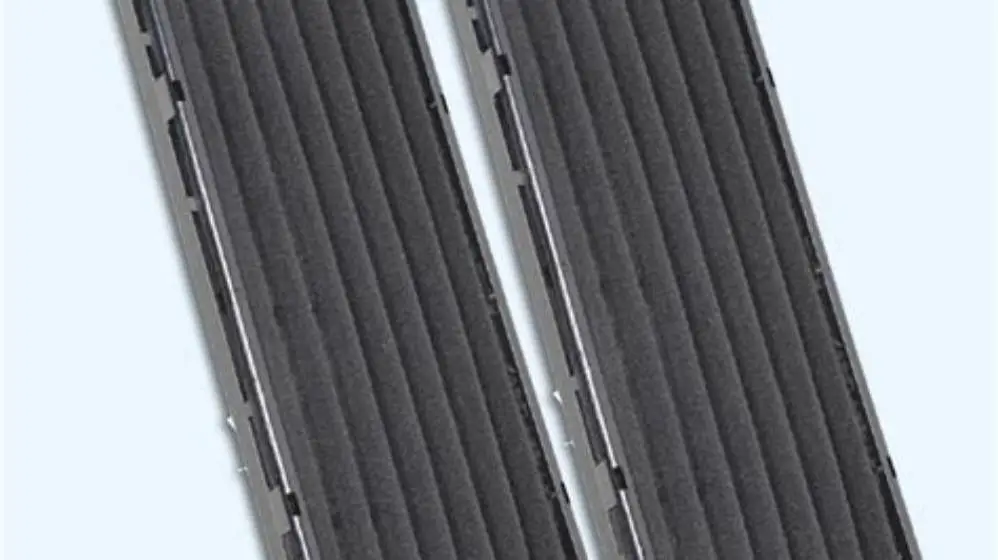
MVHR filters are pleated air filters inside a heat recovery ventilation unit. They clean incoming fresh air and outgoing stale air before it passes the heat exchanger, protecting the core and your lungs. Most UK homes use a G4 coarse filter plus an F7 or ePM1 filter on the supply.
On this page
- Quick recap
- What are MVHR filters and where they sit in the unit
- Check the filter grades first: G4, M5, F7 and what they catch
- Pick the change interval for your home and location
- Swap the filters without breaking the airtight seal
- Spot the signs your filters are overdue
- Keep the rest of the MVHR system clean so filters last
- Quick questions
Part of our guide on how mvhr units function
Quick facts
- Filter positions
- 2 - supply + extract
- Common grades
- G4, M5, F7 / ePM1
- New pressure drop
- 20-40 Pa per filter
- Change interval
- 6-12 months typical
- Heat recovery when clean
- 80-90% retained
- Check frequency
- Every 3 months
Quick recap
- Most UK MVHR units need two filters: coarse on extract, fine on supply.
- F7/ePM1 on the supply catches pollen and fine dust; G4 protects the exchanger.
- Change every 6-12 months, sooner if you live near a busy road or building work.
- A pressure rise past 100 Pa or musty supply air means the filter is overdue.
What are MVHR filters and where they sit in the unit
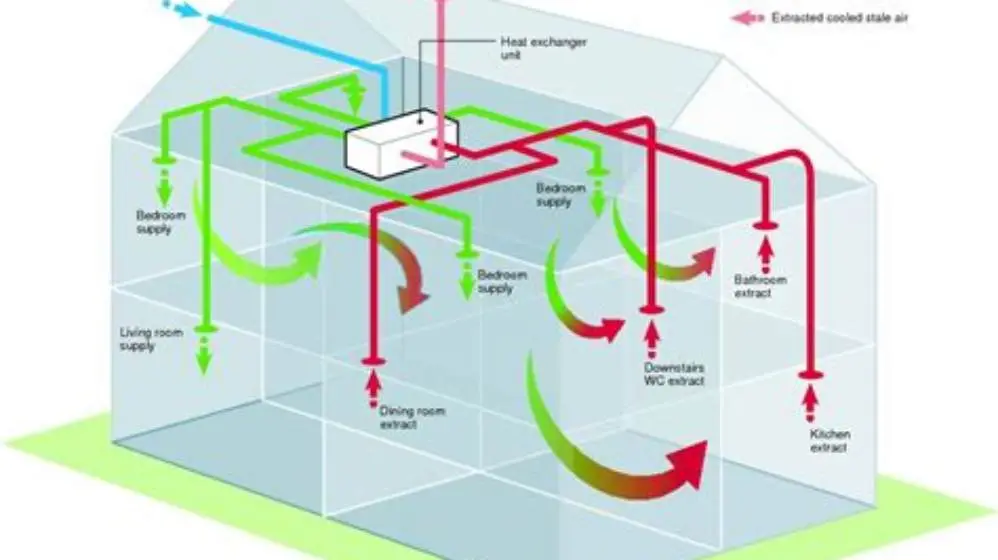
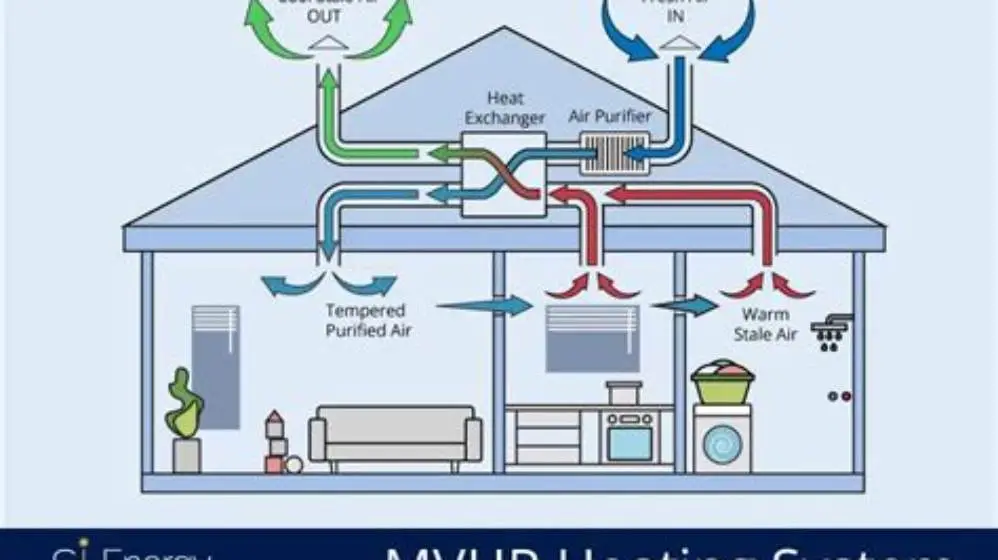
MVHR filters are the pleated mats that clean air before it hits the heat exchanger and your lungs. A domestic unit usually has two sets of G4 or F7 filters, one on the fresh-air supply and one on the extract from kitchens and bathrooms. Without them, dust coats the core, fans work harder and heat recovery drops fast. You breathe that air, so the filter grade matters as much as energy saving.
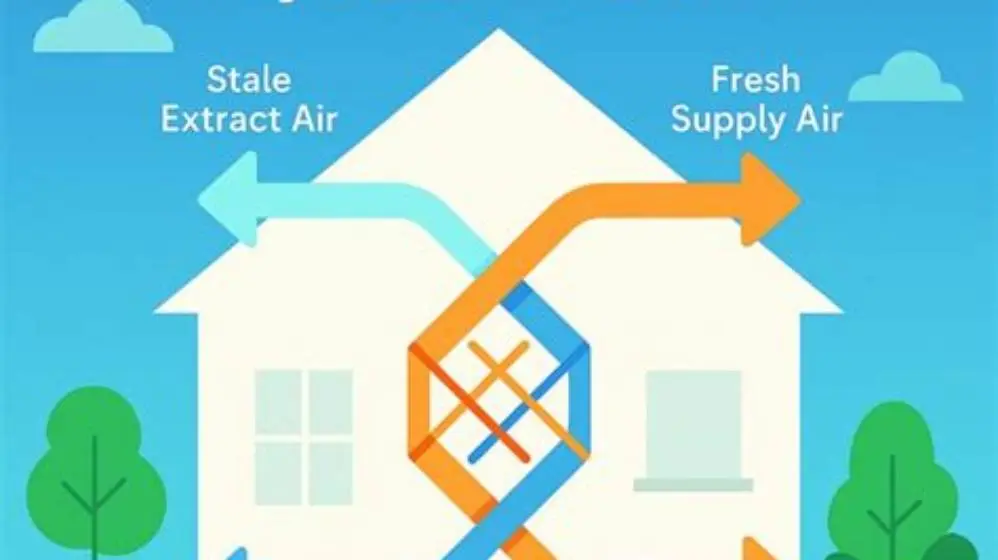
Think of the MVHR as lungs for an airtight home. The supply filter stops pollen, soot and coarse dust at the intake, typically on the outside wall or roof. The extract filter catches fluff, grease mist and hair before that stale air gives up its heat. Both sit in slide-out trays either side of the heat exchanger, often behind a single front door on units like Zehnder or Vent-Axia.
That position matters for performance. A clean supply filter keeps pressure drop at 20-40 Pa per filter when new, so the fans run quietly at 30-60% speed. A clogged one can push drop past 100 Pa, which forces the unit to ramp up, uses more watts and can unbalance supply and extract. You lose both air quality and the 80-90% heat recovery the unit was sized for.
Filters do not heat air themselves. They protect the exchanger and keep the air you get clean. In a well-sealed home at 0.6-3 air changes per hour, nearly all fresh air comes through that one intake, so the filter is your main defence against outdoor particles. Get the grade and fit right and the rest of the system stays efficient. We go through step-by-step mvhr setup step by step elsewhere on the site.
Check the filter grades first: G4, M5, F7 and what they catch
Filter grades tell you what size of particle they stop. Old UK labels use G4, M5, F7. New labels use ISO 16890 like ISO Coarse 60% or ePM1 60%. Both systems are still sold, so check which your manual lists. The number is not a quality score, it is a size class.
Most homes run a coarse filter on the extract and a fine filter on the supply. The extract G4 stops hair and coarse dust and keeps the exchanger clean. The supply F7 or ePM1 60-80% stops pollen, mould spores and much of the fine dust that triggers allergies. If you live by a main road, that fine supply filter makes a clear difference to dust on sills.
Do not fit a higher grade than your unit can handle without checking. A denser mat raises pressure drop and can cut airflow if the fans are small or the duct run is long. You want the best filtration your fan can still push at the design flow, typically 80-150 m3/h for a 2-3 bed home, without noise or excess power. For the detail, see our notes on finding replacement MVHR filters.
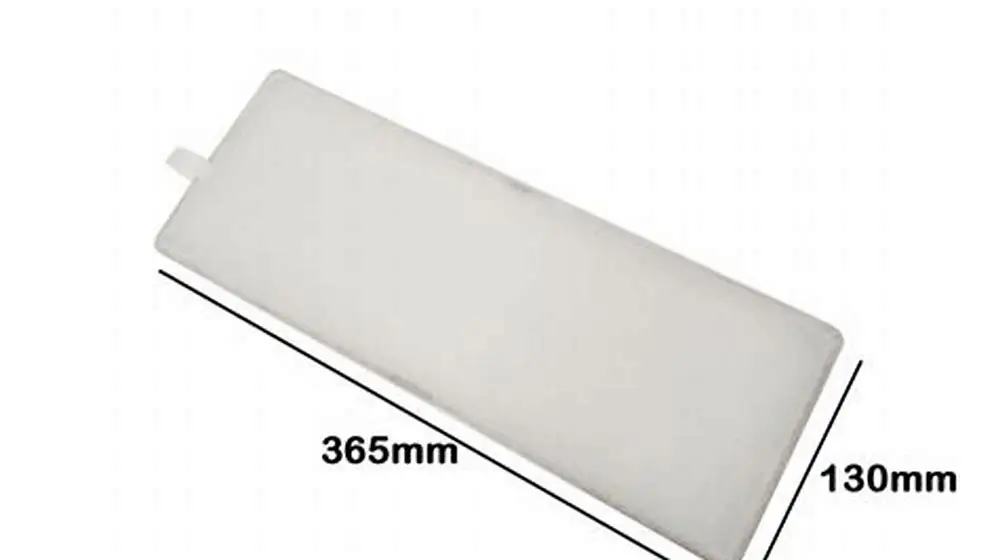
Use genuine size and depth, usually 15-25 mm deep pleats. A thin flat panel sold as universal will look right but pass less air and clog sooner. Match grade, dimensions and airflow direction arrow every time.
| Old label | ISO 16890 label | What it catches | Where it goes |
|---|---|---|---|
| G4 | ISO Coarse 60% | Hair, fluff, coarse dust >10 microns | Extract, sometimes supply pre-filter |
| M5 | ePM10 50% | Pollen, larger fine dust | Supply in low-pollen areas |
| F7 | ePM1 60-80% | Fine dust, pollen, mould spores, soot | Supply - standard for allergies/cities |
- F7/ePM1: far less pollen and fine dust indoors
- G4: low resistance, protects exchanger cheaply
- F7/ePM1: higher pressure drop, needs timely changes
- G4 alone on supply: lets fine particles through
Pick the change interval for your home and location
Change MVHR filters every 6-12 months in normal UK use, and check them every 3 months. That range depends on outdoor air, occupancy and how airtight you are. A city flat above a busy road, a home near building work or a house with pets will load a supply filter in 4-6 months. A rural home with good intake placement can stretch to 12 months if the mat still looks pale.
Do not go by colour alone. Hold the used filter to light next to a new one. If you cannot see light through the pleats or the pressure reading on the unit has risen 30-50 Pa above clean, it is done. Many units show filter days or a red light at a set hour count, often 180-270 days. Treat that as a prompt, not proof. A dusty summer can clog it sooner. For the detail, see our notes on optimal airing times for different methods.
Season matters. Pollen peaks in May-July load a fine supply filter fast. Autumn leaf mould and winter wood smoke do the same. If you commission the MVHR in winter, set a calendar check for late spring. Landlords should log changes for EPC and damp checks, as blocked ventilation is a common reason for mould in retrofits.
Keep a spare set on the shelf. Filters are light, keep for years sealed in plastic, and you will change them on a wet Sunday when shops are shut. Write the install date on the frame with a marker so the next check is honest.
- City or A-road within 100 m: check at 3 months, expect 6-month changes.
- Pets, smokers or workshop dust: supply filter loads 30-50% faster.
- New build or deep retrofit first year: plaster dust means an early first change at 3-4 months.
- Coastal or rural with clean intake: 9-12 months is realistic if pressure stays low.
Swap the filters without breaking the airtight seal
Isolate the unit first, then work clean. Turn the MVHR to standby or off at the isolator so the fans stop. You want no air pulling dust past the open tray into the exchanger. Lay a dust sheet below, have a bag ready for the old mats and do not shake them indoors. We go through when mvhr systems pay off step by step elsewhere on the site.
Fit matters more than force. Filters have an airflow arrow on the frame that must point the way the manual shows, usually towards the core on supply and towards the fan on extract. A backwards mat still fits but seals poorly and can whistle. Press the new filter fully home so the foam gasket compresses evenly with no gaps at the corners.
Reset the timer after you close up. Most units need a long press on the filter button or a menu reset to clear the warning and restart the day count. If you skip this, the light stays on and you lose your reminder. Run the unit on normal for 10 minutes and listen for whistling or rattling that signals a mis-seated tray.
Log what you fitted. Note grade, size in millimetres and date on the unit or in your house file. That record helps you claim under warranty and shows a future buyer or tenant the system was cared for, which matters in airtight homes where ventilation is the mould control. We go through condensation and black mould on walls how to stop it step by step elsewhere on the site.
- Switch MVHR to off or standby at the isolator and wait for fans to stop.
- Open the front door or tray, slide out old filters straight without tilting.
- Vacuum loose dust from the tray and door seal with a soft brush tool.
- Unwrap new filters, check size and grade, align airflow arrow as marked.
- Seat new filters fully, close door firmly, restore power and reset filter timer.
- Run on normal, check for air leaks or noise and note the date on the frame.
Spot the signs your filters are overdue
Your nose and the unit tell you first. Supply air smells stale or dusty, dust returns within days of wiping, or you see more pollen on sills in spring despite windows staying shut. The MVHR may sound louder as fans push against a higher load, or it shows filter warning or higher Pa on the display. Any of those means check now, not next month.
Look at the mat. A supply F7 that was white and now is even grey-brown across the face is loaded. A patchy grey with clean corners suggests bypass from a wrong size or a crushed gasket. An extract G4 matted with fluff and grease near the kitchen run is normal at 6 months, but if it is wet or spotted with mould, you have a condensation or duct issue to fix as well.
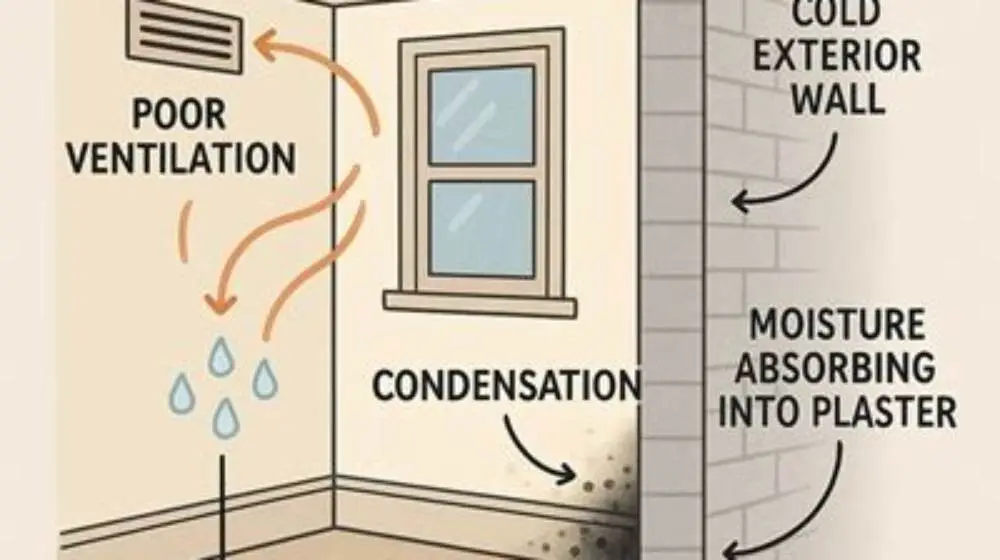
Watch energy and balance. A clogged supply filter cuts fresh air, so CO2 can creep up to 1000-1500 ppm in bedrooms overnight and humidity lingers after showers. Heat recovery falls because less air crosses the core at the design rate. If trickle vents are closed and the house still feels stuffy, the filter is the first thing to rule out.
Do the torch test at home. Shine a torch through the pleats in a dark room. A new filter glows evenly, a spent one blocks light in the centre where air hits most. You can also hold a tissue to a supply valve: it should flutter steadily. Weak or pulsing flow with fans on high hints at high resistance upstream.
- Noise up, airflow down: fans at high speed but weak flow at valves.
- Dust and smells: more dusting, cooking smells linger longer than usual.
- Warnings: filter light on, pressure reading up 30 Pa or more from clean.
- Health clues: more sneezing or itchy eyes indoors during pollen season.
Keep the rest of the MVHR system clean so filters last
Filters work best when the rest of the path is clear. Keep the outside intake grille free of leaves, nests and snow and make sure it is not pulling air from a bin store or boiler flue. A blocked cowl acts like a clogged filter and starves the unit. Brush the grille each time you check the mats and keep plants 300-500 mm clear.
Ducts and valves need light care. Wipe supply and extract valves with a damp cloth every few months and vacuum inside the spigot with a soft brush. Do not adjust the valve setting; it was commissioned to balance rooms at set flows like 8-12 l/s per bedroom. If you move a valve, mark its position first so you can return it.
The heat exchanger and fans need a yearly look. Power off, lift the core if your manual allows and check for dust film or moisture. Most domestic cores are washable plastic or aluminium, but some enthalpy cores are not. Follow the maker, not a video. A light vacuum of the fan impellers stops imbalance buzz.
A clean system keeps bills and air quality steady. With clear filters and balanced flows, the unit holds 80-90% heat recovery and runs at low watts, often 20-60 W on normal. That is the point of an airtight, insulated home: you keep heat without keeping stale air. Filters are the cheapest part of that deal.
Quick questions
Can I wash and reuse MVHR filters?
Most pleated G4 and F7 filters are single use. Washing breaks the fibre structure and the fine layer that catches small particles. Some makers sell washable coarse mats for the extract, but even those need full drying to avoid mould. Replace with the correct grade and size.
Are cheap compatible filters okay?
Compatibles are fine if they match grade, dimensions in millimetres and depth, and have a proper gasket. Check for ISO 16890 rating on the box and an airflow arrow. A filter that is 5 mm short or thin will bypass dust and cost more in fan power than you save.
Do MVHR filters stop viruses or smoke?
F7/ePM1 filters cut fine dust, pollen and soot well, but they are not HEPA. They reduce particles that carry irritants, they do not sterilise air. For heavy smoke or high allergy needs, ask your installer about a higher grade or a separate HEPA stage, if the unit can handle the extra pressure.
What happens if I leave filters too long?
Airflow drops, CO2 and humidity rise, fans run harder and louder, and dust builds on the heat exchanger. Heat recovery falls and the unit can frost or fault in cold weather. In a tight home that can mean mould in corners despite heating.
How do I know which size to order?
Read the label on the old filter frame or the manual. Note length, width and depth in millimetres and the grade like G4 or F7/ePM1 60%. Take a photo of the label and the arrow direction before you buy. Keep one spare set sealed in plastic.