Step-by-step guidance on choosing installers, securing permits, and matching batteries with 3-phase solar inverters for your home.
To buy a battery storage system working with your solar inverter, match voltage and communication specs, choose installers handling local permits, and ensure they have 3-phase wiring experience.
On this page
- The short version
- Inverter compatibility types
- How to buy a battery storage system that works with your existing solar inverter
- Buying solar panels with installers who handle local permit checks
- Finding battery installers experienced with 3-phase homes
- Matching battery and inverter specs: voltage and communication essentials
- Where to find compatible suppliers and installers for your solar and battery project
- Questions people still ask
Part of our guide on boiler upgrade scheme eligibility and how to apply
Clear steps to find solar installers who handle permits and match battery systems in complex 3-phase homes.
| Typical battery voltage | 48 V DC |
|---|---|
| Common inverter communication | CAN bus or RS485 |
| Local permit needed | Yes, almost always |
| 3-phase home wiring | Requires balanced installation |
| Installer experience | Key for 3-phase and permits |
The short version
- Match battery voltage and inverter communication protocols for compatibility.
- Hire installers familiar with local permit requirements to avoid delays.
- 3-phase homes need installers experienced with multi-phase wiring and balancing.
- Check compatibility lists from inverter manufacturers before buying storage.
- Battery installers with 3-phase experience reduce installation risks and costs.
Inverter compatibility types
Battery and solar inverter compatibility depends primarily on matching voltage ranges and communication protocols. Most home batteries operate at around 48 volts DC, but some models use 24 V or 60 V systems, so you must verify your inverter's compatible voltage input range.
Inverters communicate with batteries using protocols like CAN bus, RS485, or proprietary systems. A mismatch here prevents your battery from correctly charging or discharging, possibly causing faults or inefficient energy use.
You can usually find compatible batteries listed on your inverter’s official website or product manuals. Cross-check specification sheets to confirm voltage range and communication support before buying.
| Factor | Typical Values | Why It Matters |
|---|---|---|
| Battery Voltage | 24–60 V DC (commonly 48 V) | Must match inverter input for safe charging |
| Communication Type | CAN bus, RS485, Modbus | Ensures inverter and battery exchange data |
| Maximum Current | Varies by system | Avoids damage from overcurrent during charge/discharge |
How to buy a battery storage system that works with your existing solar inverter
Start by identifying your solar inverter’s brand and model number. Look up its technical manual online to find battery compatibility specs including voltage range and communication protocols. People in this spot often ask about home electric heat pump installation as well.
Next, inspect your current solar setup or ask your installer about existing wiring and battery interface points. If you lack documentation, a multimeter can measure DC voltage at the battery terminals to confirm system voltage.
Choose a battery that explicitly supports your inverter’s communication protocol. If uncertain, contact manufacturers or suppliers directly to confirm compatibility.
Consider battery capacity and inverter maximum battery input to ensure your system’s load and storage goals align. Oversized batteries may not charge properly with smaller inverters. Before you commit to anything, it is worth looking at grid-tied inverter compatibility.
- Identify inverter make and model.
- Check inverter specification sheet for battery voltage and communication.
- Measure existing system voltage if needed.
- Select battery with matching voltage and communication protocol.
- Confirm capacity fits inverter charge limits.

CGELE DC Multifunction Battery Monitor Meter with Shunt,0-200V,0-100A
Measures DC voltage up to 200 volts, covering your need to check system voltage for battery compatibility.
Buying solar panels with installers who handle local permit checks
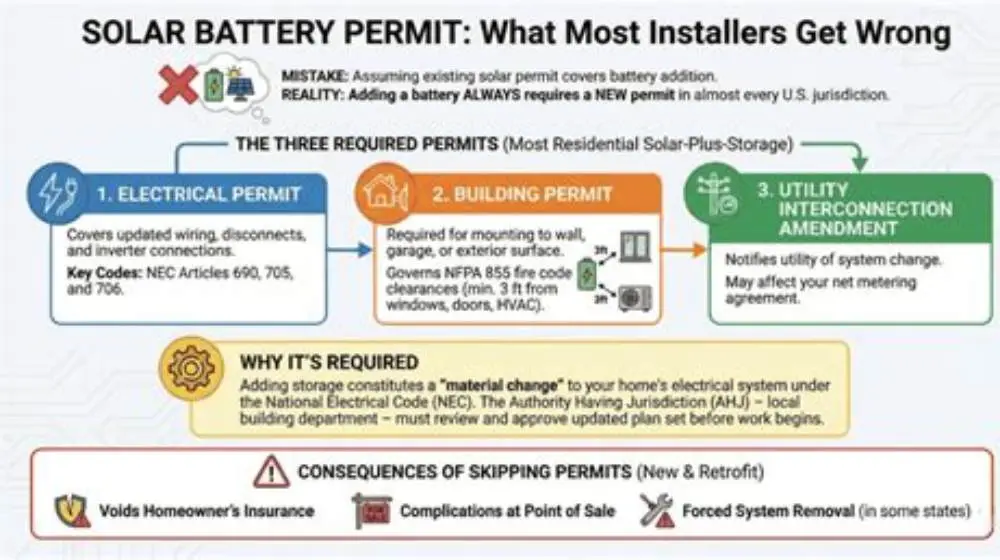
Permits for solar installations vary widely by location but nearly always require approval before work begins. Installers familiar with local authorities know the paperwork, timelines, and inspection procedures.
Choosing an installer who handles permits reduces your risk of noncompliance that can halt your project or cause fines. Permit fees often depend on system size and municipality rules.
Ask prospective installers upfront which permits they manage and how they verify compliance. Experienced companies anticipate common local hurdles and expedite approvals. For the detail, see our notes on finding local solar panel suppliers.
If you plan a self-install or use a less experienced installer, contact your local building or electrical department to learn which permits apply and the submission process.
- Permit scope: usually electrical connection and structural inspections.
- Fees: can range from nominal to several hundred dollars, based on location.
- Timeline: permits usually take 1-4 weeks depending on local authority workload.
Finding battery installers experienced with 3-phase homes
Homes with 3-phase electricity require balanced battery and inverter connections across all three phases. This is more complex than single-phase setups and needs specialized wiring knowledge.
Not all battery installers can handle 3-phase systems. You must ask if they have experience and certifications specifically for 3-phase electrical work. We cover condensing boiler units with installers in its own article.
Installers with 3-phase expertise understand how to avoid phase imbalances that cause equipment wear or electricity inefficiencies. They also know how to comply with stricter regulations often tied to 3-phase metering.
Choosing such installers reduces installation errors and possible safety issues. Verify credentials and ask for references from 3-phase battery installations.
- 3-phase requires balanced current loads on phases.
- Incorrect installation risks inverter damage and poor performance.
- 3-phase certified electricians have special qualifications.
Matching battery and inverter specs: voltage and communication essentials
Battery voltage must fall within the inverter’s stated operating range to prevent damage. For example, an inverter rated for 48 V DC ± 5 V will fault if the battery voltage drifts beyond this band. We go through boiler upgrade scheme replaces RHI step by step elsewhere on the site.
Communication protocols differ between manufacturers. Common types include CAN bus and RS485. Some inverters use proprietary messaging that restricts battery brand options.
Ensuring your inverter can communicate with the battery means that charge, status, and fault data synchronize. Without this, you risk incorrect charging cycles or missed warnings.
Check supplier websites for a compatibility matrix showing which batteries pair with your inverter’s communication system. If missing, ask technical support before purchase. If that sounds like your situation, read up on finding new home improvement finance next.
| Spec | Example Values | Impact |
|---|---|---|
| Voltage Range | 44–52 V DC | Ensures battery voltage matches inverter limits |
| Communication Type | CAN bus, RS485 | Critical for control and monitoring |
| Charge Current Max | Up to 50 A | Avoids overloading inverter inputs |
Where to find compatible suppliers and installers for your solar and battery project
Start with inverter manufacturer websites; they often list certified battery partners and authorized installers familiar with their systems.
Local solar trade associations or renewable energy organizations maintain directories of vetted installers who manage permits and specialize in 3-phase installations.
Online marketplaces that focus on renewable energy products can help find batteries and inverters with verified compatibility, but always cross-check product specs.
Ask for referrals from neighbors or community groups with similar solar setups, especially if they have 3-phase wiring and battery storage.
During supplier selection, request documentation showing their permit handling experience and examples of 3-phase battery installations to verify expertise.
- Manufacturer certified partners reduce compatibility risk.
- Local trade groups provide trustworthy installer contacts.
- Community referrals often spot installers with proven 3-phase skill.
Questions people still ask
Can I add battery storage to any existing solar inverter?
No, batteries must match your inverter’s voltage and communication protocols. Check your inverter’s documentation or contact the manufacturer for compatible battery models.
Do I always need a permit for solar and battery installation?
Almost always yes. Permits ensure your installation meets safety and grid connection standards. Local rules vary, so use an installer experienced with your municipality’s permit process.
What makes 3-phase battery installation different from single-phase?
3-phase requires balancing loads across all phases and more complex wiring. Installers need 3-phase certification and experience to avoid damage and ensure system efficiency.
Where do I find installers who handle permits and 3-phase systems?
Check inverter makers' certified installer lists, local solar trade associations, and community referrals. Verify they have 3-phase experience and handle your area’s permit procedures.
What should I measure to check my system voltage before buying a battery?
Use a DC voltmeter to measure voltage at your battery or inverter terminals with the system off. This reading guides voltage compatibility with your prospective battery.