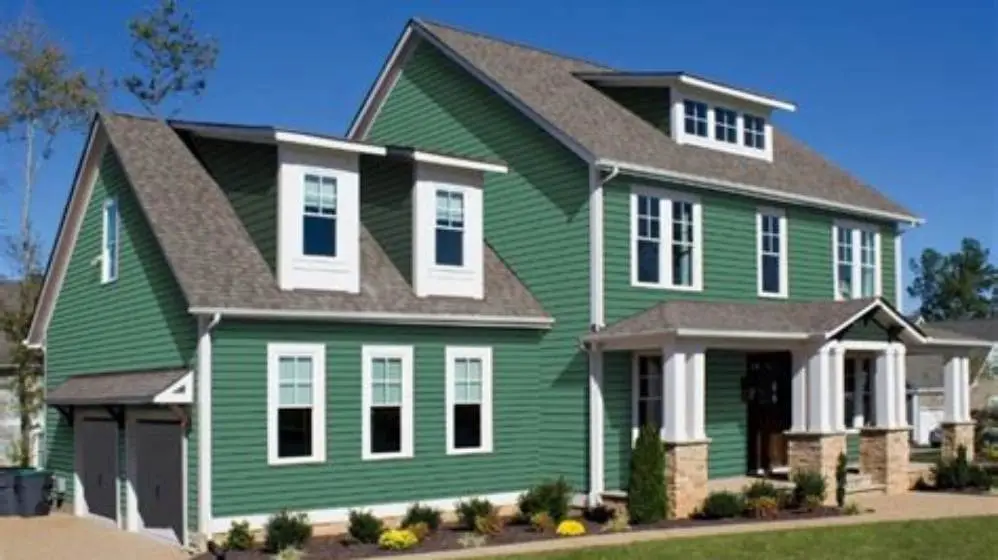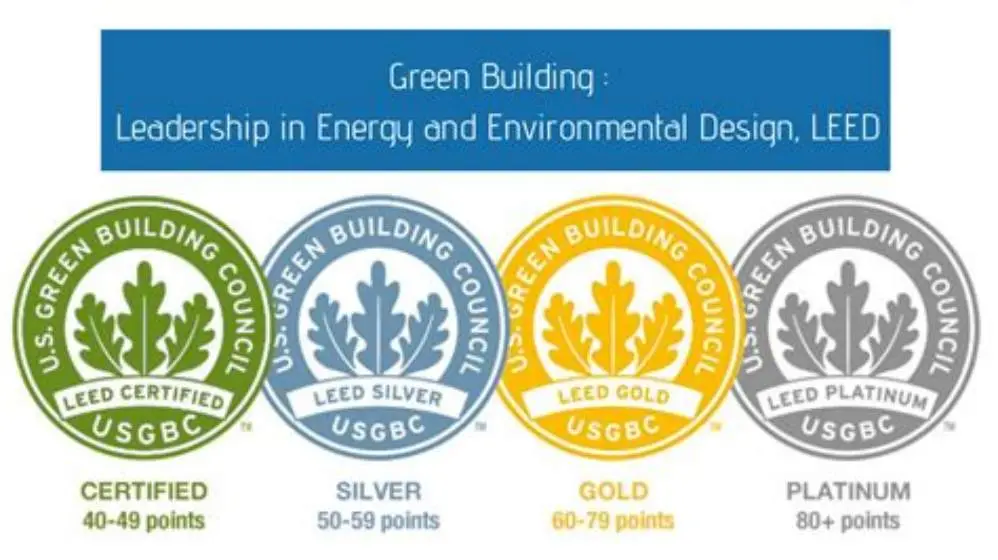
LEED certification is a green building rating system that measures sustainability and energy efficiency of a building, with levels like Certified, Silver, Gold, and Platinum showing increasing performance.
On this page
- Quick recap
- What LEED certification is in construction and buildings
- What LEED Gold certification means
- How LEED differs from BREEAM WELL and Green Globes
- How LEED certification affects UK homes and energy bills
- Steps to achieve LEED certification in the UK
- Key differences between LEED certification levels
- Quick questions
Part of our guide on government grants for green homes
Quick facts
- LEED levels
- Certified to Platinum
- Points for Gold
- 60-79 points
- Main criteria
- Energy, water, materials
- Common UK alternative
- BREEAM
- Certification type
- Voluntary
- Focus area
- Sustainability and health
Quick recap
- LEED rates building sustainability on energy, water, material use, and indoor environment.
- Gold certification requires 60-79 points on LEED's scale, showing strong green credentials.
- BREEAM, WELL, and Green Globes differ in focus, criteria, and regional uptake from LEED.
- LEED certification helps improve energy bills and EPC ratings in UK buildings.
- Achieving certification needs meeting detailed design and construction standards.
What LEED certification is in construction and buildings
LEED certification is a globally recognised system for assessing how sustainable and energy-efficient a building is. Developed by the U.S. Green Building Council, it scores buildings on performance criteria like energy use, water efficiency, indoor air quality, and materials. Buildings earn points across these categories, and the total determines their certification level.
Points range from 40 to 110 depending on design, operation, and site factors. The levels are Certified (40-49 points), Silver (50-59), Gold (60-79), and Platinum (80+). The process involves detailed documentation and third-party verification, showing how the building meets environmental and occupant health standards.
In the UK, LEED is less common than BREEAM but is still relevant, especially for international projects or those aiming for a widely recognised green credential. LEED certification affects a building’s EPC rating and can lead to lower energy bills by ensuring efficient systems and sustainable materials are used.
What LEED Gold certification means
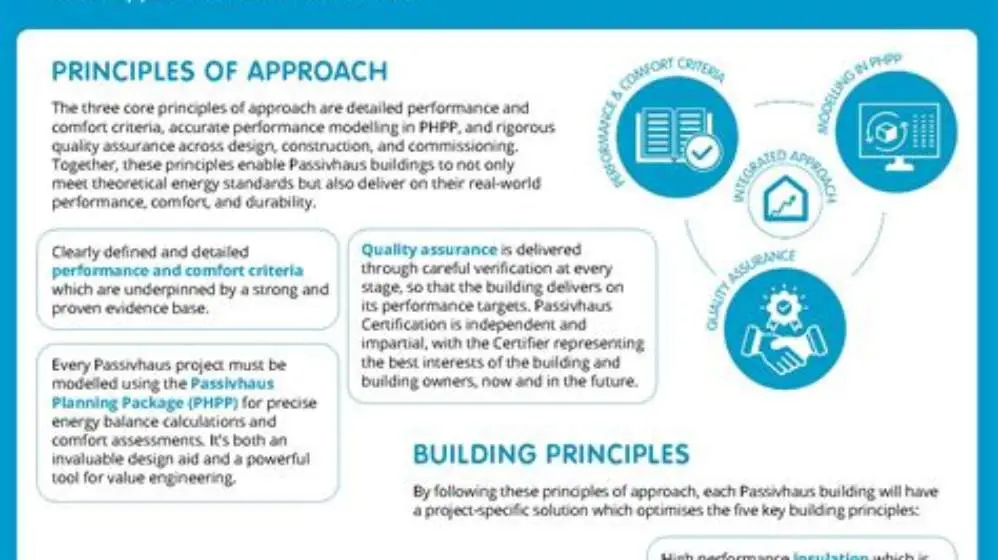
LEED Gold corresponds to a score band of 60–79 points under the LEED v4/v4.1 rating framework; this scoring range is defined by the U.S. Green Building Council (USGBC) and applies internationally where LEED is used. The score is an aggregate of credits across categories such as Integrative Process, Location and Transportation, Sustainable Sites, Water Efficiency, Energy and Atmosphere, Materials and Resources, and Indoor Environmental Quality. Achieving Gold therefore demonstrates a high level of design and operational performance across those categories rather than success in a single measure alone (source: USGBC LEED rating system documentation). There is more on passivhaus explained in a separate guide.
Buildings targeting Gold typically need measurable steps: whole‑building energy modelling to show reduced consumption, water‑use calculations, specification of low‑emission finishes, and documented commissioning of mechanical systems. These tasks require detailed evidence submitted during certification and often additional consultant time. Gold sits above Silver and Certified by requiring more credits or higher achievement within credit pathways, so project teams should expect more paperwork, more testing and, in many cases, higher design and construction costs.
The operational benefits often cited for Gold projects are lower utility consumption and improved occupant wellbeing. These are outcomes, not guarantees. Measured savings depend on local climate, building use, and how well systems are handed over and operated. When quoting expected reductions or payback periods, use project‑specific energy models or measurements; industry guidance and the USGBC case study library provide documented examples that teams can reference rather than assuming fixed figures (see USGBC case studies and the CIBSE guidance on energy modelling).
Developers commonly balance extra capital expenditure against lifecycle savings. Typical actions to reach Gold include enhanced envelope performance, heat recovery ventilation, efficient HVAC plant or heat pumps, and higher specification controls. These measures raise the probability of persistent energy savings but must be validated on a per‑project basis through pre‑ and post‑occupancy metering and reporting. For authoritative scoring and procedural detail, consult the official LEED reference guides and project registry on the USGBC website. People in this spot often ask about breeam explained as well.

Emporia Vue 3 Home Energy Monitor
Handles your energy monitoring with accuracy within ±2% for kWh readings, meeting the precision needed for LEED documentation.
How LEED differs from BREEAM WELL and Green Globes
LEED, BREEAM, WELL, and Green Globes are all green building standards but differ in scope, focus, and regional use. LEED focuses broadly on sustainability and energy performance, originating in the US but used internationally.
BREEAM is the UK’s predominant green building assessment, covering similar areas but tailored to UK regulations and climate. It often includes more local environmental factors and social aspects.
WELL certification targets occupant health and wellbeing specifically, measuring air quality, lighting, and comfort rather than broader environmental impact. Green Globes offers a more flexible, quicker certification popular in North America. It helps to understand explaining the sap numerical score before going further.
Choosing among them depends on building goals: LEED suits ambitious sustainability, BREEAM fits UK contexts, WELL prioritises health, and Green Globes offers a simpler route. For UK homeowners seeking green credentials recognized locally, BREEAM might be preferable, but LEED is a strong alternative for international recognition.
| Standard | Main Focus | Regional Use | Certification Levels | Assessment Criteria |
|---|---|---|---|---|
| LEED | Sustainability and energy | International, US-based | Certified to Platinum | Energy, water, materials, indoor environment |
| BREEAM | Environmental impact & UK context | UK and Europe | Pass to Outstanding | Energy, ecology, pollution, health |
| WELL | Occupant health & wellbeing | International | Silver to Platinum | Air, water, light, fitness, comfort |
| Green Globes | Flexible sustainability | North America | 1 to 4 Globes | Energy, water, resources, emissions |
- LEED: detailed sustainability
- BREEAM: tailored to UK needs
- WELL: focuses on health
- Green Globes: faster, flexible
- LEED: complex and costly
- BREEAM: UK-centric
- WELL: narrow focus
- Green Globes: less recognised
How LEED certification affects UK homes and energy bills
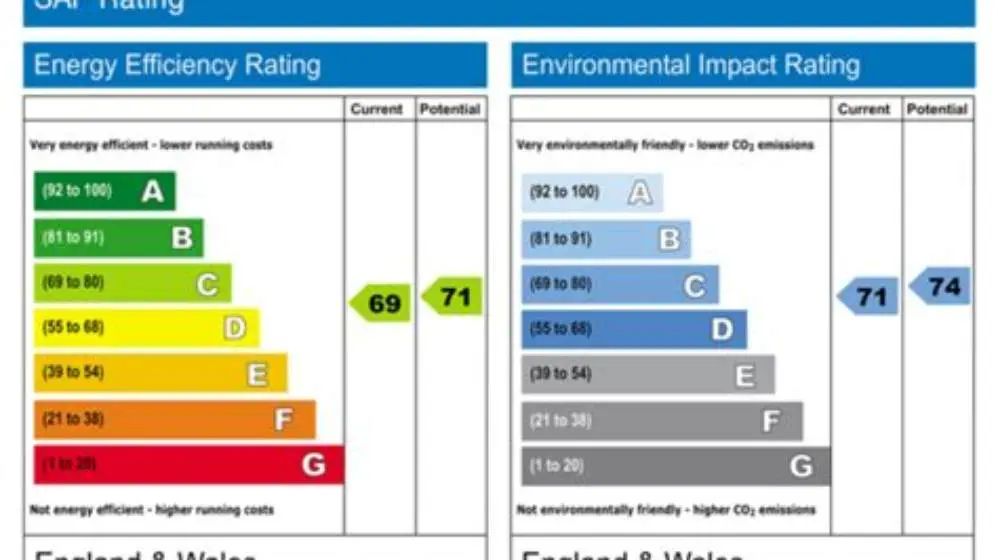
LEED certification is primarily a building rating focused on sustainability; it does not itself change a home's Energy Performance Certificate (EPC) score but the measures taken to achieve LEED can improve EPC bands. For example, fabric upgrades, efficient heating, heat-recovery ventilation and renewable generation (commonly used to earn LEED points) also reduce regulated energy use that feeds into EPC calculations. The EPC methodology is set out by the UK government and assesses elements such as insulation, heating system efficiency and fixed lighting; therefore overlap exists, but impact must be verified on a case‑by‑case basis using SAP or RdSAP modelling for EPCs (source: UK Government EPC guidance).
Quantifying bill savings requires modelling calibrated to UK climates and typical occupancy. Nationally representative figures are not provided by LEED; instead, practitioners should use calibrated energy models or post‑occupancy meter data. Industry guidance from UK organisations such as CIBSE or the Building Research Establishment (BRE) can be used to estimate heating demand reductions from specific interventions. Where studies are cited, check whether they use SAP assumptions or measured consumption because results diverge between predicted and monitored energy use. It helps to understand criteria for green electricity plans before going further.
Government programmes and grants in the UK (for example the Boiler Upgrade Scheme and social‑sector funding streams) can assist homeowners to install measures that would also contribute to LEED credits. These schemes affect upfront affordability rather than certification per se, and eligibility rules change. Project teams and homeowners should consult the latest UK government guidance and local grant portals before assuming subsidy will be available for LEED‑related measures.
Behaviour and controls matter. Even a home that has the fabric, heating system and ventilation required for LEED performance can fall short of predicted savings if controls are misconfigured or occupants use systems inconsistently. Post‑occupancy evaluation, occupant guidance packs and simple kWh monitoring are pragmatic ways to close the gap between modelled and actual energy bills. For definitive guidance on how specific measures influence EPC bands and bills in the UK, use SAP/RdSAP modelling and consult the official EPC assessment guidance from the UK government.
Steps to achieve LEED certification in the UK
Achieving LEED certification involves a clear process, often including design, documentation, construction, and verification. It usually takes months to years depending on project size and complexity. Before you commit to anything, it is worth looking at what is modular and prefabricated housing.
UK projects often hire consultants experienced with LEED to navigate local regulations and documentation requirements. Key steps include registering the project with the USGBC, setting sustainability goals, gathering evidence, and submitting for review.
Regular energy and air quality testing during construction ensures standards are met. The process ends with a third-party audit and scoring to determine the LEED level awarded.
The LEED certification process also includes a minimum performance period, requiring buildings to demonstrate sustained energy and water savings for at least 12 months after occupancy before final certification is granted. This condition ensures that the building operates as intended and that design efficiencies translate into real-world reductions.
For UK projects, adapting LEED documentation to comply with local building codes and standards is critical. This often involves cross-referencing LEED requirements with UK regulations such as Part L of the Building Regulations, ensuring that energy modelling and material certifications align with domestic expectations.
During construction, common pitfalls that delay certification include incomplete waste diversion records or missing product environmental declarations. Projects often implement rigorous quality control systems and regular audits to catch such issues early, preventing costly rework and ensuring a smoother path to certification.
- Register your building project with USGBC and select LEED rating system.
- Develop sustainability and energy efficiency goals matching LEED criteria.
- Document materials, energy use plans, water-saving measures, and indoor environment strategies.
- Complete construction using approved methods and materials.
- Conduct energy and air quality tests using certified meters and instruments.
- Submit documentation and test results for third-party verification.
- Receive LEED certification level based on total points achieved.
Key differences between LEED certification levels
LEED levels reflect the total points earned out of a possible 110, indicating how green a building is. Certified requires 40-49 points, Silver 50-59, Gold 60-79, and Platinum 80+. Each level demands more stringent energy savings, water efficiency, material sourcing, and occupant health measures.
Gold certification often requires upgrading insulation thickness, higher-efficiency heating systems, and advanced water recycling. Platinum demands further innovations like net-zero energy designs or zero-carbon materials.
These levels guide designers and builders on how far to go with sustainability efforts. For homeowners, knowing your building’s level helps understand its environmental and financial performance.
Quick questions
Is LEED certification legally required in the UK?
No, LEED certification is voluntary in the UK. It is a recognised standard for sustainability but not mandated by law. Some projects choose it to improve marketability or meet corporate social responsibility goals.
Can LEED certification improve my EPC rating?
Yes, buildings designed to LEED standards generally achieve better EPC ratings due to higher energy efficiency and insulation, which lower carbon emissions and running costs.
How long does LEED certification take to obtain?
The process typically takes several months to over a year, depending on the size and complexity of the project, and how quickly documentation and testing are completed.
Is LEED certification more expensive than BREEAM?
Often yes. LEED certification can involve more extensive documentation and higher costs, especially for international projects. BREEAM is typically more tailored and sometimes less costly in the UK context.
Does LEED certification guarantee lower energy bills?
Not guaranteed but likely. LEED-certified buildings are designed to be efficient, which generally reduces energy consumption, but occupant behaviour and maintenance affect actual bills.