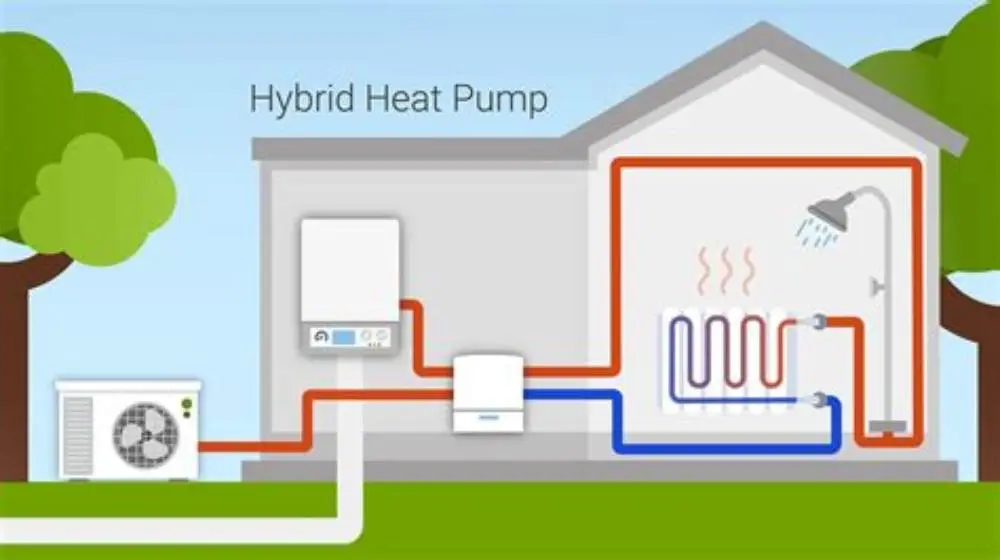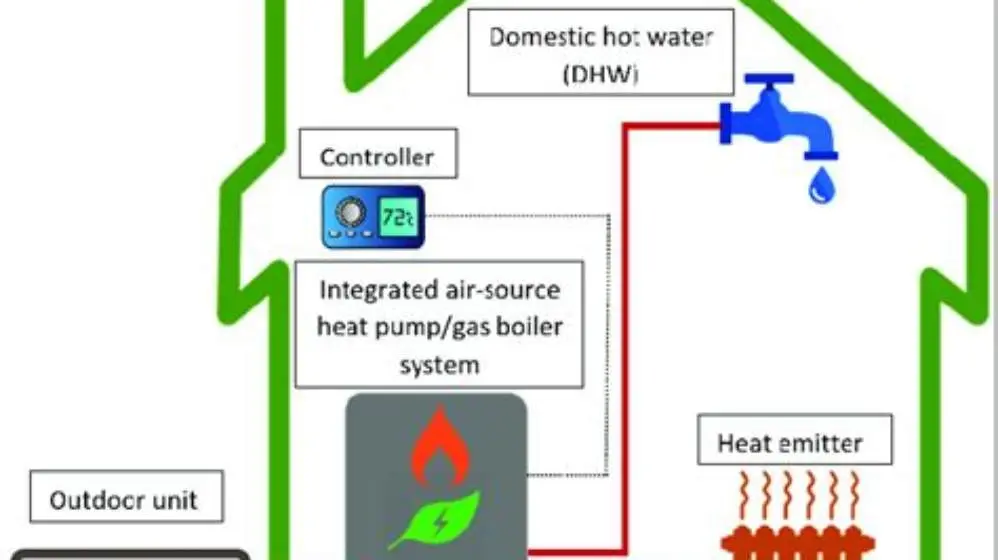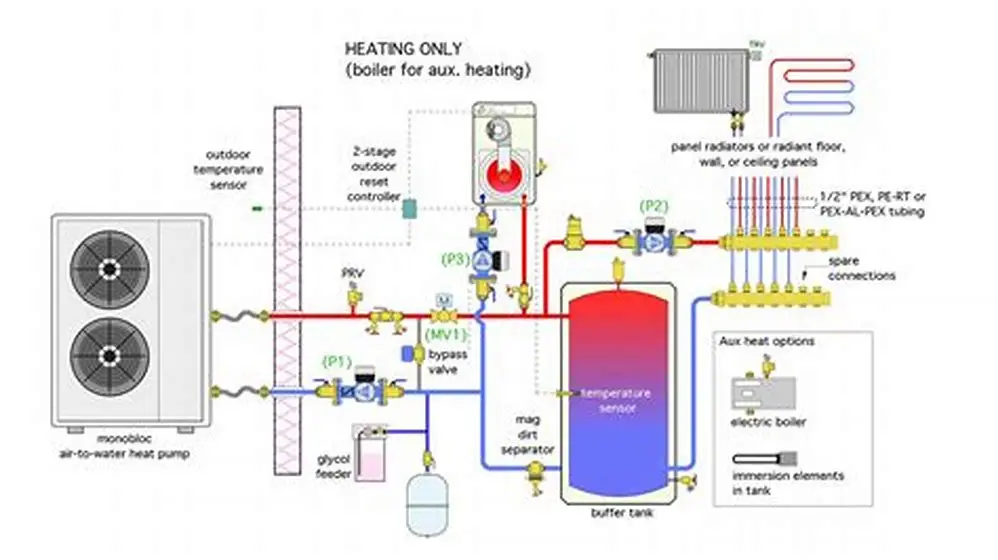
Yes, the systems can work together. Use a cylinder designed for both heat sources, with separate coils or a suitable thermal-store arrangement. Give each circuit its own pump, isolation valves, non-return protection and safety controls. Ask an MCS-accredited installer to confirm the heat pump's primary-system status before applying for support.
On this page
- Quick recap
- Choose a cylinder designed for both heat sources
- Define the primary and backup systems
- Size the cylinder from measured demand
- Connect each source as a separate circuit
- Use clear control logic and interlocks
- Check grant rules before buying equipment
- Commission the system and record measured results
- Quick questions
Part of our guide on what is a hybrid heat pump
Quick facts
- Cylinder type needed
- A manufacturer-approved twin-coil cylinder or compatible thermal store
- Primary system
- The source designated to meet normal heating or hot-water demand
- Backup system
- A secondary source that runs only under defined conditions
- Control method
- A compatible controller with relays, sensors, interlocks and priority logic
- Grant check
- Confirm current BUS guidance and primary-system rules before installation
Quick recap
- Choose a cylinder whose coil heat-transfer data matches both appliances.
- Define the heat pump as primary or backup before planning controls or grant applications.
- Use interlocked controls so both sources cannot create unsafe or conflicting flow conditions.
- Size the cylinder from measured hot-water demand and manufacturer data, not household headcount alone.
- Commission every sensor, valve, pump and safety device, then record the test results.
Choose a cylinder designed for both heat sources
A single-coil cylinder has one heat-transfer circuit. It cannot accept two independent sources safely without a design specifically approved by its manufacturer.
A twin-coil cylinder gives each source a separate circuit. The stored water is shared, but the primary heating fluids remain separate. That arrangement avoids unwanted circulation between appliances.
Check the cylinder datasheet before ordering. Look for the coil heat-transfer area, permitted flow temperature, pressure rating, sensor pockets and manufacturer-approved heat-source combinations.
Define the primary and backup systems
The primary system handles normal demand. The backup system starts only when the primary source cannot meet a defined condition, such as poor weather, a fault or a timed recovery period. We go through selecting heat pump for 1500 square feet step by step elsewhere on the site.
This distinction matters for grant eligibility. A heat pump installed beside a pellet boiler is not automatically classed as the primary heating system. Ask the installer to explain how the design will be documented in the quotation, commissioning record and grant application.
Consult the current Boiler Upgrade Scheme guidance or an MCS-accredited installer about primary-system designation. Keep the heat-loss calculation, product schedules, wiring diagram and commissioning record with the application documents.
- The heat pump can cover normal low-temperature demand.
- The pellet boiler can provide backup during defined high-demand conditions.
- The arrangement can retain an existing renewable fuel appliance where the design permits it.
- The controls need careful interlocking and commissioning.
- A cylinder with suitable coils can cost more than a single-source model.
- Grant eligibility depends on current rules and the documented system design.
Size the cylinder from measured demand
Don't choose cylinder volume from household size alone. Record hot-water use over several days, including showers, baths, kitchen use and any unusual demand. A smart meter, flow meter or manual log can provide useful inputs. The other half of this decision is hybrid heating installation tips.
Ask the designer to calculate the required stored energy from demand, recovery time and available heat-source output. The calculation should state its assumptions, including incoming-water conditions, target delivery temperature, draw-off pattern and permitted recovery period.
Use the cylinder manufacturer's sizing guide or a recognised design reference such as CIBSE guidance. Compare the result with the appliance datasheets. A cylinder that is too small can trigger frequent backup operation. A larger cylinder can increase recovery time and standing losses, so ask the designer to quantify both effects.
Coil surface area is not the same as stored-water volume. Coil surface area describes the heat-transfer surface inside the cylinder. The datasheet may call it heating surface, heat-transfer area or coil area. Use the manufacturer's stated value and test conditions, rather than estimating it from pipe size. If that sounds like your situation, read up on controls and pipework for backup boiler next.
Connect each source as a separate circuit
Pipe the heat pump and pellet boiler to their own cylinder coils. Each circuit needs correctly sized flow and return pipes, a circulation pump, isolation valves, air removal and non-return protection where the design requires it.
Follow the appliance manuals for pipe diameter and pump position. Pipe size depends on flow rate, temperature difference, allowable pressure loss and the chosen material. Do not copy a nominal pipe size from another installation.
Fit a suitable thermostatic mixing valve on the domestic hot-water outlet where the cylinder or system can deliver scalding water. Select and commission it for the cylinder manufacturer's requirements. This is the only TMV instruction needed here. We cover biomass boiler grant uk rules in its own article.
The domestic-water side also needs appropriate safety equipment. Confirm the pressure relief valve, expansion vessel, check valve, temperature controls and discharge route match the cylinder type. An unvented cylinder requires installation and testing by a competent person under the applicable building regulations.
Solid-fuel appliances need extra protection against overheating and loss of electrical power. Confirm the appliance's loading protection, heat-leak route, overheat thermostat, flue arrangement and fuel-storage requirements. Follow the manufacturer's instructions and applicable UK building and installation rules.
- Confirm the cylinder, coils and appliances are compatible from their datasheets.
- Produce a hydraulic schematic showing every valve, pump, sensor and safety device.
- Install separate flow and return circuits with serviceable isolation points.
- Install the domestic-water safety group and expansion arrangement specified for the cylinder.
- Fit sensors in the correct pockets or positions shown by the controller manufacturer.
- Label every pipe, valve, sensor cable and electrical isolator.
- Fill, vent, pressure-test and flush each circuit using the appliance instructions.
- Test each heat source separately before enabling automatic priority control.
Use clear control logic and interlocks
A controller should measure cylinder temperature, receive a demand signal and start the selected heat source. The backup relay should remain off while the primary system can satisfy demand. We go through installing heating controls step by step elsewhere on the site.
A simple example uses a cylinder sensor connected to a heat-pump controller. The controller energises the heat-pump demand relay. A second relay receives the same demand through a normally closed primary-run contact and starts the pellet boiler only after the defined backup condition is met.
The two source outputs should also pass through pump and overheat interlocks. A relay must not switch a load beyond its rating. Use a manufacturer-approved wiring centre or controller, such as the equipment specified by the heat-pump and cylinder makers, rather than mixing unapproved controls.
The controller can use a timed recovery test, a low-temperature threshold or a fault signal. The designer should state the values in the commissioning sheet. Don't copy settings from another property.
- Heat-pump demand relay: enables the primary source and its circulation pump.
- Backup relay: starts the pellet boiler only after the programmed backup condition.
- Pump interlock: prevents a pump running when its valve is closed or source is unavailable.
- Non-return protection: prevents unwanted circulation through an inactive heat source.
- High-limit circuit: removes the demand signal if the cylinder or appliance reaches its safety limit.
- Service mode: lets the installer run each source, pump and valve independently.
- Priority control reduces unnecessary pellet firing.
- Separate relays make faults easier to diagnose.
- Metering can show which source supplied the heat.
- Incorrect relay logic can prevent heating or create unsafe conditions.
- Some heat pumps require proprietary controls and sensors.
- Remote features must never replace hard-wired safety controls.
Check grant rules before buying equipment
Refer to the official Boiler Upgrade Scheme guidance for current grant levels and eligibility criteria. Ask an MCS-accredited installer to confirm whether the heat pump qualifies when a pellet boiler remains in the property.
Document which system is primary and which is backup. The design should show normal operation, backup conditions, controls, heat emitters and any retained boiler. Keep the heat-loss calculation and commissioning evidence.
For ECO4, check the scheme administrator for current end dates and rules. Eligibility can depend on household circumstances, property details and the measures proposed. Do not rely on an old article or installer estimate.
Scheme names and rules can change. Check official government pages, the scheme administrator and the installer before signing a contract.
| Item | What to confirm | Who should provide it |
|---|---|---|
| BUS guidance | Current eligibility, installer requirements and primary-system rules | Official government guidance and MCS-accredited installer |
| ECO4 rules | Current eligibility, administrator requirements and available measures | Scheme administrator and official guidance |
| Cylinder datasheet | Volume, coil heat-transfer area, pressure rating and sensor positions | Cylinder manufacturer |
| Appliance datasheets | Rated output, flow requirements, controls and safety devices | Heat-pump and boiler manufacturers |
| Commissioning record | Measured temperatures, pressures, flow rates, alarms and meter readings | Installing contractor |
Commission the system and record measured results
Commission the heat pump, pellet boiler and cylinder as separate systems before testing automatic control. Confirm correct rotation, flow direction, valve movement, sensor readings and pump operation.
Measure flow and return temperatures at each heat source under a stable demand. Compare the readings with the appliance and cylinder manufacturer's commissioning ranges. Record cylinder temperature at more than one sensor position to check stratification and sensor agreement.
Test the backup sequence by creating the defined primary-source failure or recovery condition. Confirm the boiler starts only when instructed, the heat pump stops or remains interlocked as designed, and both sources shut down at their safety limits.
Test the domestic-water outlet after the cylinder reaches its control target. Verify the TMV limits delivery temperature according to the manufacturer's instructions and record the result. Test pressure relief discharge routes and expansion behaviour using the approved commissioning procedure.
Install heat and electricity meters where practical. Compare delivered heat, electricity use, pellet use and backup run time after the first operating period. A correctly commissioned hybrid system can deliver a substantial portion of heat from the heat pump in milder seasons. Quantify the actual result from metering data.
- Confirm every sensor reading against a calibrated reference.
- Record flow and return measurements for both circuits.
- Check cylinder stratification using the available sensor positions and manufacturer limits.
- Test backup operation, shutdown, alarms and power-failure behaviour.
- Check insulation against the cylinder manufacturer's thickness and loss-reduction recommendations.
- Give the owner the final schematic, settings, datasheets and service instructions.
A pellet boiler and heat pump can share a cylinder when the equipment, controls and safety systems are designed as one installation. Size the cylinder from measured demand, define primary and backup roles, check current grant guidance and use an MCS-accredited installer where required.
Quick questions
Can I use a single-coil cylinder with a diverter valve?
Only if the manufacturer and designer approve that arrangement. A standard diverter does not automatically make two heat sources compatible. A twin-coil cylinder or approved thermal-store design usually gives clearer hydraulic separation.
What temperature should each system use?
Use the appliance and cylinder manufacturer's control ranges. Heat-pump efficiency usually improves at lower flow temperatures, while the pellet boiler needs its specified operating and protection conditions. Set domestic-water limits through the approved controller and TMV.
Will both systems run at the same time?
They can, but the control design should state when parallel operation is allowed. Priority logic normally prevents unnecessary simultaneous operation. Commission the interlocks and record the actual sequence.
Can I keep my pellet boiler and apply for BUS?
Possibly, but don't assume eligibility. Ask an MCS-accredited installer to confirm the primary-system designation and check the official Boiler Upgrade Scheme guidance before installation.
How often should the system be serviced?
Follow each manufacturer's service schedule and applicable regulations. Solid-fuel appliances need regular cleaning, safety checks and flue inspections. The heat pump, pumps, cylinder safety equipment and controls also need recorded inspections.