Check these 3 key compatibility criteria when choosing activated carbon water filters for rainwater tanks to ensure effective garden or potable water use.
Activated carbon filters must match rainwater’s turbidity below 5 NTU and chlorine absence for garden or potable use. Micron ratings of 5-20 µm suit garden water, while 1-5 µm and food-grade carbon are needed for potable water. Filter lifespan shortens with high sediment and organic load.
On this page
- The short version
- Compatibility criteria for activated carbon filters with rainwater tank water
- Water quality factors affecting activated carbon filter performance
- How to test rainwater before and after filtration to verify effectiveness
- Which activated carbon filter media and micron rating suit rainwater for garden versus potable use
- What derates the lifespan of activated carbon filters in rainwater tanks
- Compatibility criteria for activated carbon filters with rainwater tank water
- Questions people still ask
Part of our guide on high pressure low flow water pump
Three precise checks confirm if an activated carbon filter will work well with your rainwater tank and suit garden or drinking water needs.
| Turbidity limit | <5 NTU |
|---|---|
| Garden filter micron | 5-20 µm |
| Potable filter micron | 1-5 µm |
| Carbon grade needed | food-grade for potable |
| Typical lifespan | 3-6 months |
| Sediment impact | shortens lifespan |
The short version
- Match filter micron rating to rainwater use: 5-20 µm garden, 1-5 µm potable
- Test turbidity and organics before filter selection to avoid clogging
- Activated carbon needs food-grade quality for potable water safety
- Replace carbon filter media regularly; lifespan depends on rainwater quality
- Use simple test kits to verify filtration effectiveness before and after
Compatibility criteria for activated carbon filters with rainwater tank water
Activated carbon filters require rainwater turbidity below 5 NTU to avoid rapid clogging. Turbidity measures suspended particles; high levels mean sediment that blocks the filter quickly.
Filter micron size must suit end use. For garden irrigation, 5-20 µm micron rating captures debris while allowing flow. For potable water, finer filtration is necessary, typically 1-5 µm, to remove bacteria and particulates.
Carbon quality matters. Only food-grade activated carbon is safe for potable water. Non-food grade carbon may leach harmful substances and is only suited for non-drinking purposes.
Water quality factors affecting activated carbon filter performance
Suspended solids, measured by turbidity, reduce filter lifespan. Above 5 NTU, sediment causes clogging and requires frequent filter changes. We cover ideal pre-charge psi in water tanks in its own article.
Organic matter in rainwater, such as leaf litter, increases carbon use rate. High organic load saturates carbon faster, reducing effectiveness in odor and chemical removal.
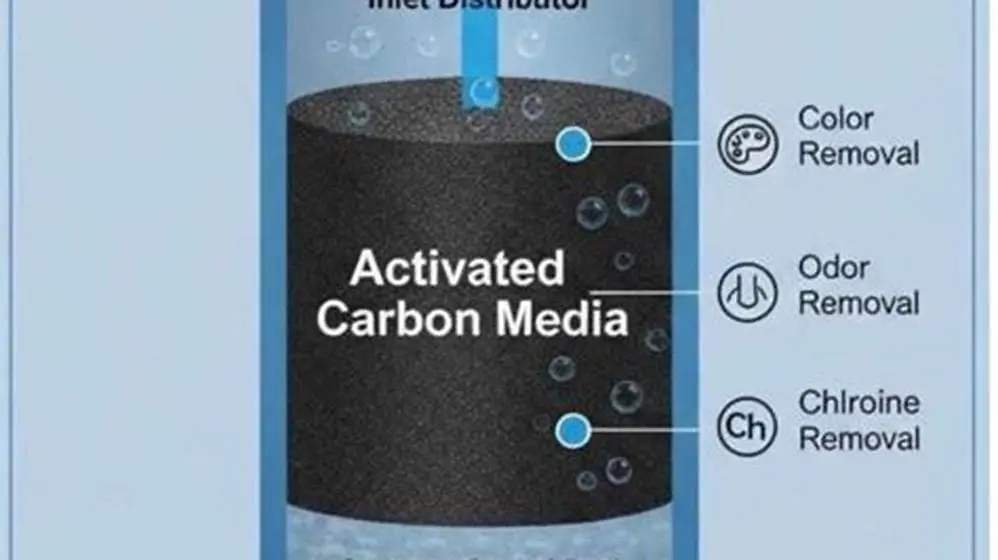
Rainwater usually lacks chlorine, which activated carbon removes well. Absence of chlorine means carbon mainly targets organics, colour, and tastes, so initial water quality dictates performance demands.
Rainwater often varies in pH from 5.5 to 7.5, which influences activated carbon's ability to adsorb contaminants. At lower pH, carbon adsorption of organics tends to improve, but the filter media may degrade faster. Alkaline water above pH 8 can reduce adsorption efficiency significantly, dropping contaminant removal by up to 30%. Before you commit to anything, it is worth looking at installing rainwater diverter.
Heavy metals like copper or zinc from roofing materials can accumulate in rainwater. Activated carbon can adsorb some metals but is less effective if concentrations exceed 0.1 mg/L. In such cases, additional filtration, such as ion exchange or reverse osmosis, should be considered to protect filter lifespan and water safety.
- Turbidity: keep below 5 NTU for stable filter function
- Organic matter: boosts carbon exhaustion speed
- No chlorine: limits carbon’s chemical adsorption role

EZTOCH Turbidity Meter, Portable Turbidimeter for Water Analysis&Treatment
Measures turbidity from 0 to 1000 NTU, covering the needed 0-10 NTU range for testing rainwater clarity before and after filtration.
How to test rainwater before and after filtration to verify effectiveness
Test turbidity before filter installation to ensure water suits your activated carbon filter. Use a handheld turbidity meter or simple test kit. Capture readings in NTU units.
After filtration, retest turbidity and taste to verify sediment removal. For potable water, also test microbiological contamination using home test kits or lab services. There is more on blocked downpipe gutter outlet in a separate guide.
Record test dates and values to track when carbon media should be replaced. Degraded performance shows as rising turbidity or poor taste.
A practical way to check filter function is a simple turbidity test using a clear glass container. Fill it with tank water before and after filtration. Visually compare cloudiness. If after-filter water appears equally cloudy, the filter is clogged or ineffective.
For example, if initial turbidity reads 4 NTU and post-filter measurement is 1 NTU, the filter removes 75% of suspended solids. A drop below 1 NTU is preferred for potable use, confirming the carbon is still active and not saturated. It helps to understand testing laundry pump clogs before going further.
Taste tests help detect organic saturation. If filtered water smells musty or tastes earthy, activated carbon is exhausted and needs replacement even if turbidity is low. This sensory check complements instrument tests.
- Collect a water sample from the tank before filtration
- Measure turbidity with meter, note NTU reading
- Sample filtered water and repeat turbidity test
- For potable uses, send filtered water sample for microbial analysis
- Compare before and after results to determine filter performance
Which activated carbon filter media and micron rating suit rainwater for garden versus potable use
For garden water, use activated carbon with micron ratings between 5 and 20 µm. This balances debris filtration and flow rate, protecting irrigation systems without frequent clogging.
Potable water needs finer filtration at 1 to 5 µm micron rating to remove bacteria and fine particulates. Use food-grade activated carbon certified to UK drinking water standards.
Granular activated carbon (GAC) is common for garden water. Block carbon filters suit potable applications better, offering consistent filtration and microbial barrier when combined with other treatments.
Block activated carbon filters have micron ratings typically around 1 to 5 µm but also provide adsorption of dissolved organics. Granular activated carbon (GAC) filters mostly target taste and odor but do not stop bacteria or fine particles effectively.
For a garden rainwater tank, a 10 µm GAC filter can pass enough water flow for irrigation while removing chlorine, odors, and some organics. In contrast, potable water requires a 1 µm food-grade block carbon filter to meet health standards.
A combined approach uses a sediment pre-filter rated at 20 µm before the activated carbon filter to extend its life. This setup suits water with moderate sediment load and protects the finer carbon media from rapid clogging.
| Use case | Micron rating | Carbon type | Common filter type |
|---|---|---|---|
| Garden irrigation | 5-20 µm | Granular activated carbon | Cartridge filter |
| Potable water | 1-5 µm | Food-grade block activated carbon | Block filter or combined system |
What derates the lifespan of activated carbon filters in rainwater tanks
High sediment load, indicated by turbidity above 5 NTU, clogs the filter quickly. Frequent backflush or pre-filtration reduces this issue but adds cost.
Organic contamination from decomposing leaves or bird droppings saturates carbon, shortening its active life from typical 6 months down to 3 or less.
Temperature and pH fluctuations in tank water affect carbon adsorption capacity. Extreme alkaline or acidic water reduces carbon efficiency.
Regular maintenance to remove sediment and replace carbon media extends lifespan. Neglect causes bacterial growth on saturated carbon, risking contamination.
Temperature impacts activated carbon performance. Optimal adsorption occurs around 20°C. At temperatures above 30°C, efficiency drops by up to 20%. Cold water below 10°C also slows adsorption but does not damage the filter.
Microbial growth on saturated carbon is a hidden risk. If filters remain in use beyond 6 months, bacteria colonies can form, causing biofilm buildup and possible health issues. A monthly inspection of filter condition helps catch early signs.
A heavy rainfall can flush large amounts of debris into the tank, abruptly raising turbidity to 15 NTU or more. Such spikes demand immediate pre-filtration cleaning or filter replacement to prevent permanent damage to the carbon media.
- Sediment >5 NTU: faster clogging
- High organics: quicker carbon saturation
- Extreme pH or temperature: reduced adsorption
- Delayed maintenance: bacterial risks
Compatibility criteria for activated carbon filters with rainwater tank water
Confirm rainwater turbidity is below 5 NTU to avoid clogging. Use a turbidity meter or test kit for measurement.
Ensure the filter micron rating suits intended use: coarse for garden, fine for drinking water.
Check if activated carbon is food-grade certified for potable use. Ask supplier for documentation if unsure.
Verify proper pre-filtration exists to protect the carbon media from large debris.
Look for flow rate compatibility; activated carbon filters restrict flow more at finer micron ratings.
Flow rate is critical. Activated carbon filters with 1 µm rating often restrict flow to less than 5 liters per minute. For garden irrigation needing 10 liters per minute or more, coarser micron sizes or larger filter units are necessary.
A pressure drop across the filter greater than 0.3 bar signals clogging. Measure pressure before and after the filter during operation. A rising difference indicates sediment buildup needing urgent maintenance.
Ensure proper sealing and filter housing compatibility with the tank plumbing. Leaks or bypasses around the filter invalidate filtration efforts and can introduce contaminants back into the water supply.
Activated carbon filters perform well for rainwater if you verify turbidity below 5 NTU and use correct micron rating and carbon grade.
Questions people still ask
Can I use any activated carbon filter for rainwater in my garden?
No. Use filters with micron ratings between 5 and 20 µm for garden water. Non-food-grade carbon is acceptable here. Higher sediment load shortens filter life.
How do I know if my rainwater is safe to drink after filtration?
Test turbidity to be below 5 NTU and use food-grade activated carbon with finer micron rating (1-5 µm). Microbial testing is essential to confirm safety.
What reduces the lifespan of activated carbon filters in rainwater tanks?
High turbidity and organic matter overload saturate the carbon quickly. Lack of pre-filtration speeds clogging and contamination risks.
Is it necessary to test water regularly when using carbon filters?
Yes. Inspect turbidity and taste quarterly to spot filter degradation. For potable water, microbial tests ensure ongoing safety.
What is the best type of activated carbon for potable rainwater use?
Food-grade block activated carbon is preferable. It offers finer filtration and better microbial barrier than granular types.