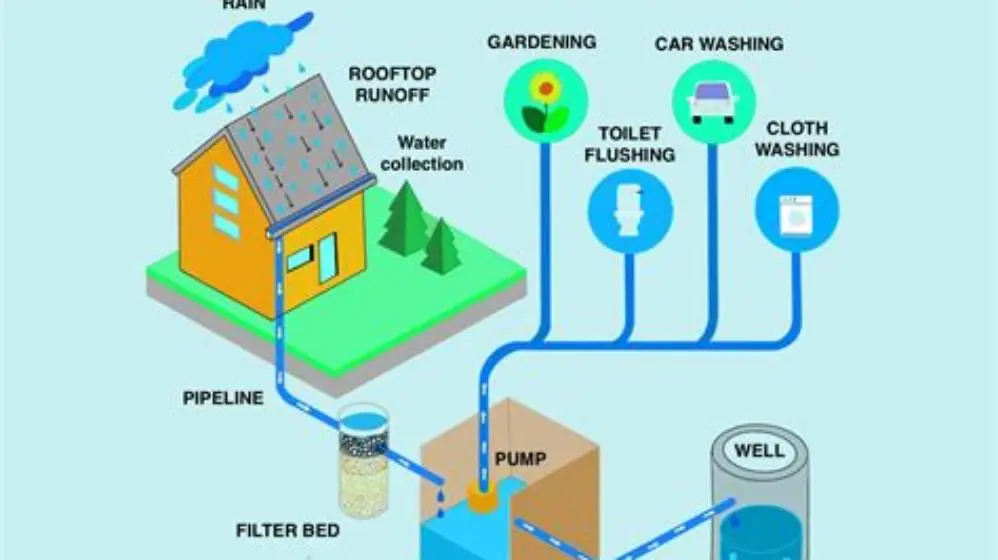
Learn how to size a rainwater tank for a 1500 sqft roof based on rainfall, with practical guidance on below-ground tank benefits and risks.
For a 1500 sqft roof, the rule of thumb is about 1 litre of water per square foot per mm of rainfall captured. To size your tank, multiply roof area by expected rainfall, then decide if you store seasonally or just peak storm volume.
On this page
- The short version
- How to calculate tank size from roof area and rainfall
- Tank size trade-offs: seasonal storage versus peak storm capture
- Simple sizing calculation example for a 1500 sqft roof
- Advantages of below-ground rainwater tanks
- Risks of below-ground rainwater tanks
- Rainwater harvesting tank size for roof area 1500 sqft: volume needed and below-ground tank risks
- Questions people still ask
Part of our guide on high pressure low flow water pump
Calculate how much rainwater a 1500 sqft roof can collect to size your tank right and weigh the practical benefits and risks of below-ground storage.
| Roof area | 1500 sqft |
|---|---|
| Volume per rainfall | 1 litre/sqft/mm |
| Typical rainfall | Depends on location |
| Tank sizing basis | Seasonal vs peak storms |
| Below-ground tank risk | Contamination, installation cost |
The short version
- 1 litre per sqft per mm rainfall equals potential water capture
- Choose tank size based on seasonal storage or peak storm needs
- Below-ground tanks save space but carry installation and contamination risks
- Simple sizing uses local rainfall data and roof area multiplication
- A good first step is calculating expected monthly rainfall volume
How to calculate tank size from roof area and rainfall
The simplest way to estimate your required rainwater tank size for a 1500 sqft roof is to apply the rule of thumb: each square foot of roof area collects about 1 litre of water for every millimeter of rain. This means if you receive 10 mm of rain, your roof can catch roughly 1500 litres.
Multiply the roof area by local average monthly or seasonal rainfall in millimeters to find your potential harvest volume. For example, if your location receives 50 mm of rain in a month, potential water capture is 1500 sqft × 50 mm = 75,000 litres.
The next step is deciding how much of that water you want to store. Do you want to capture the full month’s rainfall for dry season use (seasonal storage), or just enough to hold the expected peak storm volume to reduce drainage loads? Seasonal storage tanks are much larger.
You can adjust tank size based on demand and budget, but ignoring local rainfall patterns makes sizing ineffective. A common pitfall: oversizing a tank and leaving it empty most of the time, or undersizing and overflowing often. We go through wetland area for 4 bedroom house step by step elsewhere on the site.
- Get your roof area in square feet (here, 1500 sqft).
- Check local monthly or seasonal rainfall in millimeters.
- Multiply roof area × rainfall (mm) × 1 litre to get collection volume.
- Decide on storage type: seasonal or peak storm.
- Calculate tank volume accordingly.
| Roof area (sqft) | Rainfall (mm) | Water volume (litres) |
|---|---|---|
| 1500 | 10 | 15,000 |
| 1500 | 50 | 75,000 |
| 1500 | 100 | 150,000 |
Tank size trade-offs: seasonal storage versus peak storm capture
Selecting between seasonal storage and peak storm capture defines your tank size and system role. Seasonal storage means holding enough water to cover dry spells, which often requires tanks sized at tens of thousands of litres for a 1500 sqft roof depending on rainfall and demand.
Peak storm capture tanks are smaller, designed primarily to reduce runoff volume during heavy rains to avoid drainage overload. These are sized around the volume expected in a single large storm, which can be a few thousand litres but vary greatly regionally.
Seasonal tanks reduce mains water demand substantially but are costlier and need maintenance attention. Peak storm tanks improve drainage and prevent floods but serve less for direct water use. People in this spot often ask about typical rainwater system prices as well.
Your choice depends on whether your priority is saving water bills or managing stormwater risks. Some systems use a hybrid approach with multiple tanks or overflow controls.
In regions with highly variable rainfall, seasonal storage tanks must be sized with an understanding of the longest expected dry period to avoid running out of water. For instance, if the dry season lasts six months, a 1500 sqft roof with average monthly rainfall of 80 mm in the wet season might require a tank exceeding 50,000 litres to maintain supply, which is often cost-prohibitive.
Alternatively, peak storm capture tanks are often sized for the largest expected storm event within a 1 to 5-year return period. For example, if a 50 mm storm is typical once every three years, a peak capture tank sized around 75,000 litres would be needed to fully contain runoff from that event. This sizing approach balances cost and flood mitigation goals but does not provide water storage for dry periods. Before you commit to anything, it is worth looking at what psi should my water pressure tank be.
- Seasonal storage– large volume, high cost, water savings
- Peak storm capture– smaller volume, local drainage benefit
- Hybrid systems– balance cost and function
- Tank size directly impacts installation complexity and expense
- Seasonal stores water long-term
- Peak storm reduces flood risk
- Seasonal requires big tank, higher cost
- Peak storm offers limited water storage
Simple sizing calculation example for a 1500 sqft roof
Suppose your roof is 1500 sqft, and your area’s average monthly rainfall during the wettest season is 80 mm. Using the rule of thumb, you calculate the water capture as 1500 × 80 = 120,000 litres per month.
If your household uses 400 litres daily, monthly demand is about 12,000 litres. To cover a 3-month dry season fully, you’d need a tank close to 36,000 litres.
However, if your priority is only to capture peak storms of 20 mm per event, your tank size could be 1500 × 20 = 30,000 litres per storm, but likely less in practice to reduce cost and space.
This calculation guides your minimum tank size, but installation space, budget, and maintenance capacity will affect your final choice.
If you want to optimize tank size further, consider runoff coefficients reflecting roof material and shape. For example, a smooth metal roof might have a coefficient of 0.9, meaning only 90% of rainfall is captured due to losses. Applying this to the 1500 sqft roof with 80 mm rainfall, maximum capture is 1500 × 80 × 0.9 = 108,000 litres instead of 120,000 litres.
To check your tank size, compare it to your water demand and rainfall pattern by calculating how many days your stored water will last without rainfall. For instance, a 36,000 litre tank and 400 litre daily use would last 90 days, matching the 3-month dry season expectation. If it lasts significantly less, increase tank size or reduce water use.
| Rainfall (mm) | Water collected (litres) | Household use (litres/month) | Tank size (litres) |
|---|---|---|---|
| 80 | 120,000 | 12,000 | 36,000 (seasonal) |
| 20 | 30,000 | 12,000 | 5,000-10,000 (peak storm) |
Advantages of below-ground rainwater tanks
Below-ground tanks save valuable surface space, making them ideal in small gardens or urban areas where above-ground tanks are impractical. They keep the system out of sight, which some homeowners prefer for aesthetics.
The earth surrounding a below-ground tank helps moderate water temperature, reducing algae growth and improving water quality. These tanks can also protect water from freezing in colder climates more effectively than exposed tanks.
Below-ground tanks often have greater structural stability as the soil supports them, reducing damage risk from impacts or vandalism. They also minimize evaporation losses compared to open or elevated tanks.
Access points and maintenance can be designed discreetly, avoiding visual clutter while providing sufficient functionality.
- Space-saving footprint
- Better temperature regulation
- Protects water quality
- Less evaporation
- More complex installation
- Higher upfront cost
- Difficult maintenance access
Risks of below-ground rainwater tanks
Below-ground tanks carry risks including contamination from soil, groundwater, or surface runoff entering the tank through faulty seals or damaged lids. This can degrade water quality and cause health hazards.
Installation requires excavation and proper waterproofing; failure to do this risks tank collapse, soil infiltration, or flooding around the tank during heavy rains. The ground water table level must be assessed to avoid buoyancy issues that can displace the tank.
Maintenance is more challenging because access is restricted. Sediment buildup and algae growth can go unnoticed, potentially requiring costly cleaning.
Below-ground tanks also pose safety risks if lids are unsecured, potentially causing accidents.
- Risk of contamination
- Complex, costly installation
- Harder inspection and cleaning
- Safety hazards without secure lids
Rainwater harvesting tank size for roof area 1500 sqft: volume needed and below-ground tank risks
To size your rainwater harvesting tank for a 1500 sqft roof, start with multiplying roof area by your average rainfall in millimeters to get volume in litres. Use 1 litre per square foot per mm rainfall as a consistent conversion.
Decide if you want seasonal storage to cover multiple dry months or just capture peak storm runoff to reduce drainage costs. Seasonal tanks are often 3-5 times larger than peak storm tanks, sometimes exceeding 30,000 litres.
If you consider below-ground tanks, weigh the space-saving advantages against risks like contamination and installation complexity, typical for underground storage.
Purchasing a rainwater tank with appropriate volume and secure, easy-access design is essential. To ensure quality, get a water test kit to monitor your stored water regularly.
Choosing the right tank size depends on your water needs and rainfall, with below-ground tanks offering space savings but adding complexity and risk.
Questions people still ask
How do I find my local average rainfall?
Check your government or meteorological service website for rainfall data. Look for monthly or seasonal averages measured in millimeters for your area, which you can use to estimate your rainwater capture volume.
Can I install a below-ground tank myself?
Below-ground tanks require excavation, waterproofing, and proper installation to avoid risks. Unless you have relevant experience, hiring a professional is recommended to ensure safety and performance.
How often should I clean my rainwater tank?
Cleaning frequency depends on your environment and use but generally every 1-2 years is advisable. Inspect your tank regularly for sediment or contamination, especially if it is below ground.
What is the minimum tank size for effective rainwater harvesting?
There’s no fixed minimum; it depends on your roof area, rainfall, and water use. For a 1500 sqft roof, tanks smaller than 5,000 litres usually only capture small storm events and provide limited benefits.
Are below-ground tanks more prone to leaks?
They can be if not properly sealed and installed. Soil pressure and groundwater can cause stress on the tank walls, so high-quality materials and professional installation are critical.