Check if a thermal store suits your air source heat pump. Understand design, efficiency, and control factors for best compatibility.
A thermal store can work well with an air source heat pump if the system design ensures temperature compatibility, efficient controls, and prioritises hot water. It decouples heat generation and supply, helping improve comfort and system efficiency.
On this page
Part of our guide on what is a hybrid heat pump
| Thermal store volume | 100-300 litres typical |
|---|---|
| Operating temperature | 45-55°C for ASHP |
| Heat pump COP | Usually 3-4 at design temp |
| Hot water priority | Essential for comfort |
| Temperature layering | Preserves stratification |
| System complexity | Increased control needed |
The short version
- Thermal stores buffer heat to match demand patterns.
- Ensure temperature limits match heat pump output for best efficiency.
- Controls must prioritise hot water and prevent overheating.
- Decoupling improves system flexibility but adds complexity.
- Some installation challenges need specialist attention.
How thermal stores work with air source heat pumps
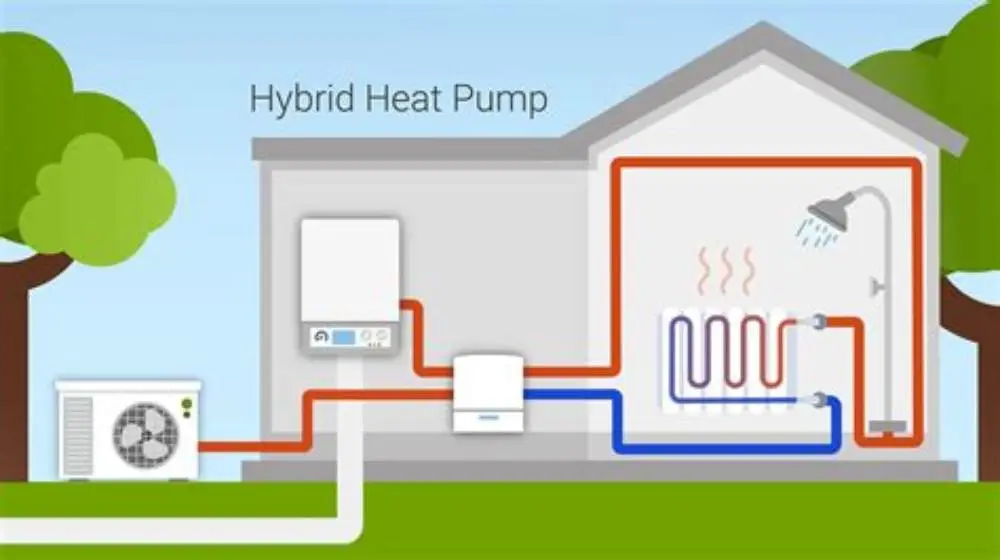
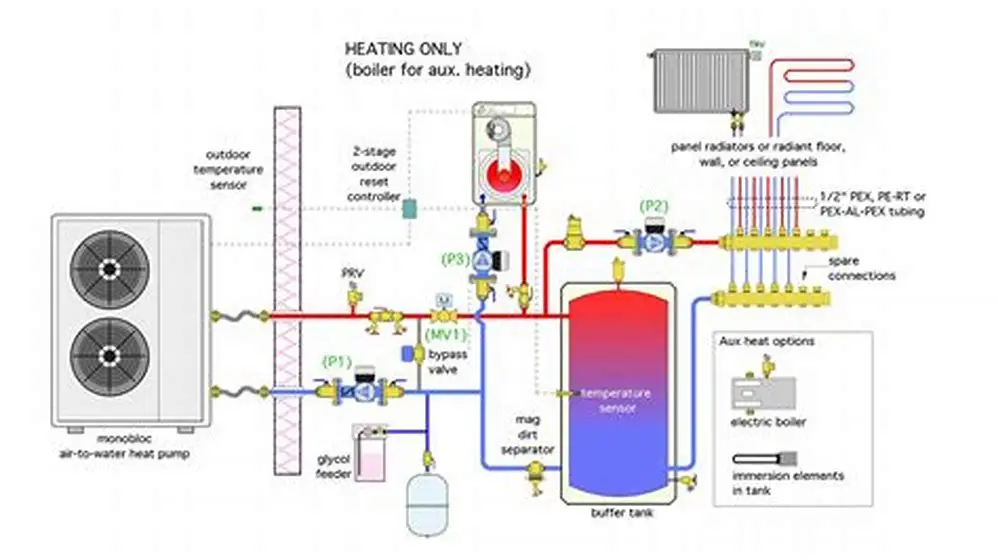
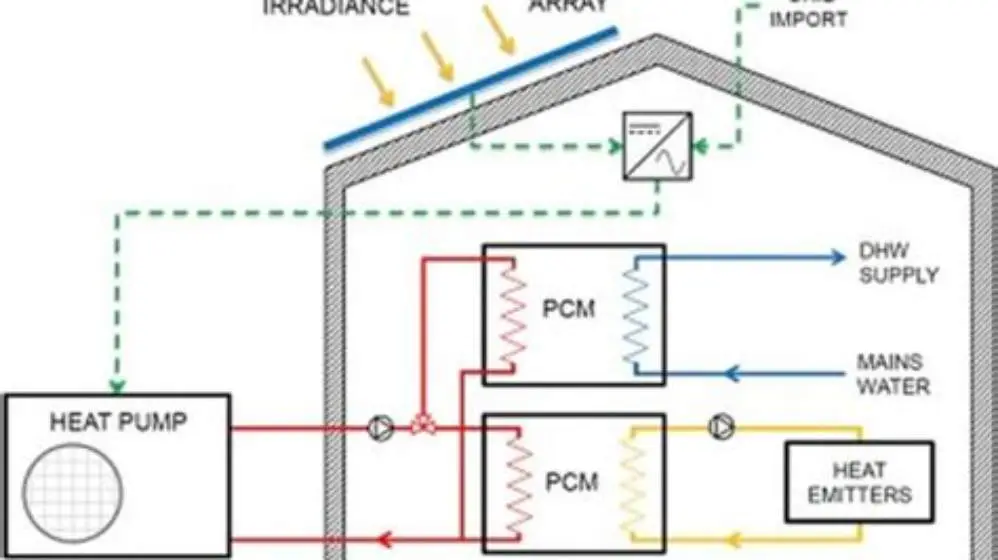
A thermal store is a large insulated tank that stores heated water from your air source heat pump (ASHP). It buffers heat production from the pump and matches heat supply to the home's demand cycles. This decouples the heat generation stage from the heating distribution.
The ASHP charges the store to a temperature usually between 45 and 55°C, which suits typical ASHP output. Water then circulates from the store to the radiators or underfloor heating and hot water taps.
Because the thermal store acts as a buffer, the heat pump can run longer at stable, efficient temperatures. This helps avoid short cycling, which reduces wear and maintains higher coefficient of performance (COP).
Thermal stores usually incorporate a heat exchanger or internal coil for domestic hot water, ensuring a hot water priority even during space heating periods. Before you commit to anything, it is worth looking at compatibility factors for hybrid heating.
What system design factors affect compatibility
The physical size of the thermal store matters. Typical volumes are between 100 and 300 litres, depending on property size and heating load. A store too small will not buffer effectively, while a very large one may waste energy through losses.
Temperature limits are key. The thermal store must hold water at temperatures suitable for your ASHP output, normally no higher than 55°C to avoid lowering heat pump efficiency. If the store is heated above 60°C, the ASHP must work harder, reducing COP.
Integration with the heating distribution system is important. Your radiators or underfloor system must operate efficiently at the store's output temperature to benefit fully. We go through old oil boiler as backup for heat pump step by step elsewhere on the site.
Controls need to coordinate charging the store and delivering heat. Valves and pumps must be sized and configured correctly to balance flow rates without causing excessive pressure drops.
Properly sized expansion vessels and safety devices are necessary to handle volume changes and prevent system pressure issues.
Efficiency and control considerations
The ASHP’s coefficient of performance (COP) depends heavily on operating temperature. Running the thermal store at 45-55°C keeps the COP usually between 3 and 4, which means 3-4 units of heat output per unit of electricity input. Before you commit to anything, it is worth looking at optimal borehole depths for heat pumps.
If the store is heated higher, the heat pump cycles more and works less efficiently, dropping the COP. Controls should avoid overheating the store to preserve efficiency.
Thermal store controls must prioritise hot water demand. A dedicated coil in the store ensures domestic hot water is available at all times without needing the heat pump to run extra cycles.
Layering the water temperature inside the tank improves comfort and efficiency. Hot water remains at the top, while cooler water feeds back to the heat pump, preventing mixing that wastes heat. The other half of this decision is differences between mini split and ductless heat pump.
Smart controls with weather compensation and timed charging cycles prevent unnecessary heat losses and maximise energy savings.
Common installation challenges and solutions
Space constraints can limit thermal store size. Many UK homes have small plant rooms or limited cellar space. Choosing a compact or bespoke tank may be necessary.
Heat loss from the store is a risk if insulation is poor. A well-insulated tank reduces standby heat loss, preserving efficiency. People in this spot often ask about uk heat pump planning permission rules as well.
Balancing flow rates and system pressures requires careful pipe sizing and valve selection to avoid noise and uneven heating.
Installer experience with combined thermal store and ASHP systems varies. Hiring someone familiar with both technologies reduces risk of poor performance.
Commissioning the system with proper testing tools like temperature gauges and flow meters is essential. These verify that setpoints are met and the store charges correctly.
Pipework layout affects system performance. Incorrect routing can cause pressure drops or slow response times. Use larger bore pipes where flow rates are higher to reduce noise and maintain efficiency.
Thermal stores require regular maintenance. Check insulation integrity and look for signs of corrosion or leaks. Neglecting maintenance can cause heat loss or system failure, which reduces system reliability.
Electrical controls need protection from moisture and dust. Position control panels away from damp areas and provide easy access for adjustments. Poor control wiring can lead to erratic operation or damage.
Will a thermal store work with my air source heat pump
Your thermal store will work with an air source heat pump if the store temperature matches the heat pump's optimal output range, typically 45-55°C. This limits heat pump stress and maintains good COP.
You must ensure the store’s volume suits your home's heating demand. A mismatch leads to inefficient cycling or wasted heat.
Controls must prioritise domestic hot water to prevent cold taps and reduce peak heat pump loads.
The store should be well insulated and correctly plumbed to maintain temperature layering and reduce heat losses.
If your heat pump is oversized or your system uses high-temperature radiators, you may need additional controls or a buffer tank designed for such setups.
Check your heat pump's flow temperature limits in the manual. If the maximum is below 55°C, a thermal store set higher may cause the heat pump to work inefficiently or trigger safety cutoffs.
Homes with very low heating demand might find thermal stores too large. The heat pump may cycle inefficiently if the store is oversized, wasting electricity and increasing wear.
If your property has an existing thermal store designed for a boiler, it might not suit an ASHP without modifications. ASHPs produce heat at lower temperatures, so the thermal store may need better insulation or a different coil to maintain performance.
Questions people still ask
Can a thermal store improve the lifespan of my air source heat pump?
Yes, thermal stores reduce short cycling by allowing the heat pump to run longer, which can extend its lifespan and maintain efficiency.
Do thermal stores increase installation costs significantly?
Adding a thermal store typically raises costs due to the tank, controls, and plumbing, but it can improve system performance and qualify for some grants.
Is a thermal store necessary for all air source heat pump systems?
No, thermal stores benefit systems with fluctuating heat demand or where hot water priority is needed but are not essential for every ASHP setup.
How do I know if my home’s heating system suits a thermal store?
Check your heat pump’s output temperature, heating load, and space availability. Consult a qualified installer to assess compatibility.
Can I retrofit a thermal store to an existing air source heat pump?
Yes, but space and plumbing complexity may limit options. Professional assessment is recommended to ensure efficient integration.