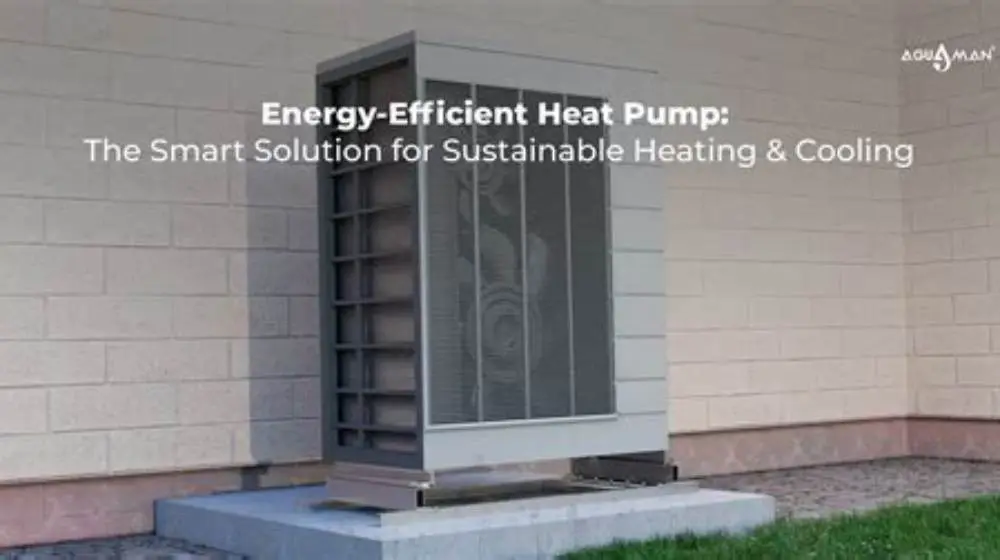
Smaller heat pumps can be more efficient and quieter on short runs, but actual savings depend on climate, installation quality, and usage patterns.
Smaller heat pumps can be more efficient during short operation periods because their variable speed compressors adjust output, avoiding excess energy use. Efficiency depends strongly on matching size to heat demand; too small or too big hurts performance.
On this page
- Key takeaways
- Are smaller heat pumps more efficient
- Do variable speed compressors save energy on short runs
- How noisy are air source heat pumps
- How to size a heat pump for your home
- Trade-offs when choosing smaller versus larger heat pumps
- When smaller heat pumps are the best choice
- Questions people still ask
Part of our guide on thermal store tanks with hybrid heat pumps
Smaller heat pumps save energy on short runs and reduce noise, but only if sized correctly for your home’s heat demand.
| Variable speed savings | 10-25% energy |
|---|---|
| Typical noise range | 40-60 dB |
| Oversize efficiency loss | up to 15% |
| Undersize run time | often 50-100% longer |
| Heat pump COP range | 3-5 typically |
Key takeaways
- Variable speed compressors in smaller heat pumps reduce energy waste on short runs
- Proper sizing is crucial; undersized units run constantly and oversize units cycle inefficiently
- Smaller units typically produce 10-20 dB less noise than larger counterparts
- Match heat pump capacity to your home’s heat loss for best efficiency
- Noise and energy savings often justify choosing a slightly smaller unit if demand allows
Are smaller heat pumps more efficient
People ask first: are smaller heat-pumps more efficient? Short answer: sometimes. Smaller heat pumps — particularly those with variable‑speed (inverter) compressors — can operate closer to the building’s instantaneous heat demand and avoid frequent on/off cycling. That reduces the performance penalty that fixed‑speed compressors incur during short runs. This effect is most noticeable in mild climates, well‑insulated homes, or systems used for supplemental heat where run times are often under 30 minutes. Manufacturers and laboratory test reports (for example, data published by national energy agencies and product test labs) commonly describe these operational benefits; treat the numbers that follow as estimated ranges reported under specific test conditions rather than universal facts (Energy Saving Trust; ASHRAE guidance).
Quantifying the savings depends on many variables: climate, the heat pump’s part‑load performance, thermostat settings, installation quality, ductwork or piping losses, and occupant behaviour. Independent lab tests and manufacturer seasonal performance tables use standard test cycles; real homes rarely match those cycles. As a result, statements like “variable‑speed compressors save 10–25% on short cycles” should be read as typical estimate ranges seen in some studies and manufacturer claims, not guaranteed outcomes for every installation. Always ask for the manufacturer’s measured seasonal performance (SCOP/SEER/SPF) at the operating conditions closest to your climate, and request third‑party test reports where available.
Noise and comfort also change with size. Smaller, lower‑capacity outdoor units often run at lower fan and compressor speeds and therefore are generally quieter than larger units operating near full capacity; many manufacturers list sound levels for each fan speed and operating mode. Reported outdoor sound levels for residential air‑source units commonly fall into ranges manufacturers publish (for small residential units these are frequently shown near 40–55 dB(A) at 1 m), but independent measurements can differ by site and mounting method. In short: smaller units can save energy and cut noise in the right circumstances, but performance and sound depend on installation, climate, and how the system is used.
Do variable speed compressors save energy on short runs
Variable speed compressors maintain low power draw by ramping up or down smoothly instead of cycling fully on or off. This reduces the energy wasted during start-up and shut-down phases, which are significant in traditional single-speed models. We cover heat pump system options explained in its own article.
Typical electricity savings from variable speed compressors during short runs are between 10% and 25%. Savings depend on run time length, outdoor temperatures, and how well the system is sized.
These compressors also improve comfort by avoiding temperature swings caused by frequent cycling, but they cost more upfront. Still, for many homes that run heat pumps intermittently, the trade-off is worthwhile.
How noisy are air source heat pumps
Air source heat pumps usually produce noise levels between 40 and 60 decibels measured at 1 meter distance, depending on size and model. Smaller units tend to be quieter by approximately 10 to 20 dB, translating to less audible disturbance. We cover estimating heat pump savings in its own article.
Noise mainly comes from the compressor and fan. Variable speed units running at lower speeds produce less noise, especially when operating on low or medium output.
Proper siting and mounting can reduce noise impact significantly. Placing the unit away from frequently used spaces and installing vibration-absorbing mounts helps.
| Heat pump size | Noise level (dB at 1 m) |
|---|---|
| Small (3-5 kW) | 40-45 dB |
| Medium (6-10 kW) | 50-55 dB |
| Large (11 kW+) | 55-60 dB |
How to size a heat pump for your home
Sizing a heat pump requires calculating your home's heat loss, which depends on insulation quality, window type, size, and local climate. A typical approach uses heat loss measured in kilowatts (kW), matching the heat pump output to that number. People in this spot often ask about heat pump water heating as well.
An undersized heat pump runs constantly, driving costs and reducing lifespan. Oversize causes frequent cycling; energy efficiency drops up to 15%, and noise increases.
Professional heat loss calculations often use software and on-site surveys. Many online calculators give rough estimates but should not replace expert advice.
When sizing a heat pump, it is crucial to consider not only the peak heat loss but also the typical heating demand throughout the day and seasons. A heat pump sized exactly to peak load may run inefficiently during milder periods if its minimum output is too high, causing frequent cycling. Variable speed compressors help mitigate this by adjusting output, but understanding typical load profiles ensures better selection. It helps to understand buffer tank benefits explained before going further.
In some cases, it can be beneficial to slightly oversize the heat pump to avoid the risk of insufficient heating during extreme cold spells. For example, if your home's heat loss peaks at 5 kW during the coldest days, choosing a 5.5 kW unit can provide a buffer. However, this must be balanced against the increased cycling and efficiency loss in warmer conditions.
A practical check after installation is to monitor the heat pump's runtime and temperature consistency. If the unit runs constantly without reaching the set temperature, it may be undersized. Conversely, if it frequently turns on and off within minutes, it is likely oversized. These observations help to confirm correct sizing and inform adjustments such as adding supplementary heating or improving insulation.
- Measure or estimate your home's heat loss in
kW. - Select a heat pump with a nominal output close to your heat loss figure.
- Verify the model has a variable speed compressor to handle partial loads efficiently.
- Consider future insulation improvements and whether auxiliary heating is needed.
Trade-offs when choosing smaller versus larger heat pumps
Smaller heat pumps save energy on short runs and produce less noise but may struggle in very cold weather or large homes without backup heating. There is more on maximizing heating efficiency with depth in a separate guide.
Larger heat pumps can handle extreme cold better and deliver heat rapidly but cycle on/off more, wasting energy and raising noise.
Choosing slightly smaller units often balances quiet operation and energy savings at the cost of some heating capacity during cold snaps, which may require supplementary heating.
The choice between smaller and larger heat pumps also depends on your home's thermal mass. Homes with high thermal mass, such as those built with concrete or brick, retain heat longer, allowing smaller heat pumps to maintain comfort with less frequent operation. Conversely, lightweight constructions with poor heat retention may require larger units or additional heating solutions.
Another trade-off involves installation space and placement flexibility. Smaller heat pumps are easier to install in constrained spaces and can be positioned farther from living areas, reducing noise impact. Larger units may require dedicated outdoor space and more robust mounting, which could increase installation complexity and costs.
Efficiency comparisons should consider the heat pump's seasonal performance factor (SPF), which measures actual energy use over the heating season. Smaller, variable speed units often achieve higher SPF values, between 3.0 and 4.5, compared to fixed-speed larger units that may range from 2.5 to 3.5, indicating better overall energy savings despite lower peak output.
| Aspect | Smaller heat pumps | Larger heat pumps |
|---|---|---|
| Energy efficiency | Better on short cycles | Lower due to cycling |
| Noise | Quieter, 40-45 dB | Louder, up to 60 dB |
| Heating capacity | May be insufficient in cold | More reliable in cold |
| Cost | Lower upfront | Higher upfront |
When smaller heat pumps are the best choice
Choose a smaller heat pump if your home is well insulated, has moderate heat demand, or you want minimal noise near living areas. Variable speed models optimize energy use during short runs common in mild climates.
If you live where temperatures rarely drop below freezing and want lower electric bills with quieter operation, a smaller unit matched to your heat loss is efficient and comfortable.
However, make sure to size the unit according to your heat loss calculation and consider backup heat for cold snaps. A correctly sized smaller heat pump often outperforms a bigger one poorly matched to your home.
Questions people still ask
Can an air source heat pump be too small for my house?
Yes. An undersized heat pump runs continuously to meet demand, increasing running costs and wear. It may not keep your home warm in the coldest weather without backup heating.
How does a variable speed compressor improve efficiency?
It adjusts the compressor speed to match heating demand, avoiding energy waste during on/off cycles common in fixed-speed units, especially beneficial during short operation periods.
What noise level is acceptable for a heat pump near bedrooms?
Typically, noise below 45 decibels at 1 meter is considered quiet enough to avoid disturbing sleep, which smaller or variable speed heat pumps often achieve.
How do I find my home’s heat loss for sizing?
A professional heat loss survey uses building details and local climate data. Rough online calculators can help but are less reliable. Accurate sizing requires this figure in kilowatts.
Do smaller heat pumps cost less to install?
Generally, yes, because smaller units have lower material costs and may require less extensive installation, but installation complexity and features also affect total cost.