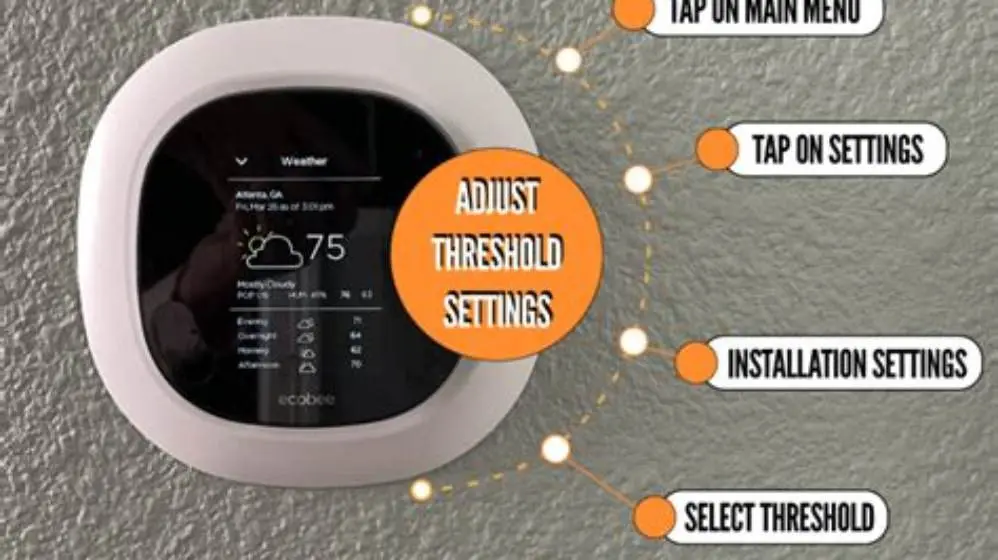
On supported Ecobee models, heat pump settings sit under Installation Settings. Check your model manual for the exact path. Confirm Heat Pump, O/B, compressor lockouts, and auxiliary heat settings. UK buyers also need to check 230V controls, a 24V supply, and C-wire or power-extender requirements.
On this page
- Quick recap
- Find the Ecobee heat pump settings first
- Check UK voltage and Ecobee support before buying
- Identify the heat pump type before choosing settings
- Set compressor and auxiliary heat limits with the installer
- Use fan controls only on forced-air systems
- Work through the installation without guessing
- Check the result after commissioning
- Quick questions
Part of our guide on what is a green home
Quick facts
- Ecobee origin
- North American 24V HVAC product
- Typical UK control voltage
- 230V, though installations vary
- Main heat pump menu
- Installation Settings > Equipment > Heat Pump
- Direction setting
- O/B reversing valve
- Compressor controls
- Compressor Min/Max Outdoor Temperature
- UK alternative
- Tado, Hive, Honeywell, or the manufacturer's controller
Quick recap
- Check whether your system is 230V or 24V before buying an Ecobee
- Ecobee is a North American product with limited UK availability and support
- A reversible heat pump needs different controls from a heating-only UK ASHP
- Find the Heat Pump, O/B, compressor lockout, and auxiliary heat settings
- Use a relay or voltage-matching accessory where the installer specifies one
- Ecobee fan controls matter on forced-air systems, not usually wet heating systems
Find the Ecobee heat pump settings first
Open Main Menu > System > Installation Settings. The exact labels and menu path vary by Ecobee model and firmware, so use the model's manual if a name differs.
Look for Equipment, then Heat Pump. The setup normally asks whether the system has a heat pump, how many compressor stages it has, and whether auxiliary heat is fitted. It may also ask for an O/B wire, which controls the reversing valve on a reversible heat pump.
The outdoor temperature controls usually include Compressor Min Outdoor Temperature and Compressor Max Outdoor Temperature. These are compressor lockouts. They stop compressor operation below or above temperatures your installer selects for the equipment.
Auxiliary controls include Aux Heat Max Outdoor Temperature and Aux savings optimization. The first limits when auxiliary heat can operate. The second changes how Ecobee balances comfort, energy use, and backup heat. Names can differ by model. People in this spot often ask about how to become heat pump installer as well.
Do not copy values from another house. Use the heat pump manufacturer's limits and the installer’s design information.
Check UK voltage and Ecobee support before buying
Ecobee is a North American product built for low-voltage HVAC control, commonly 24V. UK heating controls and heat pump equipment commonly use 230V mains switching, although some systems contain separate low-voltage circuits.
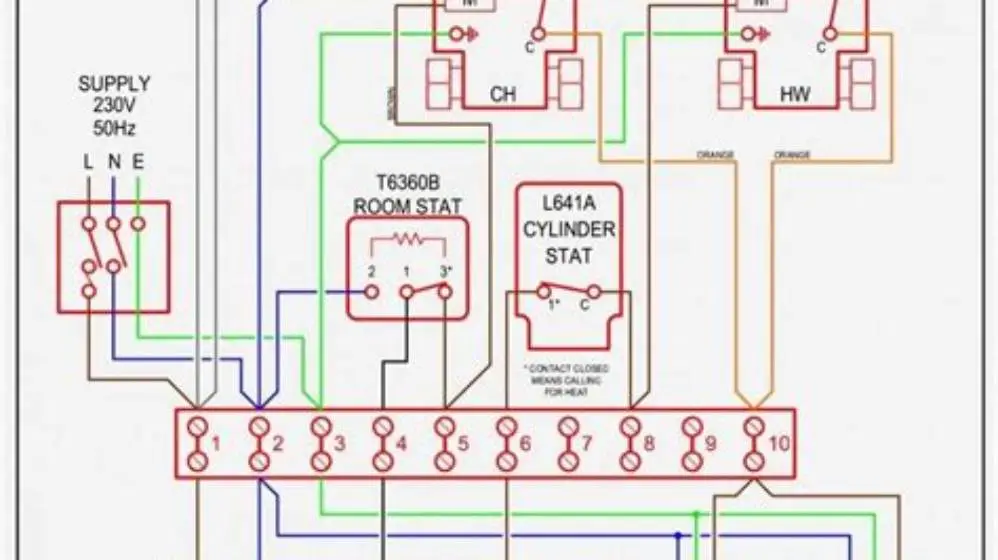
Never assume the voltage from the thermostat's appearance. Read the existing thermostat model number and terminal labels. Labels such as L, N, and E indicate mains wiring and require particular care. Photograph the wiring with the power isolated by a qualified person. If that sounds like your situation, read up on s plan heating zone stays cold after power cut next.
A relay, interface, or voltage-matching accessory may be needed between the Ecobee and the heat pump controls. The correct part depends on the existing controller, the heat pump's input requirements, and whether the system uses a call for heat, a changeover signal, or a manufacturer data bus.
Ecobee's official availability and support are centred on North America. UK support, replacement parts, app features, and warranty coverage may not match those available in the United States or Canada. Check current regional support before you order.
For many UK homes, a Tado, Hive, Honeywell, or manufacturer controller is more practical. It matches local wiring practices and gives you a clearer support route. People in this spot often ask about what is an air source heat pump as well.
| Check | What to record | Why it matters |
|---|---|---|
| Existing thermostat | Model number and every terminal label | The labels reveal the control arrangement |
| Voltage | Whether the circuit is 230V mains or low voltage | A 24V Ecobee must not receive 230V |
| Heat pump controller | Make, model, and whether it remains installed | The plant controller may handle compressor protection |
| System type | Reversible heating and cooling, or heating-only ASHP | This changes whether cooling and O/B settings apply |
| UK support | Availability, warranty, and installer experience | A North American product may lack local support |
Identify the heat pump type before choosing settings
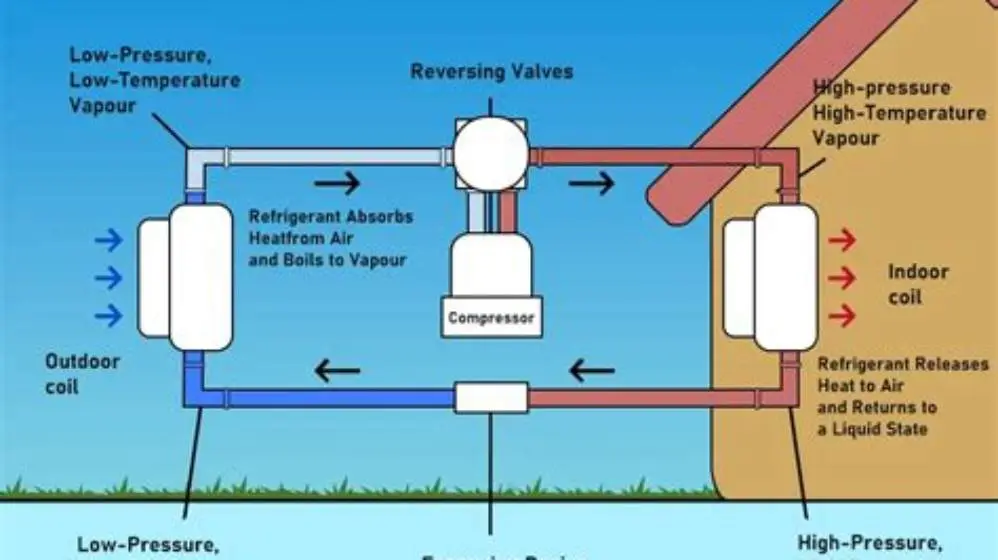
A reversible air source heat pump can provide heating and cooling. Its reversing valve changes the refrigerant circuit, and the Ecobee may need an O/B wire setting to control that change.
A heating-only UK ASHP may provide space heating and hot water without an Ecobee-controlled cooling mode. In that case, cooling settings and reversing-valve options may not apply. The heat pump's own controller may manage defrost, hot water priority, and weather compensation.
Check the heat pump model manual rather than looking for a badge on the thermostat. Record whether the system has cooling, the number of compressor stages, and the backup heat type. There is more on what is a ground source heat pump in a separate guide.
A wet system uses water through radiators or underfloor loops. Ecobee's fan controls are generally aimed at forced-air equipment with a separate blower. On a wet UK system, the fan setting is usually irrelevant because there is no room air blower for Ecobee to control.
Keep the manufacturer's controller in the circuit when it manages functions the Ecobee cannot replace. A room thermostat may only provide a demand signal.
Set compressor and auxiliary heat limits with the installer
Use Compressor Min Outdoor Temperature only when the heat pump manufacturer specifies a lower operating limit or another reason to lock out the compressor. Some heat pumps can operate at low outdoor temperatures, so a guessed lockout can waste the system's capacity. For the detail, see our notes on u-value in construction.
Use Compressor Max Outdoor Temperature when the equipment or control design requires the compressor to stop above a stated outdoor temperature. This setting is not a room comfort target.
Set Aux Heat Max Outdoor Temperature around the backup heater's permitted operating range and the system design. Ecobee uses auxiliary heat when the heat pump cannot meet demand or when its control logic calls for backup. The setting is not a universal UK temperature.
Review Aux savings optimization after the installer confirms which heater Ecobee controls. A poorly matched setting can call expensive electric heat too often. On some systems, the auxiliary circuit may control an immersion heater, electric resistance heater, or another approved source. It helps to understand what was the code for sustainable homes before going further.
Emergency Heat, where available, is separate from normal auxiliary operation. It can run the backup source without the compressor. Use it for a compressor fault or another genuine failure, not as a routine comfort setting.
Ask for the selected values and the reason for each one. The installer should base them on the heat pump manual, emitter size, backup heater, and local control sequence.
- Compressor Min Outdoor Temperature: lower compressor lockout
- Compressor Max Outdoor Temperature: upper compressor lockout
- Aux Heat Max Outdoor Temperature: upper limit for auxiliary heat operation
- Aux savings optimization: balances backup heat use and comfort
- O/B wire: controls the reversing valve on suitable reversible systems
Use fan controls only on forced-air systems
Ecobee's Fan Auto and Fan On controls apply to forced-air heating and cooling systems. They control a blower connected to the thermostat's low-voltage equipment terminals.
On a wet UK system with radiators or underfloor heating, that fan setting usually does nothing useful. The heat pump's internal fan and water circulation pump follow the manufacturer's controls instead.
Leave the fan on Auto when Ecobee genuinely controls a forced-air blower. Use On only when you need continuous air movement and the equipment supports it.
Do not use the Ecobee fan setting to correct uneven radiator temperatures, slow floor loops, or poor hydraulic balancing. Those problems need attention at the heating system, not the thermostat.
Work through the installation without guessing
Record the existing thermostat model and terminal labels before removal. Keep the photograph with the heat pump model and wiring diagram for the installer.
Confirm the Ecobee model, voltage, regional support, and required relay or interface. Do not proceed if the existing circuit carries 230V into a thermostat designed for 24V.
Ask the installer to identify the heat pump type, compressor stages, O/B requirement, auxiliary heater, and controller that remains in service.
After wiring, open the installation settings and verify the equipment detected. Check Heat Pump, O/B, compressor lockouts, Aux Heat Max Outdoor Temperature, and Aux savings optimization.
Run a heating call while watching the heat pump controller. Confirm the correct source starts and the backup heater does not operate unexpectedly.
Test cooling only if the system is genuinely reversible and the heat pump manufacturer permits Ecobee control. Leave cooling disabled on a heating-only installation.
Write down the final settings, the controlled backup heater, and the date. Keep the manufacturer's controller instructions with the record.
- Keep the heat pump manufacturer's controller if it manages weather compensation or hot water
- Do not test terminals by trial and error
- Record the final menu settings and the installer’s commissioning values
- Read the existing thermostat model and terminal labels, including L, N, and E where present
- Photograph the wiring and isolate the circuit before any removal
- Confirm 230V or 24V control voltage with a qualified person
- Confirm whether the heat pump is reversible or heating-only
- Check the Ecobee model's UK availability, warranty, and support
- Fit the specified relay or voltage-matching accessory if required
- Set Heat Pump, O/B, compressor lockouts, and auxiliary heat options from the equipment documentation
- Test heating, auxiliary operation, and cooling only where applicable
Check the result after commissioning
Watch the system through a normal heating period rather than judging it after one short call. Heat pumps often run for longer periods at lower output than boilers.
Check the room reaches its target without repeated backup heat calls. Confirm the heat pump controller still manages defrost, hot water priority, and weather compensation as intended.
If auxiliary heat runs often, ask the installer to review the lockout settings, emitter capacity, wiring, and heat pump performance. Do not simply raise or lower a threshold without finding the cause.
If cooling behaves incorrectly, check the O/B setting and confirm the system is reversible. A heating-only ASHP should not be forced into a cooling configuration.
| Symptom | Possible cause | Next action |
|---|---|---|
| Auxiliary heat runs often | Wrong backup setting, wiring, or heat pump fault | Ask the installer to review Aux Heat Max Outdoor Temperature and Aux savings optimization |
| Cooling call gives heating | Incorrect O/B configuration or unsuitable system | Disable cooling and check the equipment documentation |
| Ecobee will not power safely | 230V circuit or missing interface | Stop and fit the specified relay or use a compatible controller |
| Wet heating ignores fan changes | Fan control does not apply to the system | Use the heat pump and heating controls instead |
| Room misses its target | Emitter, flow temperature, sensor, or control issue | Have the complete system checked |
Find the Ecobee heat pump and lockout settings before making changes, but treat UK installation as a compatibility project. Confirm 230V or 24V wiring, use the specified interface, and consider a UK-native controller first.
Quick questions
Can I install an Ecobee on a UK heat pump?
Sometimes, but not as a direct assumption. Ecobee is a North American 24V product, while UK controls commonly use 230V. A suitable relay or voltage-matching interface may be required, and UK support is limited.
Which Ecobee settings control a heat pump?
Look for Heat Pump, O/B, Compressor Min Outdoor Temperature, Compressor Max Outdoor Temperature, Aux Heat Max Outdoor Temperature, and Aux savings optimization. Menu names vary by model and firmware.
Does Ecobee work with a heating-only UK ASHP?
It may control a compatible heating demand, but cooling and O/B settings may not apply. The manufacturer's controller may still need to manage the heat pump.
Should I set the Ecobee fan to On?
Only when Ecobee controls a forced-air blower and continuous air movement helps. On a wet radiator or underfloor system, the fan setting is usually irrelevant.
Can I connect Ecobee to L, N, and E?
Do not connect it directly. Those labels commonly indicate mains wiring. Have a qualified installer confirm the circuit and fit the required interface or choose a UK-compatible controller.
What is the practical UK alternative?
Tado, Hive, Honeywell, or the heat pump manufacturer's own controller usually offers a clearer UK installation and support route.