A ground source heat pump (GSHP) extracts heat from the earth, which stays around 10-12°C several metres underground, to warm your home efficiently using a buried pipe system and a heat pump unit indoors.
On this page
- Quick recap
- What a ground source heat pump is
- How a ground source heat pump works using ground heat
- Difference between ground source and air source heat pumps
- What land or space is needed for a ground source heat pump
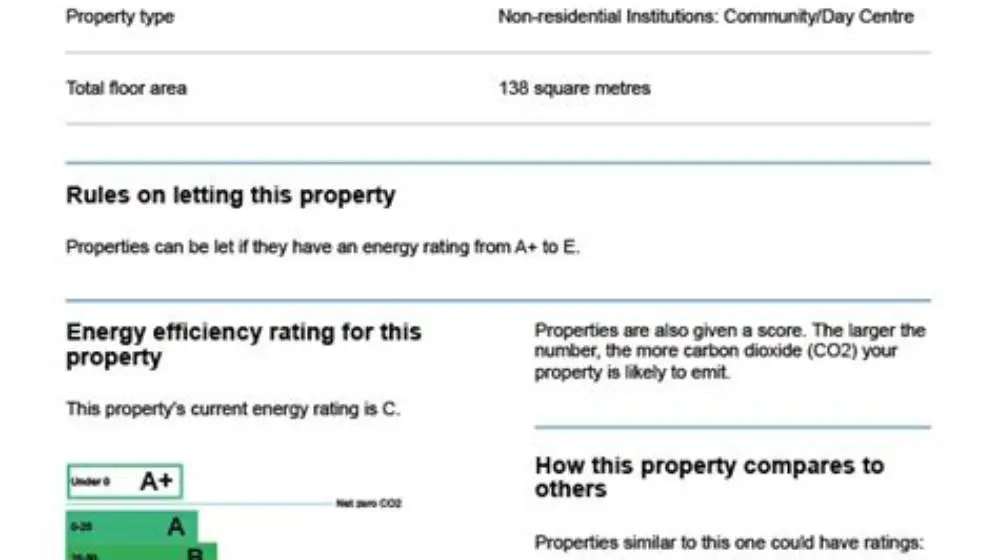
- How a ground source heat pump improves energy efficiency and EPC rating
- Ground source heat pump installation and maintenance basics
- Quick questions
Part of our guide on what is a green home
Quick facts
- Typical ground temp
- 10-12°C
- Efficiency (COP)
- 3.0 to 4.0
- Loop depth
- 1.2 to 2.0 metres
- Pipe length
- 400 to 600 metres
- Installation space
- 30-50 m²
Quick recap
- Ground source heat pumps use stable underground temperatures of about 10-12°C.
- They require buried loops of pipe in soil or under a lawn for heat collection.
- GSHPs can achieve 300-400% efficiency under typical UK conditions.
- Unlike air source heat pumps, they don't depend on outside air temperature.
- Installing a GSHP needs enough land and a compatible heating system.
What a ground source heat pump is
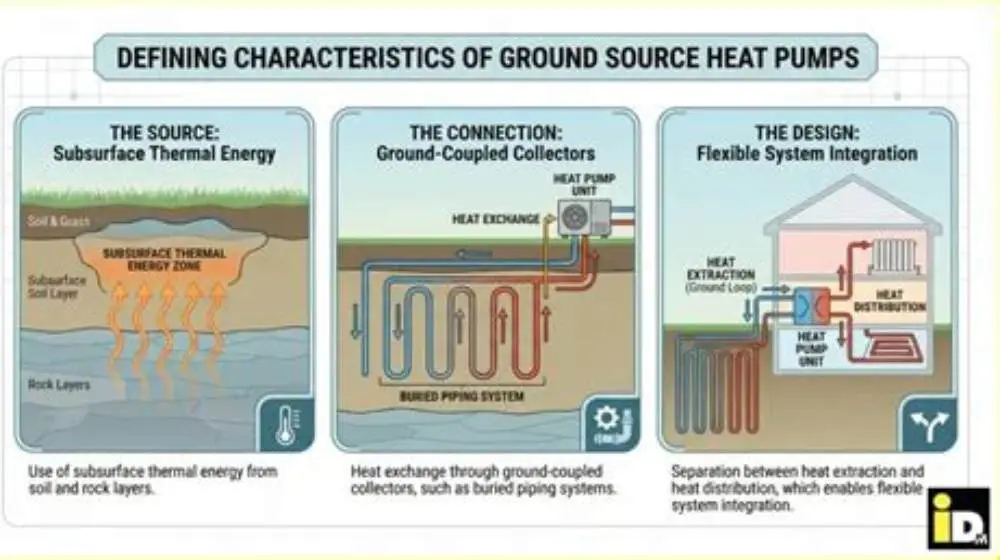
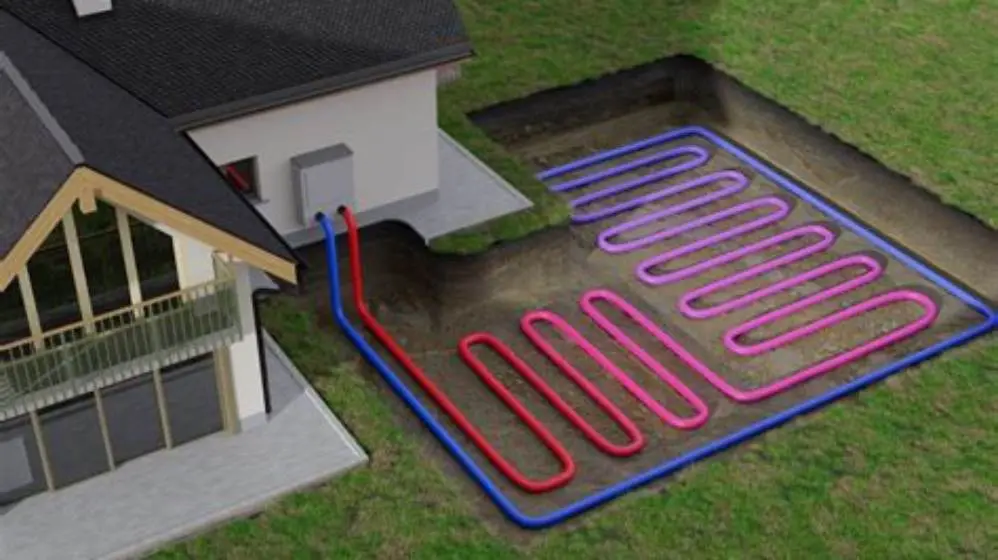
A ground source heat pump (GSHP) is a heating system that draws warmth from the earth to heat buildings. It works using a buried loop of pipes called a ground loop, typically installed 1.2 to 2 metres underground where temperatures remain steady around 10 to 12°C year-round in the UK.
The system circulates a fluid through these pipes which absorbs this ground heat. A heat pump unit inside the home then compresses this heat to a higher temperature, suitable for heating radiators, underfloor heating, or hot water.
GSHPs are renewable because they use the earth’s natural heat, unlike boilers that burn gas or oil. They often deliver three to four units of heat energy for every unit of electricity consumed, making them highly efficient.
Unlike conventional heating relying on fossil fuels, GSHPs contribute to lower carbon emissions and can improve the EPC rating of your property, important for UK homeowners aiming for greener homes. It helps to understand what is an air source heat pump before going further.
How a ground source heat pump works using ground heat
The ground stores solar energy and remains at a relatively constant temperature once you go below the frost line, typically 10-12°C at 1.5 metres depth in the UK. GSHPs exploit this by circulating a mixture of water and antifreeze through underground pipes, called ground loops, which absorb this heat.
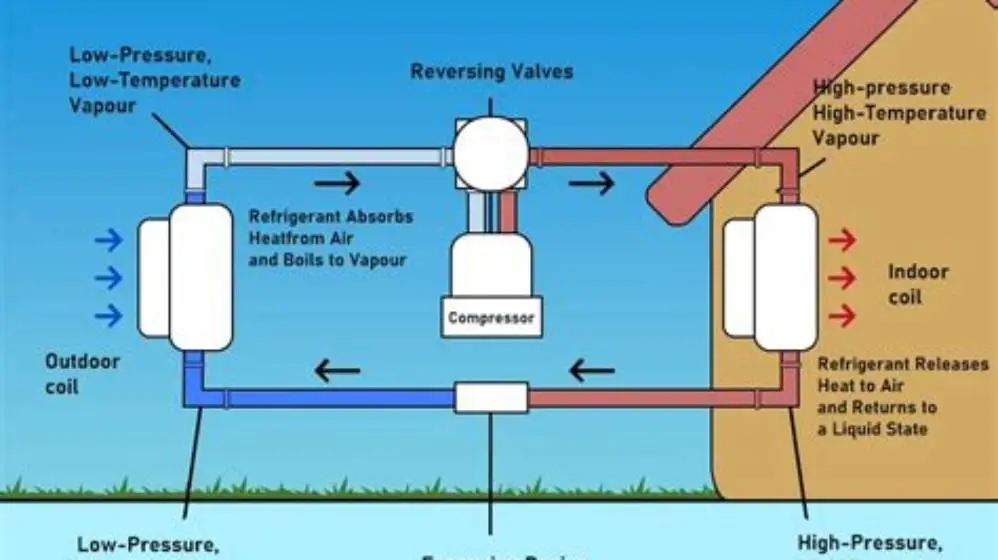
Heat is transferred from the fluid in the earth loop to a refrigerant inside the heat pump. The refrigerant is compressed, raising its temperature significantly (often reaching 40-50°C) before passing through a heat exchanger that warms your home’s heating system.
This process requires electricity to operate the compressor and circulation pumps, but the overall heat output is usually 3 to 4 times the electrical input, measured as a Coefficient of Performance (COP) between 3.0 and 4.0 under typical conditions. People in this spot often ask about how deep ground source heat pump as well.
Vertical ground loops are an alternative where land area is limited. Pipes are inserted into boreholes 30 to 100 metres deep, but these require specialist drilling and planning permission more commonly.
Difference between ground source and air source heat pumps
Ground source heat pumps rely on the earth’s stable underground temperature, while air source heat pumps extract heat from outside air, which can vary significantly seasonally and daily.
Because underground temperatures remain fairly constant, GSHPs maintain consistent efficiency year-round, usually around COP 3.0 to 4.0. Air source heat pumps often drop below COP 3.0 in very cold weather because the air temperature can fall below freezing. There is more on what is a fuel cell boiler in a separate guide.
GSHPs require significant ground area or vertical drilling, which means higher upfront costs and more complex installation. Air source heat pumps can be installed on walls or roofs with less disruption but may be noisier and less efficient in extreme cold.
Choosing between the two often comes down to site conditions, available land, and budget. For large gardens and long-term savings, ground source is often preferable. For limited space or lower initial cost, air source may be better.
- Stable efficiency year-round
- Quieter operation
- Long lifespan of ground loop
- Higher installation cost
- Requires sufficient land or boreholes
- More complex installation
What land or space is needed for a ground source heat pump
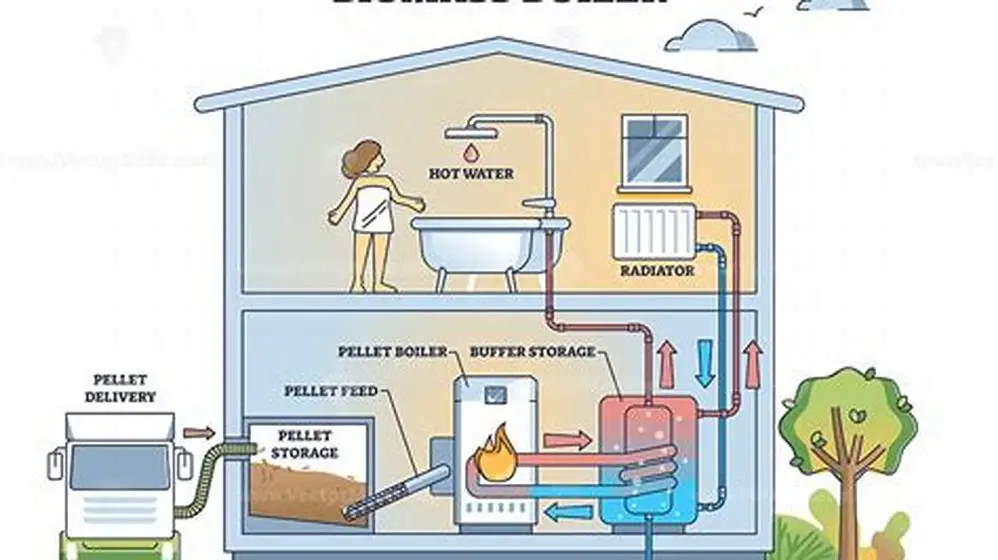
Horizontal ground loops usually require between 30 and 50 square metres of undisturbed garden space. The length of pipe buried is typically 400 to 600 metres, laid in trenches 1.2 to 2 metres deep. This size depends on soil type, moisture content, and your home’s heating demand. The other half of this decision is what is biomass heating.
If your garden is too small, vertical borehole loops are the alternative. These need much less surface space (around 1-2 square metres) but require drilling boreholes 30 to 100 metres deep using specialist equipment and permissions.
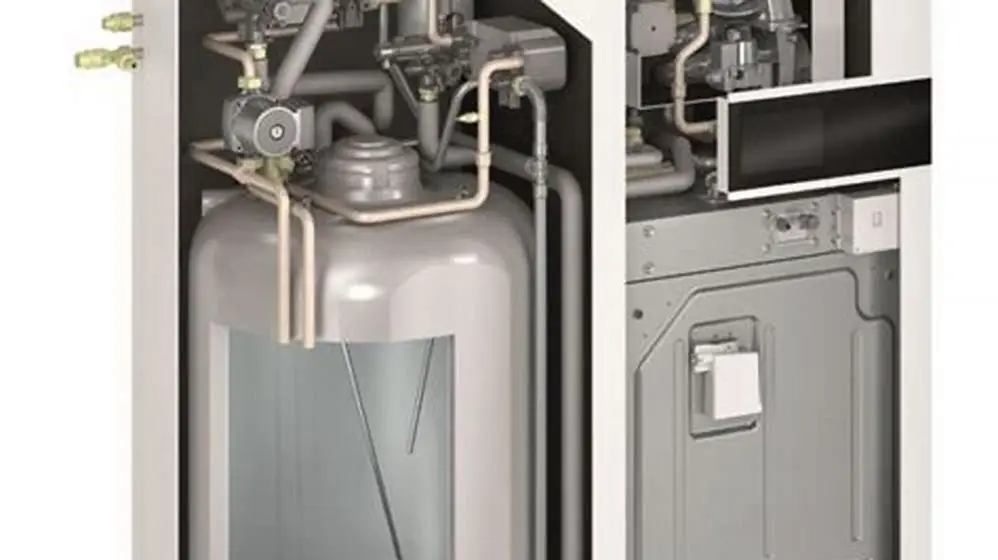
You’ll also need space inside the home for the heat pump unit itself, roughly the size of a large boiler.
Planning permissions or building regulations may apply, especially if you drill boreholes or live in a conservation area. People in this spot often ask about selecting the right hydro system as well.
The effectiveness of the ground loop also depends on soil composition and moisture. Clay soils with good moisture content conduct heat better, potentially reducing the area needed for horizontal loops by up to 20%, while sandy or rocky soils may require larger loops to achieve the same heat transfer.
If your property is in a densely built area with limited garden space and no option for vertical drilling, alternative heating methods might be necessary. In some cases, community or shared ground source systems can be considered, where multiple properties share a single GSHP installation, optimizing land use.
You need to consider future landscaping or garden projects before installation as disturbing the ground loops later can be costly and complicated. Ensuring access for maintenance and avoiding planting trees with invasive roots near buried pipes will preserve system efficiency and longevity. We go through what energy performance certificates show step by step elsewhere on the site.
How a ground source heat pump improves energy efficiency and EPC rating
GSHPs reduce energy consumption because they move heat rather than create it by burning fuel. This can cut heating bills by 40-60% depending on your current system and insulation.
Homes using GSHPs often see EPC rating improvements of 1-2 bands if combined with adequate insulation and efficient heating emitters like underfloor heating.
The stable heat source means lower running costs and fewer cold spots, contributing to a healthier indoor environment.
Upgrading to a GSHP may qualify for UK government grants such as the Boiler Upgrade Scheme, which helps offset initial costs.
However, to get the best results, your home needs a compatible heating distribution system running at low temperatures, meaning you might need to upgrade radiators or install underfloor heating.
Ground source heat pump installation and maintenance basics
Installation involves surveying your land, deciding between horizontal or vertical loops, laying the pipes, and connecting the heat pump indoors to your heating system.
A typical installation can take 1-2 weeks, with trench digging or drilling being the most disruptive stages.
Maintenance is modest: ground loops rarely need attention, but the heat pump unit should be serviced yearly to keep efficiency above 90%.
A ground loop pressure gauge and antifreeze test kit are recommended tools to monitor system health post-installation. The loop pressure normally sits between 1.0 and 2.0 bar; drops indicate leaks or pump failure.
Prompt servicing prevents major repairs and maintains performance, which otherwise can degrade by 10-15% over ten years without upkeep.
During installation, properly flushing the ground loop before system start-up is critical to remove any debris that could clog the pipes or reduce heat transfer efficiency. The antifreeze concentration in the loop fluid must also be checked to prevent freezing in winter; typical levels are between 20% and 30% propylene glycol by volume.
Beyond annual servicing, monitoring the system's Coefficient of Performance (COP) over time can signal if maintenance is needed. A steady drop in COP below 3.0 suggests issues like refrigerant leaks or pump wear that require immediate attention to avoid costly repairs.
Electrical components such as the compressor and pumps often have warranties covering 5 to 10 years, but careful handling during installation and regular professional checks extend their lifespan. Homeowners should keep a maintenance log to compare performance data year-on-year and catch inefficiencies early.
Ground source heat pumps offer stable, high-efficiency home heating where land allows; they require upfront space and cost but deliver long-term savings.
Quick questions
Can a ground source heat pump work with existing radiators?
It can but only if the radiators are large enough to deliver heat at lower temperatures around 35-45°C. Otherwise, upgrading to underfloor heating or larger radiators is needed for full efficiency.
How long does a ground source heat pump last?
The buried ground loop typically lasts 50+ years with no issues. The heat pump unit indoors has a lifespan of 15 to 20 years with proper maintenance.
Are ground source heat pumps suitable for flats or terraced houses?
They are generally not suitable due to limited ground space for loops. Air source heat pumps or other heating solutions are preferred in dense housing.
What affects the efficiency of a ground source heat pump?
Soil type, moisture content, ground temperature stability, and proper sizing of pipes and heat pump all significantly affect efficiency.
Do I need planning permission to install a ground source heat pump?
Usually no for horizontal loops in private gardens, but vertical boreholes often need building regulations approval and planning permission, especially in conservation areas.