An air source heat pump extracts heat from outside air, even at low temperatures, to warm indoor air or water for heating and hot taps, typically providing 2 to 4 units of heat per unit of electricity used.
On this page
- Quick recap
- What is an air source heat pump
- How an air source heat pump extracts heat from outside air
- What does an air source heat pump heat in UK homes
- Differences between air source and ground source heat pumps
- How air source heat pumps differ from air conditioners
- What grants and funding schemes support air source heat pumps in the UK
- Quick questions
Part of our guide on what is a green home
Quick facts
- Temperature range
- -15 to 35°C
- Coefficient of performance
- 2 to 4
- Typical lifespan
- 15-20 years
- Common heat delivery
- water and air
- UK grant schemes
- Boiler Upgrade Scheme, ECO4
Quick recap
- Air source heat pumps move heat from outside air to inside, working down to around -15°C.
- They heat water for radiators or underfloor systems, and domestic hot water.
- They differ from ground source pumps by using air, not the ground, as heat source.
- Unlike air conditioners, heat pumps can both heat and cool indoor air.
- Efficiency depends heavily on outdoor temperature and system design.
What is an air source heat pump
An air source heat pump (ASHP) captures heat from the outside air and transfers it indoors to heat your home or supply hot water. It works similarly to a refrigerator running in reverse but is designed to provide warmth instead of cooling.
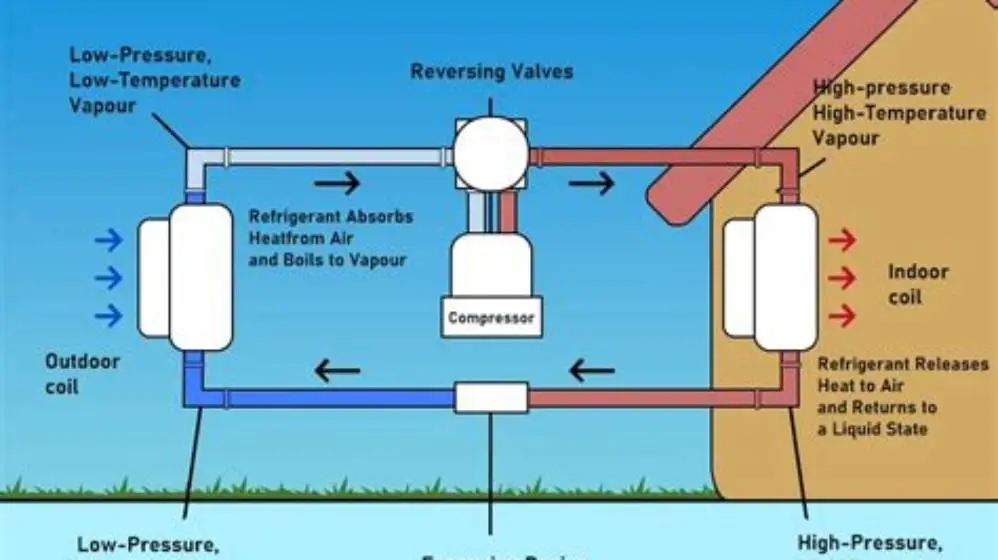
Typically, an ASHP has an external unit containing a fan and heat exchanger, which draws in air and extracts heat from it, even when outside temperatures are as low as -15°C. This heat is then compressed and transferred inside to warm your living space or water.
In UK homes, an ASHP usually replaces traditional gas or electric boilers, offering a renewable alternative that reduces carbon emissions and energy bills when installed and sized correctly.
How an air source heat pump extracts heat from outside air
The ASHP’s outdoor unit uses a refrigerant fluid that evaporates at very low temperatures. As the fan pulls in outside air, the refrigerant absorbs heat, changing from liquid to gas. The other half of this decision is u-value vs r-value comparison.
A compressor then squeezes this gas, raising its temperature substantially (often above 50°C) before it moves indoors. Inside, the heat passes through a heat exchanger, warming water or air for your heating system.
Despite cold UK winters, most modern ASHPs can extract useful heat down to around -15°C. Below this, efficiency drops, and supplementary heating might be needed. The heat pump’s performance depends heavily on outdoor temperature, humidity, and unit quality.
The coefficient of performance (COP) for an ASHP varies with outdoor temperature; for example, at 7°C, a typical ASHP might deliver a COP of 3.5, meaning it produces 3.5 units of heat for every unit of electricity consumed. However, as temperatures drop closer to -15°C, the COP can fall to around 2.0 or less, indicating reduced efficiency. Therefore, when sizing an ASHP, installers must consider local climate data to ensure the system can meet heating demands even on colder days. For the detail, see our notes on how heat pumps affect home energy scores.
A worked example: if an ASHP with a COP of 3.5 consumes 1 kWh of electricity, it delivers 3.5 kWh of heat to the home. If the outside temperature falls and the COP drops to 2.0, the same 1 kWh of electricity now produces only 2 kWh of heat, which may necessitate supplementary heating to maintain comfort levels. Monitoring this performance helps homeowners anticipate changes in running costs during winter months.
What does an air source heat pump heat in UK homes
ASHPs heat indoor spaces primarily by warming water that flows through radiators or underfloor heating systems. The water temperature typically reaches between 35°C and 55°C, which means radiators must be larger or underfloor heating used to achieve comfortable warmth.
They also supply domestic hot water for taps and showers, though producing water at 60°C or above often requires extra energy input or a heat pump with a built-in boost heater. The other half of this decision is what is a ground source heat pump.
Some systems use the warmed air directly by blowing it through vents in the living areas, but water-based delivery is more common in the UK. The system’s design must match your home’s heating needs and existing infrastructure to avoid inefficiency or discomfort.
In homes with existing radiator systems designed for high-temperature water (around 70-80°C), replacing a boiler with an ASHP may require upgrading to larger radiators or switching to underfloor heating to compensate for the lower water temperatures. A typical ASHP heats water to approximately 35-55°C, which is sufficient for well-insulated homes but may struggle in poorly insulated properties.
To verify system effectiveness, installers often perform a heat loss calculation for the home to determine the required heating output. For instance, a well-insulated 100 m² home might need a heat output of 5 kW; selecting an ASHP that can deliver this at the lower water temperature ensures comfort. If the system cannot meet this need, homeowners may experience cold spots or rely more on electric backup heaters, increasing energy costs. People in this spot often ask about using sunlight to heat water as well.
Differences between air source and ground source heat pumps
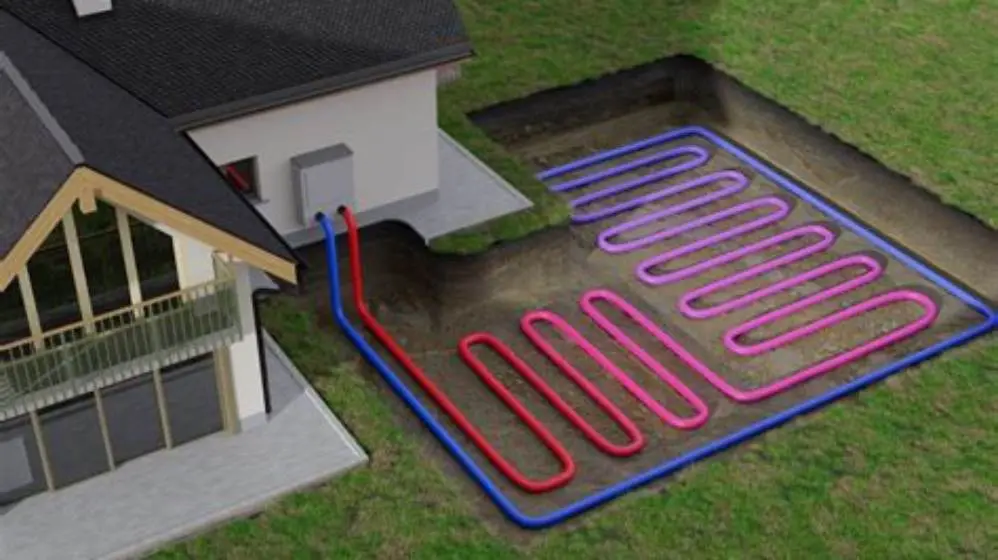
Ground source heat pumps (GSHPs) extract heat from the soil or groundwater, where temperatures remain more constant, usually around 10-12°C year-round. This stability often results in higher efficiency compared to ASHPs but requires significant ground works.
ASHPs are easier and cheaper to install because they do not need underground loops or boreholes; instead, the external unit is mounted outside on a wall or on the ground. However, their efficiency drops more in cold weather than GSHPs.
GSHP systems typically provide higher heat output at lower electricity use but involve disruption during installation and higher upfront costs. Choosing depends on your property’s space, soil type, and budget. People in this spot often ask about micro hydro power for homes as well.
| Feature | Air Source Heat Pump | Ground Source Heat Pump |
|---|---|---|
| Heat source | Outside air | Soil or groundwater |
| Installation complexity | Low (unit mounted outside) | High (ground loops needed) |
| Temperature stability | Variable, down to -15°C | Stable, ~10-12°C year-round |
| Efficiency | Coefficient of performance 2-4 | Coefficient of performance 3-5 |
| Upfront cost | Lower | Higher |
| Disruption | Minimal | Significant groundworks |
- easier installation
- lower upfront cost
- flexible placement
- lower efficiency in cold
- noise from outdoor unit
- needs good insulation
How air source heat pumps differ from air conditioners
Though ASHPs and air conditioners share similar components like compressors and refrigerants, their core purposes differ. Air conditioners remove heat from inside a building to cool it, releasing that heat outside.
ASHPs move heat in the opposite direction during winter, taking heat from outside air and delivering it indoors to warm rooms. Many modern ASHPs can reverse this process, providing cooling in summer similarly to an air conditioner.
The key difference lies in design optimisation: ASHPs focus on heating efficiency at low outside temperatures, while air conditioners are optimised for cooling performance when outdoor temperatures are higher. We cover how r values affect heat retention in its own article.
What grants and funding schemes support air source heat pumps in the UK
UK government schemes like the Boiler Upgrade Scheme (BUS) and ECO4 offer grants covering up to £5,000 for air source heat pump installation to eligible homeowners and landlords.
The Boiler Upgrade Scheme requires the heat pump to meet efficiency standards, typically a seasonal coefficient of performance (SCOP) above 3.0, ensuring systems deliver real energy savings.
Additional funding might be available through local councils under the Warm Homes Plan, focusing on low-income households. Eligibility conditions depend on factors like income, property EPC rating, and current heating system.
Applying for these grants involves getting a professional assessment, ensuring your property is suitable, and using certified installation companies.
The Boiler Upgrade Scheme also requires installations to be completed by Microgeneration Certification Scheme (MCS) certified installers, ensuring quality and compliance with industry standards. This certification helps maintain performance and reliability while protecting consumers.
Post-installation, homeowners may need to submit evidence such as installation certificates and product details to claim grants. A common check involves verifying the heat pump’s seasonal performance factor (SPF) through commissioning reports, confirming that the system meets promised efficiency levels.
Some local authorities offer additional incentives or reduced business rates for properties installing renewable heating technologies like ASHPs. These schemes vary widely, and prospective buyers should consult local council websites or energy advisors to look at all available financial support options.
- Boiler Upgrade Scheme: up to £5,000 towards ASHP installation
- ECO4 scheme: helps low-income or vulnerable households
- Grants require ASHPs to meet efficiency and emission standards
- Professional assessment needed before installation
Quick questions
Can air source heat pumps work efficiently in cold UK winters?
Yes, modern ASHPs can work down to about -15°C outdoor temperature but efficiency drops below freezing, so a backup heating source may be needed in very cold spells.
Do air source heat pumps require large outdoor space?
They need enough external clearance for airflow and maintenance, but do not require ground loops, so they suit most UK homes with a small outdoor area.
How noisy are air source heat pumps?
Outdoor units produce noise typically around 45-55 decibels, similar to a quiet conversation, so siting away from bedrooms or neighbours is advisable.
Can I install an air source heat pump myself?
Installation requires certified professionals because of refrigerant handling and system design; DIY installation is not recommended or legal in the UK.
Will installing an ASHP improve my EPC rating?
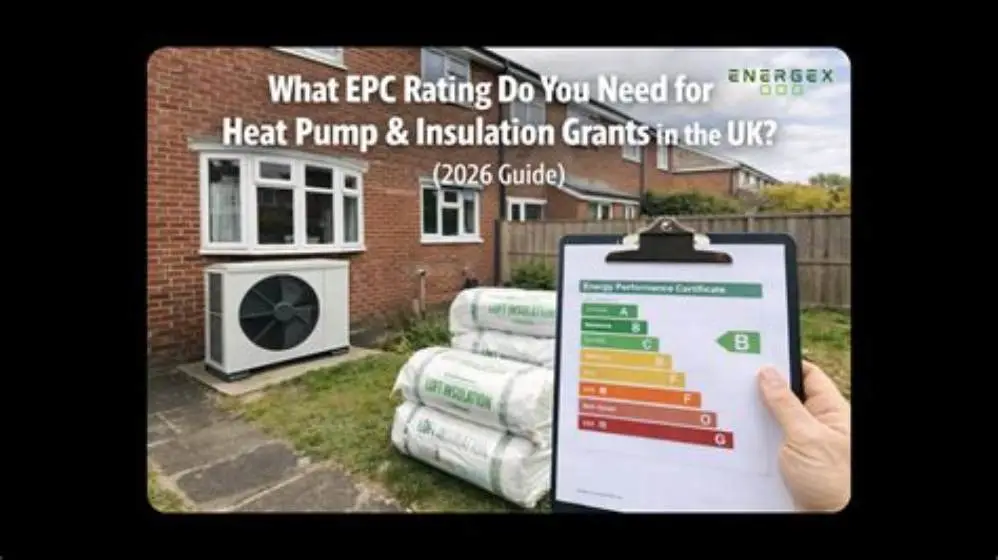
Yes, ASHPs often improve EPC scores by reducing emissions and energy use, especially if combined with insulation and efficient heating delivery.