Understand the optimal depths and pipe lengths for ground source heat pumps to maximize heating efficiency and space use.
Ground source heat pump pipes are typically buried at depths between 1 and 3 meters horizontally or drilled 30 to 150 meters deep vertically, depending on soil conditions, available land area, and heat transfer needs.
On this page
- Key takeaways
- How deep are ground source heat pump pipes
- How deep do ground source heat pumps go
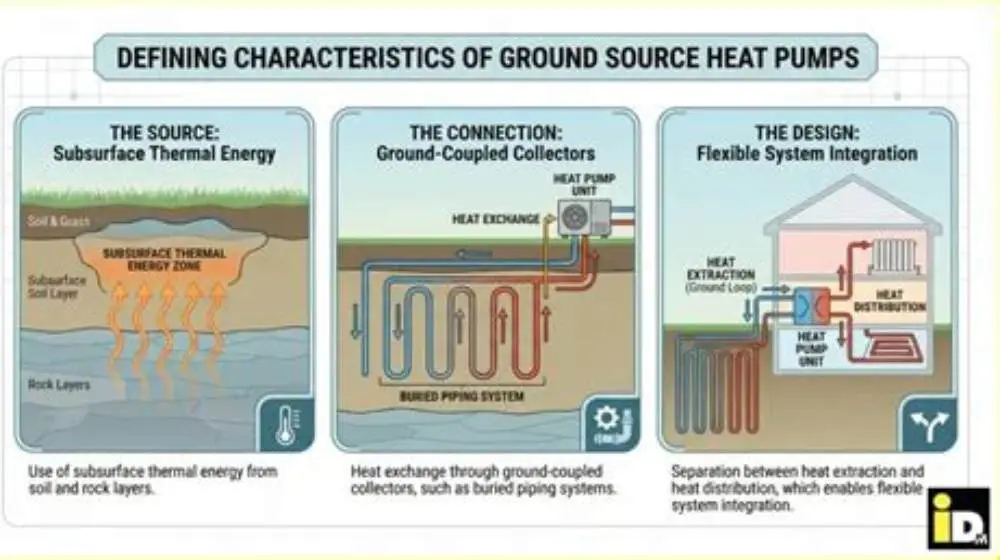
- Difference between horizontal pipe trenches and vertical boreholes
- Area requirements related to depth
- Why depth matters for heat transfer efficiency
- How deep ground source heat pump pipes should be installed
- Questions people still ask
Part of our guide on optimizing home heating costs
Exact depth and pipe length guidelines for ground source heat pumps ensure better efficiency and fit for your available land.
| Horizontal depth | 1-3 meters |
|---|---|
| Vertical borehole depth | 30-150 meters |
| Typical pipe length | 100-400 meters |
| Ground temperature range | 8-12°C stable |
| Space needed horizontal | 300-600 m² |
| Space needed vertical | few m² |
Key takeaways
- Horizontal pipes usually lie 1-3 meters underground to avoid freezing.
- Vertical boreholes reach 30-150 meters deep for better heat transfer.
- Deeper installation improves heat pump efficiency but requires more drilling.
- Available land area heavily influences pipe length and installation depth.
- Proper depth maintains stable ground temperature, crucial for performance.
How deep are ground source heat pump pipes
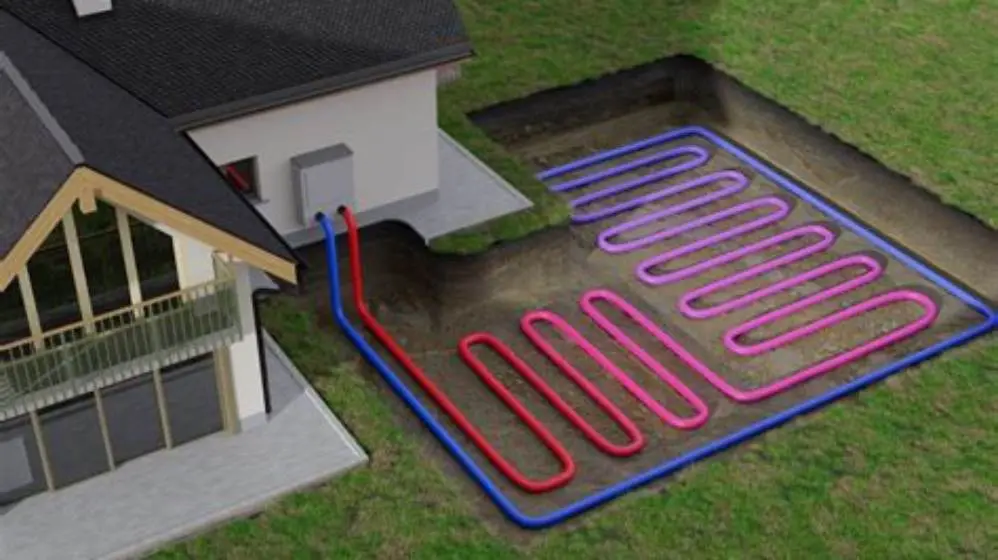
Ground source heat pump pipes in horizontal ground loops are usually buried between 1 and 3 meters deep. This range ensures the pipes stay below the frost line, preventing freezing, and maintain a relatively constant soil temperature. The exact depth depends on local frost depth and soil type.
For vertical systems, pipes are installed in boreholes drilled between 30 and 150 meters deep. This greater depth accesses more stable ground temperatures year-round, offering higher efficiency but involving more complex and costly drilling.
Pipe length is another consideration: typical total loop lengths range from 100 to 400 meters depending on the heat demand and soil thermal conductivity. Longer pipes improve heat transfer but increase upfront costs.
In colder regions, the frost line can extend beyond 2 meters, requiring pipes to be buried deeper to prevent freezing. For instance, in parts of Canada or northern Europe, depths of up to 3 meters or more may be necessary. Conversely, in warmer climates with minimal frost risk, pipes can be installed closer to 1 meter deep without compromising system performance. People in this spot often ask about check brine loop leaks without digging as well.
The thermal conductivity of the soil also affects how deep pipes must be placed. Clay soils often retain heat better but can be prone to moisture variations that affect heat transfer, while sandy soils may require longer pipes at similar depths to achieve the same efficiency.
A practical check after installation involves measuring the temperature of the fluid returning from the ground loop; a steady temperature near the expected ground temperature range indicates proper depth and installation. For example, if the local stable ground temperature is 10°C, the return fluid should be close to this value during operation.
How deep do ground source heat pumps go
The depth a ground source heat pump system goes depends on whether it uses horizontal or vertical loops. Horizontal loops commonly stay within 1 to 3 meters deep due to practical trenching limits and the need to avoid frost damage. Before you commit to anything, it is worth looking at renewable heating alternatives.
Vertical boreholes can go much deeper, from 30 meters up to 150 meters or more. The depth is chosen based on soil thermal properties, local geology, and heating load requirements. Deeper boreholes tap into stable underground temperatures that fluctuate less seasonally.
Deeper installations typically deliver better heat transfer, resulting in higher efficiency and potentially smaller heat pump units. However, drilling costs and permits rise sharply with depth, so the trade-off must be balanced carefully.
In some cases, vertical boreholes can exceed 150 meters, especially for commercial or larger residential buildings with high heating demands. However, drilling beyond 150 meters often increases costs disproportionately and requires detailed geological surveys to avoid hitting rock layers or groundwater. People in this spot often ask about calculating monthly heating savings as well.
Shallow vertical systems, sometimes referred to as 'mini-boreholes,' may only reach 20 to 30 meters but can still provide sufficient heat exchange when multiple boreholes are drilled in an array. This approach balances cost and performance, especially where deeper drilling is impractical.
A simple calculation example: a 100-meter borehole with a thermal conductivity of 2.5 W/m·K can extract approximately 50-70 watts per meter of depth, yielding 5 to 7 kW of thermal power, suitable for a medium-sized home. This helps in sizing the system appropriately.
Difference between horizontal pipe trenches and vertical boreholes
Horizontal trenches require a large area of land, typically between 300 and 600 square meters for a residential system, but only need shallow digging at 1 to 3 meters depth. They are easier to install but take up significant space and are vulnerable to frost if not buried deep enough. We cover key uk rules for heat pump permissions in its own article.
Vertical boreholes need only a few square meters of surface area but require drilling deep holes up to 150 meters. They are suited to properties with limited land but have higher upfront costs and require specialist drilling equipment.
Thermal performance differs: vertical boreholes access more stable temperatures at depth, improving efficiency throughout the year. Horizontal loops rely on shallow soil temperatures, which vary more with seasons.
| Aspect | Horizontal Pipe Trenches | Vertical Boreholes |
|---|---|---|
| Typical Depth | 1-3 meters | 30-150 meters |
| Land Area Needed | 300-600 m² | Few m² |
| Installation Cost | Lower | Higher |
| Thermal Stability | Variable | Stable |
| Installation Complexity | Simple trenching | Specialist drilling |
Area requirements related to depth
Surface area availability strongly affects your choice between horizontal and vertical systems. A typical horizontal loop demands about 300-600 square meters because pipes must be spread out horizontally to optimize heat absorption without overheating the soil. We cover what size heat pump for 1500 square foot house in its own article.
If your property is smaller, vertical boreholes become necessary since drilling vertically requires only a footprint of a few square meters regardless of depth. This is a crucial consideration in urban or suburban settings with limited land.
The length of pipe needed to meet your heating demand also affects area. Longer pipes mean more space horizontally or more boreholes vertically. Combining multiple boreholes spaced several meters apart reduces thermal interference underground.
Why depth matters for heat transfer efficiency
Ground temperature stability improves with depth, typically stabilizing around 8 to 12°C below approximately 10 meters. This stable temperature is vital for efficient heat transfer year-round, ensuring the heat pump extracts consistent heat in winter.
Shallow horizontal loops experience more temperature fluctuations depending on weather and seasons. When soil temperature dips too low, system efficiency falls and the heat pump must work harder, increasing energy use and potentially shortening equipment life.
Deeper vertical boreholes access more constant temperatures but cost more. Efficiency gains from deeper installation can reduce heat pump running costs, so the decision balances upfront drilling expenses against long-term savings.
How deep ground source heat pump pipes should be installed
Determining the exact depth involves a site-specific heat loss calculation, soil thermal conductivity test, and land availability assessment. Generally, horizontal pipes should be buried at 1.2 to 2.5 meters to avoid frost and maintain thermal comfort.
For vertical systems, borehole depth depends on heating load but usually ranges between 50 and 120 meters. Each borehole requires about 150 meters of pipe coiled inside to maximize heat exchange with the surrounding earth.
It's best to engage a qualified installer who will conduct the necessary ground surveys and calculations. They will specify pipe length and borehole depth that meet your home's heating needs efficiently without oversizing.
In addition to depth, the spacing between vertical boreholes is critical to avoid thermal interference, which can reduce efficiency. Typically, boreholes are spaced 5 to 7 meters apart, allowing the ground to recharge heat naturally between boreholes.
For horizontal systems, overlapping pipe loops can cause thermal depletion of the soil, so trenches are often spaced 1 to 1.5 meters apart horizontally to maintain heat transfer efficiency. Failing to maintain such spacing leads to decreased system performance over time.
A post-installation check involves monitoring the heat pump's coefficient of performance (COP). If the COP is significantly lower than expected, it may indicate insufficient pipe depth or length, poor soil conductivity, or incorrect installation depth, prompting a redesign or modification.
- Calculate your home's heat demand (kW) to size the system.
- Test soil thermal conductivity and frost depth on-site.
- Measure available ground area for horizontal loops or vertical borehole drilling.
- Select pipe depth and length based on heat demand and soil tests.
- Hire a certified installer to design and install the system accordingly.
Questions people still ask
Can ground source heat pump pipes be buried too shallow?
Yes. Pipes buried shallower than the local frost line risk freezing, which can damage the system and reduce efficiency. Generally, pipes should be at least 1 meter deep, depending on your area's frost depth.
Why do vertical boreholes cost more than horizontal trenches?
Vertical boreholes require expensive drilling equipment and more labor to drill deep holes, driving costs higher than shallow trench digging used in horizontal systems.
How does soil type affect the required pipe depth or length?
Soils with higher thermal conductivity transfer heat better, potentially allowing shorter pipe lengths or shallower depths. Sandy or dry soils often require longer or deeper loops.
Is it possible to combine horizontal and vertical pipe systems?
Some installations combine both to optimize space and heat transfer, but this requires careful design to avoid thermal interference and added cost.
How often should ground source heat pump pipes be inspected?
Pipes are typically designed to last 50+ years without inspection, but annual system checks ensure no leaks or pressure drops in the loop.