Learn how to diagnose air source heat pump short cycling at low load with three practical checks including when a retube is needed after 10 years.
Air source heat pump short cycling at low load usually stems from an oversized unit, incorrect control settings, or a fouled heat exchanger needing retubing after about 10 years. Checking load match, cycle times, and coil condition pinpoints the cause.
On this page
- The short version
- Air source heat pump short cycling causes at low load
- How to tell if a retube is needed after 10 years
- Steps to diagnose and fix short cycling issues
- When an oversized unit causes short cycling
- Control settings adjustments to reduce short cycling
- Adding a buffer tank to manage low load cycling
- Questions people still ask
Part of our guide on staged home retrofit
Identify why your air source heat pump short cycles at low load, including the precise pressure drop that signals retube needs after years of use.
| Short cycle duration | under 5 min |
|---|---|
| Pressure drop threshold | 20-30 kPa coil |
| Unit oversizing limit | over 25% design load |
| Retube age indicator | approx 10 years |
| Buffer tank size | 50-100 L typical |
The short version
- Short cycling often means the unit is oversized for the heat demand at low load.
- Control settings like differential temperature and minimum run time prevent short cycles.
- A retube may be needed if coil fouling raises pressure drop above 20-30 kPa.
- Use pressure gauges and run-time logs to diagnose short cycling causes.
- Adding a buffer tank smooths low-load cycling when load is unstable or minimal.
Air source heat pump short cycling causes at low load
Short cycling happens when the heat pump switches on and off frequently, often within cycles shorter than 5 minutes. This leads to wear, efficiency loss, and discomfort. At low load, this is especially common when the heat pump delivers more heat than the space needs, causing premature shutoff.
The most frequent cause is an oversized heat pump. Installations sized for peak winter demand can exceed the load needed during mild weather or transitional seasons by 25% or more. This mismatch creates very short run periods, often under 3-5 minutes.
Control settings also influence cycling. Systems lacking a minimum run time or adequate differential on thermostat settings will cycle rapidly as the temperature nears the setpoint. Some units include adaptive controls or cycling protection; others require manual adjustment.
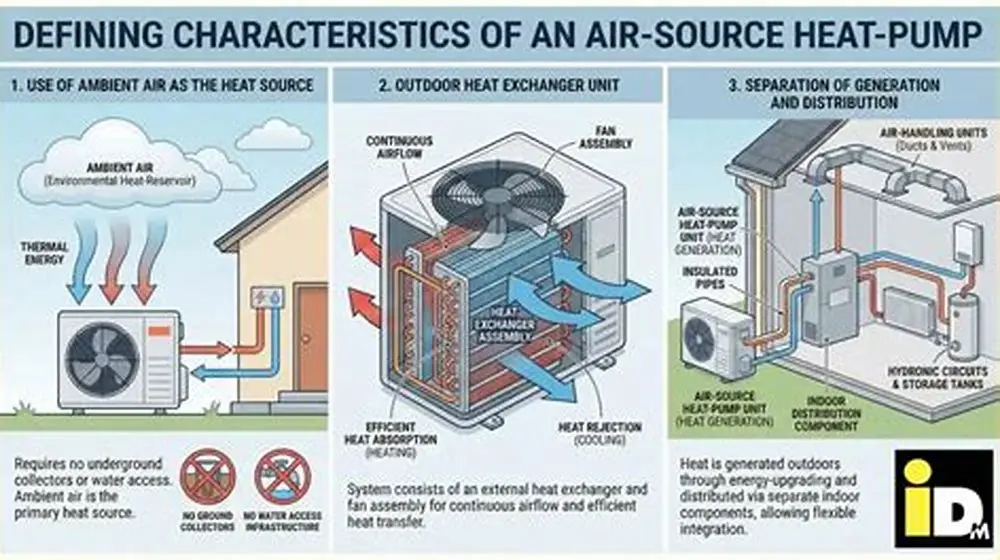
A fouled or damaged heat exchanger coil increases pressure drop, causing the compressor to shut off early, adding to short cycles. This happens gradually and is typical after about 10 years of operation without maintenance. We go through ensuring compliance for heat pump installs step by step elsewhere on the site.
Short cycling signals excessive system stress and inefficient operation, so addressing the cause improves lifespan and savings.
- Oversized unit: heat pump capacity exceeds low load by 25%+
- Control settings: thermostat differential under 2°C or no min. run
- Heat exchanger fouling: coil pressure drop exceeds 20-30 kPa
How to tell if a retube is needed after 10 years
A heat pump coil’s condition is a key factor in short cycling. Over roughly a decade, the coil tubes accumulate scale and corrosion, restricting refrigerant flow. This raises the pressure drop across the coil, which can prematurely trigger compressor shutdown.
A pressure drop reading above 20-30 kPa (kilopascals) compared to the baseline when new indicates fouling or blockage. This is measured by installing pressure gauges on the suction and discharge sides of the coil during operation at steady load. If that sounds like your situation, read up on heat pump cycling explained next.
Reduced heat transfer efficiency shows up as rising compressor discharge temperature and lower flow rates. These symptoms combined confirm the need for retubing or coil replacement.
Retubing restores original coil flow and pressure drop characteristics, reducing short cycling caused by early shutdown on high pressure. It is a cost-effective maintenance step after 10 or more years of continuous use.
- Pressure drop over 20-30 kPa signals fouled tube bundle
- Rising compressor discharge temperature correlates with coil fouling
- Reduced refrigerant flow and heat transfer efficiency occur with fouling

Steps to diagnose and fix short cycling issues
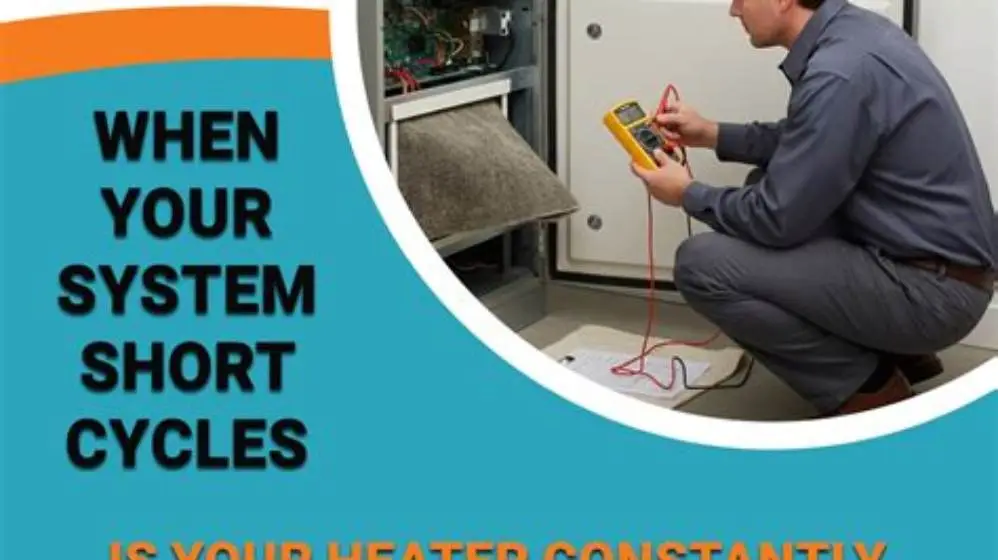
Diagnosing short cycling requires a systematic approach combining observation, measurement, and adjustment. First, log the system’s on/off cycle times at several outdoor temperatures and loads to establish if cycles are consistently shorter than 5 minutes. For the detail, see our notes on avoiding short cycling in retrofits.
Second, compare the heat pump capacity to the actual heat demand during low load periods. Oversizing above 25% is a key red flag. A load calculation or energy consumption analysis can identify this mismatch.
Third, inspect control settings on the thermostat or heat pump controller. Set minimum run times to at least 5 minutes and differential temperature to 2-3°C to prevent rapid cycling near setpoints.
Fourth, measure the coil’s pressure drop using gauges under stable operating conditions. Elevated pressure drop confirms coil fouling and need for retube or cleaning. For the detail, see our notes on explaining heat transfer in heat pumps.
Consider adding a buffer tank sized about 50-100 liters of water volume to the circuit. This smooths the load and prevents short cycling by absorbing heat surges and extending run time.
- Log compressor cycle length at different low load conditions.
- Calculate or estimate heat load and compare against heat pump size.
- Adjust thermostat or controller settings for longer minimum run time.
- Measure heat exchanger coil pressure drop during operation.
- Install a buffer tank if load fluctuations are unavoidable.
When an oversized unit causes short cycling
Oversizing a heat pump by over 25% compared to the actual heat demand at low load leads to very short cycles. The system overshoots the thermostat setpoint quickly and switches off before completing an efficient cycle.
This condition wears out components faster and reduces seasonal efficiency since start-up consumes more energy than steady operation. It also causes uneven indoor temperatures and discomfort due to frequent on/off sounds and air flow changes. Before you commit to anything, it is worth looking at testing for condensation in walls.
The main remedy is staged retrofitting: installing a smaller or multiple smaller units that match actual load better or adding control strategies to allow modulation.
This option involves balancing cost against disruption and savings. Sometimes, adding a buffer tank or adjusting control settings can mitigate short cycling without full replacement.
- Improves system lifespan by reducing rapid cycles
- Enhances comfort with steadier heating output
- Requires equipment replacement or additional components
- Involves upfront cost and potential installation disruption
Control settings adjustments to reduce short cycling
Thermostat differential and minimum run time settings critically influence short cycling at low load. A differential under 2°C or a zero minimum run time causes the heat pump to switch on and off rapidly as temperatures hover near setpoints. People in this spot often ask about why does my retrofit insulation still feel cold after airsealing as well.
By increasing differential to 2-3°C and setting a minimum run time of 5 minutes, the system avoids frequent cycling. Some heat pumps include built-in cycle delay timers or adaptive controls to optimize this automatically.
Control adjustments are typically low-cost, quick fixes that tradespeople can implement during routine servicing. They improve efficiency and comfort with minimal component wear.
However, if short cycling persists despite optimized control settings, physical system issues like oversizing or coil fouling should be investigated.
- Low cost, quick to implement
- Improves comfort and efficiency noticeably
- May not fully solve short cycling if unit is oversized
- Requires knowledge of appropriate settings for specific system
Adding a buffer tank to manage low load cycling
A buffer tank of around 50-100 liters installed in the heating circuit adds thermal mass, smoothing load fluctuations at low demand. It stores excess heat during short cycles and releases it gradually, allowing the heat pump to run longer and avoid frequent start-stop events.
Buffer tanks are especially useful in retrofit projects where demand varies unpredictably, such as intermittently occupied homes or zones with low heat loss.
Sizing depends on system size and typical load variations but should not exceed 10-15% of the heat pump's output in liters. Oversized tanks add cost and complexity without extra benefit.
Adding a buffer tank requires plumbing modifications and space but significantly extends compressor life and improves seasonal performance at low load.
| Heat pump capacity (kW) | Suggested buffer volume (liters) |
|---|---|
| 3-5 kW | 50-70 |
| 6-10 kW | 70-100 |
| Over 10 kW | 100-150 |
Questions people still ask
Can short cycling damage my air source heat pump?
Yes. Frequent short cycles increase compressor wear and reduce the overall lifespan. It also lowers efficiency due to higher startup energy consumption.
How can I measure if my heat pump is oversized?
Compare the rated heat output to the building’s actual heat load under low demand conditions, using a load calculation or utility data analysis.
Is retubing always necessary after 10 years?
Not always. Retubing is needed if pressure drop measurements show fouling above 20-30 kPa or if efficiency is noticeably reduced.
Will changing thermostat settings fix all short cycling issues?
Adjusting settings helps, but if the unit is oversized or the coil is fouled, these physical issues must be addressed for a full fix.
How do I know what size buffer tank to install?
Buffer tank size should be about 10-15% of the heat pump’s output capacity in liters; consult manufacturer guidelines or a contractor.