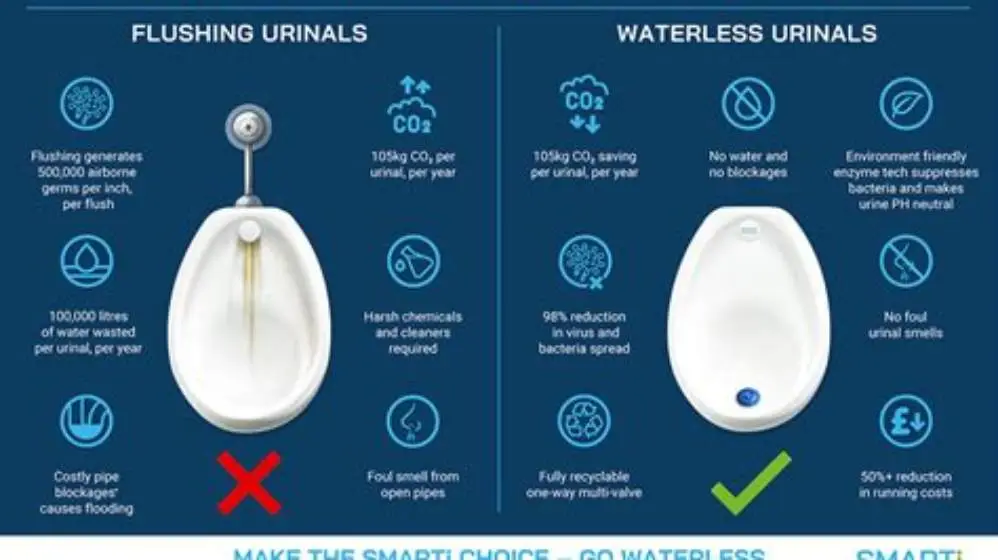
Waterless urinals use a liquid or mechanical trap seal in a cartridge to block sewer gases while letting urine flow through without flushing water. This stops odors without water use, reducing water consumption significantly compared to flush urinals.
On this page
- Quick recap
- How waterless urinals prevent odors without flushing
- The role of trap seals or liquid cartridges
- How urine flows and is vented in waterless urinals
- Typical water savings compared to flush urinals
- How does a waterless urinal operate
- Types of sealing liquids and their chemical properties
- Environmental and health considerations of cartridge disposal
- Quick questions
Part of our guide on identifying causes of low flow
Quick facts
- Water savings
- Up to 100%
- Cartridge life
- 3-12 months
- Urine flow rate
- 0.5-1 L per use
- Trap seal height
- 10-20 mm
- Vent pipe diameter
- 40-50 mm
Quick recap
- Trap seals or cartridges create a barrier against odors without water
- Urine flows through a specially designed channel and vent system
- Waterless urinals can save tens of thousands of litres annually per user depending on usage
- Regular cartridge replacement is vital to maintain odor control
- Ventilation balances air pressure and prevents smell escape
How waterless urinals prevent odors without flushing
Waterless urinals stop odors by using a trap seal or cartridge filled with a special liquid lighter than urine. This liquid floats on top of the urine, forming a physical barrier that blocks sewer gases from escaping into the restroom.
Conventional urinals use water to create this barrier, but waterless models rely on the liquid seal or a mechanical flap to contain foul smells. The seal usually sits 10 to 20 millimetres deep within the trap area.
The barrier’s effectiveness depends on maintaining the liquid level and cartridge condition. Liquid may evaporate or get displaced, so regular inspection and replacement are necessary to prevent odors.
The role of trap seals or liquid cartridges
Trap seals or cartridges form the odor barrier in waterless urinals. They contain a sealing liquid with a density around 0.80–0.85 g/cm³, lighter than urine’s typical density of about 1.01 g/cm³. This lets urine pass below the seal while gases remain above. We cover ideal pre-charge psi in water tanks in its own article.
Cartridges physically separate urine from the drain pipe to prevent odors. They usually last between 3 and 12 months depending on use and product design.
If the cartridge is damaged or the liquid evaporates, odors can escape. Some designs use a mechanical flap that opens for urine but closes immediately to block gases.
Certain cartridges include scents to mask faint odors. This scent fades over weeks, so replacing cartridges maintains freshness. We go through claiming grants for water efficiency step by step elsewhere on the site.
Some cartridges have antibacterial additives that reduce deposit buildup and prevent clogging. This can extend cartridge life beyond 12 months under moderate use.
Cartridge shape and materials affect durability and evaporation resistance. Good cartridges use durable plastics and seals to prevent leaks and maintain an effective barrier.
How urine flows and is vented in waterless urinals
Urine flows into the trap cartridge or seal, passing under the liquid barrier or through a mechanical flap, then into the drain pipe. The trap’s channel shape keeps liquid and gases separated. There is more on rainwater downpipe blocked at gutter outlet in a separate guide.
Venting is critical. A vent pipe, usually 40 to 50 millimetres in diameter, connects the urinal drain to outside air or a building vent system. This balances air pressure and stops suction that would draw odors out.
Without proper venting, urine drains slowly or odors leak. Well-ventilated systems ensure smooth drainage and block sewer gases efficiently.
Some installations connect multiple waterless urinals to a common vent stack. This needs careful design to avoid pressure problems that break the liquid seal. The other half of this decision is rainwater harvesting system uk cost and installation.
Airflow inside the vent pipe stays low, typically under 1 metre per second, to avoid disturbing the liquid seal. Fast airflow can push the liquid aside and let odors escape.
To check vent function, pour water into the urinal and listen for gurgling. Gurgling signals poor venting, which can cause odors or slow drainage. Fixing vent blockages usually resolves these issues.
Typical water savings compared to flush urinals
Waterless urinals save water by eliminating flushes. Traditional urinals use 3 to 6 litres per flush. Users typically flush 20 to 30 times daily, so annual water use can range widely. People in this spot often ask about rainwater pump keeps running full tank as well.
Water savings vary by usage and flushing habits. Depending on these factors, waterless urinals can save tens of thousands of litres per user yearly compared to flush models. The exact amount depends on frequency and type of use.
These savings reduce water bills and lessen the load on sewer systems. They also cut energy use for water treatment and pumping, lowering carbon footprints.
Savings depend on user behavior and system design. Manual flushing, poor maintenance, or blockages reduce benefits. Reliable data on water savings comes from studies like those by the Water Research Foundation.
| Urinal Type | Water Use per Flush (L) | Flushes per Day | Annual Water Use (Litres) |
|---|---|---|---|
| Traditional flush urinal | 3-6 | 20-30 | 22,000-65,000 |
| Waterless urinal | 0 | 0 | 0 |
How does a waterless urinal operate
A waterless urinal directs urine through a trap cartridge or seal that blocks sewer gases without flushing water. Urine flows under or through this barrier, while the sealing liquid or flap prevents odors from escaping.
The trap cartridge holds a lighter-than-urine liquid or a mechanical valve acting as a one-way gate. This design lets urine drain quickly but stops gases from returning.
A vent pipe balances air pressure to prevent suction or pressure changes that could break the seal and release odors. Regular cartridge replacement and vent upkeep keep the system working well.
When urine enters, it pushes aside the sealing liquid or opens the flap, flowing into the drain. Afterward, the liquid or flap reseals immediately to block odor gases.
The sealing liquid layer is 10 to 20 millimetres thick. It’s thick enough to block gases but thin enough to avoid urine backup. Flowing urine can refresh this layer, or it may need topping up during maintenance.
Blocked or damaged vent pipes cause pressure shifts that break the seal, letting sewer gases into the restroom. Regular vent inspections prevent this and confirm the system’s proper function.
Types of sealing liquids and their chemical properties
Sealing liquids in cartridges are typically light hydrocarbons or silicone-based oils. Their density is lower than urine, allowing them to float and form a barrier.
These liquids often include additives to reduce evaporation and increase lifespan. Some contain antimicrobial agents to limit bacterial growth and deposit formation.
The chemical properties ensure the liquid remains stable under restroom conditions, resists mixing with urine, and retains odor-blocking ability over time.
Some cartridges use biodegradable or less toxic liquids to reduce environmental impact. However, formulations vary by manufacturer and product.
Understanding the liquid type helps in selecting cartridges suited for specific environments or maintenance routines.
Environmental and health considerations of cartridge disposal
Cartridge disposal raises environmental and health questions due to the sealing liquids and materials used.
Sealing liquids may contain hydrocarbons or additives that require careful handling. Improper disposal can release harmful substances into the environment.
Many manufacturers design cartridges for safe disposal or recycling. Some provide take-back or recycling programs to manage waste responsibly.
Used cartridges should not be discarded with regular trash. Follow local regulations for hazardous or special waste.
Choosing cartridges with biodegradable liquids and recyclable materials reduces environmental impact.
Regular maintenance prevents leaks or spills that could affect health or sanitation in restrooms.
Quick questions
Why do waterless urinals not smell if they don’t use water?
Waterless urinals use a trap seal or cartridge with sealing liquid or a mechanical flap that blocks sewer gases. This barrier stops odors escaping while letting urine drain.
How often do I need to replace the cartridge in a waterless urinal?
Cartridge replacement intervals vary but typically range from 3 to 12 months depending on use. Replacing it regularly maintains an effective odor barrier.
Can waterless urinals cause blockages without flushing water?
Yes, if not maintained properly. Urine salts can build up. Regular cleaning and cartridge replacement prevent blockages.
Do waterless urinals require special plumbing or vents?
They need venting similar to flush urinals to balance air pressure and prevent odors. The vent pipe is usually 40 to 50 mm diameter.
How much water can a household save by switching to waterless urinals?
Waterless urinals can save tens of thousands of litres annually per user compared to conventional flush urinals. Exact savings depend on usage and flushing habits.