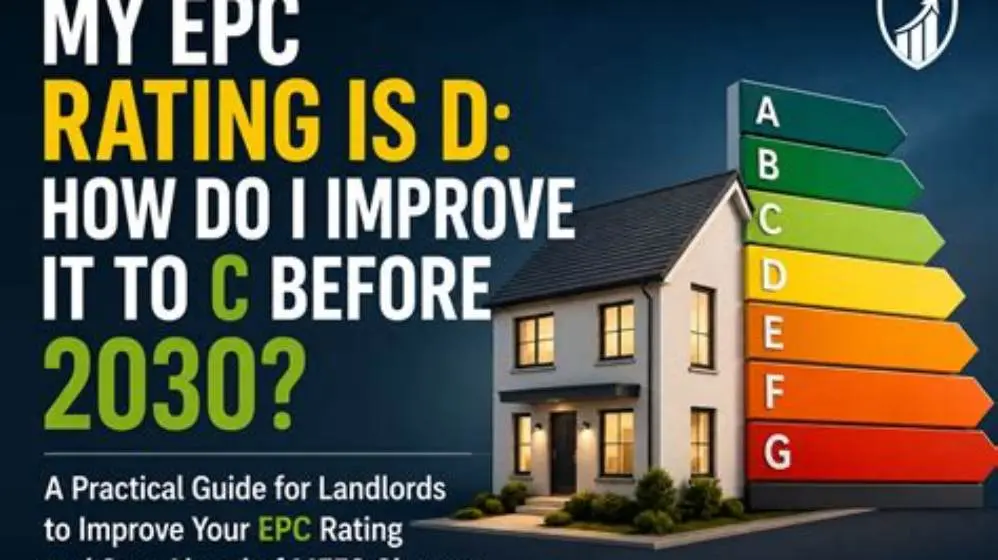
To improve your EPC rating from D to C, focus on four key upgrades: loft insulation to at least 270mm, cavity wall insulation, upgrading your boiler to an efficient model, and installing low-energy lighting. This sequence typically delivers the most reliable jump in rating.
On this page
- Quick recap
- Which home improvements most impact EPC rating between D and C
- The order to implement upgrades for best EPC gain
- Approximate costs and funding schemes available for EPC C upgrades
- Common barriers or pitfalls to reaching EPC C
- How to improve EPC rating from D to C step-by-step
- Additional tips to ensure your EPC improvement project succeeds
- Quick questions
Quick facts
- Loft insulation depth
- 270mm minimum
- Wall insulation type
- Cavity or solid wall
- Boiler efficiency
- 90%+ seasonal efficiency
- Lighting upgrade
- LED fittings
- Typical EPC rating jump
- D to C
Quick recap
- Loft insulation to 270mm or more is the most effective first step.
- Cavity wall insulation complements loft insulation and boosts efficiency.
- Boiler upgrades yield significant savings but depend on current system age.
- Low-energy lighting is low cost and quick but provides smaller EPC gains.
- Check eligibility for grants like ECO4 and Boiler Upgrade Scheme early.
Which home improvements most impact EPC rating between D and C
Improving from EPC D to C usually requires addressing heat loss and heating efficiency. Loft insulation upgraded to at least 270 millimeters of mineral wool or equivalent reduces roof heat loss by roughly 25-30%, the largest single improvement in most UK homes with existing thin insulation. This thickening makes the most immediate impact on the EPC score.
Cavity wall insulation is next most effective but depends on your property having cavity walls typically filled with mineral wool, polystyrene beads, or foam injections. It can cut heat loss through walls by around 35%, but effectiveness varies with installation quality.
Replacing an old boiler (typically over 10 years or below 70% efficiency) with a modern condensing boiler rated at 90% seasonal efficiency or above removes a major energy waste factor. This lowers fuel bills and improves thermal efficiency, significantly boosting the EPC rating.
Switching all lighting to low-energy LED bulbs can improve the EPC score marginally but at very low cost and disruption. The cumulative effect of these upgrades usually pushes the EPC from D to C. If that sounds like your situation, read up on characteristics of green homes next.
The order to implement upgrades for best EPC gain
The most cost-effective and reliable EPC improvement sequence begins with upgrading loft insulation to at least 270mm depth. Thicker insulation means less heat loss through the largest vulnerable surface in the home.
Next, cavity wall insulation should be installed if your walls are suitable and unfilled. If you have solid walls, external or internal insulation may be necessary but costs and disruption rise sharply.
Third, replace your boiler with a modern, high-efficiency condensing model if your current one is old or inefficient. This step has the largest impact on heating bills but requires upfront spend and professional installation. For the detail, see our notes on does a heat pump improve your epc rating.
Install LED lighting to capture small but cumulative savings and improve your EPC score with minimal cost and no disruption.
Following this order prioritises measures that save the most energy and improve your EPC rating with a clear cost-benefit progression.
In some cases, the order of upgrades may need adjustment depending on your home's specific condition. For example, if your loft already has sufficient insulation but your boiler is very old and inefficient, prioritising boiler replacement first can deliver a larger immediate EPC boost and energy saving. Conversely, if your walls are solid rather than cavity, insulation options become more complex and costly, so loft insulation and boiler upgrades might be the initial focus. We cover factors influencing epc after tank upgrade in its own article.
It is also important to consider seasonal timing when scheduling these upgrades. Loft and cavity insulation are best installed during warmer months to avoid moisture issues, while boiler replacements can be done year-round but may require temporary heating arrangements during winter. Planning the sequence with these factors in mind can reduce disruption and ensure smooth progress.
- Measure existing loft insulation depth.
- Install or top up loft insulation to 270mm minimum.
- Check cavity walls for existing insulation.
- Install cavity wall insulation if needed.
- Assess boiler age and efficiency.
- Arrange boiler replacement if inefficient.
- Replace all lighting with LED bulbs.

Attic Measuring Rulers - Attic Insulation R-Value Ruler,Thick Card Stock,25
Measures insulation thickness with clear markings on a 25 inch ruler to help assess current loft insulation depth.
Approximate costs and funding schemes available for EPC C upgrades
Loft insulation costs vary but expect around £300-£500 for topping up to 270mm in an average UK semi-detached home (around 70-90 m² roof area). ECO4 grants may cover some or all of this if your property qualifies under eligibility criteria such as low income or vulnerable residents.
Cavity wall insulation typically costs between £500 and £1,500, depending on the house size and installation complexity. Grants under the ECO4 scheme or the Warm Home Discount can reduce out-of-pocket expenses significantly. We go through fuel efficiency impact on epc rating step by step elsewhere on the site.
A new high-efficiency condensing boiler installation usually ranges from £2,500 to £4,500, including labour and system upgrades. The Boiler Upgrade Scheme provides a government grant of up to £5,000 towards heat pumps and certain boilers, but eligibility and amounts vary.
Replacing lighting with LEDs costs under £100 for a whole home and yields quick returns. No grants typically cover lighting but it’s a low-cost improvement.
Checking grant eligibility early can influence the upgrade sequence and budgeting to avoid paying full prices unnecessarily. If that sounds like your situation, read up on how to check the epc rating of a property next.
| Upgrade | Typical cost (£) | Grant availability | Notes |
|---|---|---|---|
| Loft insulation (to 270mm) | 300-500 | ECO4 possible | Depends on property size |
| Cavity wall insulation | 500-1500 | ECO4 and Warm Homes Plan | Only for suitable cavity walls |
| Boiler replacement | 2500-4500 | Boiler Upgrade Scheme | Depends on system type |
| LED lighting upgrade | <100 | Not typically | Low cost, quick impact |
Common barriers or pitfalls to reaching EPC C
Many homes aiming to move from EPC D to C face structural limitations such as solid walls where cavity insulation is impossible without costly external or internal insulation. This can push costs beyond typical budgets.
Incorrect or incomplete loft insulation topping, such as uneven coverage or compressing insulation below recommended depth, limits thermal gains and EPC improvement. Measuring insulation thickness before and after is essential.
Old boilers with incompatible pipework or lack of space for new units can require additional plumbing or system changes, increasing cost and complexity beyond simple replacement.
Ignoring simple measures like draught-proofing, low-energy lighting, and heating controls can stall progress on EPC rating improvements despite major upgrades being done elsewhere.
Failing to check eligibility for grants before starting work may result in missing out on significant financial help, making projects unaffordable.
Another common pitfall is neglecting ventilation when upgrading insulation. Sealing and insulating without adequate ventilation can lead to condensation build-up and mould growth, which negatively impacts both property health and EPC rating. Ensuring that loft hatches, air bricks, and extractor fans are correctly maintained or upgraded is essential to avoid these issues.
Some homeowners also underestimate the impact of draughts and air leaks. Even with good insulation and an efficient boiler, unsealed gaps around windows, doors, and floorboards can cause significant heat loss. Simple draught-proofing measures often pay for themselves quickly and help achieve the EPC C target by improving overall thermal performance.
How to improve EPC rating from D to C step-by-step
Start by assessing your home's current insulation status. Use an insulation depth gauge to measure how thick the loft insulation is across multiple points, aiming for at least 270 millimetres. If below standard, plan to top up or replace.
Arrange a professional survey for your walls to determine cavity presence and condition. If unfilled cavities are present, schedule cavity wall insulation installed by certified installers to avoid moisture issues.
Evaluate your heating system age and efficiency. Boilers older than 10 years or with efficiency below 70% seasonal require upgrading to a condensing boiler with a rating above 90%. Seek installers certified under the Gas Safe Register.
Replace all incandescent or halogen bulbs with LED equivalents throughout the home. This low-cost step needs no professional help and immediately reduces electricity used for lighting.
Following these steps in order ensures maximum impact on energy savings and EPC rating improvement.
- Measure loft insulation depth using a gauge.
- Top up loft insulation to at least 270mm.
- Survey walls for cavity and arrange insulation.
- Check boiler efficiency and plan replacement.
- Switch to LED lighting throughout home.
Additional tips to ensure your EPC improvement project succeeds
Prioritise professional assessments for insulation and boiler suitability. DIY guesses often miss hidden problems that reduce upgrade effectiveness and EPC score gains.
Keep heating system controls updated and well-maintained. Adding thermostatic radiator valves and smart controls can improve efficiency beyond physical upgrades alone.
Consider combining grants to maximise funding, such as ECO4 for insulation alongside the Boiler Upgrade Scheme for heating system replacement.
Avoid shortcuts like partial loft insulation or poor-quality materials which can lead to damp, mould, and reduced thermal performance.
Keep records of all upgrades and ask your energy assessor to re-inspect and issue an updated EPC to confirm your improved rating.
After completing upgrades, monitoring your home's energy consumption can provide valuable feedback. Comparing heating bills before and after improvements helps confirm performance gains and highlights any areas needing further attention, such as thermostat settings or radiator balancing.
Engaging your energy assessor early and throughout the project ensures that all changes are correctly recorded and reflected in the updated EPC. Some assessors offer interim visits to verify work quality, helping prevent surprises at the final assessment stage.
Staying informed about evolving regulations and government schemes can open additional funding opportunities or incentives for further efficiency improvements beyond EPC C, supporting ongoing energy savings and property value enhancement.
- Professional survey: identify hidden insulation gaps.
- Heating controls: add TRVs and timers for savings.
- Grant combination: check overlapping eligibility.
- Material quality: use accredited insulation products.
Quick questions
Can I get an EPC C rating without replacing my boiler?
It is possible but depends heavily on how insulated and draught-proof your home is. Upgrading loft and wall insulation can sometimes suffice, but an old boiler often prevents reaching EPC C.
How do I know if my walls are suitable for cavity insulation?
A professional survey is necessary. Homes built after 1920 in the UK generally have cavity walls, but thickness and condition vary. Avoid DIY guesses as incorrect installation risks damp.
What is the best way to measure loft insulation depth accurately?
Use an insulation depth gauge or ruler at multiple points in the loft, avoiding compressed or disturbed areas, to get an average depth reading necessary for planning upgrades.
Are there risks in adding too much insulation in the loft?
Yes, compressing insulation reduces its effectiveness, and blocking ventilation above eaves can cause damp. Always follow manufacturer guidelines and maintain ventilation.
Do I need to update my EPC after each improvement?
While not legally required, updating your EPC after upgrades documents the improvement and can increase property value or qualifying for funding.