The UK government currently recommends loft insulation thickness of around 270mm to 300mm to meet energy efficiency standards. At 270mm, your insulation is at the lower end of the recommended range, meaning it generally complies but may miss higher performance targets that affect grant eligibility and savings.
On this page
- Quick recap
- Current UK recommended loft insulation thickness in millimetres
- How 270mm loft insulation compares to this recommendation
- Implications for energy savings and eligibility for grants or schemes
- How to measure and check your loft insulation thickness accurately
- Types of loft insulation and how their thickness affects performance
- When and why you might need to upgrade beyond 270mm loft insulation
- Quick questions
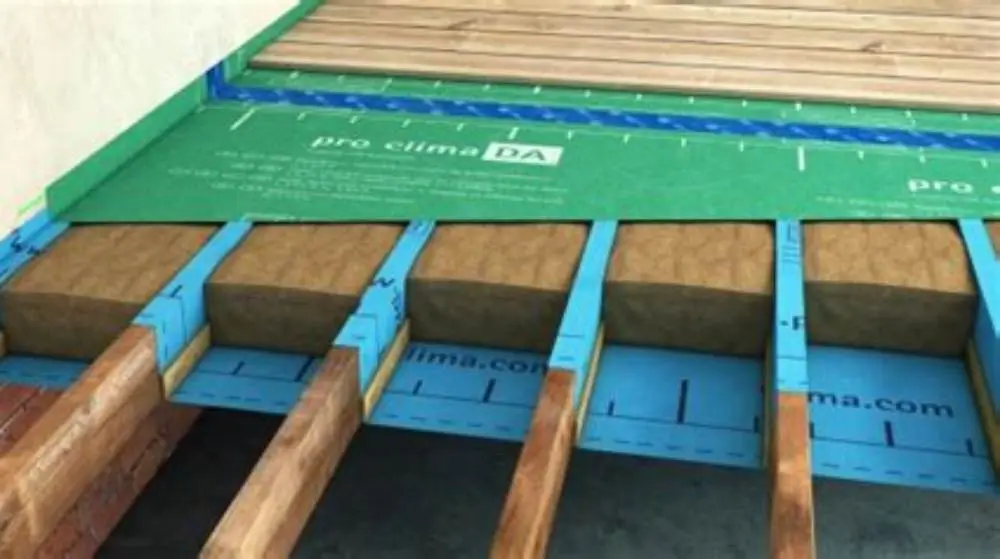
Part of our guide on how to insulate a suspended timber floor
Quick facts
- Recommended thickness
- 270-300mm
- Common insulation depth
- 100-200mm old lofts
- Typical R-value range
- 3.5-3.8
m²K/W - Minimum for ECO4 grants
- 270mm or more
- Savings on bills
- up to 25% heating
Quick recap
- UK recommended loft insulation thickness is 270-300mm.
- 270mm meets minimum standards but may limit some grant options.
- Thicker insulation yields better energy savings and reduces drafts.
- Check your insulation’s actual depth and material performance.
- Upgrading below 270mm is often cost-effective and improves EPC ratings.
Current UK recommended loft insulation thickness in millimetres
Official UK energy efficiency standards for loft insulation typically recommend a thickness between 270mm and 300mm for mineral wool or equivalent materials. This guidance is intended for new installations or upgrades to reach a thermal resistance (R-value) around 3.5 to 3.8 m²K/W, balancing cost and performance.
This range depends on the insulation type, loft conditions, and building regulations aimed at reducing heat loss and lowering energy bills. Building England’s Green Homes Grant and schemes like ECO4 support installing insulation to this thickness or more to qualify for funding.
Older lofts often have between 100mm and 200mm of insulation, which is insufficient under current standards. Increasing insulation depth to at least 270mm typically yields measurable improvements in energy ratings.
How 270mm loft insulation compares to this recommendation
With 270mm of insulation, your loft meets the minimum recommended thickness in the UK but is at the threshold rather than exceeding it. This means you comply with current standards but may not maximize energy savings. For the detail, see our notes on is rockwool good for thermal insulation.
Some grant schemes and incentives require exceeding 270mm or meeting specific R-values, so while your loft insulation passes basic requirements, it may not qualify for all funding options.
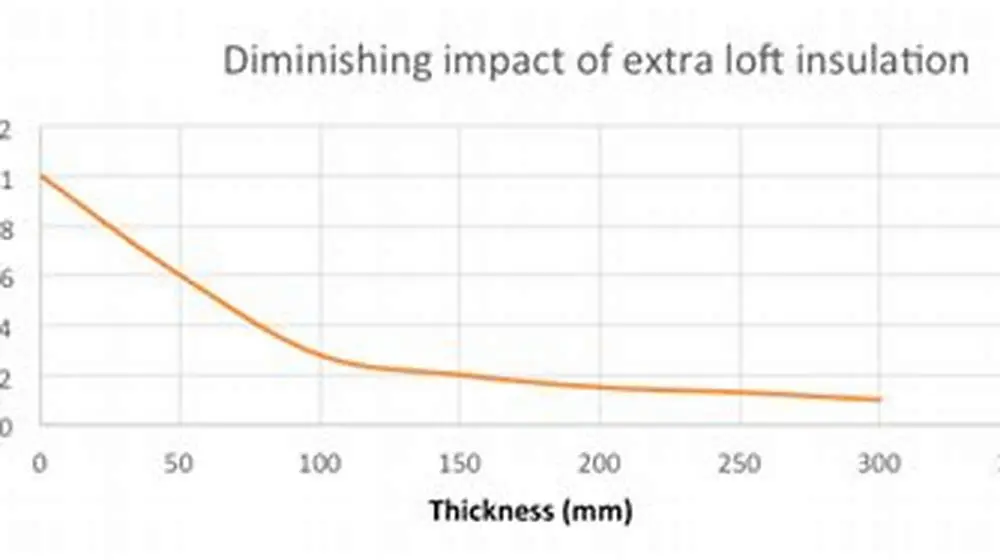
Insulation beyond 270mm can improve thermal resistance slightly, but gains diminish after about 300mm due to physics of heat transfer. Certain materials with higher thermal performance can achieve better insulation at thinner depths, but mineral wool at 270mm remains a benchmark.
| Insulation Thickness | R-value Approx. | Energy Saving Impact | Grant Eligibility |
|---|---|---|---|
| 100-150mm | 1.3-1.8 m²K/W | Low | Usually no |
| 200-250mm | 2.7-3.2 m²K/W | Moderate | Rarely |
| 270mm | 3.5 m²K/W approx. | Good | Meets minimum |
| 300mm+ | 3.8+ m²K/W | Best | Likely yes |

Aimee’s Workshop Attic Anchor
Helps you measure insulation depth accurately with a 24 inch (610 mm) ruler, suitable for checking if your insulation meets the recommended thickness.
Implications for energy savings and eligibility for grants or schemes
Installing 270mm of loft insulation can reduce heating bills by up to 25%, depending on house size, heating system, and climate. This thickness improves your EPC rating and reduces drafts noticeably. People in this spot often ask about 50mm PIR board for room in roof as well.
Grant schemes such as ECO4 and the Boiler Upgrade Scheme often require loft insulation to be at least 270mm thick or equivalent in thermal performance to qualify for funding. Falling below this level can disqualify applications or reduce available support.
If your current insulation is under 270mm, upgrading to this thickness is a cost-effective way to lower bills and access grants. Choosing materials with better thermal conductivity may allow thinner layers but always check scheme conditions.
Be aware that some older homes have restricted loft access or ventilation needs that affect insulation installation, influencing actual performance and eligibility. Before you commit to anything, it is worth looking at best insulation for small lofts.
- Energy savings: up to 25% heating cost reduction
- Grant eligibility: usually requires 270mm or higher
- EPC impact: improves rating towards band C or better
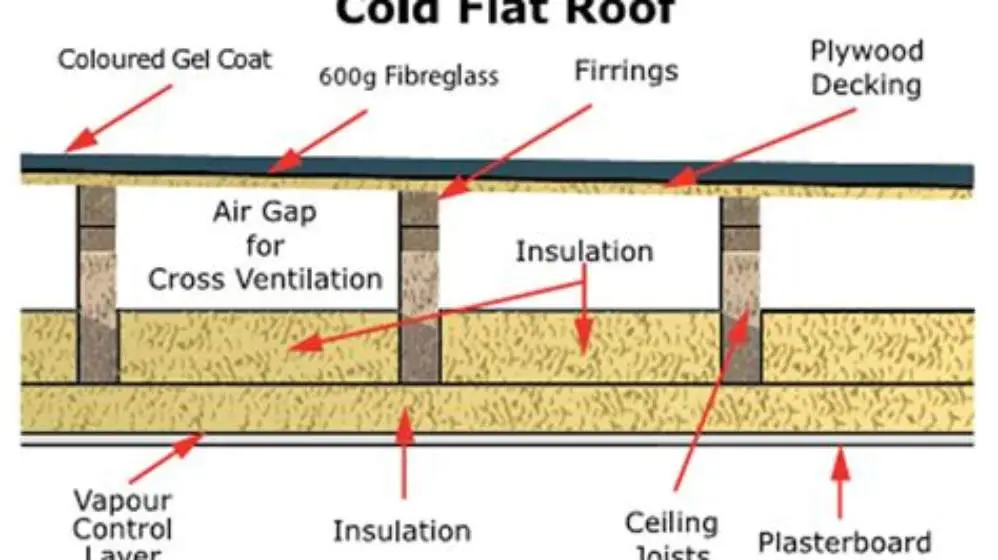
- Installation: must maintain loft ventilation
- Material choice: affects thickness vs. thermal performance
How to measure and check your loft insulation thickness accurately
To confirm your loft insulation thickness, use a metal ruler or measuring probe inserted vertically into the insulation without compressing it. Measure at multiple points because insulation depth can be uneven.
Record the average of these measurements to assess compliance with 270mm recommendations. Make sure the insulation covers joists fully and does not have gaps or compressed areas that reduce effectiveness.
If uncertain, professional thermal imaging or energy assessment services can help verify insulation performance rather than just thickness. The other half of this decision is meeting r-value requirements.
This step is essential before applying for grants or planning upgrades to avoid costly mistakes.
- Clear a small area of loft debris where you want to measure.
- Insert a ruler or probe gently through the insulation to the loft floor.
- Take measurements at 3 to 5 locations across the loft space.
- Calculate the average thickness from your readings.
- Note any compressed or disturbed sections separately.
Types of loft insulation and how their thickness affects performance
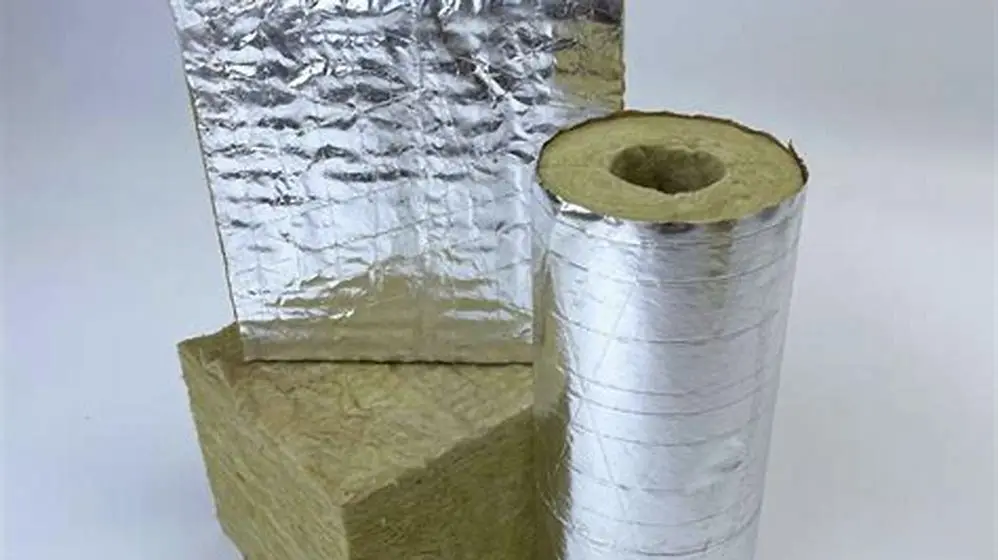
Mineral wool is the most common loft insulation in the UK, with recommended thickness of 270-300mm to achieve target R-values. Its thermal conductivity ranges between 0.035 and 0.04 W/m·K.
Wood fibre and sheep wool insulations have similar recommended thicknesses but sometimes require more depth due to slightly lower insulating properties. The other half of this decision is minimizing disruption during insulation retrofit.
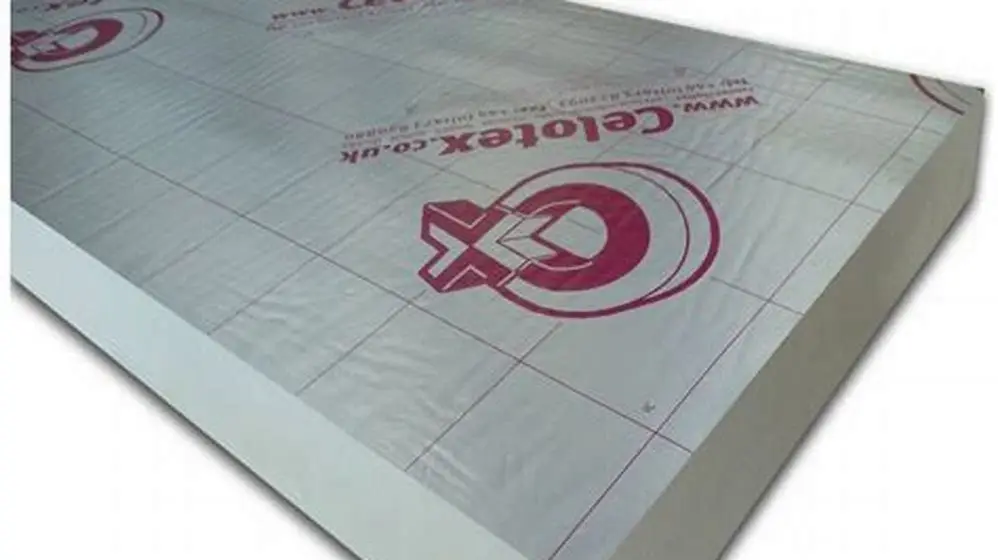
Foam boards or spray foam products achieve higher R-values per millimetre, meaning thinner layers can meet or exceed 270mm of mineral wool performance. However, these are less common for loft insulation due to cost and ventilation concerns.
Choosing the right insulation depends on loft conditions, budget, and compliance with UK building regulations.
| Material | Typical Thickness for 270mm Wool Equivalent | Approximate Lambda (W/m·K) |
|---|---|---|
| Mineral wool | 270mm | 0.035-0.04 |
| Sheep wool | 280-300mm | 0.038-0.04 |
| Wood fibre | 300mm | 0.04-0.045 |
| Polyurethane foam board | 120-150mm | 0.022-0.025 |
| Spray foam | 120-150mm | 0.02-0.025 |
When and why you might need to upgrade beyond 270mm loft insulation
Upgrading insulation beyond 270mm can be justified if you want to maximise energy savings, future-proof your home, or improve EPC ratings for resale or rental. Gains beyond 300mm are smaller but still beneficial in cold climates or poorly insulated homes.
Higher thickness reduces heat loss, cuts condensation risk, and lowers drafts, enhancing comfort and reducing heating demand.
Grant schemes sometimes target deeper upgrades for social housing or fuel-poor households. Check if your property qualifies and whether thicker insulation or better materials yield the best return on investment.
At this point, considering the right insulation material and professional installation ensures compliance with fire safety and ventilation regulations.
Quick questions
Can I install less than 270mm of loft insulation to save money?
Installing less than 270mm generally means poorer thermal performance, higher energy bills, and missing out on most UK grant schemes. It's usually better to invest up to or beyond 270mm to meet minimum standards.
Does the type of insulation affect whether 270mm is enough?
Yes, materials with lower thermal conductivity may need thicker layers than 270mm to perform equally. Conversely, high-performance foams may achieve target R-values with less thickness.
How do I know if my loft insulation qualifies for ECO4 or other schemes?
You must measure thickness accurately and check insulation type. Schemes typically require at least 270mm thickness or equivalent R-value, plus proper installation and safety compliance.
Is professional installation required for loft insulation upgrades?
Not always, but professionals ensure correct thickness, loft ventilation, fire safety, and grant compliance. DIY can be suitable if you measure and install carefully.
Will loft insulation alone solve cold drafts in my home?
Insulation reduces heat loss but does not seal drafts caused by gaps or poor sealing. Combining insulation upgrades with draught proofing gives best results.