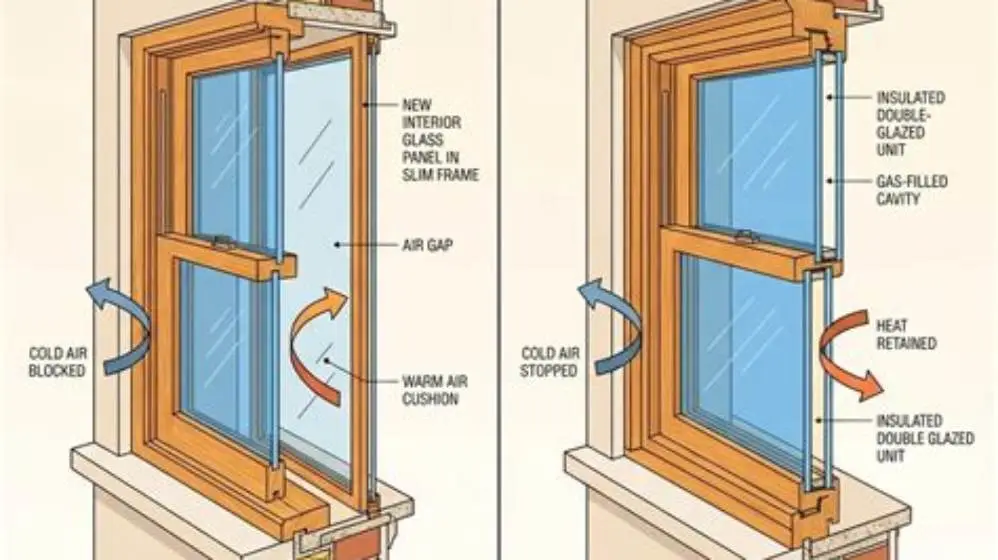
Secondary glazing improves energy efficiency by adding a second pane inside the existing window, typically cutting heat loss by 35-50%. Double glazing replaces the original window and can reduce heat loss by 40-60%, but risks harming period features. For period homes, secondary glazing balances energy savings with heritage preservation better.
On this page
- Quick recap
- Energy efficiency differences between secondary and double glazing
- Impact on period home heritage and character
- Cost and installation considerations for period homes
- Secondary glazing vs double glazing for period homes
- What grants and funding support glazing upgrades in period homes
- How to plan a staged retrofit balancing cost, disruption, and savings
- Quick questions
Part of our guide on cost-effective retrofit strategies
Quick facts
- Heat loss cut - secondary glazing
- 35-50%
- Heat loss cut - double glazing
- 40-60%
- Typical secondary glazing gap
- 12-20 mm
- Double glazing thickness
- 24-28 mm
- Installation disruption
- Low to high
Quick recap
- Secondary glazing offers 35-50% heat loss reduction with heritage protection
- Double glazing achieves 40-60% heat loss reduction but risks character loss
- Secondary glazing is usually less costly and disruptive to install
- Double glazing may qualify for some grants but requires planning permission
- Choose secondary glazing for listed homes or when maintaining original windows
Energy efficiency differences between secondary and double glazing
Secondary glazing usually reduces heat loss through windows by 35-50%, depending on the air gap thickness (commonly 12-20 mm) and the type of glass used. It adds a new sealed pane inside the existing window, improving thermal insulation without removing original glazing or frames.
Double glazing cuts heat loss by about 40-60%, influenced by spacer bar quality, glass coatings, and thickness (commonly 24-28 mm). It replaces old windows entirely with a sealed unit, potentially offering better airtightness but removing original window materials.
Air gaps matter: a larger gap improves insulation but can increase condensation risk with secondary glazing. Double glazing’s sealed gap is factory-controlled, typically with inert gas filling, offering consistent performance.
Secondary glazing’s insulation gain depends on the condition of existing windows. If original windows are very poor, secondary glazing’s absolute gain is more notable. For double glazing, the gain depends on its U-value, often between 1.6 and 2.0 W/m²K. If that sounds like your situation, read up on anatomy of a zero carbon home next.
| Measure | Secondary glazing | Double glazing |
|---|---|---|
| Heat loss reduction | 35-50% | 40-60% |
| Typical air gap | 12-20 mm | 24-28 mm |
| U-value range | 1.8-2.4 W/m²K | 1.2-2.0 W/m²K |
| Dependence on existing window | High | Low |
| Condensation risk | Moderate if gap <15 mm | Low if sealed properly |
Impact on period home heritage and character
Secondary glazing preserves original window frames and glass, which is vital for listed or conservation-area homes. It is reversible and usually does not require planning permission, keeping period features intact.
Double glazing installation requires removal of original window materials, which risks destroying historic joinery and glazing patterns. This can lower a home's heritage value and impact its character, especially if inappropriate modern frames are used.
Many heritage bodies recommend secondary glazing for period properties precisely to protect original fabric. Some local authorities refuse double glazing for listed buildings except in exceptional cases. We cover planning eco home budgets in its own article.
Secondary glazing can be less visible internally, especially if slim-profile frames are chosen, maintaining visual authenticity better than double glazing, which often has thicker frames and sealed units.
In some cases, secondary glazing can be tailored to match the period style by using slim-profile frames and traditional glazing bars inside the secondary units, further blending with the original window aesthetics. This approach minimizes visual intrusion and maintains daylight levels, which can be severely affected by bulkier double glazing frames.
Double glazing’s impact on character is not only a matter of frame removal but also thermal movement and condensation patterns. Modern sealed units can cause stress on older timber frames leading to warping or paint failure, which undermines both appearance and fabric longevity. Such issues often only become noticeable after some years, necessitating costly repairs or replacements. People in this spot often ask about preserving window aesthetics as well.
- Secondary glazing: preserves original windows
- Secondary glazing: reversible installation
- Double glazing: often better airtightness
- Secondary glazing: slightly bulkier inside
- Double glazing: removes original fabric
- Double glazing: may need planning permission
Cost and installation considerations for period homes
Secondary glazing installation typically costs £150-£300 per window, depending on size and complexity. It is less disruptive as it fits inside existing frames without removal, often completed in one day per window.
Double glazing costs usually run higher, about £400-£700 per window, reflecting manufacture and installation of new units and frames. Installation can be disruptive, requiring removal and refitting of window frames, sometimes scaffold access.
Secondary glazing suits phased retrofit plans well, allowing homeowners to spread costs and reduce disruption over time. Double glazing tends to be an all-or-nothing project. We go through retrofit plan sequence uk step by step elsewhere on the site.
Secondary glazing can improve EPC ratings enough to gain some grants under schemes like ECO4, but double glazing may qualify for additional funding if it meets minimum U-value specs (often 1.6 W/m²K or better).
Installation time for secondary glazing is generally shorter, with each window often completed in a few hours, meaning less disruption to household routines. This suits homeowners who want immediate improvements without moving out or extensive scaffolding. In contrast, double glazing installation can take several days per window when factoring in frame removal, fitting, and finishing work such as repainting or plastering.
Cost variations for both glazing types also depend on window complexity. For example, bay or sash windows common in period properties require bespoke secondary glazing units that may increase costs by 20-30%, whereas straightforward casements are cheaper. Double glazing of such windows often demands custom joinery and specialist craftsmanship, potentially doubling the standard cost estimates. Before you commit to anything, it is worth looking at future homes standard what it means for new build buyers.
| Factor | Secondary glazing | Double glazing |
|---|---|---|
| Typical cost per window | £150-£300 | £400-£700 |
| Installation time per window | 1 day or less | 1-3 days |
| Disruption level | Low | Medium to high |
| Planning permission risk | Low | High for listed buildings |
| Suitability for phased retrofit | Ideal | Less flexible |
Secondary glazing vs double glazing for period homes
The choice between secondary glazing and double glazing hinges on prioritising heritage preservation or maximum energy savings. Secondary glazing offers 35-50% heat loss reduction with nearly no impact on original windows, ideal for conservation.
Double glazing provides a more sealed system with 40-60% heat loss reduction but at the cost of removing original windows and risking loss of period authenticity.
For most period homes, especially listed buildings, secondary glazing is preferable. It allows staged retrofit, lower installation disruption, and maintains character while improving warmth and bills noticeably.
If your windows are modern replacements or unprotected by listing, double glazing could deliver better comfort and savings, but you must weigh these gains against cost and heritage loss.
| Aspect | Secondary glazing | Double glazing |
|---|---|---|
| Heat loss reduction | 35-50% | 40-60% |
| Heritage impact | Minimal | Significant |
| Installation disruption | Low | High |
| Cost | Lower | Higher |
| Planning permission | Rarely needed | Often needed for listed |
| Suitability for phased retrofit | Excellent | Poor |
- Secondary glazing: preserves heritage
- Secondary glazing: less disruptive
- Double glazing: higher thermal performance
- Secondary glazing: slightly less efficient
- Double glazing: costly installation
- Double glazing: heritage risk
What grants and funding support glazing upgrades in period homes
Under current UK schemes like ECO4 and the Boiler Upgrade Scheme, secondary glazing and double glazing can qualify for funding if they improve a home's energy performance significantly.
The key criterion is the U-value: double glazing must typically achieve better than 1.6 W/m²K to meet grant standards. Secondary glazing grants depend on overall home efficiency improvements and existing window conditions.
Listed and period homes may face additional restrictions qualifying for grants. Some schemes require landlord consent or local authority approval for listed properties before installing double glazing.
Careful documentation of the existing window type, energy performance certificates, and planned improvements is essential to secure funding for either glazing type in period homes.
- ECO4: targets low-income households and landlords with energy-saving installations
- Boiler Upgrade Scheme: primarily for heating but may support whole-house retrofit including glazing
- Local authority grants: vary widely, check heritage and conservation conditions first
How to plan a staged retrofit balancing cost, disruption, and savings
Start with a home energy audit to identify the worst heat loss points and assess window conditions. This directs whether secondary or double glazing fits your retrofit goals.
Plan glazing upgrades in phases, prioritising the most exposed or draughty windows first. Secondary glazing’s low disruption suits phased work better than double glazing, which is disruptive and costlier per install.
Incorporate insulation, ventilation, and heating upgrades with glazing improvements to maximise savings and comfort. Each stage can leverage different available grants.
Keep detailed records of window specifications, installation dates, and U-values to support future grant applications and EPC improvements.
When planning a staged retrofit, consider weather conditions and seasonal temperature variations. Installing secondary glazing in colder months can immediately reduce heat loss and carbon emissions, maximizing the seasonal benefit and comfort, whereas delaying double glazing installation until spring might reduce disruption risks such as condensation-related damage during cold snaps.
A successful retrofit plan should also include monitoring energy bills before and after each phase. For example, after adding secondary glazing to the most exposed windows, tracking a 15-20% reduction in heating energy use over winter confirms effectiveness and informs prioritisation of next steps.
Be aware that ventilation strategies must adapt with glazing upgrades. Secondary glazing can allow easy trickle vents to remain functional, but double glazing installations often require integrated ventilation systems to prevent moisture build-up, which adds complexity and cost to staged retrofit plans.
- 1. Conduct an energy audit focusing on window performance
- 2. Decide on glazing type per window based on heritage status and condition
- 3. Apply for grants with documented specifications
- 4. Schedule installation to minimise occupancy disruption
- 5. Monitor impact on energy bills and comfort after each phase
For most period homes, secondary glazing strikes the best balance of energy savings, heritage preservation, and cost-effectiveness.
Quick questions
Can secondary glazing reduce noise as well as heat loss?
Yes, secondary glazing typically reduces external noise by 20-30 decibels depending on glass type and gap thickness, improving comfort in noisy areas while preserving period windows.
Is double glazing always better for energy savings in period homes?
Not always. While double glazing generally offers higher thermal efficiency, the loss of original window fabric and potential installation issues can offset benefits, especially in listed buildings.
Do I need planning permission to install secondary glazing on a listed period home?
Usually not, because secondary glazing is reversible and does not alter the external appearance significantly. However, check with local authorities since rules can vary.
How does condensation behave differently between secondary and double glazing?
Secondary glazing can have moderate condensation risk if the air gap is under 15 mm and ventilation is poor. Double glazing, when properly sealed with inert gas, has lower condensation risk.
What maintenance do secondary glazing units require?
Periodic cleaning and checking seals or fixings for damage are usually required. Unlike double glazing, secondary units are accessible for repair without replacing the entire window.