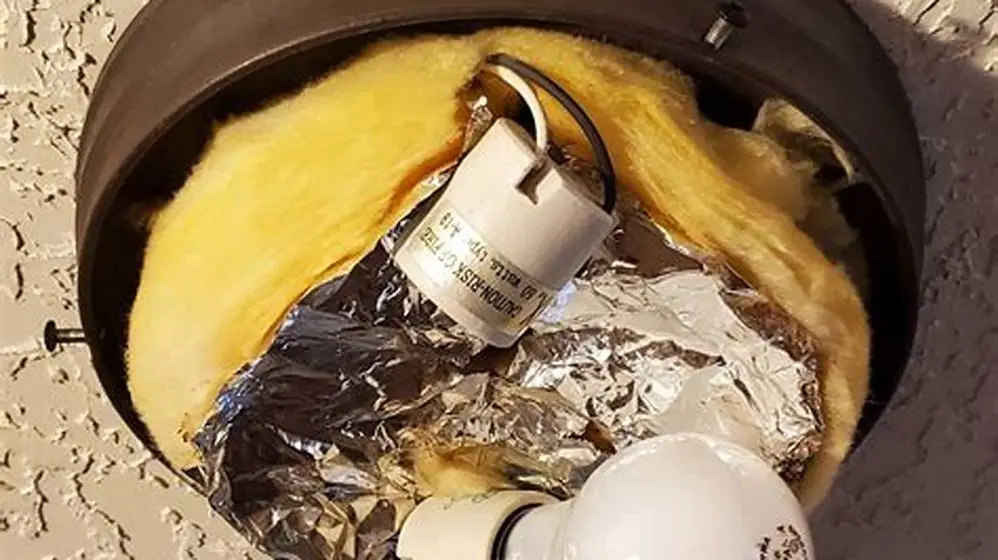
You should only place insulation inside or in direct contact with a light fixture if it is IC-rated, meaning rated for Insulation Contact. Non-IC fixtures risk overheating and fire if insulated.
On this page
- Quick recap
- What insulation contact (IC) rating means
- How to identify IC-rated fixtures
- Risks of insulating non-IC fixtures
- How to inspect existing fixtures for insulation compatibility
- Should there be insulation inside a light fixture
- Summary comparison of IC-rated vs. non-IC fixtures for insulation
- Quick questions
Part of our guide on materials for floor insulation
Quick facts
- IC Rating
- Required for insulation contact
- Clearance for non-IC
- Typically 3 inches
- Fire risk
- High if non-IC insulated
- Inspection method
- Label or visual check
- Common fixture types
- IC/non-IC rated
Quick recap
- Only IC-rated fixtures allow insulation contact safely.
- Check fixture labels or documentation for IC rating.
- Non-IC fixtures must have clearance from insulation.
- Inspect fixtures visually for seals or labels.
- Installing insulation contact requires specific fixture types.
What insulation contact (IC) rating means
An IC rating indicates that a light fixture is designed and tested to safely have insulation in direct contact without causing overheating. This involves specific design features such as heat-resistant housing and thermal protection.
IC-rated fixtures prevent heat buildup that can lead to fires when surrounded by insulation materials, which trap heat. This rating depends on compliance with safety standards ensuring the fixture can handle typical household insulation materials without risk.
Without this rating, insulating around or inside a fixture can cause the fixture’s components to exceed safe temperatures, risking damage or ignition. IC rating is therefore a critical specification to find on any light fitted in insulated ceilings or walls.
The IC rating also considers the type of insulation material that can come into contact with the fixture. For example, some fixtures are tested only with typical fiberglass or cellulose insulation; contact with spray foam or other materials may require additional precautions or different fixture ratings. We go through how to clean external wall insulation step by step elsewhere on the site.
The IC rating often specifies maximum ambient temperature conditions under which the fixture can safely operate. This means that in very hot attic spaces or where multiple fixtures are clustered, even IC-rated fixtures might need additional ventilation or spacing to prevent premature failure or fire risk. Always check manufacturer guidelines for these limits.
How to identify IC-rated fixtures
The simplest way to identify if a fixture is IC-rated is to look for a label or stamp on the fixture itself or its packaging. Manufacturers usually mark fixtures clearly with 'IC' or 'IC-rated' plus compliance codes.
If the fixture is recessed, the housing may have a visible label inside the trim or near the light socket. Documentation or installation instructions accompanying the fixture also state this rating. People in this spot often ask about how to get rid of old insulation as well.
In absence of a label, features like sealed or gasketed housings, or fixtures made specifically for insulation contact (such as some LED trims), suggest IC rating. When unsure, treat the fixture as non-IC to avoid risks.
In some cases, IC-rated fixtures may also include additional markings such as air-tight (AT) or insulation-contact/air-tight (IC/AT), indicating suitability for use in air-sealed ceilings. This is important in energy-efficient homes where air leakage through fixtures can be a concern.
If you encounter a fixture without any visible markings but suspect it might be IC-rated due to its design, a practical test is impossible and unsafe. Instead, cross-reference the model number with product listings or contact the manufacturer directly to obtain official certification details before proceeding with insulation contact. We cover does building insulation wear out and have to be replaced in its own article.
Risks of insulating non-IC fixtures
Putting insulation in contact with a non-IC-rated fixture commonly leads to overheating. These fixtures lack adequate heat dissipation design, causing internal temperatures to rise above safe limits.
Consequence examples include degraded wiring insulation, melting parts inside the fixture, and worst case, fire ignition in the ceiling cavity. These fires may smolder unseen before becoming apparent.
Non-IC fixtures typically require a safe clearance of around 3 inches (75mm) of air space around them to allow heat dissipation. Insulation should be kept well away within that zone to reduce risk. It helps to understand XPS boards on cold slab edges before going further.
How to inspect existing fixtures for insulation compatibility
Begin by turning off power and removing the fixture trim if possible to check for labels or markings. Look carefully for 'IC' or similar safety marks on the metal housing or inside parts.
If no label is visible, check the fixture’s model number and manufacturer details against online specifications or user manuals to confirm rating. When documentation is missing, treat the fixture as non-IC-rated.
Assess if there is physical clearance around the fixture inside the ceiling space. Insulation must maintain at least 3 inches distance from a non-IC fixture. If insulation is already touching, removal or fixture replacement is necessary. There is more on what type of insulation for roof in a separate guide.
- Turn off power to fixture for safety.
- Remove fixture trim to inspect housing.
- Locate and read fixture labels or stamps.
- Find model number and search online for IC rating.
- Measure clearance around fixture inside ceiling.
- If unclear, assume non-IC and do not insulate contact.
Should there be insulation inside a light fixture
Insulation should only be allowed inside or in direct contact with a light fixture if it is explicitly IC-rated. The IC rating confirms the fixture is designed to dissipate heat safely even when covered by insulation.
For non-IC fixtures, insulation must be kept away to preserve airflow and prevent dangerous heat buildup. Insulation inside these fixtures violates safety rules and can cause fires.
When installing insulation, confirm the fixture type first. If the fixture is not IC-rated and insulation contact is unavoidable, replacing the fixture with an IC-rated one is necessary. This replacement avoids costly and dangerous retrofits after installation.
There are exceptions where low wattage or LED fixtures produce minimal heat and may be safe with insulation contact even if not officially IC-rated. However, this is only valid if the fixture manufacturer explicitly states this in their specifications, as unverified assumptions can lead to hazardous conditions.
For example, a 10W LED recessed fixture with an aluminum heat sink and sealed housing might be safe to have insulation touch it. Always check the maximum fixture wattage for insulation contact allowed by the manufacturer, as exceeding this can negate the IC rating and cause overheating.
Another consideration is that some retrofit LED modules designed for non-IC housings reduce heat output enough to allow insulation contact, but they usually require the original housing to remain intact. Removing or replacing housings without ensuring IC rating can void warranties and safety certifications.
Summary comparison of IC-rated vs. non-IC fixtures for insulation
Understanding the differences between IC-rated and non-IC fixtures clarifies insulation decisions and improves safety. The table summarizes key features and requirements of each type.
| Aspect | IC-rated Fixture | Non-IC Fixture |
|---|---|---|
| Insulation contact allowed | Yes, direct contact safe | No, maintain 3 inch clearance |
| Risk of overheating | Low due to heat-resistant design | High without clearance |
| Labeling | Clearly marked 'IC' or 'IC-rated' | No IC label or rating |
| Installation cost | Usually higher upfront | Lower upfront but retrofit risk |
| Suitability for insulated ceilings | Ideal and safe | Not recommended |
Only insulation-compatible (IC-rated) fixtures should have insulation touching them; otherwise, risk is unacceptable.
Quick questions
Can I add insulation around non-IC rated recessed lights?
You must leave at least 3 inches of clearance around non-IC rated fixtures to prevent heat buildup. Insulating too close risks overheating and fire.
How do I find out if an old fixture is IC rated without documentation?
Look for labels inside the fixture housing or check the model number online. If uncertain, assume it is non-IC rated for safety.
What happens if insulation touches a non-IC rated light fixture?
The fixture can overheat, causing damaged wiring, component failure, or even a fire, especially if airflow is restricted.
Is it worth replacing non-IC fixtures to allow insulation contact?
Yes. Replacing with IC-rated fixtures improves safety and enables full insulation coverage, reducing heating bills.
Are LED light fixtures more likely to be IC rated?
Many modern LED fixtures are IC-rated due to lower heat output and improved thermal design, but always check the label.