Learn how heat pump hot water systems efficiently transfer heat and raise water temperature for your home.
A heat pump hot water system extracts environmental heat using refrigerant cycling to raise water temperature typically to 45-60°C, using less electricity than direct electric heating.
On this page
- The short version
- How heat pumps extract heat from air or ground
- Air source vs ground source efficiency
- The refrigerant cycle in heat pump water heaters
- Typical refrigerants used
- Typical output temperatures for hot water
- Balancing temperature and energy use
- Differences from electric hot water systems
- Planning a staged retrofit with a heat pump hot water system
- How heat pump hot water system works
- Questions people still ask
Part of our guide on how to retrofit a house
Understand the step-by-step heat transfer process and key components of heat pump hot water systems for efficient home heating.
| Typical output temp | 45-60°C |
|---|---|
| Heat source | Air or ground |
| Efficiency ratio | 3-4 COP |
| Electric system temp | 60-65°C |
| Common refrigerant | R134a or R410a |
The short version
- Heat pumps use refrigerant cycles to move heat from air or ground to water.
- Typical hot water output temperatures range 45-60°C, depending on setup.
- Heat pump systems have higher efficiency than electric immersion heaters.
- Understanding components helps in planning cost-effective retrofits.
- Monitoring temperature and pressure ensures system efficiency.
How heat pumps extract heat from air or ground
Heat pumps absorb heat energy from external air or ground even when temperatures are low. Air-source heat pumps usually extract heat from outdoor air between -15°C and 35°C. Ground-source systems take heat from soil or groundwater, which stays within a narrower temperature range around 7-12°C all year.
The heat extraction rate depends on the heat source temperature. Warmer sources yield better efficiency. For instance, extracting from 10°C ground is more efficient than from 0°C air. The pump circulates a fluid through underground loops or an air coil, gathering heat to transfer inside.
Extracted heat moves to the refrigerant cycle. Air-source units have fans to pull air past the evaporator coil. Ground loops rely on pumped water or antifreeze to carry heat. Noise and space requirements differ between these sources. Air units are easier to install but less consistent in colder months. Ground systems cost more but offer stable heat input.
Heat pumps also have a minimum operating temperature. Air-source heat pumps usually stop extracting heat efficiently below about -15°C. Below this, frost can form on the evaporator coil, requiring defrost cycles that reduce performance. Ground-source heat pumps avoid this with stable underground temperatures, typically 7-12°C, allowing continuous operation in cold climates. It helps to understand do heat pumps provide hot water before going further.
The heat extraction rate influences the system’s coefficient of performance (COP). For example, an air-source heat pump working at 10°C air temperature might achieve a COP of 3.5, meaning 3.5 kWh of heat output for every 1 kWh of electricity. At 0°C air temperature, the COP might drop closer to 2.5, reflecting reduced efficiency. Choosing the right system depends on typical local temperatures and heat demand.
Air source vs ground source efficiency
Air-source heat pumps have coefficient of performance (COP) around 3 at 10°C air temperature. This means for each kWh of electricity used, they deliver about 3 kWh of heat. Ground-source pumps often maintain COP above 4 due to steadier temperatures.
Installation disruption is higher for ground-source systems because of trenching or boreholes. Air-source units are usually mounted on walls or the ground. Your home's outdoor space and access influence which extraction method fits best.
The refrigerant cycle in heat pump water heaters
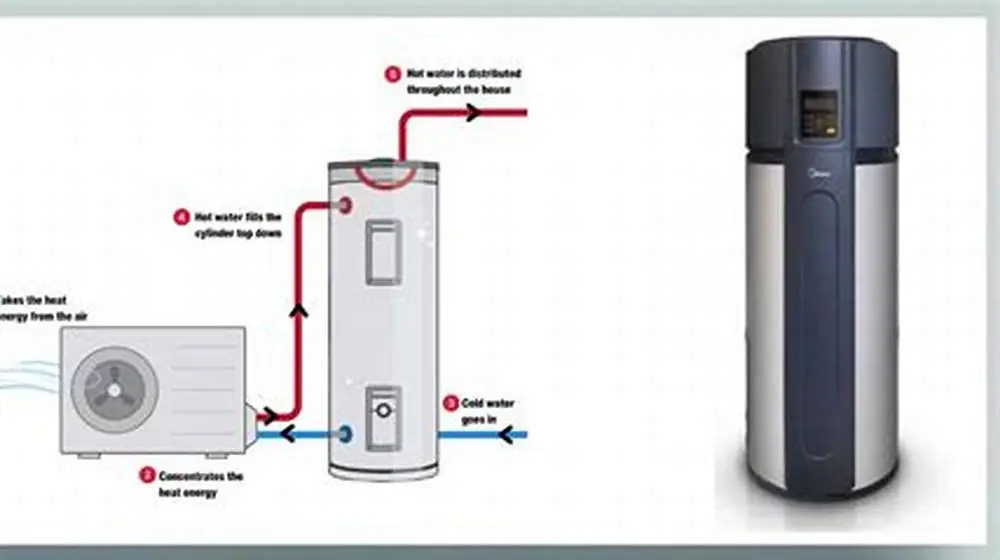
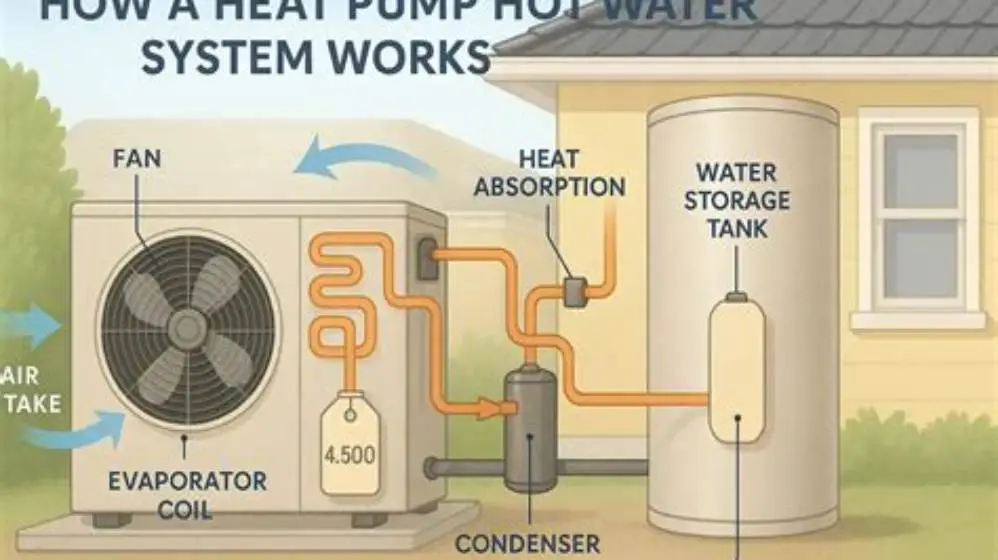
Heat pump hot water systems rely on a refrigerant cycle to move heat from the source to the water. The process involves four main parts: evaporator, compressor, condenser, and expansion valve.
In the evaporator, the refrigerant absorbs heat and evaporates at a low temperature and pressure. The compressor then raises the refrigerant's pressure and temperature, turning it into a hot gas. This hot gas flows to the condenser, where it transfers heat to the water in the cylinder. The refrigerant passes through the expansion valve, dropping its pressure and temperature to repeat the cycle.
This cycle allows the system to heat water efficiently at temperatures usually between 45°C and 60°C. The refrigerant must have a low boiling point to evaporate easily in the evaporator and release heat in the condenser.
The refrigerant used in the cycle often is a hydrofluorocarbon with a boiling point below -30°C, allowing evaporation in cold environments. For example, R134a refrigerant boils at -26.3°C at atmospheric pressure, which suits the evaporator’s low temperature conditions.
The compressor’s role is critical. It increases refrigerant pressure from around 2-3 bar in the evaporator to about 10-15 bar in the condenser. This pressure change raises the refrigerant temperature from roughly 5°C to over 80°C, enabling heat transfer to the water.
Expansion valves are typically thermostatic or electronic to precisely control refrigerant flow. If the valve malfunctions, the system can lose efficiency or cycle abnormally. Regular maintenance checks include measuring pressure across the expansion valve to ensure it is dropping pressure correctly, often a 7-10 bar difference is expected.
- Refrigerant evaporates absorbing heat from air or ground.
- Compressor increases refrigerant pressure and temperature.
- Hot refrigerant gas releases heat to water at condenser.
- Expansion valve lowers refrigerant pressure and temperature.
- Cycle repeats continuously while heating water.
Typical refrigerants used
Common refrigerants in UK heat pump water heaters include R134a and R410a. These have boiling points around -26°C to -48°C, suitable for evaporating at low source temperatures.
Changing refrigerants requires specialist handling due to environmental regulations. Leak detection kits are essential for maintenance.
Typical output temperatures for hot water
Heat pump hot water systems normally deliver water between 45°C and 60°C. The exact temperature depends on the water cylinder design, heat pump capacity, and user settings.
This output is lower than traditional electric boilers, which often reach 60-65°C to prevent bacterial growth and meet hot water demands quickly.
To ensure safety and hygiene, many systems include a boost electric element that raises water temperature periodically to 60°C or above. This is called a thermal store or legionella kill cycle.
Output temperature affects system efficiency. Lower temperatures use less electricity but may require longer heat-up times or supplemental heating.
When the hot water temperature is set lower, for example 45°C, the system uses less energy. The heating period extends but overall electricity consumption reduces, improving the system’s seasonal efficiency rating. Some households prefer this to maximize savings.
If higher water temperatures are needed, such as 60°C or above for hygiene, the system might activate an electric boost heater. This element consumes more power but ensures safe hot water. The boost cycle usually runs a few times a week for about 30 minutes each, balancing safety and efficiency.
Some advanced heat pump systems use weather compensation controls that adjust water temperature based on outside temperature. For example, when it is mild, the system delivers 45°C water, but when colder, it raises output to 55-60°C to maintain comfort while optimizing energy use.
Balancing temperature and energy use
Setting the water temperature at 50-55°C balances energy savings and hygiene. Pushing above 60°C lowers efficiency sharply because the heat pump works harder to reach higher temperatures.
Homes with low hot water demand may find lower set points more efficient but must monitor water safety closely.
Differences from electric hot water systems
Unlike electric immersion heaters that convert electricity directly into heat, heat pump systems transfer heat from the environment using electricity only to run compressors and fans.
This transfer process boosts efficiency, typically giving a coefficient of performance (COP) between 3 and 4. Electric heaters have a COP of 1 since all electricity becomes heat.
Electric systems achieve hotter water faster, often 60-65°C, while heat pumps deliver 45-60°C unless boosted electrically. That makes electric heaters simpler but more costly to run.
Heat pumps produce fewer emissions when powered with renewable electricity and improve EPC ratings by lowering energy consumption.
Electric resistance heaters directly convert electricity into heat, with no moving parts. This simplicity means fewer failures but higher running costs. Heat pumps have compressors and fans that require servicing but offer energy savings.
Heat pumps are often larger and require outdoor space for the unit, which may cause noise concerns. Electric heaters fit inside cylinders or tanks, needing less space. The choice depends on space constraints and budget.
Heat pumps have a longer payback period, often 5-10 years, depending on electricity rates and climate. Electric heaters are cheaper upfront but cost more to run. The environmental benefit of heat pumps is greater when paired with renewable electricity sources.
Heat pump systems require specific electrical connections to handle their compressors and fans. They often need a dedicated circuit and sometimes a higher amperage supply compared to simple electric immersion heaters. Incorrect wiring or insufficient electrical capacity can cause frequent tripping of circuit breakers or poor system performance.
Noise can be a consideration with heat pump units. The compressor and fan produce sound that varies by model and installation location. Typical noise levels range from 40 to 60 decibels at one meter, roughly the volume of a normal conversation or light rainfall. Placing the unit away from bedrooms or with noise barriers can reduce disturbance.
Heat pumps may need more space outdoors for the air-source unit. This contrasts with electric heaters fully enclosed inside cylinders. The outdoor unit generally requires 1 to 2 square meters of clear area for airflow and maintenance access. Urban homes with limited outdoor space may find this challenging, influencing the choice between heat pump and electric systems.
| Feature | Heat pump system | Electric immersion heater |
|---|---|---|
| Typical COP | 3-4 | 1 |
| Output temperature | 45-60°C | 60-65°C |
| Electricity use | Lower | Higher |
| Installation complexity | Higher | Lower |
| Impact on EPC | Positive | Neutral |
- Reduced running costs
- Lower carbon emissions
- Improves home energy rating
- Higher upfront cost
- Longer heat-up time
- Requires space for outdoor unit
Planning a staged retrofit with a heat pump hot water system
Retrofitting a heat pump hot water system requires balancing cost, disruption, and energy savings. Installing a full ground-source system at once may be expensive and disruptive but offers stable efficiency.
Air-source heat pumps involve less ground work but can be less efficient in cold weather. A staged approach might begin with air source and add ground loops later if needed.
Upgrading insulation and hot water cylinder design alongside the heat pump improves performance by reducing heat loss.
You can install the heat pump first and keep an electric immersion as backup, switching fully once you confirm energy savings. That spreads cost and disruption over time.
Applying for UK grants like the Boiler Upgrade Scheme or ECO4 can offset upfront costs, but eligibility depends on home type and retrofit stage.
When planning a staged retrofit, consider timing the heat pump installation with other upgrades like solar panels or home insulation. Coordinated projects can lower overall costs and complexity by sharing electrical upgrades and scaffolding.
A pilot phase with an air-source heat pump can test performance and savings before committing to a ground-source system. Monitor energy consumption and hot water adequacy closely during this time to decide if further investment is justified.
Careful sizing of the hot water cylinder is essential in staged retrofits. An undersized cylinder may cause frequent cycling and reduce heat pump efficiency. Oversizing wastes space and increases heat loss. A common guideline is one cylinder liter per person plus 10-20 liters for guest use, but check manufacturer recommendations.
- Assess heat source availability and site conditions.
- Choose heat pump type suitable for your property.
- Upgrade hot water cylinder with proper insulation.
- Install heat pump and connect to water system.
- Keep or install backup heating for peak demand.
- Apply for grants and monitor savings over time.
How heat pump hot water system works
A heat pump hot water system works by extracting heat from ambient air or ground and transferring it to water using a refrigerant cycle. The cycle includes an evaporator where refrigerant absorbs environmental heat and turns into gas.
The compressor then raises the refrigerant’s temperature and pressure. This hot gas passes through a condenser coil that transfers heat to the water in the storage cylinder. The refrigerant then cools and returns to liquid form through an expansion valve, which lowers its pressure before the cycle repeats.
Typical water output temperatures range from 45°C to 60°C. The system uses a thermostat to maintain these temperatures efficiently, cycling on and off as needed.
Because the heat pump uses environmental heat, it consumes about a third or less electricity than resistance heating for the same water heating output, improving running costs and carbon footprint.
Regular checks on temperature settings and refrigerant pressure help ensure optimal performance and avoid costly breakdowns.
The thermostat typically cycles the compressor on and off to maintain water temperature within a narrow range, usually ±2°C. This prevents overheating and reduces electricity use. For example, if the water drops below 45°C, the compressor starts; when it reaches 47°C, it stops.
Heat pumps also include safety features like pressure relief valves, temperature sensors, and high-pressure cut-outs to prevent damage or unsafe conditions. If the refrigerant pressure rises too high, the compressor will shut off automatically.
A practical check for system health is monitoring the temperature differential across the condenser coil. For instance, if inlet water is 20°C and outlet is 50°C, a 30°C temperature rise indicates effective heat transfer. A smaller difference may suggest fouling or refrigerant issues.
Some heat pump water heaters include variable-speed compressors that adjust output based on demand. This allows more precise temperature control and reduces cycling losses. For example, the compressor might run slower when only a small volume of hot water is needed, saving energy.
Heat pumps can incorporate smart controls linked to weather forecasts or time-of-use electricity tariffs. You can schedule heating during low-cost periods or when renewable solar or wind power is abundant. This reduces electricity bills and carbon emissions.
A common fault in heat pump systems is refrigerant leaks, which lower performance and can damage components. Detect leaks by monitoring pressure drops and inspecting condenser and evaporator coils for oil residue. Prompt repair and refrigerant recharge restore system efficiency and prolong lifespan.
Questions people still ask
Can a heat pump hot water system work in very cold UK winters?
Air-source heat pumps lose efficiency below -15°C but still function adequately. Ground-source heat pumps maintain better efficiency year-round due to constant ground temperature.
How long does it take for a heat pump to heat a full water cylinder?
Typically between 3 and 5 hours, depending on cylinder size and output temperature setting. It is slower than electric heaters due to lower output temperatures.
What maintenance does a heat pump hot water system require?
Regular inspection of refrigerant levels, cleaning air filters, checking compressor operation, and servicing the expansion valve ensure efficient operation.
Is a heat pump cylinder compatible with existing plumbing?
Generally yes, but the cylinder must have proper insulation and be sized correctly to match heat pump output and household hot water demand.
Are there UK grants available for heat pump hot water systems?
Yes, schemes like the Boiler Upgrade Scheme and ECO4 offer support, depending on property type and retrofit plans.